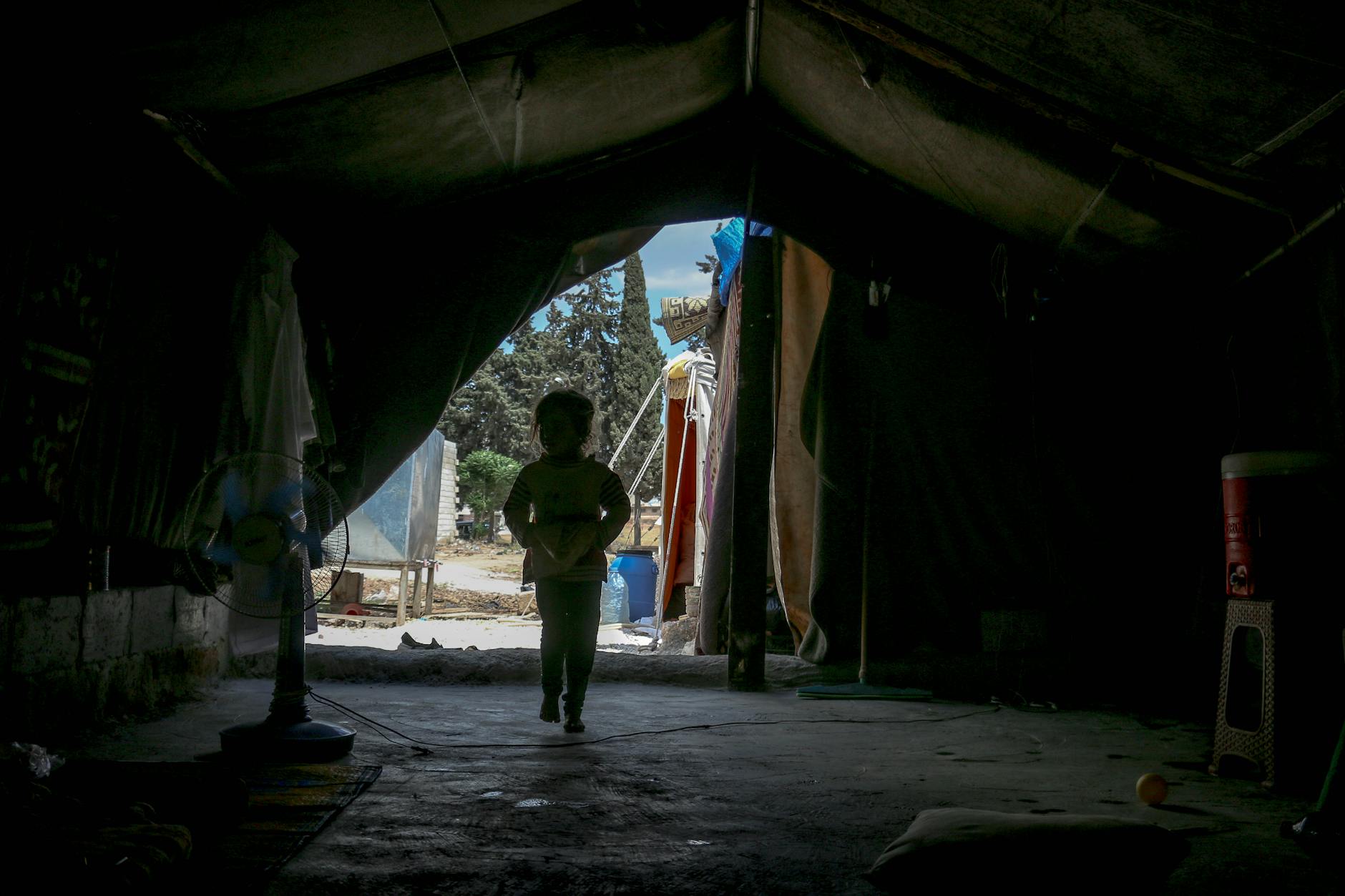
The U.S.-Israeli military strikes on Iran that began on February 28, 2026 have set the stage for what could become the largest refugee crisis since World War II. Iran’s population of approximately 92 million is more than four times the size of Syria’s when its civil war began, and if displacement follows even a fraction of the Syrian pattern, the world could see upwards of 23 million Iranians fleeing their homeland — a figure that would increase the global refugee population by roughly 76 percent, according to UNHCR estimates cited by the Cato Institute. That is not a typo. Even conservative projections from the American Enterprise Institute suggest a worst-case scenario of over 10 million refugees, a number that would still rival the largest displacement events of this century. The coordinated strikes, codenamed Operation Roaring Lion by Israel and Epic Fury by the U.S.
Department of Defense, targeted Iranian leadership, military commanders, nuclear facilities, and missile sites. Iran’s Red Crescent reported 201 civilians killed and 747 injured in the first hours alone, with preliminary totals climbing to approximately 555 dead in Iran by early March. Iran launched counter-strikes hitting Israeli territory and U.S. bases, as well as civilian airports in Dubai, Abu Dhabi, Bahrain, and Kuwait. The escalation has been swift, and the humanitarian fallout is only beginning. This article examines why Iran’s refugee crisis could dwarf anything the Middle East has ever experienced, how neighboring countries are preparing, which populations face the greatest displacement risk, and what the broader geopolitical consequences could look like in the weeks and months ahead.
Table of Contents
- Why Could the Refugee Crisis From Iran Dwarf Anything the Region Has Ever Seen?
- How Are Neighboring Countries Preparing for Iranian Refugees?
- Which Iranian Populations Face the Greatest Displacement Risk?
- What Would a Full-Scale Iranian Refugee Crisis Mean for Europe?
- Why Current Humanitarian Infrastructure Cannot Handle This Crisis
- The Afghan Refugees Inside Iran Add a Compounding Layer
- What Comes Next and Why the Window for Action Is Closing
- Conclusion
- Frequently Asked Questions
Why Could the Refugee Crisis From Iran Dwarf Anything the Region Has Ever Seen?
The numbers alone tell the story. Syria’s population was roughly 22 million when its civil war began in 2011, and approximately 25 percent of that population — about 5.5 million people — fled the country as refugees. iran‘s population of 92 million is larger than the combined populations of Iraq, Syria, and Libya. If displacement mirrors Syria’s proportions, approximately 23.4 million iranians could become refugees. To put that in perspective, the entire current global refugee population tracked by UNHCR would increase by about 76 percent. No humanitarian infrastructure on earth is built to handle that. But the comparison to Syria actually understates the problem in several important ways.
Iranians have roughly three times the GDP per capita (purchasing power parity) that Syrians did at the start of their civil war, which means more Iranians have the financial resources to actually flee rather than become internally displaced. Iranians also have deeper cultural and diaspora connections with the West, making Europe a likely destination for millions. The Syrian refugee crisis fundamentally reshaped European politics, fueling the rise of far-right movements across the continent. A crisis several times larger could be destabilizing on a scale that is difficult to overstate. There is also the compounding factor of Iran’s existing refugee population. Iran currently hosts approximately 3.5 million refugees, mostly Afghans who fled decades of conflict in their own country. These individuals would almost certainly flee again, adding to the overall displacement numbers and creating a cascading crisis across multiple borders simultaneously.
How Are Neighboring Countries Preparing for Iranian Refugees?
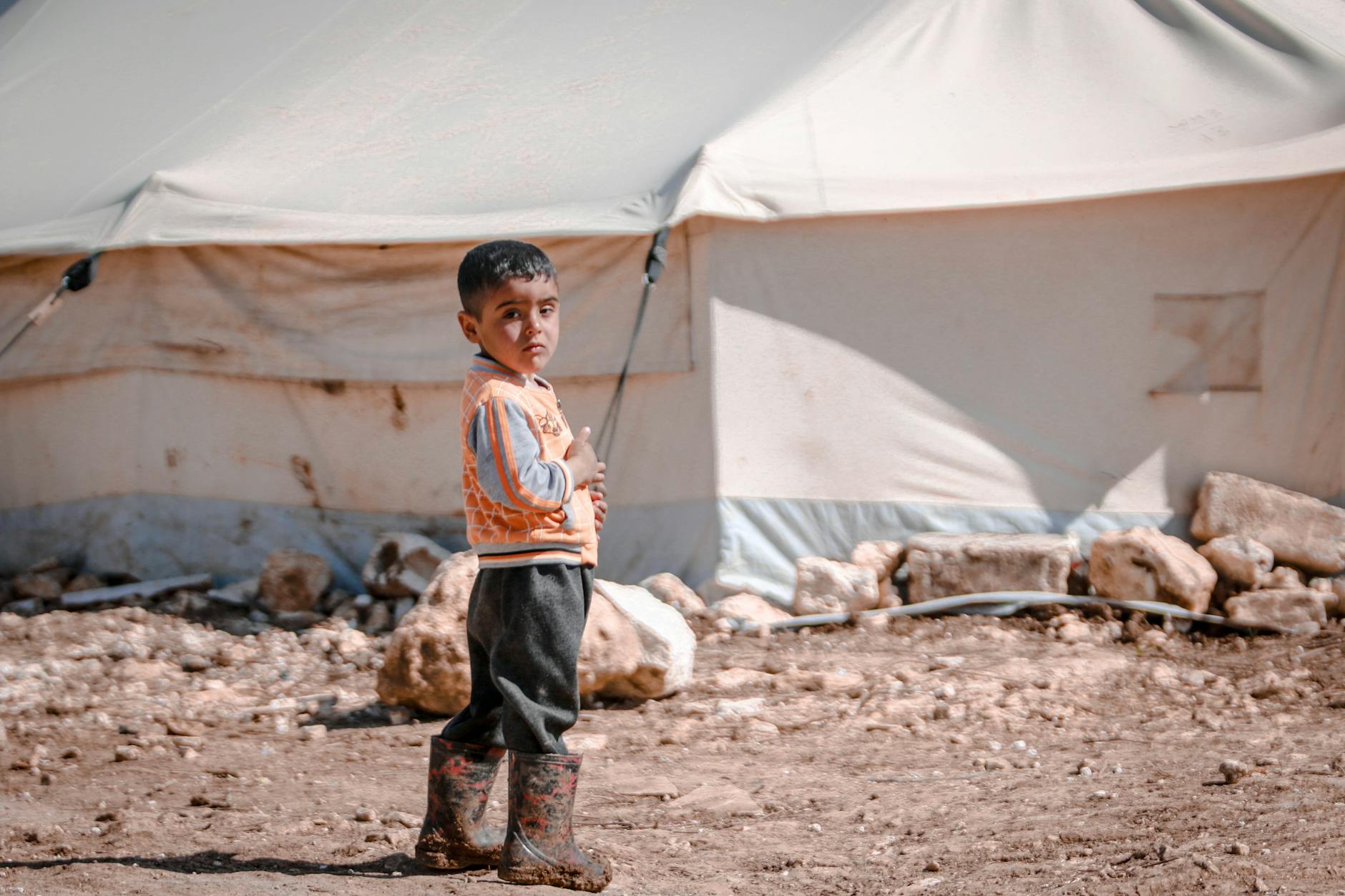
Turkey, which already hosts the world’s largest refugee population at approximately 2.3 million Syrians and 170,000 other asylum seekers, is at the center of contingency planning. Reports from Middle East Eye indicate that Turkey is preparing refugee camps near the Iran-Turkey border and considering deploying troops into Iranian territory to create a buffer zone to control refugee flows. Estimates circulating in Ankara suggest that a full-scale conflict could push up to 1 million people toward the Turkish border alone. Turkey has denied reports of planning an outright invasion but confirmed that contingency planning is underway. However, Turkey’s capacity to absorb another wave of refugees is deeply limited. The political backlash against Syrian refugees in Turkey has been significant, with anti-refugee sentiment becoming a major factor in Turkish elections over the past several years.
Adding Iranian refugees to that burden could create serious domestic instability. If Turkey imposes hard border restrictions to prevent entry, the humanitarian consequences at the border could be catastrophic — overcrowded camps, lack of medical care, and exposure to ongoing military strikes. The situation is even more precarious for smaller gulf states. Iran’s oil-rich Khuzestan province, with a population of roughly 5 million, borders Kuwait, whose citizen population is only about 1.5 million. Even localized displacement from Khuzestan alone could overwhelm Kuwait’s capacity entirely. Wealthy Gulf states will almost certainly attempt to reject Iranian refugees, as they largely did with Syrians, but geographic proximity may make that far more difficult to enforce than it was during the Syrian crisis.
Which Iranian Populations Face the Greatest Displacement Risk?
Iran is an ethnically diverse country, and the displacement patterns are likely to follow ethnic and geographic lines. Kurdish populations in western Iran face disproportionate targeting during military operations, and Kurdish refugees would most likely flood into Iraq’s Kurdistan Region, which has already absorbed waves of refugees and internally displaced people over the past two decades. The Kurdistan Regional Government has limited resources and infrastructure, and a sudden influx could strain the region to a breaking point. Baluch populations in southeastern Iran face a similar situation, with Pakistan as the most likely destination. Pakistan is already dealing with its own economic crisis and has been forcibly deporting Afghan refugees in recent years.
The prospect of absorbing large numbers of Baluch Iranians is politically and economically untenable, yet Pakistan’s long and porous border with Iran makes it nearly impossible to prevent crossings entirely. The middle-class and professional populations concentrated in Tehran, Isfahan, and other major cities represent a different kind of displacement challenge. These are people with education, resources, and connections to Western diaspora communities. History suggests they will attempt to reach Europe, either through Turkey and the Balkans or through other routes. The European Union, which struggled to develop a coherent response to the roughly one million asylum seekers who arrived in 2015 during the Syrian crisis, would be facing a challenge of an entirely different magnitude.
What Would a Full-Scale Iranian Refugee Crisis Mean for Europe?
The comparison to Europe’s 2015 refugee crisis is instructive but inadequate. That crisis involved roughly one million asylum seekers arriving over the course of a year and it fundamentally reshaped European politics, contributed to Brexit, fueled the rise of parties like the AfD in Germany and the National Rally in France, and nearly broke the EU’s internal cohesion. An Iranian refugee crisis could be several times larger, and it would arrive in a political environment that is already far more hostile to immigration than it was a decade ago. Iranians have deeper cultural and diaspora connections with the West than Syrians did. Large Iranian communities already exist in Germany, Sweden, the United Kingdom, Canada, and the United States. These connections serve as pull factors, drawing refugees toward countries where they have family, language familiarity, or community networks.
However, those same destination countries have significantly tightened their asylum systems since 2015. The tradeoff is stark: the demand for refuge would be enormous, but the political willingness to provide it may be at a historic low. There is also a strategic dimension. If European countries refuse to accept Iranian refugees, those populations will concentrate in Turkey, Iraq, and Pakistan, all of which are already under significant strain. Destabilizing those countries creates its own set of security consequences for Europe, from terrorism risks to further migration pressures down the line. There is no version of this crisis that does not reach Europe’s doorstep, whether through refugee arrivals or through the secondary effects of regional destabilization.
Why Current Humanitarian Infrastructure Cannot Handle This Crisis
The global humanitarian system is not built for a crisis of this scale. UNHCR’s total budget in recent years has hovered around $10 to $12 billion annually, and the agency has consistently faced funding shortfalls. The Syrian refugee crisis, at its peak, required billions in annual funding and still left millions of refugees in inadequate conditions. An Iranian displacement event that is three to four times larger would require a corresponding scale-up in funding, staffing, and infrastructure that simply does not exist. Michael Rubin of the American Enterprise Institute warned as early as January 15, 2026 that the world was not prepared for waves of Iranian refugees and that regional states lack the capacity to absorb them. That warning has been largely vindicated by events.
The Cato Institute was even more direct, stating that one of the consequences of such a war could be the largest refugee crisis since World War II. The UK House of Commons Library published a briefing on challenges facing Iran in 2026, including internal instability and refugee risk, suggesting that even governments nominally allied with the U.S. in this conflict recognize the humanitarian dimensions. The limitation that observers consistently flag is timing. Refugee infrastructure takes months or years to build, but displacement happens in days and weeks. The strikes began on February 28. By the time camps are operational and funding is allocated, millions of people may already be on the move with nowhere to go.

The Afghan Refugees Inside Iran Add a Compounding Layer
One frequently overlooked dimension of this crisis is the 3.5 million mostly Afghan refugees already living inside Iran. These individuals fled decades of conflict in Afghanistan, and many have been living in Iran for years or even generations. As military strikes destabilize Iran, these Afghan refugees will almost certainly attempt to flee again — but to where? Afghanistan under Taliban rule is not a viable destination for most.
📨 Get Free Accountability Coverage Alerts
Free · No spam · Unsubscribe anytime
Pakistan has been actively deporting Afghan refugees. Turkey has indicated it will not accept more. This creates a situation where some of the world’s most vulnerable people — refugees who have already been displaced once — face displacement again with even fewer options than before. International humanitarian law obligates countries not to return refugees to places where they face persecution, but in practice, border closures and political hostility often override those obligations.
What Comes Next and Why the Window for Action Is Closing
The trajectory of this crisis depends heavily on whether the U.S.-Israeli strikes remain limited or escalate into a prolonged campaign. Iran’s counter-strikes, which have already hit Israeli territory killing at least 9 near Jerusalem and struck U.S. bases and civilian airports across the Gulf, suggest that escalation is more likely than de-escalation. Each round of strikes increases civilian casualties — already at approximately 555 dead in Iran — and each round pushes more people toward the borders.
The international community has a narrow window to pre-position humanitarian resources, negotiate refugee-sharing agreements, and establish protected corridors for civilian evacuation. Every day that passes without those preparations makes the eventual crisis harder to manage. The question is no longer whether an Iranian refugee crisis will materialize. It is whether the world will be remotely prepared when it does.
Conclusion
The potential refugee crisis from Iran is not a hypothetical scenario — it is unfolding in real time. With a population of 92 million, deep ethnic divisions, an existing refugee population of 3.5 million Afghans, and neighbors that are either too small, too poor, or too politically hostile to absorb large populations, the ingredients for a displacement catastrophe are all present. Expert assessments from the Cato Institute, AEI, and the UK House of Commons Library all converge on the same conclusion: this could be the worst refugee crisis since World War II.
What makes this situation particularly dangerous is the gap between the scale of the potential crisis and the world’s preparedness for it. Turkey is planning buffer zones, Europe is bracing for arrivals, and Gulf states are likely to close their doors. But none of these responses match the magnitude of what a 92-million-person country in active conflict could produce. The decisions made in the coming weeks by governments, international organizations, and military planners will determine whether this crisis is managed or whether it spirals beyond anyone’s control.
Frequently Asked Questions
How many refugees could an Iran conflict produce?
Estimates range widely depending on the scale and duration of the conflict. If displacement mirrors Syria’s proportions, where about 25 percent of the population fled, approximately 23.4 million Iranians could become refugees. Even a 10 percent displacement rate would produce over 9 million refugees. The American Enterprise Institute has cited a worst-case figure of over 10 million.
Which countries would receive the most Iranian refugees?
Turkey, Iraq, and Pakistan are the most likely first destinations due to shared borders. Turkey is already preparing camps near the Iran-Turkey border. Kurdish Iranians would likely flee to Iraq, and Baluch Iranians to Pakistan. Europe, particularly Germany, Sweden, and the UK, would likely see significant numbers due to existing Iranian diaspora communities.
What happened on February 28, 2026?
The United States and Israel launched coordinated military strikes on Iran, codenamed Operation Roaring Lion by Israel and Epic Fury by the U.S. Department of Defense. The strikes targeted Iranian leadership, military commanders, nuclear facilities, and missile sites. Iran’s Red Crescent reported 201 civilians killed and 747 injured in the initial hours.
Does Turkey plan to invade Iran?
Turkey has denied reports of planning an outright invasion but has confirmed contingency planning. Reports indicate Turkey is preparing refugee camps near the Iran-Turkey border and considering deploying troops into Iranian territory to create a buffer zone to control refugee flows, not to conduct a full-scale invasion.
How does Iran’s potential refugee crisis compare to Syria’s?
Iran’s population is more than four times larger than Syria’s was at the start of its civil war. Iranians also have roughly three times the GDP per capita that Syrians did, giving more people the resources to flee. Additionally, Iran hosts 3.5 million Afghan refugees who would also likely be displaced, compounding the crisis beyond anything the Syrian conflict produced.
Are Gulf states expected to accept Iranian refugees?
Wealthy Gulf states will most likely attempt to reject Iranian refugees, following the pattern established during the Syrian crisis. However, geographic proximity — particularly Khuzestan province’s border with Kuwait — may make it more difficult to prevent refugee flows than it was with Syria.
You Might Also Like
- Ethnic Azerbaijanis in Northern Iran Could Push for Separation From Tehran
- War Crimes Allegations Are Already Emerging From the Iran Bombing Campaign
- Trump’s Approval Rating Could Shift Dramatically Based on How the Iran War Goes