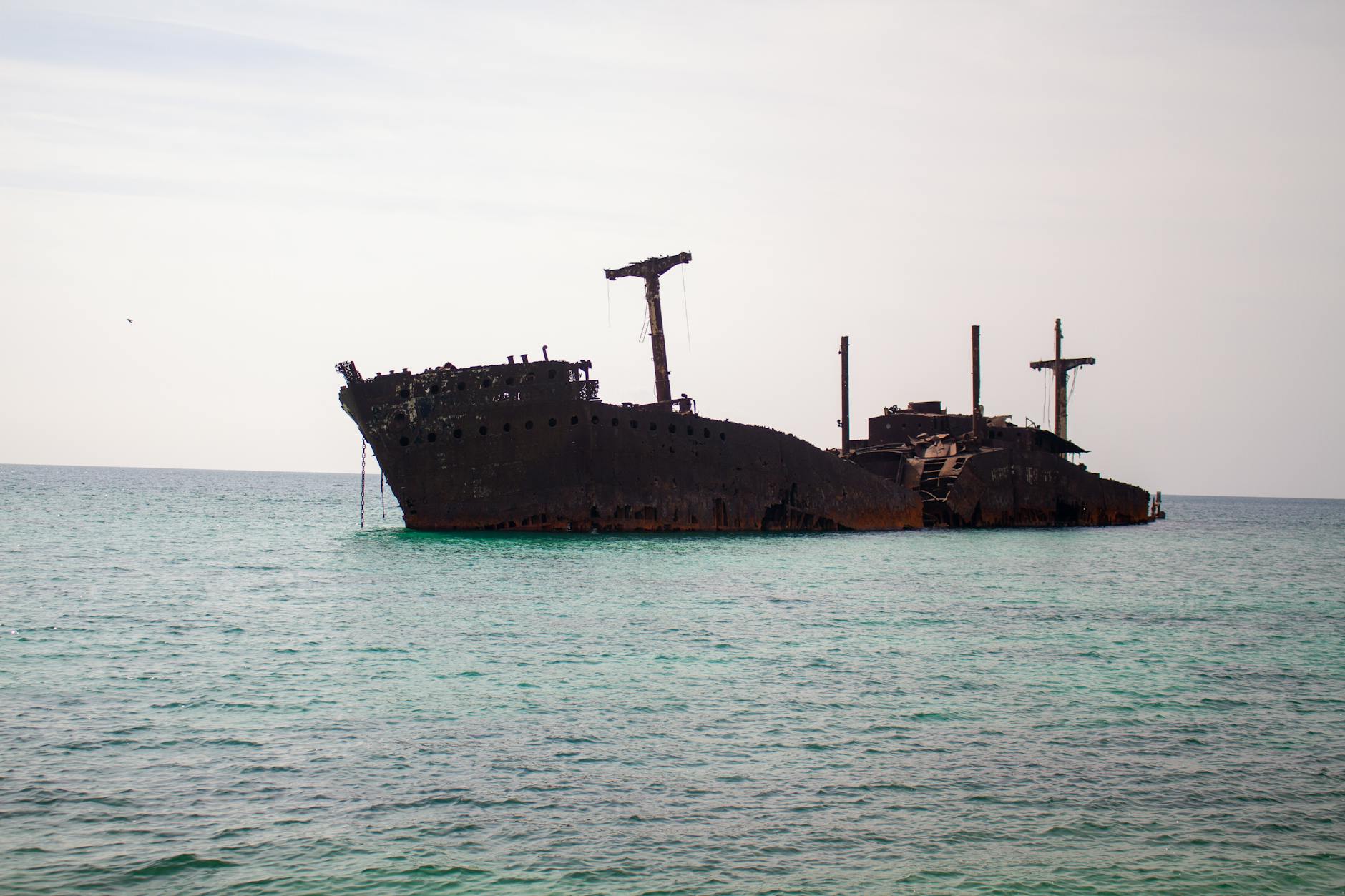
Naval warfare, accumulated military debris, and chronic fuel spills in the Persian Gulf are pushing one of the world’s most ecologically stressed marine environments toward a breaking point. The Gulf’s shallow, warm waters — home to dugongs, hawksbill turtles, coral reefs, and the world’s second-largest wild dolphin population — have absorbed decades of contamination from military operations dating back to the Iran-Iraq War of the 1980s, the 1991 Gulf War (which produced the largest deliberate oil spill in history at an estimated 4 to 8 million barrels), and ongoing naval patrols by multiple nations. The result is a body of water where heavy metal concentrations in sediment near former conflict zones regularly exceed international safety thresholds, and where fish populations that millions of people depend on for protein are showing measurable declines. This is not merely an environmental story. It is a public accountability story.
U.S. taxpayers fund the Fifth Fleet’s permanent presence in Bahrain. Defense contractors profit from naval exercises that leave behind unexploded ordnance, toxic anti-fouling paint residues, and fuel discharge. Meanwhile, Gulf state governments and the U.S. Department of Defense have been remarkably slow to fund marine remediation or even to publish comprehensive environmental impact assessments of ongoing military activity in the region. This article examines the specific threats to Gulf marine life, the legal and regulatory gaps that allow contamination to continue, the health consequences for coastal populations, and what accountability mechanisms — if any — exist for affected communities.
Table of Contents
- How Does Naval Warfare Directly Threaten Persian Gulf Marine Ecosystems?
- What Role Does Ongoing Military Presence Play in Chronic Contamination?
- Coral Reefs, Dugongs, and Turtles — Which Species Face the Greatest Danger?
- What Legal Frameworks Exist to Hold Polluters Accountable in the Gulf?
- Health Consequences for Coastal Communities and Fisheries Workers
- Unexploded Ordnance — The Invisible Minefield Below the Surface
- Can the Persian Gulf’s Marine Environment Recover?
- Conclusion
- Frequently Asked Questions
How Does Naval Warfare Directly Threaten Persian Gulf Marine Ecosystems?
The Persian Gulf is essentially a shallow, semi-enclosed basin averaging only 35 meters in depth, which means pollutants do not disperse the way they would in open ocean. When naval conflict occurs here, the environmental damage concentrates. During the 1991 Gulf War, Iraqi forces deliberately released crude oil from Kuwait’s Sea Island terminal and set fire to over 600 oil wells. The resulting slick covered more than 1,500 square kilometers of sea surface. Saudi Arabia’s coastal marshes and mangrove stands absorbed enormous quantities of oil, and studies published in Marine Pollution Bulletin as recently as 2021 found residual petroleum hydrocarbons still present in intertidal sediments along the Saudi coastline more than 30 years later. Beyond the headline-grabbing spills, naval warfare introduces less visible but persistent threats. Explosive ordnance detonations — whether from mines, torpedoes, or depth charges — produce shockwaves that kill fish and marine mammals within a blast radius, rupture the swim bladders of nearby species, and destroy benthic habitats on the seafloor.
The Iran-Iraq War saw extensive mine-laying in the northern Gulf, and the U.S. Navy’s Operation Earnest will convoy escort missions from 1987 to 1988 involved multiple engagements that deposited unexploded ordnance on the seabed. Fishermen in Kuwait and Iran still occasionally pull mines and munitions fragments from their nets, a grim reminder that the Gulf floor remains littered with wartime leftovers. Naval combat also introduces chemical pollutants beyond petroleum. Anti-ship missiles and torpedo warheads contain heavy metals including lead, mercury, and depleted uranium in some cases. When these weapons detonate or corrode on the seabed, those metals leach into the water column and enter the food chain through bioaccumulation. A 2019 study by researchers at the University of Tehran found elevated mercury levels in yellowfin tuna sampled from the northern Persian Gulf, with concentrations in some specimens exceeding the WHO’s recommended limit of 0.5 milligrams per kilogram for human consumption.
What Role Does Ongoing Military Presence Play in Chronic Contamination?
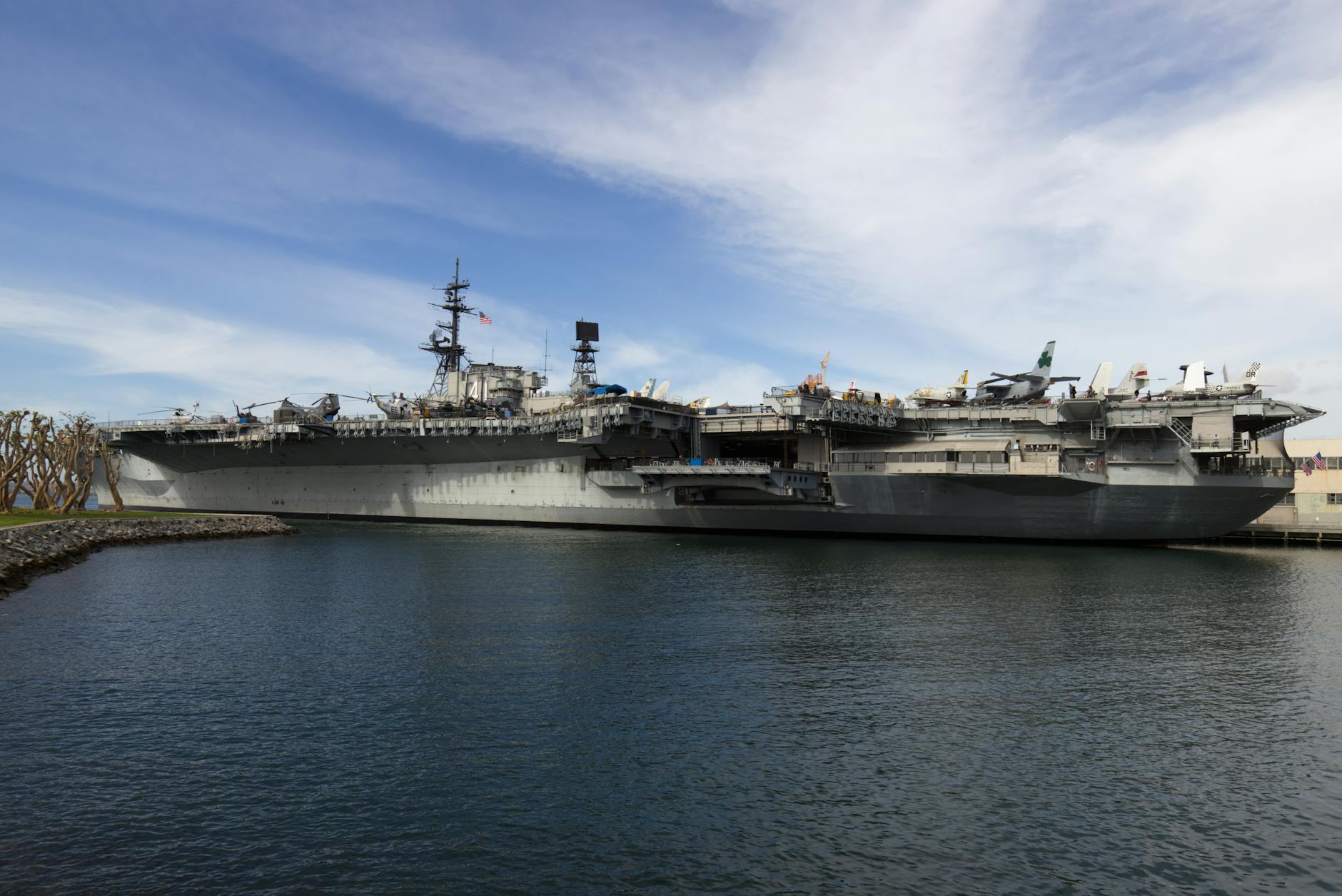
Even in peacetime, the permanent stationing of naval fleets in the Gulf produces a steady stream of pollution that is rarely discussed publicly. The U.S. Fifth Fleet, headquartered in Bahrain since 1995, maintains a continuous presence of roughly 20 to 30 vessels at any given time, supplemented by carrier strike groups on rotation. Allied navies from the UK, France, and various Gulf Cooperation Council states add to the total. These ships discharge bilge water, graywater, and treated sewage into Gulf waters under international maritime rules that are far more permissive than most people realize. Under MARPOL Annex IV, treated sewage can be discharged as close as three nautical miles from shore, and the Persian Gulf has no special designation that would impose stricter standards. Fuel spills from routine operations are another chronic issue. Navy vessels refuel at sea through underway replenishment, a process that inevitably involves small spills. Individual incidents may be minor — tens or hundreds of gallons — but they occur frequently and cumulatively. The U.S.
Navy’s own environmental compliance data, obtained through Freedom of Information Act requests by groups like the Center for Biological Diversity, has shown hundreds of reportable fuel discharge incidents across its global fleet annually. However, incident-level data specific to Fifth Fleet operations in the Gulf is not routinely published, making independent assessment difficult. This opacity is itself a form of accountability failure. There is an important caveat here. Not all naval pollution is american in origin, and it would be misleading to assign sole blame to the U.S. presence. Iran’s naval forces, which operate aging vessels with poor environmental controls, are significant contributors. So are the commercial shipping fleets that transit the Strait of Hormuz — one of the busiest maritime chokepoints on Earth, handling roughly 20 percent of the world’s petroleum trade. However, the U.S. military’s own environmental regulations, particularly Executive Order 12114 on environmental effects abroad of major federal actions, theoretically require assessment and mitigation. The gap between that requirement and actual practice in the Gulf is wide.
Coral Reefs, Dugongs, and Turtles — Which Species Face the Greatest Danger?
The Persian Gulf’s coral reefs are already among the most heat-stressed on the planet, surviving in water temperatures that regularly exceed 35 degrees Celsius in summer. These corals have adapted to extremes that would kill reefs elsewhere, but that adaptation leaves them with almost no buffer against additional stressors. Oil contamination smothers coral polyps and blocks the photosynthesis of their symbiotic algae. Studies conducted after the 1991 spill documented near-total coral mortality in affected areas of the Saudi coastline, and recovery has been agonizingly slow. Reefs that were healthy before the war still show reduced species diversity three decades later. Dugongs — the gentle, herbivorous marine mammals sometimes called sea cows — represent one of the Gulf’s most vulnerable populations. The Persian Gulf hosts the world’s second-largest dugong population after Australia, estimated at roughly 5,800 individuals concentrated mainly around Bahrain, Qatar, and the UAE.
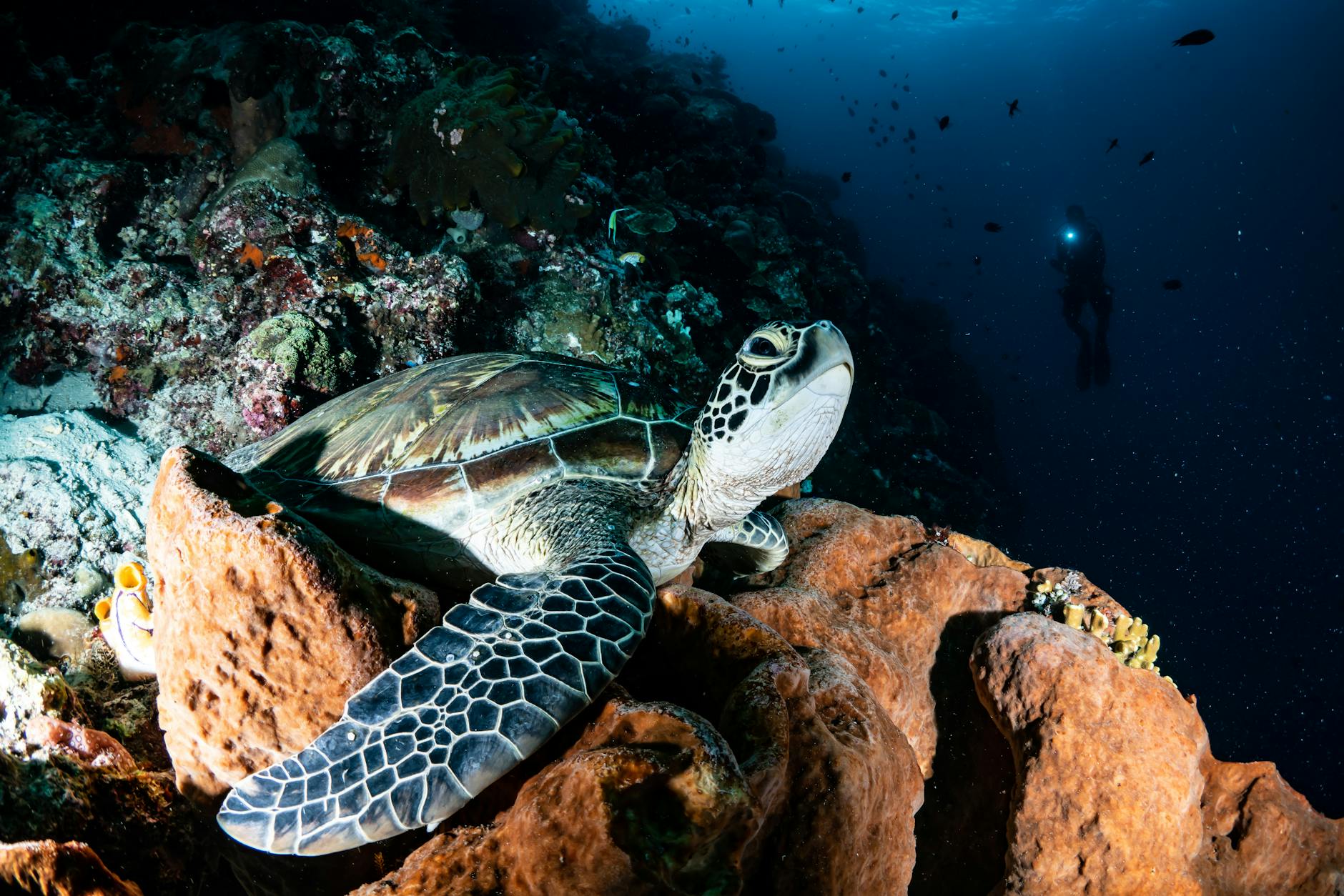
Dugongs feed exclusively on seagrass beds, which are highly sensitive to water quality degradation. Fuel spills, sediment disturbance from naval exercises, and dredging for port expansion have all reduced seagrass coverage in key feeding areas. A 2020 aerial survey by the Environment Agency Abu Dhabi found a measurable decline in dugong sightings in waters near shipping lanes and military exercise zones compared to protected areas farther from those activities. Hawksbill and green sea turtles nest on Gulf beaches and forage in nearshore waters where contamination tends to be highest. Hawksbills are critically endangered globally, and the Gulf population is small enough that any additional mortality source is significant. Nesting beaches in Kuwait, which were heavily oiled during the 1991 war, saw reduced nesting success for years afterward. More recently, entanglement in military-related debris — including netting, cable fragments, and floating waste from naval vessels — has been documented by marine rescue organizations in the UAE and Oman.
What Legal Frameworks Exist to Hold Polluters Accountable in the Gulf?
The short answer is that legal accountability for military-related marine pollution in the Persian Gulf is extraordinarily weak. International environmental law provides several potentially applicable frameworks — UNCLOS (the UN Convention on the Law of the Sea), the Kuwait Regional Convention of 1978, and MARPOL — but enforcement against military vessels is essentially nonexistent. Article 236 of UNCLOS explicitly exempts warships and government vessels from its environmental protection provisions. This means that a naval vessel can discharge pollutants that would result in massive fines if released by a commercial tanker, and face no legal consequence whatsoever. The Kuwait Regional Convention, also known as the Kuwait Action Plan, was designed specifically for the Persian Gulf marine environment and is administered by the Regional Organization for the Protection of the Marine Environment (ROPME). In theory, it commits signatory states — including Bahrain, Iran, Iraq, Kuwait, Oman, Qatar, Saudi Arabia, and the UAE — to prevent marine pollution and cooperate on environmental protection. In practice, ROPME has minimal enforcement authority, a modest budget, and no mechanism to compel military forces to comply with environmental standards.
Its most significant function has been monitoring and reporting, not regulation. For U.S. citizens concerned about accountability, the pathway is almost entirely through domestic politics rather than international courts. Congress authorizes the defense budget that funds Fifth Fleet operations. The Department of Defense is subject to the National Environmental Policy Act for actions with significant environmental effects, though the military has historically claimed broad exemptions for operational activities. Environmental groups have filed lawsuits under NEPA related to naval sonar and marine mammal harm in other theaters, notably in Hawaii and Southern California, and these cases have sometimes produced meaningful restrictions. Similar litigation targeting Gulf operations would face additional obstacles including standing, jurisdiction, and the state secrets doctrine. The tradeoff is clear: pursuing accountability through courts is slow, expensive, and uncertain, while congressional pressure through appropriations conditions is more direct but requires sustained political will that has rarely materialized on this issue.
Health Consequences for Coastal Communities and Fisheries Workers
The environmental damage in the Gulf is not an abstract ecological concern — it directly affects millions of people. Commercial fishing remains a major livelihood along the coasts of Iran, Kuwait, Bahrain, and the UAE. Fish consumption per capita in Gulf states is among the highest in the world, particularly in Bahrain and the UAE where traditional fishing communities still depend on local catch. When heavy metals and petroleum hydrocarbons accumulate in commercially harvested species like hamour (orange-spotted grouper), shari (emperor bream), and shrimp, the exposure pathway to human populations is direct and ongoing. Research from Kuwait’s Environmental Public Authority has found polycyclic aromatic hydrocarbon (PAH) levels in Gulf shrimp that occasionally exceed European Union food safety limits.
PAHs are byproducts of petroleum combustion and incomplete burning of fossil fuels; they are classified as probable carcinogens by the International Agency for Research on Cancer. The limitation of this data is that monitoring is sporadic and geographically patchy — Iran and Iraq conduct far less seafood safety testing than the wealthier Gulf states, meaning the populations most dependent on subsistence fishing have the least information about what they are consuming. There is also the issue of occupational exposure. Fishermen and port workers in areas near military installations or former conflict zones face elevated risks from contact with contaminated water and sediment. Veterans of Gulf War operations have documented a range of health issues attributed to environmental exposures, including respiratory problems and elevated cancer rates, though establishing direct causation is scientifically contested. What is not contested is that the Gulf’s marine environment carries a measurable burden of wartime and military-operational pollution, and the people who work in and eat from those waters bear the consequences most directly.
Unexploded Ordnance — The Invisible Minefield Below the Surface
The Persian Gulf seabed contains an unknown but significant quantity of unexploded ordnance from multiple conflicts. During the 1991 Gulf War alone, coalition forces dropped over 88,000 tons of explosives on Iraqi positions, many of them in or near coastal and marine areas. Iraq had also deployed an estimated 1,200 naval mines in the northern Gulf, of which only about 1,100 were accounted for after the war. The remaining mines, along with unexploded bombs, torpedo fragments, and artillery shells, sit on or embedded in the seabed in various states of corrosion. This ordnance presents a dual threat.
📨 Get Free Accountability Coverage Alerts
Free · No spam · Unsubscribe anytime
The immediate physical danger to fishermen, divers, and dredging operations is well known — Kuwait’s coast guard has conducted multiple ordnance removal operations over the years and continues to encounter wartime munitions. But the slower environmental threat may be larger. As metal casings corrode in warm, salty Gulf water, explosive compounds like TNT and RDX leach into surrounding sediment. These chemicals are toxic to marine organisms at relatively low concentrations and have been linked to liver damage and reproductive disruption in fish exposed under laboratory conditions. A NATO-funded study of munitions dump sites in the Baltic Sea found measurable contamination plumes extending hundreds of meters from corroding ordnance. Comparable studies in the Persian Gulf have not been conducted at scale, which is itself an indictment of the international community’s priorities.
Can the Persian Gulf’s Marine Environment Recover?
Recovery is possible but will not happen passively. The Gulf’s ecosystems have demonstrated resilience — coral species that survived the 1991 oil spill have shown genetic adaptations to petroleum stress, and some seagrass beds have recolonized formerly contaminated areas. But recovery timelines measured in decades are not compatible with the pace of ongoing degradation. Without active intervention — ordnance removal, pollution source reduction, habitat restoration, and enforced environmental standards for military operations — the cumulative burden will continue to grow.
The most practical near-term step would be establishing the Persian Gulf as a Special Area under MARPOL Annex I, which would impose stricter discharge standards on all vessels including, potentially, naval support ships. Several environmental organizations and Gulf state representatives have advocated for this designation, but it has not been adopted by the International Maritime Organization. The geopolitical complexity of the Gulf — where military rivals and commercial competitors share a single shallow sea — makes cooperation difficult. Yet the alternative is continued degradation of a marine environment that supports food security, livelihoods, and biodiversity that cannot be replaced once lost. At some point, the cost of inaction becomes the headline.
Conclusion
The Persian Gulf’s marine life faces a convergence of threats that are largely man-made and substantially attributable to military activity spanning four decades. From the catastrophic oil spills of the 1991 Gulf War to the chronic pollution from permanent naval presence, from unexploded ordnance corroding on the seabed to heavy metals accumulating in commercially harvested fish, the damage is measurable, documented, and ongoing. Legal frameworks that should provide accountability are riddled with military exemptions, and the populations most affected — coastal fishermen and communities — have the least political leverage to demand change. For readers concerned about government accountability and the responsible use of taxpayer-funded military assets, this issue deserves sustained attention.
The U.S. Department of Defense should be required to publish comprehensive environmental impact data for Fifth Fleet operations in the Gulf. Congress should condition defense appropriations on compliance with environmental assessment requirements. And international cooperation through ROPME and the IMO should be pressed toward enforceable standards rather than voluntary guidelines. The Persian Gulf is not an expendable body of water, and the marine life within it is not acceptable collateral damage.
Frequently Asked Questions
How large was the 1991 Gulf War oil spill compared to other major spills?
The deliberate release of oil during the 1991 Gulf War is considered the largest oil spill in history, estimated at 4 to 8 million barrels. By comparison, the Deepwater Horizon disaster in 2010 released approximately 4.9 million barrels, and the Exxon Valdez spill in 1989 released about 257,000 barrels.
Are fish from the Persian Gulf safe to eat?
It depends on the species, the location of harvest, and how frequently you consume them. Monitoring data from wealthier Gulf states generally shows most commercial fish within safety limits, but sporadic testing has found PAH and heavy metal levels exceeding international standards in some samples, particularly shrimp and predatory fish from areas near former conflict zones.
Does the U.S. military have any environmental obligations for its Persian Gulf operations?
Technically, yes. Executive Order 12114 requires federal agencies to assess environmental effects of major actions abroad, and the National Environmental Policy Act applies to certain military activities. In practice, the Department of Defense has claimed broad operational exemptions, and enforcement of these requirements in overseas theaters has been minimal.
What is ROPME and what authority does it have?
The Regional Organization for the Protection of the Marine Environment, based in Kuwait, coordinates environmental protection efforts among eight Gulf states under the Kuwait Regional Convention. It conducts monitoring and issues reports but has limited enforcement power and cannot compel military forces to comply with environmental standards.
Are there unexploded mines still in the Persian Gulf?
Yes. An estimated 100 or more naval mines from the 1991 Gulf War remain unaccounted for, along with significant quantities of other unexploded ordnance from both the Gulf War and the earlier Iran-Iraq War. Kuwait’s coast guard continues to encounter and remove wartime munitions from its waters.
Has any country been held legally liable for environmental damage in the Gulf?
Iraq was held liable for environmental damage from the 1991 invasion of Kuwait through the United Nations Compensation Commission, which awarded approximately $5.2 billion in environmental claims. However, no legal proceedings have addressed the environmental effects of coalition military operations or ongoing naval presence in the Gulf.
You Might Also Like
- What Regime Change in Iran Could Actually Look Like Based on History
- War Crimes Allegations Are Already Emerging From the Iran Bombing Campaign
- Tucker Carlson Publicly Criticizes Trump’s Decision to Strike Iran