
Bitcoin is surging and plunging in wild swings as the U.S.-Iran conflict reshapes global markets, and ordinary Iranians are scrambling into cryptocurrency as their only viable escape from a collapsing rial. On March 1, 2026, Bitcoin spiked near $70,000 after Iranian state media confirmed that Supreme Leader Ayatollah Ali Khamenei was killed in U.S.-Israeli airstrikes — triggering an $80 billion swing in Bitcoin’s market cap and $300 million in liquidations in a single session. Crypto outflows from Iranian exchange Nobitex surged 700% within minutes of the initial strikes, according to blockchain analytics firm Elliptic, as citizens rushed to convert their savings into anything that wasn’t the rial. But the story here is not just about price charts.
Iran’s crypto shadow economy hit $7.78 billion in 2025, with IRGC-linked addresses accounting for over half of all Iranian crypto inflows in the final quarter of the year. The rial has lost roughly 20,000 times its value over four decades, and inflation hit 42.5% in December 2025 — with food prices up 58%. For millions of Iranians, Bitcoin is not a speculative bet. It is the only financial infrastructure still functioning. This article covers the market mechanics behind Bitcoin’s war-driven volatility, why Iranian citizens and the regime itself depend on crypto for very different reasons, how Bitcoin compares to gold as a safe haven during geopolitical shocks, and what the Trump administration’s expanding sanctions mean for the broader crypto ecosystem.
Table of Contents
- Why Is Bitcoin Surging as Iranians Seek a Financial Safe Haven?
- Iran’s $7.8 Billion Crypto Shadow Economy and What It Actually Means
- Bitcoin vs. Gold — Which Actually Works as a Safe Haven During War?
- What the Trump Administration’s Iran Strikes Mean for Crypto Markets Going Forward
- Sanctions, Exchanges, and the Limits of Crypto Enforcement
- The Human Cost Behind the Crypto Numbers
- Where Bitcoin and the Iran Conflict Go From Here
- Conclusion
- Frequently Asked Questions
Why Is Bitcoin Surging as Iranians Seek a Financial Safe Haven?
Bitcoin is trading at approximately $66,195 as of March 2, 2026, down from that brief spike near $68,000 the day before. The volatility is directly tied to the evolving military situation in Iran. When Trump announced that “large-scale operations” would continue, Bitcoin briefly touched $70,000 — not because crypto traders are cheering on conflict, but because markets were pricing in a scenario where traditional financial systems in the region become even less reliable. The pattern is clear: every major escalation in the conflict produces a sharp move in Bitcoin, sometimes up, sometimes down, depending on whether traders interpret events as extending or shortening the crisis. For Iranian citizens specifically, this is not abstract market positioning. The Iranian rial stood at roughly 1,314,315 rials per dollar as of late February, having weakened 21.12% in a single month. When your national currency loses a fifth of its value in 30 days, you do not wait for the next central bank announcement.
You move whatever you can into something — anything — that holds value across borders. That is exactly what the 700% surge in Nobitex outflows represents: not sophisticated trading, but financial survival. The comparison that matters here is with other conflict zones. When Russia invaded Ukraine in 2022, Ukrainian crypto donations and transactions spiked in a similar pattern. But Iran’s situation is more extreme. Unlike Ukrainians, who had access to Western banking systems and international aid, iranians are locked out of SWIFT, cut off from most global payment networks, and subject to some of the strictest sanctions on earth. Crypto is not one option among many. For a significant number of Iranians, it is the only option.
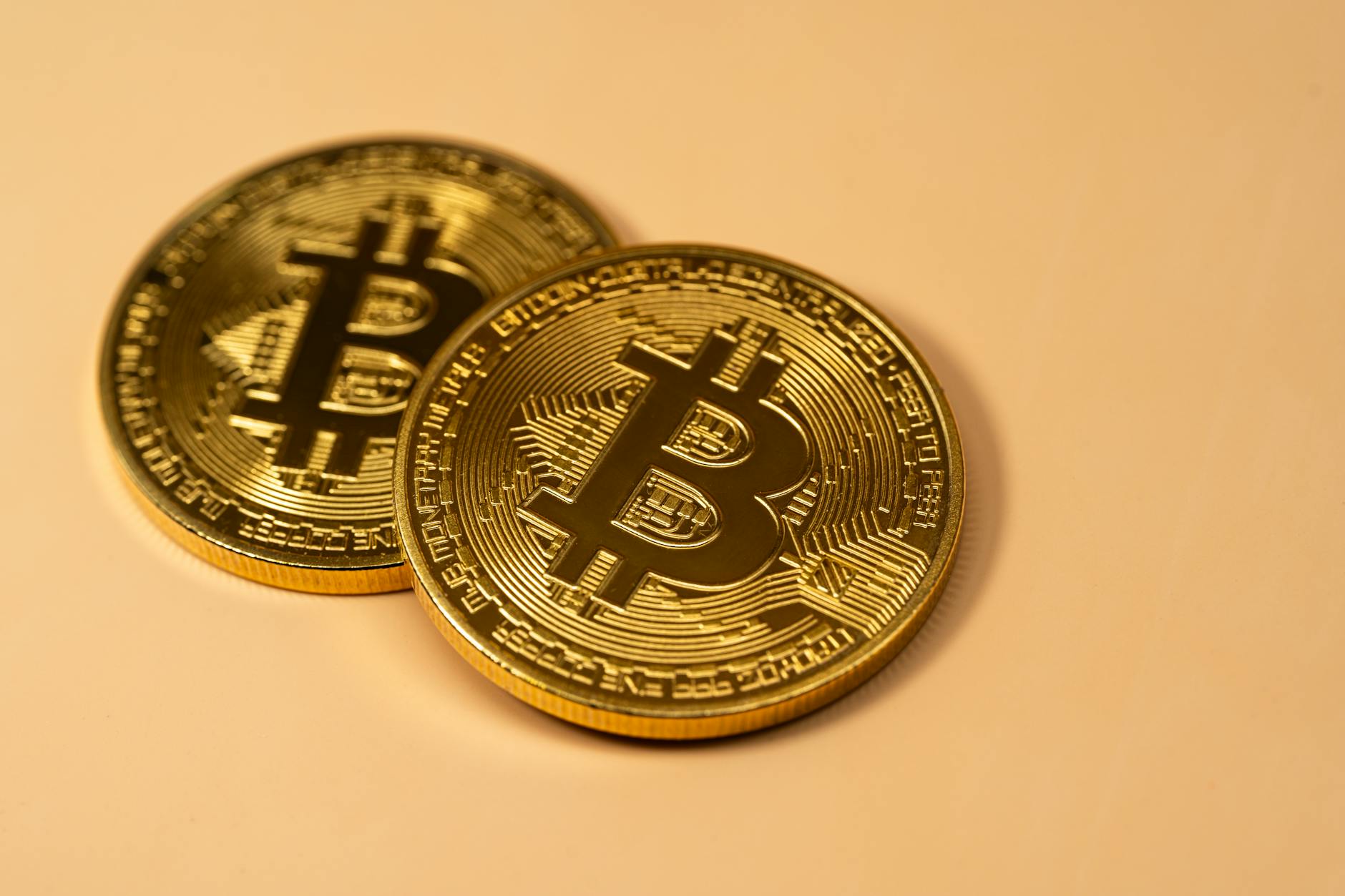
Iran’s $7.8 Billion Crypto Shadow Economy and What It Actually Means
Iran’s crypto ecosystem reached $7.78 billion in 2025, growing faster than the prior year, according to Chainalysis data reported by CoinDesk. That number includes everything from ordinary citizens converting rial savings into stablecoins to state-linked mining operations and sanctions evasion networks. Iran accounts for an estimated 2% to 5% of global Bitcoin mining power — a significant share for a country under comprehensive international sanctions. The critical detail that too many crypto commentators gloss over: IRGC-linked addresses accounted for over 50% of total Iranian crypto inflows in Q4 2025, receiving more than $3 billion in value. This means the same technology that lets a tehran shopkeeper protect his family’s savings is also being used by the Islamic Revolutionary Guard Corps to move billions outside the reach of international sanctions. This dual-use reality is not a hypothetical policy debate. It is happening at massive scale right now.
If you are someone who believes crypto is purely a tool of financial freedom, Iran’s numbers should complicate that narrative significantly. However, if you assume this means sanctioning crypto will solve the problem, the evidence suggests otherwise. The U.S. Treasury sanctioned crypto exchanges Zedcex and Zedxion in January 2026 — the first sanctions specifically targeting exchanges under Iran-specific authorities — for facilitating IRGC transactions. But the volume of Iranian crypto activity continued to grow. Sanctioning individual exchanges is a game of whack-a-mole when decentralized protocols and peer-to-peer trading remain available. The limitation of the current enforcement approach is that it targets centralized chokepoints in a system specifically designed to route around them.
Bitcoin vs. Gold — Which Actually Works as a Safe Haven During War?
Gold broke through $5,300 per ounce on March 1, climbing 1.5% to a new high, as investors followed the oldest safe-haven playbook in existence. Bitcoin, by contrast, initially sold off like a risk asset alongside equities after the strikes began — then rallied sharply when news broke of Khamenei’s death. This divergence matters. Gold moved in one direction, steadily up. Bitcoin whipsawed, first down, then aggressively up. If you are looking for stability during a crisis, gold delivered. If you are looking for asymmetric upside, Bitcoin delivered — but only if you had the stomach to hold through the initial drop. According to reporting on a BlackRock 60-day analysis, Bitcoin historically rebounds and outpaces both gold and the S&P 500 in recovery after geopolitical shocks.
The key word is “recovery.” In the immediate aftermath of a crisis event, Bitcoin tends to behave like a high-beta tech stock, selling off with everything else. It is only in the days and weeks that follow that it begins to act like a safe haven. Gold does the opposite — it moves first and fastest, then typically settles. For an Iranian citizen who needs to preserve value today, not in 60 days, this distinction is not academic. It is the difference between having enough to eat next month and not. The honest assessment is that Bitcoin is a safe haven for some purposes and not others. It is excellent at moving value across borders without permission from any government. It is terrible at providing short-term price stability during acute crises. The 15% drop Bitcoin suffered in February alone, contributing to five straight red monthly candles since October 2025, makes the safe-haven argument harder to sustain on price action alone.

What the Trump Administration’s Iran Strikes Mean for Crypto Markets Going Forward
The geopolitical context here is unprecedented for crypto markets. U.S. and Israeli airstrikes killed Iran’s supreme leader — confirmed by Iranian state media on March 1 — and oil prices surged while equities fell as markets repriced geopolitical risk across every asset class. Bitcoin is now firmly embedded in the geopolitical risk calculus in ways it was not during previous Middle Eastern conflicts. The $80 billion market cap swing in a single session demonstrates that crypto markets are large enough and liquid enough to absorb — and amplify — global macro shocks. For investors trying to navigate this, the tradeoff is straightforward. If the conflict shortens — if Khamenei’s death leads to regime change or a negotiated settlement — Bitcoin likely benefits as risk appetite returns and Iranian demand for crypto transitions from panic buying to reconstruction-era capital flows.
If the conflict escalates into a prolonged regional war involving oil infrastructure disruption and broader sanctions, Bitcoin faces competing pressures: increased demand from citizens in affected countries versus decreased risk appetite from institutional investors who treat it as a speculative asset. The $300 million in liquidations from a single session shows how quickly leveraged positions get destroyed in this environment. The practical reality for most retail investors is that trading Bitcoin around geopolitical events is extraordinarily difficult. The market moved from sell-off to rally on the Khamenei confirmation faster than most people could refresh their trading apps. As Blockhead reported, Bitcoin priced in a shorter conflict before traditional markets could even react. Unless you are running algorithmic strategies with direct news feeds, you are not fast enough to trade these moves. The more defensible approach is to have a position sized for volatility you can tolerate and then not touch it.
Sanctions, Exchanges, and the Limits of Crypto Enforcement
The Treasury Department’s January 2026 sanctions against Zedcex and Zedxion marked a new chapter in crypto enforcement. For the first time, exchanges were sanctioned specifically under Iran-related authorities, not just general anti-money-laundering actions. This signals that the administration views crypto infrastructure as a direct national security concern in the context of the Iran conflict, not merely a financial compliance issue. The warning for the broader crypto industry is clear: any exchange or protocol that touches Iranian flows — even inadvertently — is now in the crosshairs. The Chainalysis data showing $3 billion in IRGC-linked inflows in a single quarter means the flows are large enough to show up in any reasonably connected exchange’s transaction history. Compliance teams at major exchanges are almost certainly running enhanced screening on Iranian-linked addresses right now. For ordinary users, this means potential delays, frozen accounts, and enhanced verification requirements if your transaction history intersects with flagged addresses, even several hops removed.
The limitation that regulators face is fundamental to how blockchain works. You can sanction a centralized exchange. You cannot sanction a smart contract. You cannot sanction a peer-to-peer transaction between two individuals using self-custodied wallets. The 700% surge in outflows from Nobitex — a centralized exchange — suggests many Iranians are moving to self-custody precisely because they understand that centralized platforms are vulnerable to sanctions and shutdowns. The more aggressively the U.S. enforces, the more activity migrates to channels that are harder to monitor.

The Human Cost Behind the Crypto Numbers
Behind the $7.78 billion figure and the 700% outflow spike are real people making desperate calculations. Iran’s inflation hit 42.5% in December 2025. Food inflation reached 58%. Fruit costs soared 75%. When you combine that with a rial that has lost 21% of its remaining value in a single month, you are looking at a population that cannot afford to hold their own currency. A teacher in Isfahan who converts her monthly salary to USDT the day she receives it is not speculating.
📨 Get Free Accountability Coverage Alerts
Free · No spam · Unsubscribe anytime
She is trying to make sure she can still buy rice next week. This context matters for how we evaluate crypto policy. Blanket restrictions on Iranian access to crypto platforms do not primarily hurt the IRGC, which has sophisticated evasion infrastructure and $3 billion in quarterly flows. They hurt the teacher. They hurt the small business owner. They hurt the millions of Iranians who had no say in their government’s policies and are now caught between a collapsing currency and international sanctions designed to punish a regime, not a population.
Where Bitcoin and the Iran Conflict Go From Here
The next weeks will be decisive for both the geopolitical situation and crypto markets. If the conflict produces a swift resolution — regime change, ceasefire, or negotiated de-escalation — expect Bitcoin to rally as risk assets broadly recover and Iranian reconstruction creates new demand for cross-border capital flows. If it escalates into a prolonged regional conflict involving oil chokepoints and broader military engagement, Bitcoin will likely experience continued extreme volatility, with sharp rallies on de-escalation signals and sharp drops on escalation. The longer-term trajectory is more important than the daily price action.
Iran’s $7.78 billion crypto economy is not going away regardless of how the conflict resolves. The infrastructure is built. The demand is structural, driven by decades of currency collapse, not a single military event. Whether that demand flows through regulated channels or underground networks depends entirely on whether policymakers can design sanctions regimes that distinguish between a regime’s military apparatus and a population trying to survive. So far, the evidence suggests they cannot.
Conclusion
Bitcoin’s wild swings during the Iran crisis reveal a market that is simultaneously a speculative trading vehicle for Western institutions and a last-resort financial system for people in countries where everything else has failed. The $80 billion market cap swing, the $300 million in liquidations, the 700% surge in Iranian exchange outflows — these are not just numbers on a screen. They represent the collision of geopolitics, monetary policy failure, and technological disruption in real time. Gold remains the more reliable short-term safe haven.
Bitcoin remains the more accessible one for people who cannot walk into a bank. For investors, the actionable takeaway is to size positions for the volatility that actually exists, not the volatility you wish existed. For policymakers, the takeaway is that Iran’s crypto shadow economy demonstrates both the promise and the peril of decentralized finance at scale. And for anyone watching the conflict itself, the crypto data — the outflow spikes, the exchange sanctions, the mining operations — provides a real-time window into economic conditions on the ground that traditional financial data simply cannot match.
Frequently Asked Questions
Is Bitcoin actually a safe haven during geopolitical crises?
It depends on your time horizon. BlackRock’s analysis shows Bitcoin historically outpaces gold and the S&P 500 in 60-day recovery windows after geopolitical shocks. But in the immediate aftermath of a crisis, Bitcoin often sells off alongside equities before rebounding. Gold tends to move first as a safe haven; Bitcoin catches up later.
How are Iranians using cryptocurrency to protect their savings?
Iranian citizens are converting rial holdings into Bitcoin and stablecoins like USDT through exchanges such as Nobitex and through peer-to-peer transactions. With the rial losing 21% of its value in a single month and inflation at 42.5%, crypto offers a way to hold value outside a collapsing national currency — though it carries its own volatility risks.
What did the U.S. Treasury do about Iranian crypto activity?
In January 2026, the Treasury sanctioned crypto exchanges Zedcex and Zedxion for the first time under Iran-specific sanctions authorities, targeting them for facilitating IRGC transactions. This marked a new approach to crypto enforcement, treating exchanges as direct national security concerns rather than just compliance issues.
How much of Iran’s crypto activity is linked to the IRGC?
According to Chainalysis, IRGC-linked addresses accounted for over 50% of total Iranian crypto inflows in Q4 2025, receiving more than $3 billion in value. This means the majority of Iran’s crypto volume by value is connected to sanctioned military entities, though millions of ordinary citizens also use crypto for legitimate savings protection.
Could Bitcoin mining in Iran be disrupted by the conflict?
Iran accounts for an estimated 2% to 5% of global Bitcoin mining power. Airstrikes targeting infrastructure could damage mining operations, and prolonged conflict could disrupt the electricity supply that mining depends on. However, mining operations are distributed and some may be resilient to localized strikes.
Has Bitcoin been falling before the Iran conflict started?
Yes. Bitcoin suffered a 15% drop in February 2026 and has posted five consecutive red monthly candles since October 2025. The Iran conflict created a sharp short-term spike, but the broader trend heading into March was bearish. Any safe-haven narrative needs to be weighed against this multi-month decline.
You Might Also Like
- Iranians Turn to Cryptocurrency as the Rial Collapses Under War Pressure
- War Crimes Allegations Are Already Emerging From the Iran Bombing Campaign
- UNESCO Calls for Protection of Iranian Heritage Sites During Combat Operations