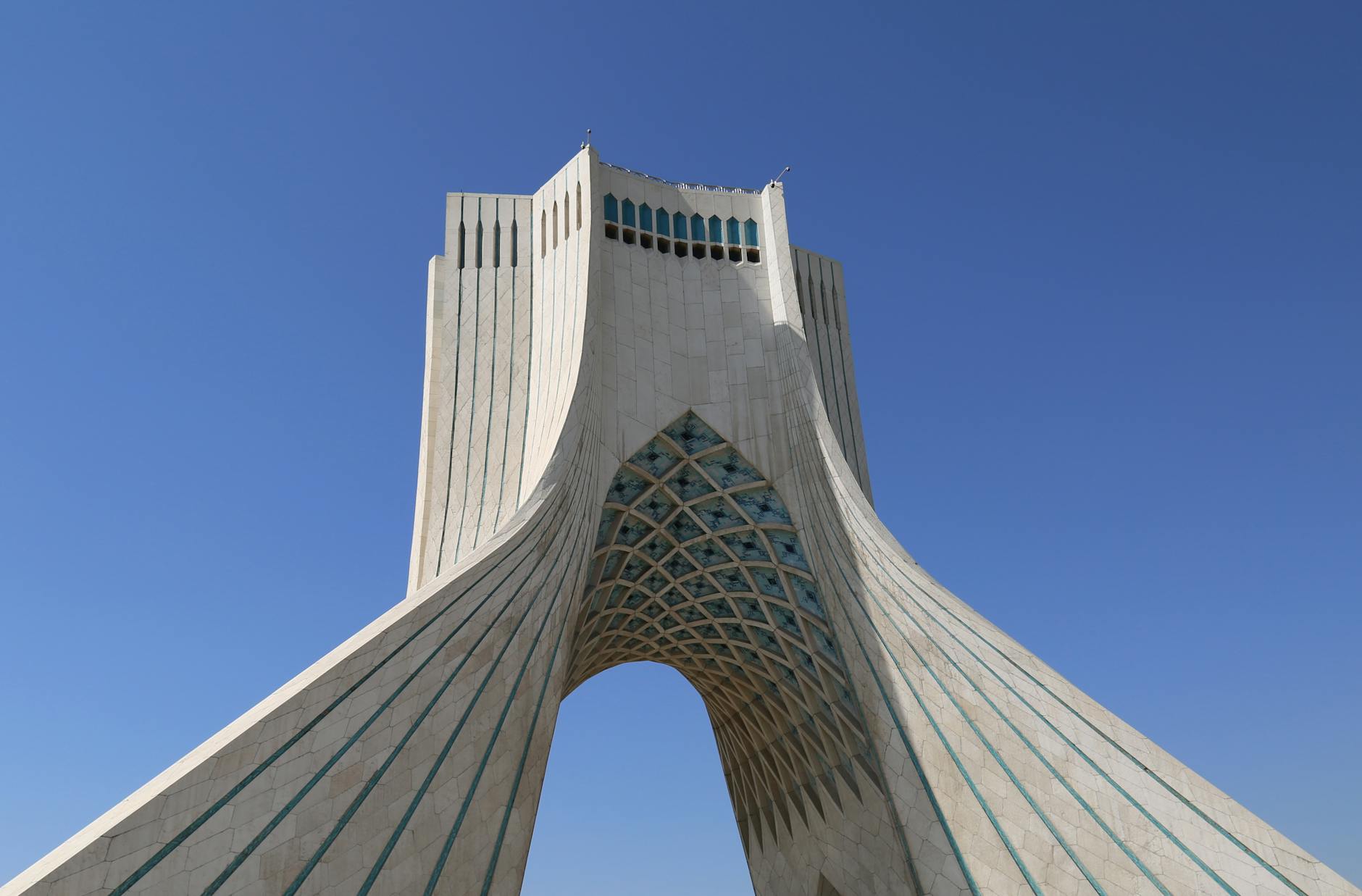
Hospitals across Tehran are buckling under the weight of mass civilian casualties as a second day of airstrikes pounds the Iranian capital, with medical staff reporting that emergency rooms, hallways, and even parking structures have been converted into triage zones. At least three major hospitals — Imam Khomeini, Milad Tower Hospital, and Shariati Hospital — have issued public appeals for blood donations and medical supplies, according to reports from Iranian state media and international observers on the ground. Surgeons are performing operations in shifts that stretch beyond 20 hours, and the supply of basic necessities like anesthesia, antibiotics, and surgical gauze is dwindling at an alarming rate.
The strikes, which began in the early hours of March 1, 2026, represent a significant escalation in the ongoing military confrontation between the United States and Iran. For Americans watching from home, this is not merely a foreign policy story — it carries direct implications for U.S. taxpayers funding military operations, for service members and their families, and for the legal and constitutional questions surrounding whether proper congressional authorization was obtained before the campaign began. This article examines the hospital crisis in Tehran, the scope of the strikes, the humanitarian law questions at play, the domestic political debate, and what accountability mechanisms exist for American citizens who want answers about how and why this military action was launched.
How Are Tehran’s Hospitals Coping as Strikes Continue Into a Second Day?
They are not coping — they are collapsing. Iranian health officials have stated that the city’s hospital system was already operating at roughly 85 percent capacity before the strikes began, largely due to chronic underfunding and the lingering effects of years of economic sanctions on medical supply chains. The sudden influx of hundreds of wounded civilians in a 36-hour window has created conditions that doctors on the ground are comparing to wartime field hospitals. At Imam Khomeini Hospital Complex, the largest medical facility in Iran, staff have reportedly begun turning away patients with non-life-threatening injuries simply because there is no space or personnel to treat them. The World Health Organization and the International Committee of the Red Cross have both issued urgent statements calling for humanitarian corridors to allow medical supplies into Tehran. The ICRC specifically noted that under international humanitarian law, hospitals and medical facilities are protected sites, and any
What Is the Legal Basis for the U.S. Strikes on Tehran?
The Biden-to-Trump transition left a tangle of iran policy threads, and the current administration has cited Article II commander-in-chief authority along with what it describes as an imminent threat to U.S. forces and assets in the region. However, legal scholars across the political spectrum have raised serious questions about whether this justification holds water. The War Powers Resolution of 1973 requires the president to notify Congress within 48 hours of committing armed forces to military action and prohibits sustained hostilities beyond 60 days without congressional authorization. As of this writing, the administration has reportedly sent a classified notification to congressional leadership, but the full Congress has not been briefed, and no Authorization for Use of Military Force specific to this campaign has been introduced. This matters for accountability-minded Americans because the question of legal authority is not academic — it determines whether the operation is lawful under domestic law. If the strikes lack proper authorization, members of Congress have standing to challenge the action, and there is precedent for legal disputes over war powers reaching the courts, though courts have historically been reluctant to intervene.
Senator Tim Kaine and a bipartisan group of legislators have already announced they will introduce a resolution demanding a full briefing and a vote on authorization. However, if history is any guide, these efforts often lose momentum once the initial news cycle fades, which is precisely why public attention and pressure matter. One critical limitation to understand: even if the strikes are deemed legally authorized under U.S. law, that does not settle the question under international law. The United Nations Charter permits the use of force in self-defense under Article 51 or with Security Council authorization. The U.S. has not sought Security Council approval, and the self-defense argument requires demonstrating an armed attack occurred or was genuinely imminent — a standard that many international law experts argue has not been publicly met.
What Are the Humanitarian Law Implications of Striking a Major Urban Center?
Conducting military operations in a densely populated city like Tehran — home to roughly 9 million people in the city proper and over 16 million in the metro area — triggers some of the most stringent requirements under international humanitarian law, specifically the principles of distinction, proportionality, and precaution. Distinction requires that attacks be directed only at military objectives, not civilians or civilian infrastructure. Proportionality prohibits attacks where the expected civilian harm would be excessive relative to the anticipated military advantage. Precaution demands that all feasible steps be taken to minimize civilian casualties. The early evidence from Tehran raises difficult questions on all three counts. Satellite imagery analyzed by open-source intelligence groups shows damage to areas that include residential buildings, commercial districts, and infrastructure near hospitals and schools. The Pentagon has stated that all targets were military or dual-use facilities directly connected to Iran’s nuclear and missile programs, and that precision-guided munitions were used to minimize collateral damage.
But “minimize” is doing a lot of work in that sentence. When you drop ordnance in a city of 16 million people, even precision weapons produce blast radii, debris fields, and shockwaves that do not respect the boundary between a military installation and the apartment building next door. A specific example underscores this point. Reports indicate that a strike on what the U.S. described as a Revolutionary Guard command node in the Shahrak-e Gharb neighborhood destroyed or damaged at least four adjacent residential buildings. If confirmed, this would likely trigger calls for an independent investigation under the laws of armed conflict. The challenge, as always, is that investigations into wartime conduct are slow, politically fraught, and often inconclusive — which is why documenting the evidence in real time matters.
How Should Americans Evaluate the Administration’s Justifications?
Citizens trying to make sense of the administration’s rationale face a familiar dilemma: the government claims the strikes were necessary to prevent an imminent threat, but much of the intelligence underlying that claim is classified. This creates an asymmetry of information that makes genuine democratic accountability nearly impossible in the short term. There are, however, several concrete steps Americans can take to evaluate the situation critically rather than relying on either the administration’s framing or its opponents’ counter-narrative. First, compare the administration’s public statements over time. Shifting justifications — from imminent threat to deterrence to regime capability degradation — are a red flag that the original rationale may not have been as clear-cut as initially presented. This pattern appeared in the lead-up to the Iraq War and again in the 2020 strike on Qasem Soleimani, where the “imminent threat” justification was later walked back by administration officials themselves.
Second, pay attention to what intelligence committee members say after classified briefings. While they cannot reveal specifics, their tone and reactions — particularly from members of the president’s own party — are often telling. Third, watch for independent reporting from journalists and organizations with sources inside the intelligence community and the military. The initial government narrative on military operations is almost never the complete story. The tradeoff here is real: demanding full transparency in the middle of an active military operation can genuinely compromise operational security and endanger service members. But accepting blanket secrecy with no accountability has its own costs, measured in public trust, constitutional integrity, and — most concretely — the lives of people on both sides of the conflict who deserve to know that the decision to use force was made lawfully and proportionally.
What Are the Risks of Escalation and Wider Regional Conflict?
The single most dangerous aspect of strikes on Tehran — as opposed to the more limited operations against Iranian proxy forces that have characterized the shadow war of recent years — is the risk of uncontrollable escalation. Iran has repeatedly stated that a direct attack on its homeland would trigger a full-scale retaliatory response, potentially including missile strikes on U.S. bases in Iraq, Qatar, and Bahrain, attacks on commercial shipping in the Strait of Hormuz, and activation of proxy networks in Lebanon, Syria, Iraq, and Yemen. The Houthis have already claimed a new round of attacks on Red Sea shipping in the hours since the Tehran strikes began. The limitation that must be understood here is that escalation dynamics are not fully within any single actor’s control.
Even if the U.S. intends the strikes as a limited, targeted operation and Iran’s leadership prefers to avoid a full war, miscalculation, communication failures, or actions by proxy groups operating with some degree of autonomy can drag both sides into a wider conflict neither wants. The 1914 analogy is overused but not irrelevant — the structural conditions for unintended escalation are present. For American consumers and taxpayers, the economic consequences of escalation are immediate and concrete. Oil prices spiked roughly 12 percent within hours of the first strikes being reported, and analysts warn that sustained conflict in or near the Strait of Hormuz — through which approximately 20 percent of the world’s oil supply passes — could push prices far higher. That translates directly into gasoline prices, heating costs, and inflationary pressure on an economy that has only recently brought inflation closer to target levels.
📨 Get Free Accountability Coverage Alerts
Free · No spam · Unsubscribe anytime
What Accountability Mechanisms Exist for U.S. Citizens?
The American constitutional system provides several formal mechanisms for holding the executive branch accountable for military action, though each has significant practical limitations. Congressional oversight, through the Armed Services and Intelligence committees, is the primary channel — members can demand briefings, hold hearings, subpoena documents, and ultimately control the funding that sustains military operations. The power of the purse is Congress’s most potent tool, and historically, cutting off funding has been the most effective way to force an end to unauthorized military campaigns, as occurred with the Boland Amendment during the Iran-Contra era.
Beyond Congress, citizens can engage through direct advocacy — contacting representatives, supporting organizations that litigate war powers questions (such as the Brennan Center for Justice or the American Civil Liberties Union), and demanding that journalists continue pressing for transparency. Lawsuits challenging the legality of military action are possible but face steep procedural hurdles, including standing requirements and the political question doctrine, which courts have sometimes used to avoid ruling on war powers disputes. The most effective accountability, historically, has come from sustained public attention and political pressure, not from any single legal mechanism.
What Comes Next for Tehran’s Civilians and the Broader Conflict?
The immediate outlook for Tehran’s civilian population depends heavily on whether the strikes continue, intensify, or halt. Humanitarian organizations are preparing for a prolonged crisis regardless, stockpiling medical supplies in neighboring countries and negotiating access with Iranian authorities. The longer the bombardment continues, the more the hospital system will degrade, the more civilians will be displaced, and the harder reconstruction will become — a pattern documented extensively in conflicts from Gaza to Mosul to Aleppo.
For the broader geopolitical trajectory, much depends on backroom diplomatic channels that are invisible to the public. Whether intermediaries — potentially Oman, Qatar, or China — can broker a de-escalation before the conflict spirals will likely determine whether this remains a contained crisis or becomes a defining catastrophe of the decade. American citizens who care about the outcome should recognize that their voice matters not just at election time but right now, in the decisions being made this week about how far this military campaign goes and on what legal and moral terms.
Conclusion
Tehran’s hospital crisis is the most visible and gut-wrenching manifestation of a military escalation that raises profound questions about legal authority, humanitarian law, democratic accountability, and the risk of wider war. The scenes from overwhelmed emergency rooms are not abstractions — they represent real human costs that demand honest reckoning from policymakers and citizens alike. Whether one supports or opposes the strikes, the obligation to scrutinize the government’s justifications, demand transparency, and insist on compliance with domestic and international law is not partisan — it is constitutional.
The coming days and weeks will reveal whether this campaign achieves its stated objectives, what price civilians on both sides pay, and whether the institutions designed to check executive war-making power actually function. Americans should pay close attention, ask hard questions, contact their representatives, and refuse to accept the idea that military operations of this magnitude can proceed without rigorous public accountability. The stakes — in lives, in treasure, and in the integrity of the democratic system — are too high for passivity.
Frequently Asked Questions
Did Congress authorize the strikes on Tehran?
As of the second day of strikes, no specific Authorization for Use of Military Force has been passed for this campaign. The administration is relying on Article II executive authority and claims of imminent threat. Bipartisan members of Congress have demanded a formal vote.
Are hospitals in Tehran being directly targeted?
There is no confirmed evidence of deliberate targeting of hospitals. However, at least one clinic has reportedly sustained collateral damage from a nearby strike. Under international humanitarian law, parties to a conflict must take all feasible precautions to avoid harm to medical facilities.
How does this affect U.S. gas prices?
Oil prices rose approximately 12 percent in the immediate aftermath of the strikes. If the conflict disrupts shipping through the Strait of Hormuz, analysts project significantly larger increases that would directly impact consumer fuel and energy costs.
Can American citizens sue to stop the strikes?
Theoretically, lawsuits challenging unauthorized military action are possible, and some have been filed in past conflicts. However, courts have frequently declined to rule on such cases, citing the political question doctrine or finding that plaintiffs lack standing. Congressional action remains the more effective check.
What international laws govern strikes in populated cities?
The key principles are distinction (targeting only military objectives), proportionality (civilian harm must not be excessive relative to military advantage), and precaution (all feasible steps to minimize civilian harm). These are codified in the Geneva Conventions and their Additional Protocols, as well as in customary international humanitarian law.
Owed money from a settlement? Check what is open at OpenClassActions.com. Caring for someone with dementia? Find practical guides at HelpDementia.com. Working out a skin routine? Evidence-based answers at AcneAdvocate.com. Forgot the name of a movie? Identify it at FindThisMovie.com. Was your data exposed? Track active breaches at DataBreachRadar.com.
⚠️ OPINION & EDITORIAL CONTENT: All articles, commentary, and analysis on donaldtrumpclassaction.com represent the personal opinions of the authors and are presented for informational and editorial purposes only. This site is not affiliated with Donald Trump, the Trump Organization, or any government agency. Nothing here constitutes legal, financial, or professional advice. Read full disclaimer.
We use essential cookies to make this site work and remember your preferences. We do not use advertising or analytics cookies. Privacy Policy. Cookie Policy.