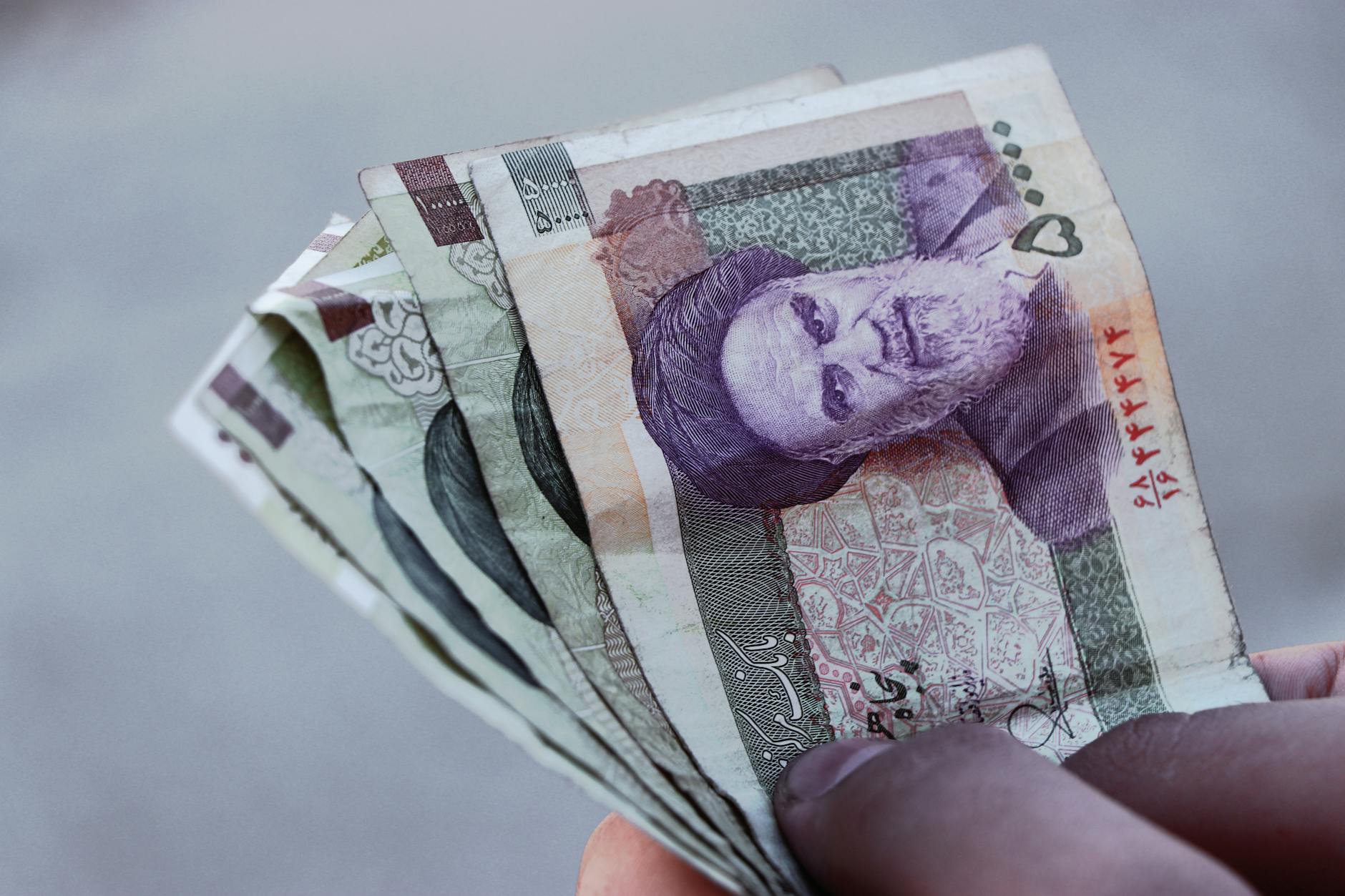
Iran’s economy did not collapse overnight on February 28, 2026, when Operation Epic Fury’s bombs began falling. It had been dying for years — hollowed out by sanctions, corruption, and staggering mismanagement that pushed the rial past 1,000,000 to the dollar, drove inflation above 48%, and left over 40 million Iranians living in absolute poverty. The US-Israeli strikes did not create Iran’s economic crisis.
They poured accelerant on a fire that was already burning through every layer of Iranian society, from bazaar merchants shuttering their shops to university graduates who cannot find work. What the strikes did accomplish was the removal of any remaining pretense of stability. With Supreme Leader Ali Khamenei confirmed dead on March 1, tanker traffic through the Strait of Hormuz down roughly 70%, and Brent crude spiking toward $90 a barrel, the economic scaffolding that kept Iran’s regime functioning — however poorly — has been knocked away. This article traces the full arc of that collapse: the years of currency destruction and poverty that preceded the war, the immediate economic shock of the strikes, the global energy market disruption, and what the fallout means for ordinary Iranians and the broader region.
Table of Contents
- How Far Had Iran’s Economy Crumbled Before the War Began?
- The Human Cost — Poverty, Hunger, and the Death of Iran’s Middle Class
- The Late 2025 Protests and the Regime’s Fragile Grip
- Operation Epic Fury — What the Strikes Hit and Why It Matters Economically
- Iran Strikes Back — Attacks on Regional Energy Infrastructure
- The Rial’s Final Plunge and What Regime Officials Are Admitting
- What Comes Next for Iran’s Economy and the Global Fallout
- Conclusion
- Frequently Asked Questions
How Far Had Iran’s Economy Crumbled Before the War Began?
The numbers tell a story of an economy in freefall long before a single missile was launched. The iranian rial crossed the psychologically devastating threshold of 1,000,000 to $1 USD on March 19, 2025 — making it the world’s least valuable currency. By December 2025, it had deteriorated further to 1,750,000 to the dollar. For perspective, the rial traded at roughly 42,000 to $1 before the current sanctions era. That is not a decline. That is an extinction-level devaluation of a national currency, and it happened entirely during peacetime. GDP growth collapsed in parallel.
Iran posted 5.3% real GDP growth in 2023, which fell to 3.7% in 2024, and the IMF projected just 0.6% for 2025 — effectively stagnation. The World Bank was even more pessimistic, projecting outright contraction in both 2025 and 2026. Meanwhile, inflation hit 48.6% in October 2025 and remained at 42.2% in December, with the World Bank warning it could climb toward 60%. These are not wartime numbers. These are the numbers of a peacetime government that had already lost control of its own economy. What makes this particularly damning for the Iranian regime is that its own economists have said as much publicly. Hossein Raghfar and Farshad Momeni — regime-affiliated economists — have admitted that Iran’s economic collapse stems primarily from domestic corruption and systemic mismanagement, not solely from external sanctions. When your own establishment figures are publicly pointing the finger inward, the narrative that Western pressure alone is responsible becomes impossible to sustain.
The Human Cost — Poverty, Hunger, and the Death of Iran’s Middle Class
Macroeconomic indicators are abstract until you see what they mean for actual people. As of March 2025, estimates placed between 22% and 50% of iranians below the poverty line — a range so wide it reflects how difficult it is to get reliable data from a regime that has every incentive to hide the truth. The higher-end estimates suggest over 40 million people living in absolute poverty, with roughly 70% falling below the relative poverty line. UN FAO data adds another grim dimension: 41% of Iranians suffer moderate or severe food insecurity, and 36 million cannot afford a healthy diet. Food inflation has been particularly savage. It reached 41% in early 2025 and climbed to 57.9% by late summer — meaning staple goods were becoming unaffordable at a pace that outstripped even the general inflation rate. For families already spending 60% or more of their income on food, as is common in lower-income Iranian households, this is not an inconvenience.
It is a survival crisis. However, the damage extends well beyond the poor. Iran’s middle class — once a source of stability and national identity — has been systematically destroyed. Middle-class self-identification fell from 78.7% in 2005 to 63.7% by 2020, and sanctions alone caused an average annual 17-percentage-point decline in middle class size between 2012 and 2019. This matters because middle-class erosion does not just produce poverty statistics. It produces political instability. People who remember having more and now have less are the demographic most likely to take to the streets — which is exactly what happened in late 2025.
The Late 2025 Protests and the Regime’s Fragile Grip
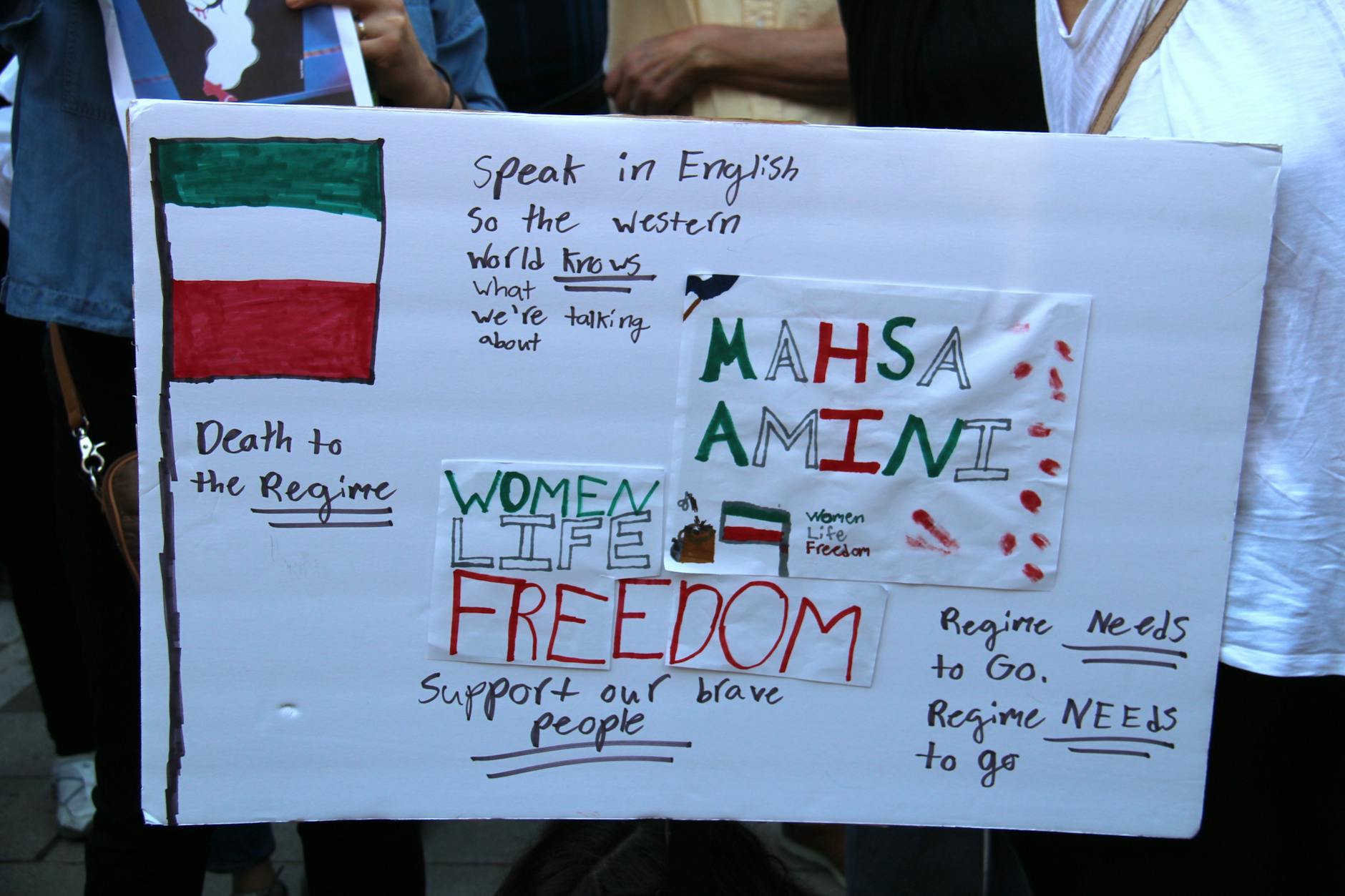
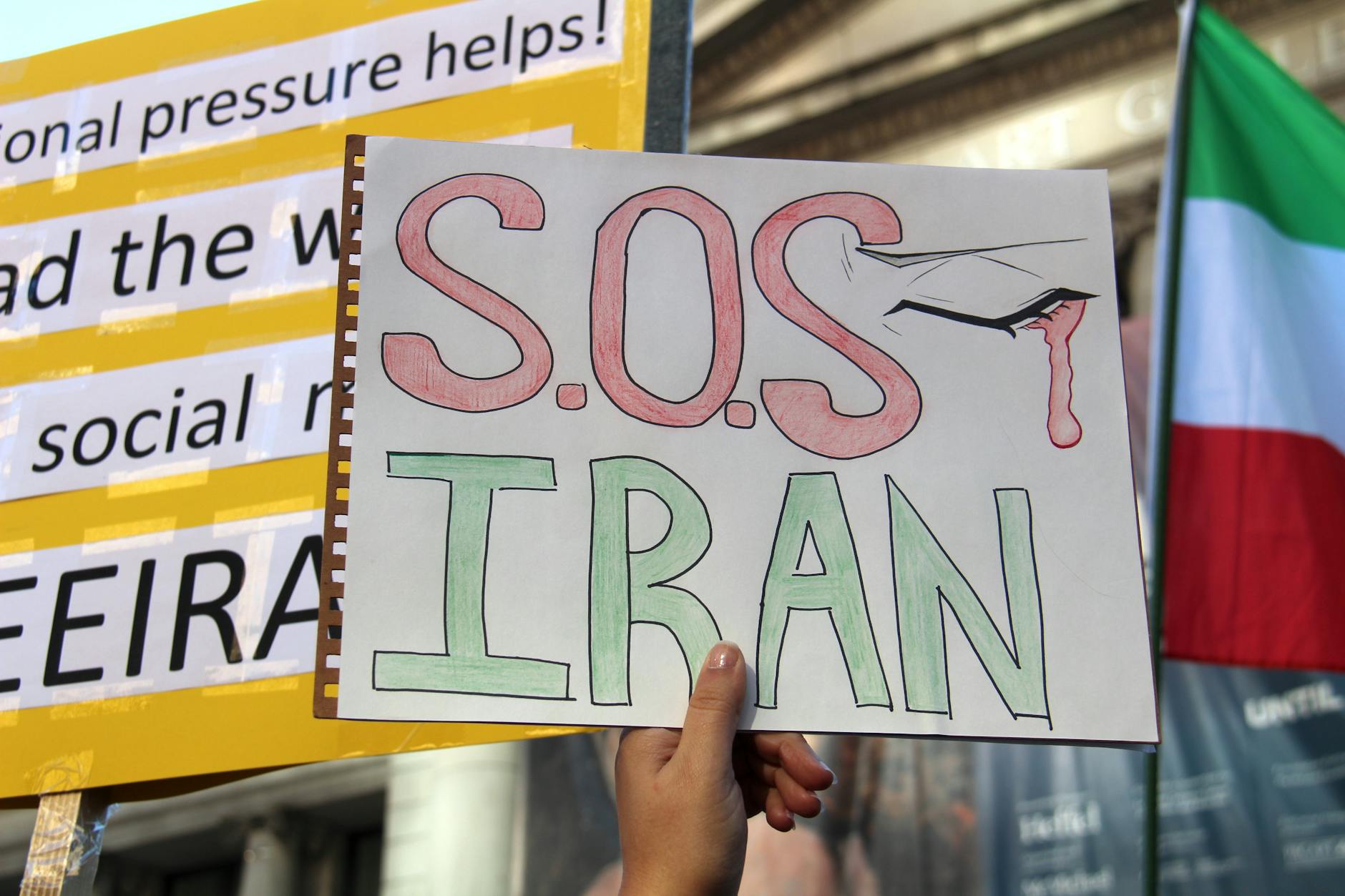
By late 2025, the economic pressure had translated into the most significant unrest since the 2022 Mahsa Amini protests. Bazaar merchants and shopkeepers in Tehran — historically a bellwether of Iranian political discontent — began protesting against economic conditions, and the movement spread to Isfahan, Shiraz, and Mashhad. This was not a student protest or a women’s rights movement, though both of those currents remained active. This was the commercial class, the traditional backbone of the Iranian economy, saying publicly that the system was failing them. The significance of bazaar protests in Iran cannot be overstated. The bazaari merchant class played a critical role in the 1979 Islamic Revolution itself.
When these shopkeepers close their shutters and take to the streets, it signals something fundamentally different from youth-driven social media movements. It means the economic pain has reached the people whose cooperation the regime most depends on for day-to-day commercial functioning. The regime responded with its standard toolkit of suppression, but the underlying conditions that produced the protests — a worthless currency, runaway food prices, and vanishing livelihoods — were not things that could be beaten or arrested away. Youth unemployment compounded the pressure. At 19% overall, with women’s joblessness above 15%, and a staggering 40% of the unemployed holding university degrees, Iran had created a generation with education, expectations, and no economic future. That is a demographic powder keg in any country. In one already rocked by repeated protest movements, it was a countdown.
Operation Epic Fury — What the Strikes Hit and Why It Matters Economically
On February 28, 2026, the United States and Israel launched Operation Epic Fury — coordinated strikes targeting military facilities, nuclear sites, and regime leadership across at least nine Iranian cities. Iranian state media confirmed on March 1 that Supreme Leader Ali Khamenei had been killed. Whatever one thinks of the strategic rationale, the immediate economic consequences were severe and global in scope. The most consequential economic effect was the disruption to the Strait of Hormuz. Tanker traffic dropped roughly 70%, with over 150 ships anchoring outside the strait rather than risking transit. This matters far beyond Iran because approximately 20% of the world’s daily oil supply and significant LNG volumes move through that chokepoint.
Major carriers including Maersk began rerouting via the Cape of Good Hope — adding weeks to delivery times and enormous costs to global shipping. Brent crude jumped from approximately $73 per barrel to the $85–90 range, with some intraday projections exceeding $88. The comparison to prior oil shocks is instructive but also carries a caveat. The 1973 Arab oil embargo and the 1979 Iranian Revolution both produced sustained price spikes and global recessions. The current disruption, however, occurs in a global energy market with more diversified supply sources, larger strategic petroleum reserves, and greater renewable energy capacity than existed during those earlier crises. That does not mean the effects will be mild — it means the transmission mechanism is different, potentially slower-burning but still deeply consequential, particularly for energy-importing developing nations that cannot absorb $85-plus oil.
Iran Strikes Back — Attacks on Regional Energy Infrastructure
Iran did not absorb the strikes passively. On March 2, Iranian drone attacks struck Saudi Arabia’s Ras Tanura refinery — a facility with over 500,000 barrels per day of processing capacity — forcing a temporary shutdown. Kuwait’s Ahmadi refinery was also hit. These retaliatory strikes represented a calculated escalation aimed at Iran’s Gulf neighbors and, by extension, the global oil market itself. The message was clear: if Iran’s economy burns, it will not burn alone. This is the scenario energy analysts have warned about for decades but which markets had largely priced as a tail risk.
A shooting war that damages actual refining capacity in Saudi Arabia and Kuwait does not just raise oil prices on fear — it physically removes supply from the market. Ras Tanura alone handles a significant share of Saudi export capacity. Even a temporary shutdown ripples through global supply chains, and the threat of further attacks keeps a permanent risk premium embedded in prices. For consumers worldwide, this translates directly into higher gasoline and heating costs at a time when many economies were already dealing with stubborn inflation. The limitation worth noting is that Iran’s retaliatory capacity, while real, is not unlimited. Its military infrastructure was a primary target of Operation Epic Fury, and the loss of centralized leadership creates coordination challenges for sustained operations. However, asymmetric capabilities — drones, proxies, and the threat of mining the Strait — do not require the same command infrastructure as conventional military operations, meaning the economic disruption potential persists even as Iran’s conventional military capacity degrades.
The Rial’s Final Plunge and What Regime Officials Are Admitting
Iran’s own finance minister publicly blamed the war with Israel for the rial’s collapse to 1,750,000 to the dollar — a rare admission from a government that typically attributes all economic problems to foreign conspiracies while claiming domestic resilience. But the timeline undermines even this limited admission. The rial had already hit 1,750,000 by December 2025, two months before the first strike. The war did not cause the currency collapse.
📨 Get Free Accountability Coverage Alerts
Free · No spam · Unsubscribe anytime
It eliminated any remaining possibility of recovery. Trump’s NSPM-2, issued in February 2025, had already reimposed “maximum pressure” sanctions explicitly aimed at driving Iran’s oil exports to zero. Iran was still managing roughly 1.8 million barrels per day in exports through 2025, generating an estimated $3.9 to $4.2 billion per month at peak — largely through sanctions evasion networks involving Chinese refiners and ship-to-ship transfers. The strikes and subsequent Hormuz disruption threaten to accomplish what sanctions alone could not: a near-total shutdown of Iran’s export lifeline.
What Comes Next for Iran’s Economy and the Global Fallout
The combination of pre-existing economic collapse, leadership decapitation, and energy infrastructure warfare has created a situation with no modern precedent. Iran’s economy was already projected to shrink. Its population was already hungry, unemployed, and increasingly willing to protest. The strikes have added military destruction, political chaos, and the near-complete severance of oil export revenue to an economy that had no remaining buffers.
For the global economy, the key variable is duration. A short disruption to Hormuz traffic — days to weeks — would produce a price spike that markets could absorb. A prolonged closure or repeated attacks on Gulf refining infrastructure would represent a genuine supply shock with recessionary implications for energy-dependent economies worldwide. The situation remains fluid, and projections beyond the immediate term carry enormous uncertainty. What is not uncertain is that Iran’s economic collapse, years in the making, has now entered a phase from which recovery — under any government — will be measured in decades, not years.
Conclusion
Iran’s economic destruction is not a story that begins on February 28, 2026. It is a story that begins with years of currency collapse, runaway inflation, mass poverty, middle-class erosion, and a regime that its own economists admit was rotted through with corruption and mismanagement. The rial had already lost virtually all its value. GDP growth had already flatlined. Over 40 million people were already living in absolute poverty.
The bazaars were already shutting down in protest. The war accelerated all of this — dramatically — but it did not create it. The strikes, the Hormuz disruption, the retaliatory attacks on Saudi and Kuwaiti refineries, and the death of Khamenei have transformed a slow-motion economic collapse into an acute crisis with global dimensions. For anyone tracking the intersection of geopolitics and economic reality, the lesson is stark: Iran’s economy was a structure with no foundation, and the war was the earthquake. The rubble was inevitable. The timing was the only question.
Frequently Asked Questions
Was Iran’s economy already in crisis before the February 2026 strikes?
Yes. The rial had already fallen to 1,750,000 to the dollar by December 2025, inflation exceeded 48% in late 2025, and over 40 million Iranians were living in absolute poverty — all before any military action occurred.
How have the strikes affected global oil prices?
Brent crude jumped from approximately $73 per barrel to the $85–90 range following the strikes and the subsequent disruption to Strait of Hormuz tanker traffic, which dropped roughly 70%.
What is the Strait of Hormuz and why does it matter?
The Strait of Hormuz is a narrow waterway through which approximately 20% of the world’s daily oil supply passes. Its disruption affects global energy prices and shipping routes, with carriers like Maersk rerouting around the Cape of Good Hope.
Did sanctions alone cause Iran’s economic collapse?
Sanctions played a major role, but Iranian regime economists including Hossein Raghfar and Farshad Momeni have publicly stated that domestic corruption and systemic mismanagement were primary drivers of the collapse — not sanctions alone.
How bad is food insecurity in Iran?
According to UN FAO data, 41% of Iranians suffer moderate or severe food insecurity, and 36 million cannot afford a healthy diet. Food inflation reached 57.9% by late summer 2025.
What was Iran’s oil export situation before the strikes?
Iran was exporting roughly 1.8 million barrels per day in 2025, generating an estimated $3.9 to $4.2 billion monthly. Trump’s NSPM-2 reimposed maximum pressure sanctions aimed at reducing these exports to zero.
You Might Also Like
- War Crimes Allegations Are Already Emerging From the Iran Bombing Campaign
- Trump’s MAGA Base Is Divided Over the Iran War — Not Everyone Is on Board
- Trump’s Approval Rating Could Shift Dramatically Based on How the Iran War Goes