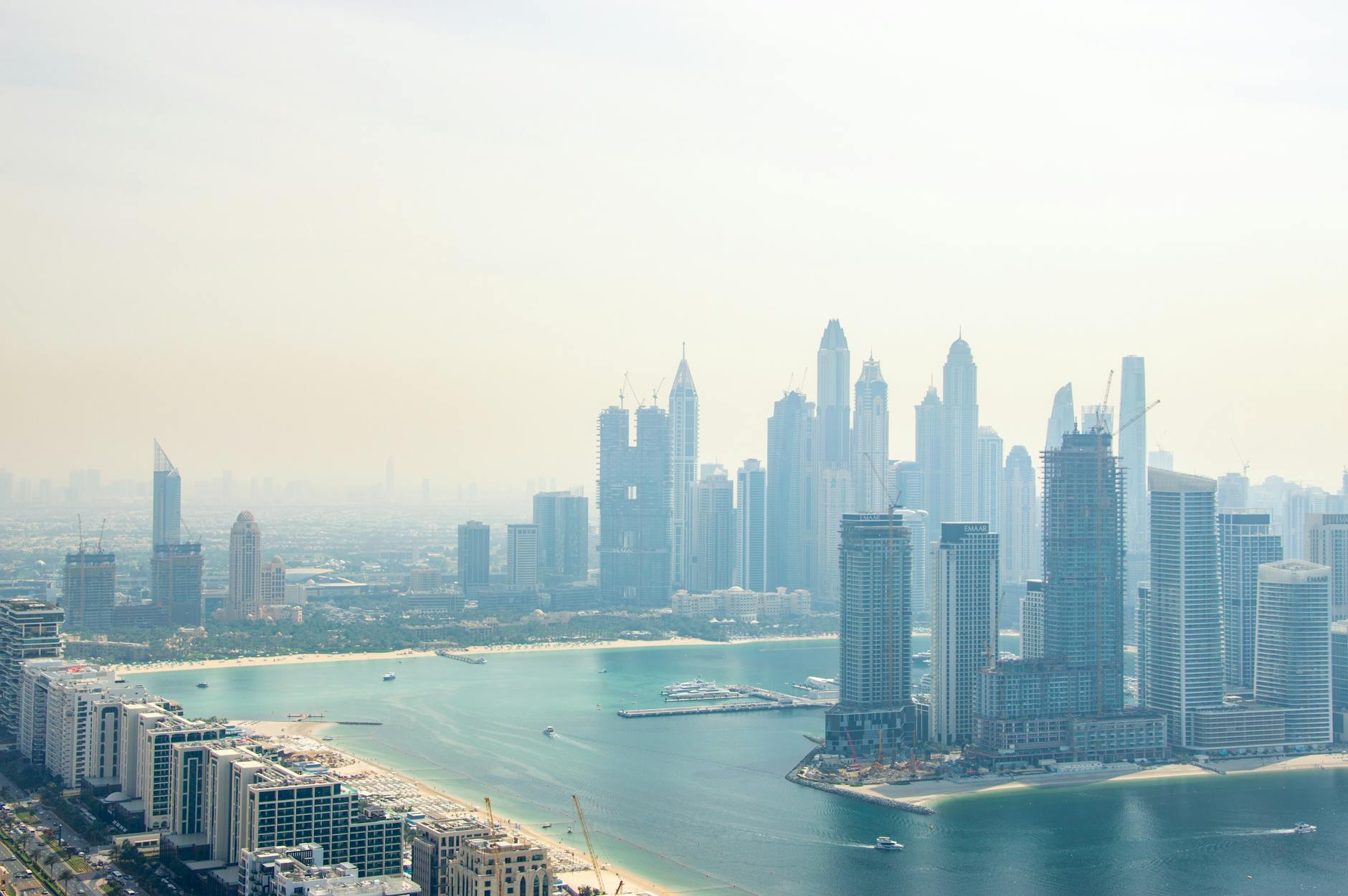
Every major American and international news network has rushed reporters to the Middle East following the joint U.S.-Israeli strikes on Iran launched on February 28, 2026. CNN, Fox News, NBC News, NPR, The New York Times, and Al Jazeera have all deployed significant journalistic resources across the region, stationing correspondents in Tel Aviv, Riyadh, Abu Dhabi, Dubai, Istanbul, Cyprus, and northern Iraq, among other locations. The scale of the media mobilization reflects the gravity of what is being called Operation Epic Fury and its immediate aftermath, including Iranian retaliatory strikes on Israel and U.S. military bases across multiple Gulf states.
Yet for all the firepower of these newsroom deployments, a critical gap remains. As of March 1, 2026, no Western journalist has been confirmed inside Iran itself. The country remains largely closed to Western media, with limited internet access making it what one report called “something of an information black box.” This means the most consequential military escalation in the Middle East in decades is being covered primarily from the outside, raising serious questions about the quality and completeness of the information reaching the American public. This article breaks down the network-by-network deployments, the challenges reporters face, and what the coverage gaps mean for public understanding of the conflict.
Table of Contents
- Which News Networks Have Deployed Reporters to the Middle East and Where Are They?
- Why No Western Journalists Are Inside Iran — and Why That Matters
- Iran’s Retaliation and the Expanding Geographic Scope of Coverage
- How News Organizations Are Adapting Their Coverage Strategies
- The Information Black Box and the Risk of Misinformation
- U.S. Government Media Funding and Its Role in Conflict Coverage
- What Comes Next for Middle East Media Coverage
- Conclusion
Which News Networks Have Deployed Reporters to the Middle East and Where Are They?
CNN has established the most extensive regional footprint of any single network. Erin Burnett, Nick Paton Walsh, and Jeremy Diamond are all reporting from Tel Aviv, the de facto hub for covering Israel’s role in the strikes. Nic Robertson is stationed in Riyadh, Saudi Arabia. Becky Anderson is broadcasting from Abu Dhabi, and Paula Hancocks is in Dubai. Clarissa Ward, one of CNN’s most experienced conflict correspondents, is reporting from Erbil in northern Iraq. That is at least seven named correspondents spread across six cities in the region, not counting producers, camera crews, and security teams supporting each one.
Fox news has taken a different approach, deploying a smaller but strategically positioned team. Trey Yingst is in Tel Aviv, where much of the breaking news about Israeli military operations originates. Nate Foy is in Cyprus, which has historically served as a staging ground and evacuation point during Middle East conflicts. Lucas Tomlinson is in Istanbul, providing a vantage point closer to Iran’s northern border and a major diplomatic crossroads. The New York Times has arguably mounted the largest overall operation in terms of sheer personnel. A spokesperson for the paper said the organization mobilized “hundreds of journalists from across The Times’ global newsroom — in New York, Washington, London, Seoul and a large and growing reporting team on the ground in the region.” NBC News has reporters Alexander Smith, Freddie Clayton, and Courtney Kube providing coverage from the region. NPR has been filing reports from multiple locations, including coverage of three American troops killed in Iranian retaliatory strikes and President Trump’s warning that more casualties should be expected.
Why No Western Journalists Are Inside Iran — and Why That Matters
The most significant limitation of the current media deployment is the total absence of independent Western reporting from inside Iran. Iran has been largely closed to American and European journalists for years, and the onset of military strikes has only tightened that closure. Limited internet access within the country further restricts the flow of information, leaving reporters and editors dependent on iranian state media, government statements, unverified social media footage, and whatever signals intelligence agencies choose to share publicly. This matters because the stated objective of Operation Epic Fury was the elimination of senior Iranian leadership, including Supreme Leader Ayatollah Ali Khamenei and up to 40 top officials. Verification of those claims requires on-the-ground reporting that simply is not happening. When the U.S.
government says a strike achieved its objectives, and no independent journalist can confirm or deny that claim, the public is left to decide how much trust to place in official narratives. However, if Iran were to open its borders to international press, that would likely come with its own restrictions and state-managed access, meaning fully independent reporting may be impossible under any scenario during active hostilities. The information vacuum has created a dynamic where Al Jazeera has emerged as a particularly important source. The Qatar-based network has provided extensive live-blog coverage, including exclusive video footage of missile strikes over Tel Aviv and fires at a U.S. naval facility in Bahrain during Iran’s retaliatory attacks. While Al Jazeera brings its own editorial perspective, its regional presence and access give it footage and sourcing that American networks simply cannot match from their positions outside Iran.
Iran’s Retaliation and the Expanding Geographic Scope of Coverage
The media deployment is not concentrated solely around Israel and Iran because the conflict itself is not limited to those two countries. Iran retaliated against the U.S.-Israeli strikes with missile and drone attacks on Israel and on American military installations across the Gulf region, including bases in Bahrain, Qatar, Kuwait, Jordan, the UAE, and Saudi Arabia. This spread of hostilities across at least eight countries has forced news organizations to stretch their resources across an enormous geographic area. The attack on the U.S. naval facility in Bahrain and the deaths of three American service members reported by NPR illustrate why this geographic dispersal matters. A reporter stationed in Tel Aviv cannot cover events in Bahrain.
A correspondent in Riyadh cannot simultaneously report on strikes in Kuwait. The wider the conflict spreads, the thinner the coverage gets, and the more likely it becomes that significant events in smaller or more remote locations go underreported. CNN’s decision to station correspondents in six different cities appears designed to mitigate this risk, but even that level of deployment cannot cover every potential flashpoint across the Gulf. President Trump’s public warning that more American casualties should be expected adds another dimension. With U.S. troops stationed across multiple countries now under threat, American newsrooms face pressure to cover not just the geopolitical chess match but also the human cost to American military families, a story that unfolds in communities across the United States as much as it does in the Middle East.

How News Organizations Are Adapting Their Coverage Strategies
The contrast between CNN’s approach and Fox News’s deployment illustrates different editorial strategies for covering the same crisis. CNN has opted for maximum geographic spread, placing named anchors and correspondents in as many regional capitals as possible. This allows the network to cut between live locations on air, creating a sense of comprehensive, panoramic coverage. The tradeoff is that each individual correspondent is working with a smaller team in their location, potentially limiting the depth of reporting from any single city. Fox News, by contrast, has concentrated on three locations that serve distinct strategic functions. Tel Aviv is the nerve center for Israeli operations.
Cyprus provides a safe fallback position and a hub for any potential evacuation coverage. Istanbul offers proximity to Turkey’s role as a regional power broker and a gateway to information from Iran’s northern approaches. This leaner deployment may sacrifice breadth but could allow deeper reporting from each location. The New York Times’s mobilization of hundreds of journalists reflects a different calculation entirely. As a print and digital outlet, the Times is less constrained by the demands of live television and can deploy reporters to gather information for stories that may take days or weeks to publish. This is the kind of resource commitment that produces the detailed, sourced investigations that emerge after the initial fog of conflict begins to clear, but it does little to fill the real-time information gaps that television and radio audiences experience during the first hours and days of a crisis.
📨 Get Free Accountability Coverage Alerts
Free · No spam · Unsubscribe anytime
The Information Black Box and the Risk of Misinformation
When journalists cannot access a conflict zone directly, the information ecosystem becomes dangerously vulnerable to manipulation. Both the U.S. and Iranian governments have strong incentives to shape the narrative. Social media videos, which news organizations increasingly rely on to fill reporting gaps, are notoriously difficult to verify in real time. A clip circulating on social media may show genuine destruction, but confirming when it was filmed, where, and by whom requires the kind of on-the-ground verification that no Western outlet can currently perform inside Iran. This is not a theoretical concern.
In previous conflicts, unverified footage has been misattributed, recycled from earlier wars, or deliberately staged. The combination of high public interest, minimal journalistic access, and the speed of social media sharing creates ideal conditions for misinformation to spread and calcify into accepted fact before anyone can correct it. Consumers of news about this conflict should be particularly cautious about dramatic claims that cite only unnamed sources, unverified video, or single-source government statements. The reliance on Iranian state media for information about conditions inside Iran presents its own distortions. State-controlled outlets will report what serves the government’s narrative, whether that means exaggerating civilian casualties to build international sympathy or minimizing military losses to project strength. Without independent reporters on the ground to provide a counterpoint, these state narratives enter the global information stream with less scrutiny than they would normally receive.

U.S. Government Media Funding and Its Role in Conflict Coverage
One often-overlooked aspect of wartime media coverage is the role of U.S. government-funded broadcasting. The Middle East Broadcasting Networks (MBN) and Voice of America received continued funding in the 2026 appropriations bill signed by President Trump on February 3, 2026, just weeks before the strikes began. These outlets broadcast in Arabic, Farsi, and other regional languages, and their continued funding signals sustained bipartisan support for American-backed international journalism.
The timing raises questions worth examining. Government-funded media operating in a region where the same government has just launched military strikes occupies an inherently complicated position. MBN and VOA are editorially independent by statute, but their credibility with regional audiences depends on maintaining that independence visibly and consistently, especially during a conflict initiated by their funder. Whether these outlets can serve as reliable information sources for populations inside the conflict zone while their parent government is an active combatant is a tension that has never been fully resolved.
What Comes Next for Middle East Media Coverage
The current deployment represents the opening phase of what could be a prolonged period of intensive coverage. If the conflict expands further or if diplomatic negotiations begin, news organizations will face decisions about sustaining expensive overseas deployments for weeks or months. The financial pressures on American newsrooms, many of which have cut foreign bureau staff over the past decade, make extended large-scale deployments difficult to maintain.
The longer-term question is whether any Western news organization will gain access to Iran. If diplomatic channels open or if Iran decides that allowing foreign press serves its strategic interests, the first network to get a correspondent into Tehran will have an enormous competitive advantage. Until then, the public should understand that the most comprehensive-looking coverage still has a significant blind spot at the center of the story, and that the fog of this particular war is thicker than most.
Conclusion
Every major news network has committed substantial resources to covering the aftermath of Operation Epic Fury, with CNN leading in geographic spread, The New York Times in personnel numbers, and Al Jazeera in regional access and exclusive footage. Fox News, NBC News, and NPR have each carved out their own coverage niches across the region. The deployments span at least six countries and involve hundreds of journalists, reflecting the consensus that this is one of the most significant military escalations in the Middle East in generations. But the story that matters most remains the hardest to tell.
No Western reporter is inside Iran, the country at the center of this conflict, and the information coming out is filtered through government statements, state media, and unverified social media. Three American troops are dead, Iranian retaliation has struck targets across multiple Gulf states, and the full scope of what happened remains unclear. Consumers of this coverage should pay close attention not just to what is being reported, but to where each report originates and what sources it relies on. In a conflict where the most important location is an information black box, skepticism is not cynicism. It is a necessity.
You Might Also Like
- Cable News Ratings Surge as Every Network Goes Wall-to-Wall on Iran
- Veterans Groups Across the Country Issue Statements on the New Middle East War
- Turkey Closes Airspace as Regional Tensions Spike Across the Middle East