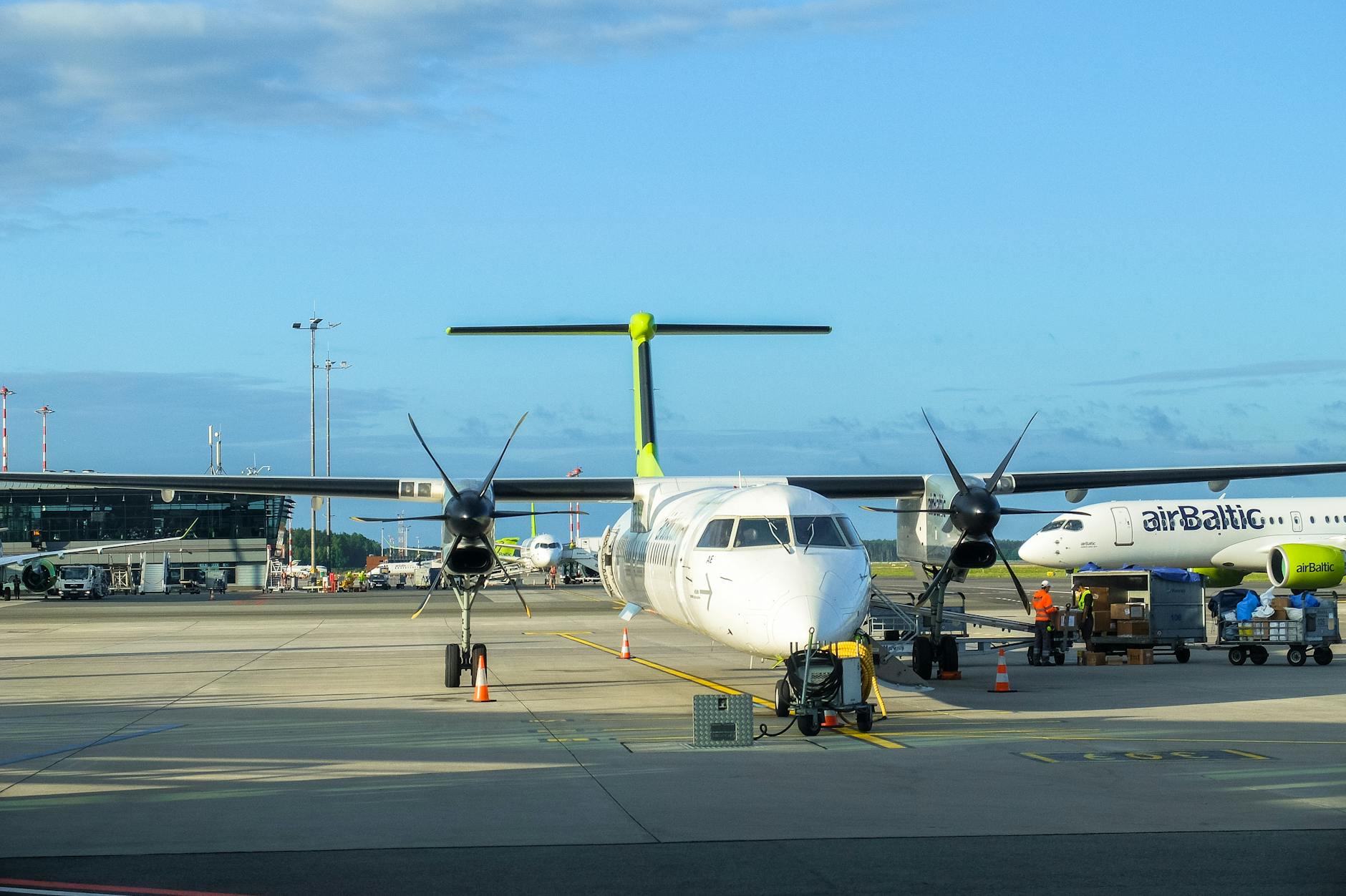
Turkey did not fully close its own airspace, but the country’s aviation sector was thrown into chaos on February 28, 2026, after the United States and Israel launched joint military strikes against Iran. Turkish Airlines suspended flights to 10 Middle Eastern countries, other carriers like Ajet and Pegasus followed suit, and 266 flights were disrupted from Turkish airports in a single day. The ripple effects turned Turkey into a bottleneck for rerouted international traffic as at least eight countries in the region shut their airspace entirely.
The disruption stemmed from Operation Epic Fury, the U.S. Department of Defense’s codename for the strikes, which Israel simultaneously dubbed “Roaring Lion.” Nearly 900 strikes hit Iranian targets in the first 12 hours, Iran’s Supreme Leader Ali Khamenei was killed, and three American service members lost their lives. For civilian aviation, the consequences were immediate: roughly 24 percent of all flights to the Middle East were canceled on February 28, more than 1,800 flights were scrapped on March 1, and an estimated 19,000 flights were delayed across the region according to Euronews. This article breaks down what actually happened with Turkey’s airspace, which countries locked down their skies, how airlines responded, what travelers should know about their rights, and what the broader implications look like for Middle Eastern aviation and regional stability.
Table of Contents
- What Actually Happened to Turkey’s Airspace When Middle East Tensions Spiked?
- Which Countries Closed Their Airspace and How Did It Compare to Previous Shutdowns?
- The Military Operation That Triggered the Aviation Crisis
- What Stranded Travelers Should Know About Rebooking and Compensation
- The Risk to Civilian Aviation in Active Conflict Zones
- Turkey’s Strategic Position as an Aviation Crossroads
- What Comes Next for Middle Eastern Airspace and Regional Stability
- Conclusion
- Frequently Asked Questions
What Actually Happened to Turkey’s Airspace When Middle East Tensions Spiked?
Turkish authorities updated their airspace status and restrictions following the onset of the US-Israeli strikes, but the country never imposed a blanket closure on flights entering or leaving Turkish skies. The distinction matters because initial social media reports and some headlines suggested Turkey had sealed off its airspace entirely. In reality, Turkey’s role was more complicated — it became one of the few viable corridors for international flights trying to navigate around the massive closures across the Middle East. That said, the practical impact on travelers flying through Turkey was severe. Fifteen flights were diverted on February 28 alone, with nine aircraft redirected to Istanbul Airport. Turkish Airlines canceled flights to Lebanon, Syria, Iraq, Iran, and Jordan through March 2, 2026, and separately canceled service to Qatar, Kuwait, Bahrain, the UAE, and oman for February 28.
Ajet and Pegasus Airlines implemented similar cancellations. If you had a connecting flight through Istanbul to anywhere in the Gulf or Levant, you were almost certainly stranded. The congestion problem compounded as rerouted international traffic funneled through a handful of remaining corridors connecting Saudi Arabia, Egypt, Turkey, and Southern Cyprus, or via northern Azerbaijan toward Turkey and Europe. Istanbul Airport, already one of the world’s busiest hubs, absorbed a disproportionate share of the overflow. The U.S. Embassy in Turkey issued a security alert on February 28 advising American citizens to exercise caution due to regional events — a diplomatic understatement given the scale of the military operation underway next door.

Which Countries Closed Their Airspace and How Did It Compare to Previous Shutdowns?
At least eight countries closed their airspace on February 28, 2026: Iran, Israel, Iraq, Jordan, Qatar, Bahrain, Kuwait, and the UAE. Syria closed part of its southern airspace along the Israeli border for a 12-hour window. The UAE temporarily banned all aircraft and passengers from its airspace. Qatar suspended air traffic entirely. Kuwait canceled all flights to Iran. This was not a partial restriction or a NOTAM advisory — these were full shutdowns across some of the busiest aviation corridors on earth. The scale dwarfed previous Middle Eastern airspace disruptions. When Iran launched drone and missile The Military Operation That Triggered the Aviation Crisis
The airspace closures were a direct consequence of Operation Epic Fury, launched by the United States, and its Israeli counterpart, Operation Roaring Lion. strikes began at approximately 9:45 a.m. Iran Standard Time on February 28, 2026 — about 1:15 a.m. Eastern Standard Time. A U.S. official confirmed that nearly 900 strikes on Iranian targets were conducted in the first 12 hours. At 2:30 a.m. EST, President Trump released an eight-minute video statement that effectively framed the operation as regime change. The human cost was staggering and immediate. Iran’s Supreme Leader Ali Khamenei was killed in the strikes. On the American side, CENTCOM confirmed on March 1 at 9:30 a.m. ET that three U.S. service members had been killed and five seriously injured during the operation. Iran retaliated with projectile launches from Lebanon toward Israel in the early hours of March 2, raising the prospect of sustained conflict and further airspace disruptions. For civilian populations across the region, the military operation translated into grounded flights, stranded passengers, and a wall of uncertainty about when normal air travel would resume. Airlines could not simply resume service once bombs stopped falling — they needed assurances from aviation authorities in each country that airspace was safe, that air traffic control was functioning, and that anti-aircraft systems were no longer a threat to civilian planes. That process takes days, not hours. If your flight was canceled due to the airspace closures, your options depend heavily on which airline you booked with, where you purchased your ticket, and whether your destination country’s airspace has reopened. Turkish Airlines offered rebooking for affected passengers on flights canceled through March 2, but the airline’s call centers and digital systems were overwhelmed by the volume of disruption — 266 flights from Turkish airports alone were affected on February 28. Under EU Regulation 261/2004, passengers departing from an EU airport or arriving on an EU-based carrier are entitled to rebooking or a full refund when flights are canceled. However, the regulation includes an “extraordinary circumstances” exemption that airlines routinely invoke during military conflicts and airspace closures, which means cash compensation for delays is unlikely. Turkish Airlines, as a non-EU carrier, is not bound by EU 261 for flights departing from Turkey, though it may still be subject to Turkish civil aviation rules requiring rebooking or refund options. The tradeoff for travelers is between waiting for their original carrier to rebook them — potentially days out given the scale of cancellations — or purchasing a new ticket on an alternative route at crisis-inflated prices. Travelers with comprehensive travel insurance that covers “war and terrorism” may be able to recover costs, but many standard policies exclude exactly this scenario. Check your policy language carefully before assuming coverage. The February 2026 airspace closures should remind everyone that civilian aviation remains dangerously vulnerable when military operations erupt without warning. The 2014 downing of Malaysia Airlines Flight 17 over eastern Ukraine, which killed all 298 people aboard, demonstrated what happens when airspace is not closed quickly enough. The 2020 shootdown of Ukraine International Airlines Flight 752 by Iranian air defenses — killing 176 people just hours after Iran launched missiles at U.S. bases in Iraq — showed the same fatal gap. In this case, the closures happened relatively fast, but the risk window was real. Strikes began at 9:45 a.m. local time in Iran, a peak hour for regional air traffic. The 15 flights diverted from Turkish airspace and the nine aircraft redirected to Istanbul suggest that planes were already airborne in or near threatened corridors when the shooting started. Any delay in the closure decision could have put civilian aircraft in the path of missiles or anti-aircraft fire. A critical limitation of the current system is that airspace closure decisions rest with individual national authorities, and there is no automatic international trigger that shuts down civilian flights when a military operation of this scale begins. Airlines and air traffic controllers rely on NOTAMs — Notices to Air Missions — which can lag behind rapidly evolving military situations. Until that system is reformed, passengers and crew remain exposed to a gap between the start of hostilities and the closure of airspace. Turkey’s geographic position makes it uniquely exposed to Middle Eastern instability. Istanbul Airport sits at the junction of European, Asian, and Middle Eastern air routes, handling over 90 million passengers annually. When eight countries simultaneously close their airspace, Turkey becomes either the last viable hub or the first bottleneck — depending on your perspective. 📨 Get Free Accountability Coverage Alerts Free · No spam · Unsubscribe anytime The February 28 disruptions illustrated both roles: Turkey absorbed diverted flights while simultaneously canceling its own service to 10 countries. This dual role creates a recurring economic vulnerability for Turkish carriers. Turkish Airlines built its business model around connecting passengers between Europe and destinations across the Middle East, Africa, and Asia. Every regional crisis that closes Gulf or Levantine airspace directly threatens that model, grounding revenue flights and stranding connecting passengers who chose Istanbul specifically because of its hub connectivity. The immediate question is how long airspace restrictions will persist. Iran’s retaliatory strikes from Lebanon toward Israel on March 2 suggest the conflict is not a single-day event. If hostilities continue or escalate, airspace closures could extend for weeks, with cascading effects on global supply chains, tourism, and business travel. Airlines will need to continuously reassess route viability, fuel costs for diversions, and crew scheduling disruptions. The longer-term question is whether the February 2026 crisis accelerates changes to international aviation safety protocols. The speed and scale of the US-Israeli operation — nearly 900 strikes in 12 hours — outpaced the ability of some national aviation authorities to respond in real time. Industry groups and regulators will face pressure to establish faster, more coordinated closure mechanisms. For now, the lesson for travelers is blunt: if you are flying through or near an active conflict zone, have a backup plan, carry flexible tickets, and do not assume that airspace open today will be open tomorrow. Turkey’s aviation disruptions on February 28, 2026, were a direct consequence of the largest joint US-Israeli military operation in the region’s history. While Turkey did not fully close its own airspace, the practical effects — 266 disrupted flights, cancellations to 10 countries, and severe congestion from rerouted traffic — made the distinction largely academic for stranded passengers. At least eight countries shut their skies entirely, roughly a quarter of all Middle Eastern flights were canceled, and 19,000 flights were delayed across the region. For consumers, the takeaways are concrete: check your travel insurance for war exclusions before booking flights through the Middle East, understand your rebooking rights under the applicable jurisdiction’s regulations, and monitor airspace status through official aviation authority channels rather than social media. The situation remains fluid, and with Iran’s retaliatory strikes already underway, further disruptions are likely. The February 2026 crisis will be studied for years as a case study in how modern warfare and civilian aviation collide — and how the systems meant to protect passengers still lag behind the speed of conflict. No. Turkey updated its airspace status and restrictions but did not impose a full closure. Turkish Airlines and other carriers voluntarily suspended flights to 10 Middle Eastern countries due to airspace closures in those destination countries. Approximately 24 percent of all flights to the Middle East were canceled on February 28, 2026. Over 1,800 flights were canceled on March 1, and Euronews reported 19,000 flights delayed region-wide. At least eight countries: Iran, Israel, Iraq, Jordan, Qatar, Bahrain, Kuwait, and the UAE. Syria partially closed its southern airspace along the Israeli border for 12 hours. Airlines are required to offer rebooking or refunds for canceled flights, but cash compensation for delays is unlikely because military conflicts typically qualify as “extraordinary circumstances” under most aviation regulations, including EU Regulation 261/2004. Turkish Airlines initially canceled flights through March 2, 2026, for some destinations. However, with Iran’s retaliatory strikes beginning on March 2, further extensions are possible. Check directly with your airline for the most current status. Fifteen flights were diverted from Turkish airspace and nine aircraft were redirected to Istanbul Airport on February 28, indicating that some planes were airborne when the strikes began. No civilian aircraft were reported hit, but the incident highlights the risk window between the start of hostilities and airspace closures.
What Stranded Travelers Should Know About Rebooking and Compensation
The Risk to Civilian Aviation in Active Conflict Zones

Turkey’s Strategic Position as an Aviation Crossroads
What Comes Next for Middle Eastern Airspace and Regional Stability
Conclusion
Frequently Asked Questions
Did Turkey actually close its airspace?
How many flights were affected across the Middle East?
Which countries closed their airspace on February 28, 2026?
Am I entitled to compensation for a canceled flight due to the conflict?
How long will flight cancellations last?
Were any civilian aircraft endangered during the strikes?
You Might Also Like