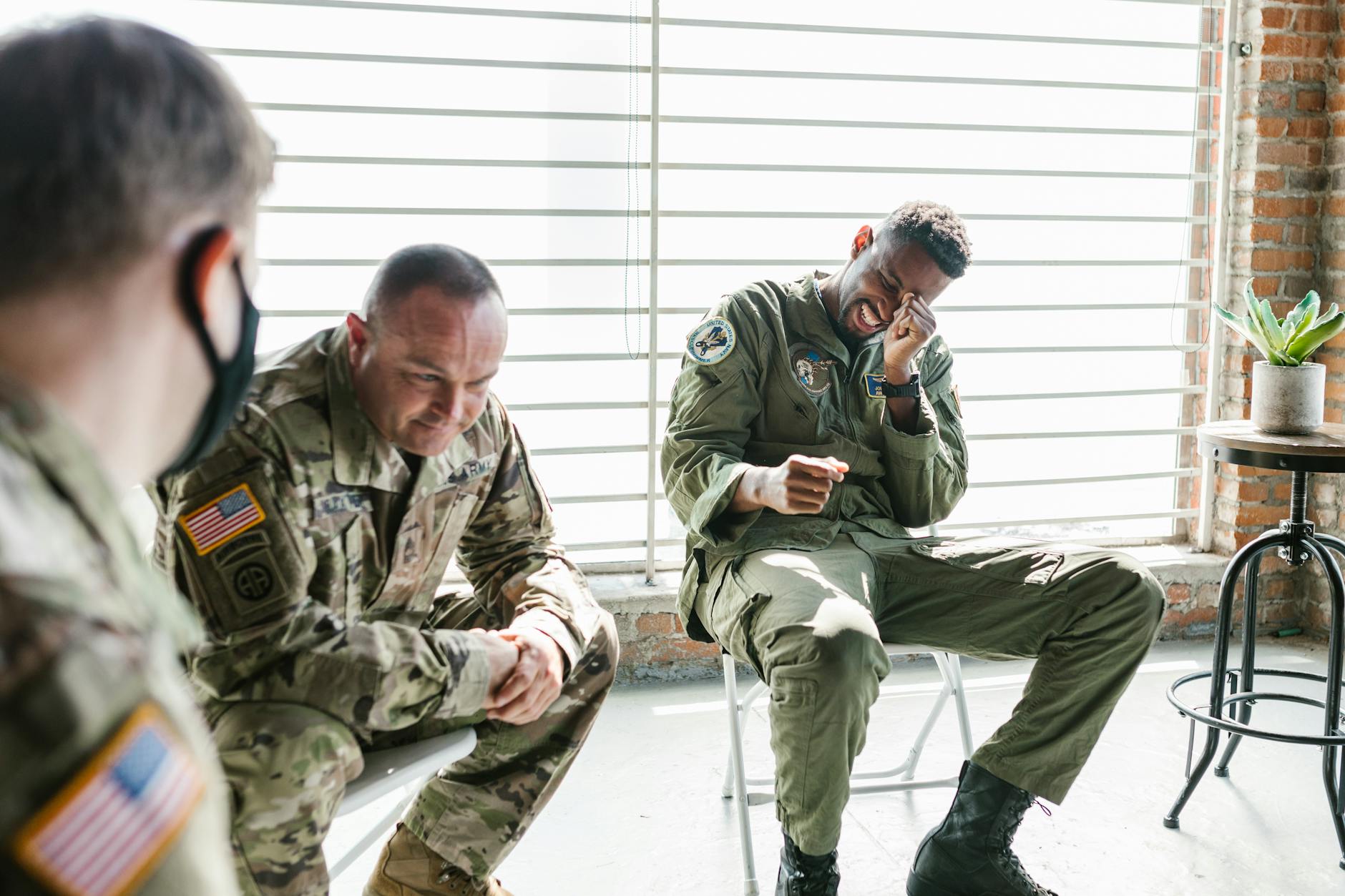
Since U.S. and Israeli strikes on Iran began on February 28, 2026, under Operation “Epic Fury,” veterans across the country have reported that the around-the-clock war coverage is triggering PTSD symptoms — flashbacks, nightmares, hypervigilance, and in some cases, suicidal ideation. The VA’s own research confirms that news reports, combat sounds, and war imagery are documented triggers for post-traumatic stress, and with 24/7 cable news and social media making this conflict nearly impossible to escape, mental health professionals and veterans’ organizations are sounding the alarm. On average, 17 veterans die by suicide every day in the United States, and advocacy groups warn that number could climb as war coverage intensifies.
This is not hypothetical. Veterans who served in Iraq and Afghanistan — an estimated 15% of whom currently have PTSD, with 29% experiencing it at some point in their lives — are reporting that the Iran coverage feels like a rerun of the worst periods of their service. Common Defense, a veterans’ advocacy organization, issued a statement condemning the strikes, with Executive Director Jose Vasquez saying plainly: “Veterans know what these reckless actions mean: another Forever War. We remember Iraq. We remember Afghanistan.” This article examines the scope of the PTSD crisis among veterans, how nonstop war coverage acts as a trigger, the gaps in VA mental health treatment, and what resources are available right now for veterans in crisis.
Table of Contents
- Why Are Veterans With PTSD Being Triggered by Nonstop Iran War Coverage?
- The Scope of PTSD Among U.S. Veterans — And Why the Numbers Are Likely Worse Than Reported
- Veterans’ Organizations Are Pushing Back — And Drawing Parallels to Iraq and Afghanistan
- What Veterans Can Do Right Now to Protect Their Mental Health
- The VA’s Mental Health System Is Strained — And Some Veterans Say It Is Failing Them
- The Racial Disparities in Veteran PTSD Are Getting Worse, Not Better
- What Happens Next — And Why the Veteran Community Is Bracing for the Worst
- Conclusion
- Frequently Asked Questions
Why Are Veterans With PTSD Being Triggered by Nonstop Iran War Coverage?
The mechanism is well-documented. The VA’s National Center for PTSD states that returning service members may re-experience trauma through nightmares and flashbacks, and that specific triggers — including news reports, sounds, and visuals — can cause veterans to relive traumatic experiences. When a veteran who survived an IED blast in Fallujah turns on the television and sees aerial footage of bombing runs over Tehran, the brain does not always distinguish between past and present danger. The sympathetic nervous system activates. The body responds as if the threat is immediate. This is not weakness. It is the neurological signature of trauma. What makes the current moment particularly dangerous is the saturation. In previous conflicts, veterans could limit their exposure by turning off the evening news.
In 2026, war coverage arrives through push notifications, social media feeds, group chats, and autoplay videos. A veteran scrolling through their phone at 2 a.m. during an insomnia episode — itself a common PTSD symptom — can stumble into graphic combat footage without warning. Deployment triples the risk of developing PTSD compared to non-deployed veterans from the same era, and for the roughly 3.5 million Americans who served in Iraq and Afghanistan, the Iran conflict does not feel like a foreign policy abstraction. It feels personal. The comparison to the early days of the Iraq War is instructive. Veterans who served in the Gulf War — 14% of whom currently have PTSD — reported similar surges in symptoms when the 2003 invasion began. Vietnam veterans, 5% of whom still carry a current PTSD diagnosis decades later, have described the same phenomenon. Each new conflict reopens old wounds for the generation that fought the last one.
The Scope of PTSD Among U.S. Veterans — And Why the Numbers Are Likely Worse Than Reported
According to the VA’s National Center for PTSD, 7% of all U.S. veterans will experience PTSD at some point in their lives, compared to 6% of the general adult population. But that topline number obscures the real picture. Among veterans who actually use VA healthcare — meaning those who have sought help — the rate jumps to 23%. The gap between those two figures represents a massive population of veterans who either do not recognize their symptoms, cannot access care, or have given up on the system. The disparities are stark across service eras and demographics.
iraq and Afghanistan veterans carry the heaviest burden at 15% current PTSD prevalence and 29% lifetime prevalence. Among Black veterans who deployed, 22% have PTSD compared to 14.1% of White veterans, a gap that reflects both the disproportionate combat exposure and the systemic barriers to mental health care that Black service members face. A January 2026 report in the Birmingham Times highlighted how Black veterans are speaking out about these disparities, but structural change remains slow. However, even these statistics likely undercount the problem. PTSD screening in the military relies heavily on self-reporting, and the stigma around mental health — while reduced from a decade ago — has not disappeared. Veterans who fear that a PTSD diagnosis will affect their employment, security clearance, or custody arrangements may never appear in the data at all. A March 2026 VA Boston study found that depression and health challenges are central factors linked to poor mental health and daily functioning in trauma-exposed veterans, suggesting that PTSD rarely exists in isolation and that co-occurring conditions make both diagnosis and treatment more complicated.
Veterans’ Organizations Are Pushing Back — And Drawing Parallels to Iraq and Afghanistan
The response from veterans’ advocacy groups has been swift and blunt. Common Defense’s Jose Vasquez framed the iran strikes in explicitly historical terms: “There is no imminent threat, no clear authorization from Congress, no plan for what comes next. We remember Iraq. We remember Afghanistan. Thousands of American service members killed, trillions spent, and entire regions destabilized.” For veterans who lived through those conflicts, the parallels are not rhetorical. They are visceral.
Veterans for Peace went further in a February 24, 2026 statement, arguing that a U.S. war on Iran would be illegal and raising the question of whether military personnel should refuse to fight. That is an extraordinary position for a veterans’ organization to take publicly, and it reflects the depth of anger and fear within the veteran community. The group’s statement came four days before the strikes began, suggesting that the veteran community saw this coming and tried to intervene before it was too late. Protests have erupted across the country, including in Portland, with veterans and civilians marching together against the military action. On Capitol Hill, the strikes have ignited a War Powers fight in Congress, with lawmakers questioning whether the president had legal authority to initiate the operation. For veterans watching this unfold, the political battle is secondary to the personal one — but the lack of congressional authorization adds a layer of moral injury for those who feel they were sent to fight in wars that were never properly debated or declared.

What Veterans Can Do Right Now to Protect Their Mental Health
The most immediate and practical step is reducing exposure to war coverage. This does not mean ignoring reality — it means setting boundaries. Mental health professionals recommend checking the news once or twice a day at scheduled times rather than leaving cable news running or compulsively refreshing social media. Turning off push notifications for news apps, muting keywords like “Iran” and “bombing” on social media platforms, and telling friends and family that you need them to stop forwarding war updates are all concrete actions that can reduce the frequency of triggers. For veterans who are already in crisis, the Veterans Crisis Line is available 24/7 by dialing 988 and pressing 1, or by texting 838255.
The Vet Center Call Center at 1-877-927-8387 is staffed around the clock by combat veterans and military family members who understand the context without needing it explained. The VA also offers same-day mental health care at many facilities, and some services are available even without VA healthcare enrollment — a fact that many veterans do not know. The tradeoff that veterans face is real: staying informed about a conflict that may directly affect their community and fellow service members versus protecting their own mental health. There is no universally correct answer. But clinicians consistently advise that a veteran in active PTSD crisis is not helping anyone — least of all themselves — by consuming more war footage. The analogy is straightforward: you put on your own oxygen mask first.
The VA’s Mental Health System Is Strained — And Some Veterans Say It Is Failing Them
Even as demand for mental health services rises in response to the Iran conflict, some veterans report that the VA is moving in the wrong direction. The War Horse reported that veterans have described the VA ending therapy prematurely or capping mental health sessions, creating a situation where the system is reducing access at precisely the moment it is most needed. For a veteran who has spent months building trust with a therapist — trust that is central to effective PTSD treatment — being told that their sessions are being limited can feel like abandonment. This is a systemic issue, not just an individual one. The VA’s mental health workforce has been under strain for years, with recruiting and retention challenges that predate the current conflict.
Rural veterans face additional barriers, with some driving hours to reach the nearest VA facility. Telehealth has expanded access in some cases, but it is not a substitute for in-person care for veterans whose PTSD symptoms include severe dissociation or who lack reliable internet access. The warning for veterans navigating this system is direct: do not wait for the VA to reach out to you. If your current treatment is being reduced or terminated and you are not stable, file a complaint, contact your local veterans’ service organization for advocacy support, and explore Community Care options that allow you to see private-sector providers at VA expense. The bureaucratic burden should not fall on the person in crisis, but in the current environment, self-advocacy is often the difference between getting care and falling through the cracks.
The Racial Disparities in Veteran PTSD Are Getting Worse, Not Better
The 22% PTSD rate among Black veterans who deployed — compared to 14.1% among White veterans — is not simply a reflection of higher combat exposure. It is the result of compounding factors: racial trauma experienced within the military itself, fewer culturally competent mental health providers within the VA system, historical mistrust of government institutions, and the reality that Black veterans return to communities that are already under-resourced.
📨 Get Free Accountability Coverage Alerts
Free · No spam · Unsubscribe anytime
A January 2026 Birmingham Times feature documented Black veterans speaking openly about these dynamics, but awareness has not yet translated into adequate systemic response. For Black veterans and other veterans of color who are experiencing PTSD symptoms triggered by the Iran coverage, the standard advice to “call the VA” may ring hollow. Seeking out veteran-specific peer support groups, community-based mental health providers with cultural competency, and organizations like the National Alliance on Mental Illness (NAMI) that offer veteran-focused programs can supplement or substitute for VA care when the system falls short.
What Happens Next — And Why the Veteran Community Is Bracing for the Worst
President Trump stated that Operation Epic Fury could take “four weeks or less,” but veterans have heard that kind of timeline before. The Iraq War was supposed to be brief. Afghanistan was supposed to be targeted. Both lasted decades.
Three U.S. troops have already been killed in the Iran operation — the first American casualties — and each death will generate a new wave of coverage, a new set of triggers, and a new cohort of grieving military families. The veteran community is not waiting for the conflict to end before acting. Organizations are mobilizing peer support networks, mental health professionals are pushing for expanded crisis services, and veterans themselves are publicly sharing their experiences in an effort to reduce stigma and encourage others to seek help. Whether this conflict lasts four weeks or four years, the mental health consequences for veterans — those who serve in it and those who carry the scars of previous wars — will persist long after the news cycle moves on.
Conclusion
The nonstop coverage of U.S. and Israeli strikes on Iran is a documented mental health threat to the millions of American veterans living with PTSD. With 15% of Iraq and Afghanistan veterans currently affected, deployment tripling the risk of PTSD, and 17 veterans dying by suicide every day, the stakes of this moment extend far beyond foreign policy. War coverage acts as a direct trigger for re-experiencing trauma, and the current media environment makes that coverage nearly inescapable without deliberate effort.
Veterans in crisis should call 988 and press 1 to reach the Veterans Crisis Line, or text 838255, any time of day or night. Those not in immediate crisis but struggling with increased symptoms should contact their VA mental health provider, reach out to a Vet Center at 1-877-927-8387, or connect with peer support through organizations like Common Defense or Veterans for Peace. Reducing news exposure, maintaining routines, and leaning on trusted support networks are not signs of disengagement — they are acts of survival. The country owes its veterans more than gratitude. It owes them the mental health infrastructure to survive what they have already endured and what is being asked of them again.
Frequently Asked Questions
Can war news coverage really trigger PTSD symptoms in veterans?
Yes. The VA’s National Center for PTSD confirms that news reports, sounds, and visuals related to combat are documented triggers that can cause veterans to re-experience trauma through flashbacks, nightmares, and hypervigilance.
How many veterans have PTSD?
About 7% of all U.S. veterans will experience PTSD in their lifetime. Among those using VA healthcare, the rate is 23%. Iraq and Afghanistan veterans have the highest rates at 15% current and 29% lifetime prevalence.
What should a veteran do if they are in crisis right now?
Call 988 and press 1 to reach the Veterans Crisis Line, available 24/7. You can also text 838255 or call the Vet Center Call Center at 1-877-927-8387, which is staffed by combat veterans and military family members.
Do I need to be enrolled in VA healthcare to get mental health help?
No. The VA offers same-day mental health care at many facilities, and some services are available even without VA healthcare enrollment.
Is the VA limiting mental health treatment for veterans?
Some veterans have reported that the VA has been ending therapy prematurely or capping mental health sessions, according to reporting by The War Horse. If your treatment is being reduced and you are not stable, you can file a complaint, seek advocacy from a veterans’ service organization, or explore Community Care options for private-sector providers at VA expense.
Are PTSD rates different for Black veterans?
Yes. Among Black veterans who deployed, 22% have PTSD compared to 14.1% of White veterans. This disparity reflects compounding factors including racial trauma within the military, fewer culturally competent providers, and systemic barriers to care.
You Might Also Like
- Azerbaijan Monitors Its Border With Iran as War Escalates
- Veterans Groups Across the Country Issue Statements on the New Middle East War
- Universities Cancel Classes as Students Organize Iran War Protests Nationwide