
Iranian students studying at American universities cannot reach their families back home because the Iranian government imposed a near-total internet blackout on January 8, 2026, severing phone lines, mobile networks, text messaging, and even satellite internet connections like Starlink. For nearly three weeks, millions of Iranians living abroad had no way to verify whether their parents, siblings, or extended family members were alive or dead. At California State University, Northridge, Iranian students reported being completely unable to contact loved ones or receive any updates during the worst of the crisis. The blackout, triggered by protests over currency collapse and soaring inflation that erupted on December 28, 2025, was the most severe internet shutdown in Iran’s history.
The situation is compounded by the fact that Iranian students in the United States face single-entry visa restrictions under the ongoing U.S. travel ban, meaning they cannot simply fly home to check on their families without risking permanent separation from their studies and lives in America. Many have not seen their parents in several years. What follows is a detailed look at how the blackout unfolded, the psychological toll on students and diaspora communities, the travel ban’s role in deepening the crisis, the tools activists used to fight back, and the Iranian government’s plans for a tiered internet system that threatens to make these shutdowns permanent.
Table of Contents
- Why Can’t Iranian Students Abroad Reach Their Families During the Blackout?
- The Psychological Toll on Iranian Students and Diaspora Communities
- How the U.S. Travel Ban Traps Iranian Students Between Two Countries
- How the Diaspora Fought Back With Technology and Activism
- Iran’s Two-Tiered Internet and the Threat of Permanent Disconnection
- The Damage to Iranian Academia and Research
- What Comes Next for Iranian Students and Families
- Conclusion
- Frequently Asked Questions
Why Can’t Iranian Students Abroad Reach Their Families During the Blackout?
The answer is straightforward and grim. When iranian authorities shut down the internet on January 8, 2026, they did not merely slow down social media or block a handful of apps. They disabled mobile data networks, text messaging services, landline phone connections, and even attempted to block Starlink satellite terminals. This was not a partial throttle. It was a communications kill switch applied to a nation of roughly 90 million people. For iranian students sitting in dorm rooms in Los Angeles, Toronto, or London, every channel they had ever used to hear their mother’s voice or read a text from a sibling went dark simultaneously. The blackout lasted approximately 20 days before limited access began returning around January 23, 2026. But even after that partial restoration, conditions remained far from normal.
As of February 16, internet traffic inside Iran was still running at just 50 percent of ordinary levels. Then, following U.S. and Israeli military strikes on February 28, connectivity collapsed again to a staggering 4 percent of normal capacity. For students abroad, this has meant weeks of agonizing uncertainty punctuated by brief windows where a garbled WhatsApp message might get through, only for the connection to drop again. The comparison to previous Iranian internet shutdowns is important. During the November 2019 protests, Iran imposed a week-long shutdown that drew international condemnation. The 2026 blackout dwarfed it in both scope and duration. Previous shutdowns typically left landlines functional or allowed limited SMS communication. This time, the government targeted every layer of the communications infrastructure, leaving virtually no workaround for ordinary citizens to reach the outside world.

The Psychological Toll on Iranian Students and Diaspora Communities
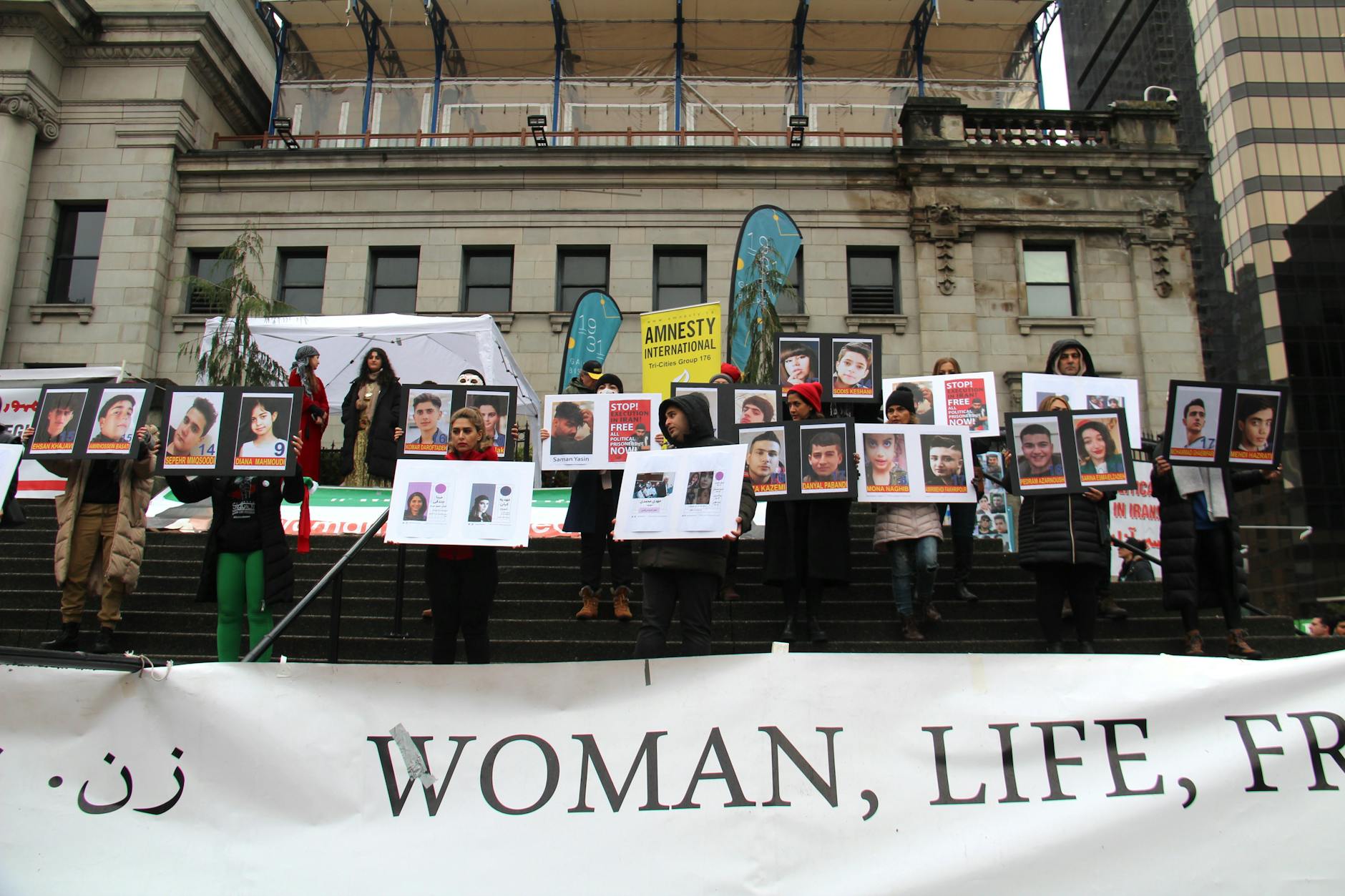
Mental health professionals who work with the Iranian diaspora have identified a specific cluster of psychological conditions emerging from the blackout. A Canadian-Iranian clinical counselor told Iran International that “psychologically, not knowing what is happening — or whether family members are safe — keeps the body and mind in a prolonged state of stress.” This is not abstract therapeutic language. It describes what thousands of students experienced daily: waking up, checking their phones, finding nothing, and spending the rest of the day cycling between dread and desperate hope. Experts interviewed by Al Jazeera identified chronic hypervigilance, ambiguous loss, and vicarious trauma as the key psychological impacts on Iranians abroad. Ambiguous loss is a term that describes grief without closure — the person you love may be alive, may be injured, may be dead, and you simply do not know.
Many diaspora members described spending entire days refreshing news feeds and social media, bracing for phone calls that never came. For students trying to attend classes, complete assignments, and maintain academic standing, this constant state of emergency made normal functioning nearly impossible. However, it is worth noting that the psychological damage is not limited to the period of total blackout. Even after partial internet restoration, the uncertainty continues. Students who managed to briefly reach a family member in late January found themselves back in the dark after the February 28 connectivity collapse. The on-again, off-again nature of communication may actually be more psychologically damaging than a clean break, because it prevents any adaptation or coping mechanism from taking hold. Every restored connection raises hope, and every subsequent cutoff destroys it again.
How the U.S. Travel Ban Traps Iranian Students Between Two Countries
The internet blackout would be painful for any diaspora community, but Iranian students in the United States face a uniquely cruel additional barrier. Iran remains under a full U.S. travel ban with extremely limited exceptions, a policy that has been in place in various forms since 2017. Iranian nationals holding student visas are typically issued single-entry visas, which means that if they leave the United States to visit family, they must apply for a new visa from abroad to return — a process with no guaranteed outcome and potentially years-long delays. A 2025 study published in the Journal of Immigrant and Minority Health by Springer documented the impact of these restrictions on Iranian students, finding that many have been unable to see their parents for several years. Under normal circumstances, this separation is painful but manageable through regular phone calls, video chats, and messaging. The blackout eliminated every one of those coping mechanisms overnight.
Students who might have booked a flight home in a genuine emergency were stopped by the knowledge that doing so could end their education, their career trajectory, and their legal status in the United States permanently. This creates a trap with no good options. Stay in the U.S. and endure weeks of not knowing if your family is alive. Or fly to Iran, potentially find your family safe, and then face the possibility of never being allowed to return to finish your degree. For students deep into PhD programs or professional degrees representing years of work, the calculus is agonizing. The travel ban was designed as a national security measure, but in the context of a communications blackout, it functions as an additional layer of psychological punishment applied to people who have done nothing wrong.

How the Diaspora Fought Back With Technology and Activism
Faced with an unprecedented communications blackout, the Iranian diaspora did not simply wait. Approximately 400,000 Iranians abroad used tools like Psiphon, a censorship circumvention application, to share their bandwidth and help people inside Iran punch through the digital blockade. This was not a centralized effort directed by any single organization. It was a grassroots response driven by desperation and technical knowledge, with individuals configuring VPN proxies and relay servers from their apartments in cities around the world. The effort extended to hardware. According to Associated Press reporting, tens of thousands of Starlink satellite internet terminals were smuggled into Iran through informal networks supported by activists and diaspora members. These terminals, which connect directly to SpaceX’s satellite constellation and bypass ground-based infrastructure, represented the best hope for getting around a government-imposed shutdown.
The logistics of smuggling thousands of satellite dishes into a country under heavy surveillance speak to the scale of the diaspora’s determination. On social media, the diaspora circulated the hashtag #DigitalBlackoutIran on X and Instagram to draw global attention to the crisis. The tradeoff with these efforts is real, however. Circumvention tools require technical sophistication that many older family members inside Iran do not possess. Starlink terminals are expensive, conspicuous, and their use can be detected and punished by Iranian authorities. And social media campaigns, while valuable for awareness, do not actually restore the ability to call your mother. These tools helped at the margins, but they could not replace the infrastructure that the Iranian government had deliberately destroyed.
Iran’s Two-Tiered Internet and the Threat of Permanent Disconnection
The January 2026 blackout may have been the most dramatic manifestation of Iran’s internet control, but the longer-term threat is more insidious. The Iranian government is actively building a two-tiered internet system that would grant unrestricted access to the global web only to a select group of security-vetted elites — approximately 16,000 holders of so-called “white SIM cards.” The remaining 90 million Iranian citizens would be confined to a domestic intranet, a walled-off network with access only to government-approved Iranian websites and services. If this system is fully implemented, it would mean that the kind of total blackout experienced in January could become the permanent default condition for ordinary Iranians, not just during protests, but every day. Foreign Policy and Rest of World have both reported on the architecture of this tiered system, which draws on models pioneered by North Korea and, to a lesser extent, China’s Great Firewall.
For Iranian students abroad, this is not just a current crisis but a warning about the future. Even if the current blackout eventually lifts, the infrastructure being built would allow the government to sever international communications at will, with increasing precision and decreasing political cost. The warning for diaspora families is stark: the channels you use today to stay connected with relatives in Iran may not exist in their current form much longer. Students and families should be aware that the Iranian government’s goal is not temporary disruption but permanent control over the flow of information in and out of the country.
The Damage to Iranian Academia and Research
The blackout’s impact extended well beyond personal communications. Nature reported that researchers and students inside Iran lost access to international journals, collaboration tools, and the ability to communicate with academic colleagues abroad. For Iranian scholars co-authoring papers with international teams, participating in peer review, or relying on cloud-based research tools, the shutdown effectively froze their professional lives.
📨 Get Free Accountability Coverage Alerts
Free · No spam · Unsubscribe anytime
Times Higher Education reported that Iranian students inside the country saw their study plans derailed after universities were shut down during the protests, with some students described as “trapped” — unable to continue their education, unable to leave, and unable to communicate with the outside academic world. Meanwhile, Iran’s own Minister of Communications acknowledged the shutdown was costing the economy $35.7 million per day, with online sales falling by 80 percent. The blackout was not just a human rights crisis. It was an act of economic self-harm by a government willing to cripple its own country to maintain political control.
What Comes Next for Iranian Students and Families
The path forward is uncertain and offers little comfort. Even as internet access slowly returns, the Iranian government has shown it is willing and able to impose total communications blackouts whenever it perceives a threat to its authority. The construction of a tiered internet system suggests future shutdowns will be more targeted and harder to circumvent.
For Iranian students in the United States and other Western countries, the combination of travel bans and communications blackouts creates a form of enforced separation that can last years with no resolution in sight. What is clear is that this is not a temporary inconvenience. The inability of Iranian students abroad to reach their families represents a sustained human rights crisis operating at the intersection of authoritarian digital repression and immigration policy. Advocacy organizations, universities, and lawmakers who care about the welfare of international students should be paying attention — not just to the dramatic moments of total blackout, but to the slow construction of a system designed to make disconnection the permanent state of affairs.
Conclusion
The 2026 Iranian internet blackout exposed a reality that hundreds of thousands of Iranian students and diaspora members have been navigating for years: their connection to family back home exists entirely at the mercy of a government willing to sever it without warning. The January shutdown lasted approximately 20 days in its most severe form, but rolling restrictions, the February 28 connectivity collapse to just 4 percent of normal levels, and the ongoing construction of a tiered internet system mean that the crisis is far from over. Combined with U.S.
travel ban restrictions that prevent students from visiting home, the situation constitutes a form of enforced family separation with no clear end date. For those affected, the practical steps remain limited but worth pursuing: supporting circumvention tools like Psiphon, advocating for Starlink access, using the #DigitalBlackoutIran hashtag to maintain public pressure, and pushing universities and lawmakers to recognize the unique hardships facing Iranian international students. No one should have to choose between their education and knowing whether their parents are alive. That this choice is being forced on tens of thousands of people by the combined weight of two governments’ policies — one that cuts the internet and one that bars the door — deserves far more attention than it has received.
Frequently Asked Questions
Can Iranian students in the U.S. travel home to check on their families?
In most cases, no — not without serious risk. Iranian students typically hold single-entry visas under the U.S. travel ban. Leaving the country means needing to apply for a new visa to return, with no guarantee of approval. Many students have been unable to visit their families for several years as a result.
Is internet access currently restored in Iran?
Only partially. As of February 16, 2026, internet traffic was at roughly 50 percent of normal levels. After U.S. and Israeli strikes on February 28, connectivity dropped again to just 4 percent of ordinary levels. The situation remains unstable and subject to further government-imposed restrictions.
What tools are people using to get around the blackout?
The primary circumvention tools include Psiphon, a censorship-bypassing application used by approximately 400,000 Iranians abroad to share bandwidth, and Starlink satellite terminals, tens of thousands of which have been smuggled into Iran through diaspora networks. However, these tools have significant limitations in reach and accessibility.
What is Iran’s “two-tiered internet” system?
The Iranian government is building a system that gives unrestricted global internet access only to approximately 16,000 security-vetted “white SIM card” holders, while confining the remaining 90 million citizens to a domestic-only intranet. This could make communications blackouts a permanent condition rather than an emergency measure.
How much is the blackout costing Iran’s economy?
Iran’s own Minister of Communications acknowledged the shutdown was costing $35.7 million per day. Online sales inside the country fell by 80 percent during the blackout period.
What psychological effects are Iranian students abroad experiencing?
Mental health professionals have identified chronic hypervigilance, ambiguous loss, and vicarious trauma as the primary psychological impacts. The prolonged uncertainty about family members’ safety keeps the body and mind in a sustained state of stress that interferes with daily functioning and academic performance.
You Might Also Like
- Kurdish Peshmerga Forces on Alert After Erbil Airport Hit by Iranian Missiles
- Iranian Americans Rally in Los Angeles After Khamenei’s Death Confirmed
- Iran’s Diaspora Community Split Between Relief and Fear for Families