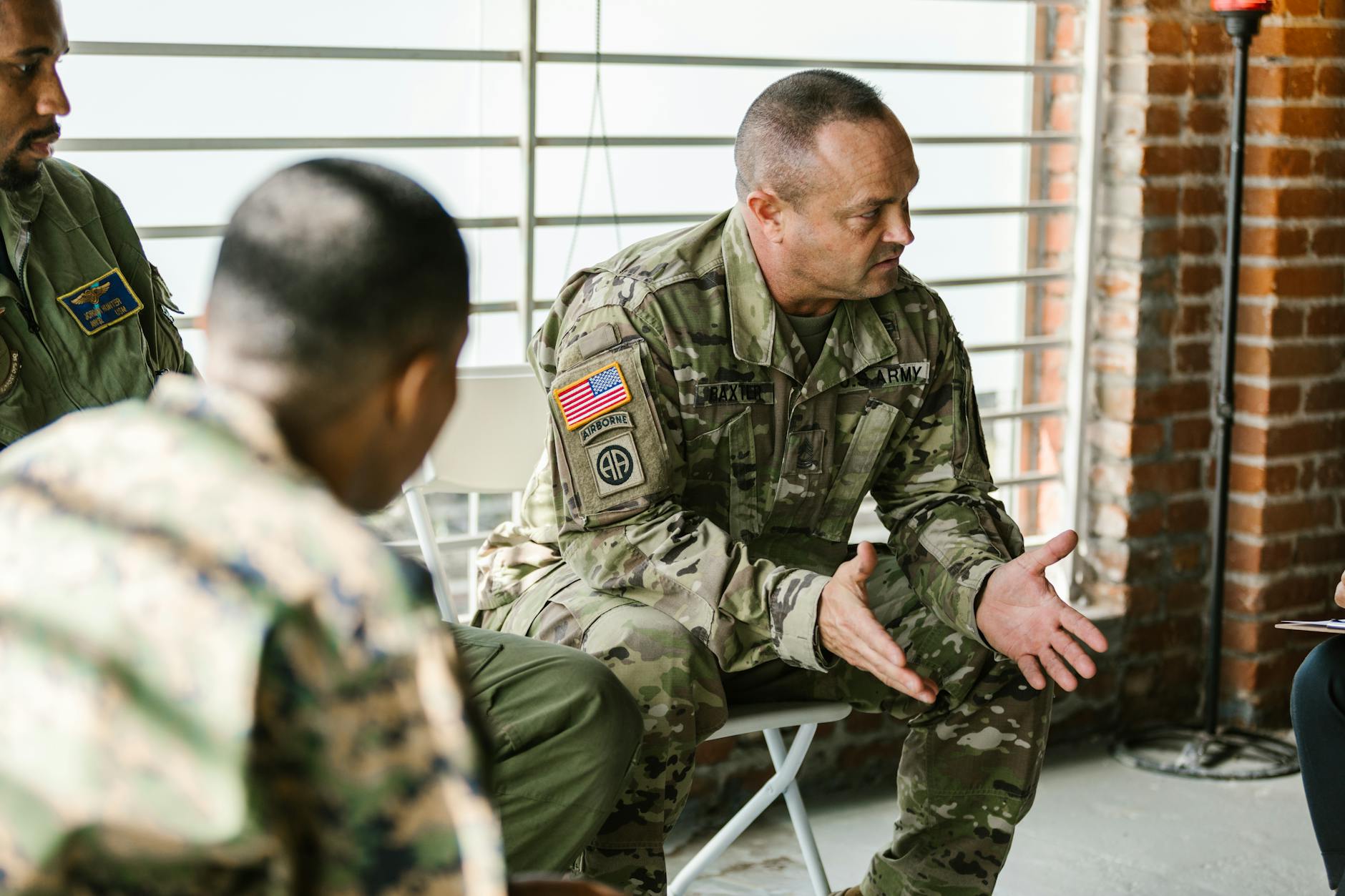
Veterans organizations across the United States have issued a wave of statements in response to Operation Epic Fury, the large-scale U.S.-Israeli military strikes against Iranian targets launched on February 28, 2026 — and the responses reveal a deeply divided veterans community. Service-focused groups like the VFW and Wounded Warrior Project are rallying behind deployed troops and their families, while advocacy organizations like Veterans For Peace and IAVA are raising urgent questions about the legality of the operation and demanding Congressional authorization before the conflict escalates further. Three American troops have already been killed as of March 1, 2026. The split among veterans groups mirrors a broader tension in American civil-military relations that has resurfaced with every major military engagement since the 2003 Iraq invasion — the largest comparable U.S.
buildup in the Middle East until now. What makes this moment distinct is the speed and intensity of the responses. Veterans For Peace condemned the strikes “in the strongest possible terms” within hours, while the VFW moved quickly to affirm its “promise to U.S. service members” and pledge support for families of the deployed. This article breaks down the full range of veterans’ statements, examines the legal questions being raised about war authorization, and looks at the real-world actions groups are taking — from billboard campaigns near military bases to Congressional resolutions aimed at reasserting war powers.
Table of Contents
- What Are Veterans Groups Saying About the New Middle East War?
- The Legal Battle Over War Authorization and Why It Matters Now
- Veterans For Peace Launches Billboard Campaign Near Military Bases
- How Individual Veterans in Congress Are Responding to the Conflict
- The Risk of Outdated War Authorizations in a New Conflict
- What Support Is Available for Families of Deployed Troops
- What Comes Next for Veterans Advocacy and the Middle East Conflict
- Conclusion
- Frequently Asked Questions
What Are Veterans Groups Saying About the New Middle East War?
The veterans community’s response to Operation Epic Fury falls roughly into two camps, and the dividing line is not left versus right — it is institutional mission. Organizations built around direct service to veterans and their families have focused their messaging on readiness, benefits protection, and emotional support. The VFW’s statement specifically pledged to defend benefits and support the families of deployed troops. The Wounded warrior Project issued a similar statement standing with service members in the Middle East and their families, emphasizing its existing support programs and advocacy infrastructure. Neither organization took a position on the merits of the operation itself. On the other side, organizations with explicit advocacy mandates have been far more pointed.
IAVA, the Iraq and Afghanistan Veterans of America, reaffirmed its strong support for repealing outdated Authorizations for Use of Military Force. Its CEO, Dr. Kyleanne Hunter, stated plainly: “We must ensure that the United States is not pulled into another war under an outdated authorization that Congress hasn’t debated in over two decades.” Veterans For Peace went further, condemning the U.S. and Israeli attack on Iran “in the strongest possible terms” and calling on members and allies to resist what they describe as a “dangerous and illegal war.” The contrast is worth sitting with. Two groups — VFW and Veterans For Peace — both claim to speak for the interests of those who have served, and yet their responses to the same military action could not be more different. This is not new, but the stakes of the disagreement are higher than usual when American casualties are already being reported within the first 48 hours of operations.
The Legal Battle Over War Authorization and Why It Matters Now
The most substantive policy debate emerging from the veterans community centers on whether the United States has proper legal authorization for military strikes against iran. IAVA has endorsed bipartisan H.Con.Res.38, introduced by Representatives Thomas Massie and Ro Khanna, and is closely watching Senator Tim Kaine’s iran war powers resolution, S.J.Res.59. The underlying argument is that existing AUMFs — some dating back to 2001 and 2002 — were never intended to authorize a full-scale military confrontation with Iran in 2026. This matters beyond the legal technicalities because the question of authorization directly affects how the operation is funded, how long it can last, and what recourse Congress has to limit or end it. If the administration is relying on existing AUMFs or Article II executive authority, it can conduct operations without a specific vote.
However, if Congress passes a new resolution or successfully invokes the War Powers Act, the dynamic shifts considerably. Veterans groups on the advocacy side are betting that public pressure — particularly from those who have served — can force the authorization debate that Congress has largely avoided for two decades. There is an important limitation to acknowledge here. Even if Congress were to pass legislation restricting the operation, enforcement of war powers provisions has historically been weak. No president has conceded that the War Powers Resolution is binding in the way its authors intended, and courts have been reluctant to adjudicate disputes between the branches on military matters. So while the legal arguments are serious, the practical path from a veterans group’s policy statement to an actual constraint on military operations is long and uncertain.
Veterans For Peace Launches Billboard Campaign Near Military Bases
Among the most visible and controversial actions taken by any veterans organization is Veterans For Peace’s billboard campaign, launched around January 23, 2026 — more than a month before Operation Epic Fury began. The billboards, placed near major military installations, feature an image of Uncle Sam with the text: “Active duty and National Guard: I want you to refuse illegal orders.” Installations targeted include Fort Huachuca in Arizona, Naval Station Great Lakes in Illinois, Naval Station Norfolk in Virginia, Fort Drum in New York, and Fort Benning in Georgia, with more locations planned. The campaign drew national attention and sharp criticism from some quarters well before the strikes on Iran materialized. But with the launch of Operation Epic Fury, the billboards have taken on new urgency and new controversy. Veterans For Peace had already published an article on February 24, 2026, arguing that a U.S.
war on Iran would be “totally illegal” and questioning whether military personnel should refuse to fight. The organization is operating from a clearly stated position that the conflict lacks legal and moral legitimacy. Six members of Congress who are themselves military veterans, including Senator Mark Kelly, have publicly stated that active-duty and National Guard troops have “the right and the duty to refuse illegal orders.” This is a notable development — sitting lawmakers with military credentials lending their voices to a message that, coming from a peace organization alone, might be easier to dismiss. Whether the campaign changes any service member’s behavior is unknowable, but it has undeniably shaped the public conversation about the operation’s legitimacy.
How Individual Veterans in Congress Are Responding to the Conflict
Beyond organizational statements, individual veterans serving in Congress have offered some of the most pointed commentary on Operation Epic Fury. Representative Seth Moulton, a Marine veteran who completed multiple tours in Iraq, called for transparency and accountability from the administration. His questions cut to the core of what many veterans are thinking: “Are we fighting a war of regime change? Are we dismantling a nuclear weapons program? Or are we laying groundwork for a deal?” Moulton’s most striking remark was a warning rooted in his own experience: “I think there are a lot of troops in the Middle East today who must be wondering: Are they lying to us again?” That question — whether the stated objectives of the operation match its actual goals — echoes the disillusionment that defined the post-Iraq generation of veterans. For many who served in conflicts where the mission’s rationale shifted over time, the lack of a clearly articulated and honestly defended objective is not an abstract policy concern.
It is personal. The tradeoff for veteran lawmakers is real. Speaking out against a military operation while troops are in harm’s way carries political risk and can be framed as undermining morale. But staying silent when they believe the operation lacks proper authorization or clear objectives conflicts with the very sense of duty that led them to serve in the first place. Moulton and others appear to have calculated that the greater risk is silence — that failing to ask hard questions early is exactly the mistake that was made in 2003.
The Risk of Outdated War Authorizations in a New Conflict
The 2001 AUMF, passed in the immediate aftermath of September 11, authorized the use of force against those responsible for the attacks. The 2002 AUMF authorized force against the regime of Saddam Hussein in Iraq. Neither was written with Iran in mind, and yet both have been stretched by successive administrations to justify military operations across the Middle East that bear little resemblance to their original scope. IAVA’s Dr. Kyleanne Hunter is direct about the problem: Congress has not debated these authorizations in over two decades, and yet they remain the legal scaffolding for American military action in the region. The warning here is that legal ambiguity does not just create constitutional problems — it creates practical ones for the troops themselves.
Service members operating under unclear or disputed legal authority face uncertainty about rules of engagement, the scope of their mission, and the protections available to them if things go wrong. Veterans groups on both sides of the divide have reason to care about this, even if they disagree about the operation itself. The VFW’s focus on defending benefits, for instance, becomes more complicated when the legal basis for the deployment is contested, because benefit eligibility can hinge on the formal classification of the conflict. There is also a recruitment and retention dimension that rarely gets discussed in real time but matters enormously in the long run. The post-Iraq and post-Afghanistan generations of veterans have been vocal about how unclear missions and shifting justifications eroded their trust in military leadership. If Operation Epic Fury follows a similar pattern, the consequences for the all-volunteer force could extend well beyond this particular conflict.
📨 Get Free Accountability Coverage Alerts
Free · No spam · Unsubscribe anytime

What Support Is Available for Families of Deployed Troops
For military families suddenly thrust into the anxiety of a new deployment, the immediate question is not about war powers — it is about support. Both the VFW and the Wounded Warrior Project have emphasized their existing programs for families of deployed service members. The VFW’s statement specifically pledged to defend benefits and provide family support as Operation Epic Fury began, a signal that the organization is preparing for a potentially extended period of elevated need.
These programs typically include financial assistance for families facing deployment-related hardship, mental health resources, connections to local support networks, and advocacy for benefits claims. For families who have been through this before, the infrastructure is familiar if imperfect. For those experiencing their first deployment during a major combat operation, navigating available resources can be overwhelming. The Wounded Warrior Project’s emphasis on standing with service members and their families reflects an understanding that the needs will grow as the operation continues and casualties mount.
What Comes Next for Veterans Advocacy and the Middle East Conflict
The trajectory of veterans’ advocacy in the coming weeks will depend heavily on how the conflict itself develops. If Operation Epic Fury remains limited in scope and duration, the organizational statements issued in the first 48 hours may represent the high-water mark of the debate. But if the operation expands, if casualties rise beyond the three American troops already killed, or if the mission’s objectives shift, expect the advocacy-oriented groups to escalate their campaigns significantly. IAVA’s focus on Congressional resolutions and Veterans For Peace’s billboard campaign are both designed to scale.
The deeper question is whether this moment produces lasting change in how Congress handles war authorization. Veterans groups have been pushing for AUMF reform for years with limited success. A new conflict that highlights the absurdity of relying on two-decade-old authorizations could finally create the political conditions for reform — or it could be swept aside by the urgency of an active military operation. History suggests the latter is more likely, but the speed and intensity of the veterans’ response this time is notable. These organizations are not waiting to see how the war goes before making their positions clear.
Conclusion
The veterans community’s response to Operation Epic Fury reveals a fundamental divide that has been present since at least the Iraq War but is now playing out in real time around a new and potentially larger conflict. Service organizations like the VFW and Wounded Warrior Project are doing what they do best — rallying support for troops and families — while advocacy groups like IAVA and Veterans For Peace are challenging the legal and strategic foundations of the operation itself. Individual veterans in Congress, including Representative Seth Moulton, are asking the hard questions about mission objectives and honesty that their experience in previous conflicts compels them to raise.
What unites these groups, despite their profound disagreements, is a shared insistence that the people who bear the costs of war deserve to be heard when decisions about war are made. Whether that means protecting benefits, demanding Congressional authorization, or placing billboards near military bases urging troops to refuse illegal orders, the veterans community is not sitting this one out. With three American troops already killed and the operation barely underway, the stakes of this debate will only grow.
Frequently Asked Questions
Has Congress formally authorized Operation Epic Fury?
As of March 1, 2026, Congress has not passed a specific authorization for military strikes against Iran. The administration appears to be relying on existing authorities. IAVA and other groups are pushing for Congressional debate and have endorsed bipartisan resolutions including H.Con.Res.38 and S.J.Res.59.
Which veterans organizations support the strikes on Iran?
No major veterans organization has explicitly endorsed the military operation. The VFW and Wounded Warrior Project have issued statements focused on supporting troops and families without taking a position on the merits of the strikes. Veterans For Peace has explicitly condemned the operation.
How many American casualties have there been in Operation Epic Fury?
As of March 1, 2026, three American troops have been killed in the conflict, according to reports from NPR and CBS News. The operation launched on February 28, 2026.
What is the Veterans For Peace billboard campaign?
Veterans For Peace launched a billboard campaign near major military bases starting around January 23, 2026, featuring Uncle Sam with the message: “Active duty and National Guard: I want you to refuse illegal orders.” Billboards have been placed near Fort Huachuca, Naval Station Great Lakes, Naval Station Norfolk, Fort Drum, and Fort Benning, with more planned.
What are AUMFs and why do veterans groups want them repealed?
AUMFs — Authorizations for Use of Military Force — are Congressional resolutions that grant the president authority to use military force. The 2001 and 2002 AUMFs were passed for the War on Terror and the Iraq War respectively. Veterans groups argue these decades-old authorizations are being stretched far beyond their original intent to justify new conflicts without fresh Congressional debate.
You Might Also Like
- Turkey Closes Airspace as Regional Tensions Spike Across the Middle East
- This Was the Largest U.S. Military Buildup in the Middle East Since Iraq
- Pope Francis Warns Iran Conflict Could Tip the Middle East Into “Irreparable Abyss”