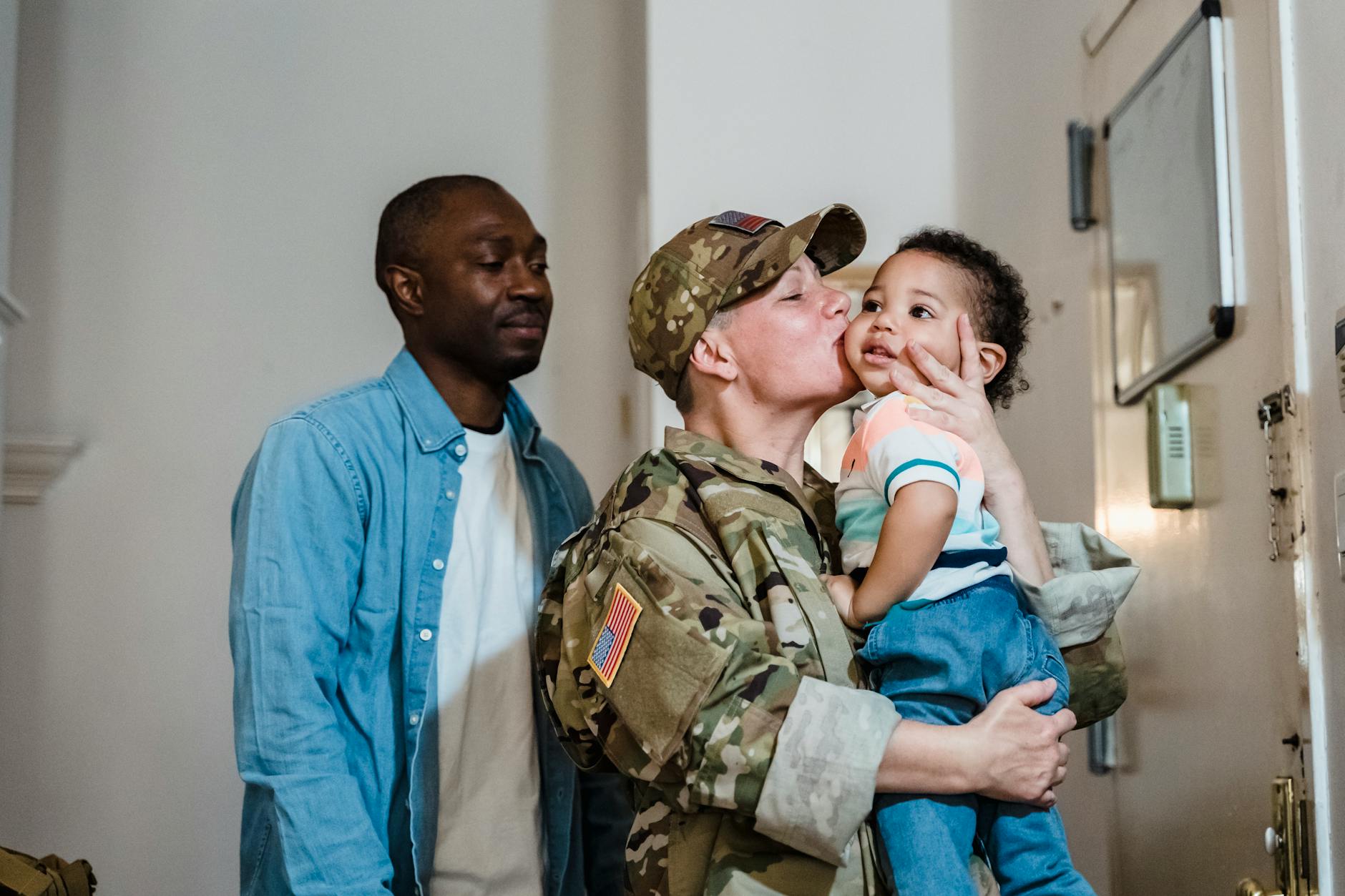
Thousands of military families across the United States are now confronting the reality of longer and more frequent deployments to the Middle East, as the Trump administration has significantly expanded the American military footprint in the region throughout 2025 and into early 2026. What began as a series of “temporary” force posture adjustments has evolved into sustained rotations that are stretching deployment cycles well beyond the standard timelines families were told to expect. At Fort Campbell, Kentucky, soldiers from the 101st Airborne Division who deployed in mid-2025 for what was described as a six-month rotation have had their tours extended twice, with some units now approaching eleven months in theater. The ripple effects go far beyond the emotional toll of separation.
Extended deployments trigger a cascade of legal, financial, and logistical consequences that military families must navigate, often with inadequate institutional support. The Servicemembers Civil Relief Act provides certain protections, but those protections have limits that catch many families off guard. This article examines the scope of the current deployment expansion, the legal rights and financial safeguards available to affected families, the gaps in the support system, and what advocacy organizations are doing to push back against open-ended commitments that lack clear congressional authorization. The situation has also reignited a long-simmering debate about executive war powers. Several members of Congress from both parties have questioned whether the scale of the current Middle East buildup requires a new Authorization for Use of Military Force, a question the administration has so far deflected by characterizing the deployments as force protection measures rather than a new combat mission.
Table of Contents
- Why Are Military Families Facing Extended Deployments to the Middle East in 2026?
- What Legal Protections Exist for Families During Extended Military Deployments?
- The Financial Strain of Repeated and Prolonged Deployments
- How Military Families Can Prepare for and Navigate Extended Deployments
- Mental Health and Family Readiness Gaps During Extended Operations
- Congressional Oversight and the War Powers Question
- What Comes Next for Military Families Facing Ongoing Middle East Operations
- Conclusion
- Frequently Asked Questions
Why Are Military Families Facing Extended Deployments to the Middle East in 2026?
The current wave of extended deployments traces back to the administration’s decision in late 2024 to bolster force levels across the Central Command area of operations, initially in response to escalating tensions with Iran and continued instability in Syria and Iraq. By mid-2025, the Pentagon had increased troop levels in the region to approximately 55,000, up from roughly 34,000 at the start of the administration. Rather than drawing down as conditions shifted, the Defense Department has maintained elevated force levels by extending existing rotations and accelerating the deployment timelines of units that were not originally scheduled. The 3rd Infantry Division out of Fort Stewart, Georgia, provides a stark illustration. The division’s 1st Brigade Combat Team deployed in August 2025 with orders for a standard nine-month rotation. In January 2026, families received notification that the deployment would be extended by at least 90 days, with the possibility of further extensions.
Families who had arranged childcare, employment schedules, and financial plans around a spring homecoming found themselves scrambling to adjust. The Army has attributed these extensions to “evolving operational requirements,” a phrase that has become a source of deep frustration for military spouses who say it functions as a blank check with no accountability. What makes this cycle particularly difficult is the compressed dwell time between deployments. Department of Defense policy historically aimed for a deployment-to-dwell ratio of at least 1:2, meaning a soldier who deploys for nine months should have at least eighteen months at home before the next rotation. Multiple brigade commanders have acknowledged in public forums that current ratios for some units have fallen below 1:1, meaning soldiers are spending more time deployed than at home. This pace is not sustainable, and retention data is already reflecting it. Army reenlistment rates for mid-career NCOs, the backbone of the force, dropped 11 percent in the fourth quarter of 2025 compared to the same period in 2024.
What Legal Protections Exist for Families During Extended Military Deployments?
The Servicemembers Civil Relief Act remains the primary federal legal shield for deployed service members and their families. SCRA protections include a cap on interest rates at six percent for pre-service debts, protection against default judgments in civil litigation, the ability to terminate certain leases, and a stay of civil proceedings. These protections activate upon receipt of deployment orders and generally extend for the duration of military service plus a limited period afterward. For families dealing with extended deployments, the SCRA provides genuine relief, but it is not the comprehensive safety net many assume it to be. However, the SCRA has significant gaps that become more painful the longer a deployment drags on. The interest rate cap applies only to obligations incurred before active duty, so any debt taken on after deployment orders, including emergency credit card charges a spouse might need, receives no protection.
Lease termination rights are valuable, but they require the service member to provide written notice and a copy of orders, and landlords do not always comply willingly. The Department of Justice’s enforcement of SCRA violations has historically been inconsistent. In fiscal year 2025, the DOJ filed only four SCRA enforcement actions, down from an average of nine per year during the previous administration, according to data compiled by the National Military Family Association. State-level protections vary dramatically and can either fill in or widen the gaps. California, New York, and Texas have enacted supplemental protections that extend SCRA-like benefits to state taxes, child custody proceedings, and professional licensing renewals. But service members stationed in or deploying from states without these supplements, such as several southeastern states with large military installations, may find themselves with fewer options. If a deployed soldier’s spouse is fighting a custody modification in a state without military-specific custody protections, the SCRA’s general stay provisions may not be enough to prevent a court from proceeding in the service member’s absence.
The Financial Strain of Repeated and Prolonged Deployments
Extended deployments impose financial costs that military pay and allowances only partially offset. While deployed service members receive Hostile Fire Pay of $225 per month and may qualify for the Combat Zone Tax Exclusion, these benefits were designed for standard rotation lengths. Families dealing with eleven-month or year-long deployments face compounding expenses at home: higher childcare costs when a co-parent is absent, vehicle maintenance that a deployed spouse would normally handle, and the loss of a second income if the non-deployed spouse had to leave employment to manage the household alone. A 2025 survey by Blue Star Families found that 47 percent of military families reported spending more than they earned during at least one month of a deployment, with the gap averaging $800. For junior enlisted families, the numbers are worse. An E-4 with four years of service and two dependents earns roughly $3,400 per month in base pay.
Even with housing allowances and deployment pay, the margins are razor-thin. One Army spouse at Fort Bragg described selling furniture on Facebook Marketplace to cover a $1,200 car repair because the family had no emergency savings left after the deployment was extended past the point she had budgeted for. Military relief societies, including Army Emergency Relief and the Navy-Marine Corps Relief Society, provide interest-free loans and grants for qualifying emergencies. These organizations disbursed over $70 million in assistance in 2025, a 23 percent increase from the prior year. But the demand is outpacing resources. AER reported in its year-end summary that average loan amounts increased while the number of grants, which do not require repayment, decreased as a share of total assistance. The practical effect is that families are taking on more debt to cope with deployments that the government ordered but did not adequately fund support for.

How Military Families Can Prepare for and Navigate Extended Deployments
Preparation is the most effective tool families have, though it requires confronting the uncomfortable possibility that any deployment could be extended. Financial advisors who specialize in military clients consistently recommend building a deployment buffer of at least three months of expenses beyond the stated deployment length. For a family expecting a nine-month deployment, that means budgeting as though it will last twelve. This is not pessimism but pattern recognition: deployment extensions have been the norm rather than the exception in every major operational period since 2003. The tradeoff is that aggressive saving before deployment often means cutting spending during what may be the last months a family has together. Some families choose to prioritize pre-deployment time together, accepting greater financial risk during the deployment itself.
Neither approach is wrong, but the consequences differ sharply. Families who enter a deployment with less than $1,000 in liquid savings, which the Federal Reserve’s data suggests includes nearly 40 percent of all American households and a disproportionate share of junior military families, have almost no margin for the kind of disruptions that extensions cause. Beyond finances, legal preparation is equally critical. Every service member should execute a durable power of attorney before deployment, one that is broad enough to allow the non-deployed spouse to handle banking, real estate, vehicle transactions, and medical decisions for dependents. A narrowly drafted POA can leave a spouse unable to refinance a mortgage or even access certain accounts. Military legal assistance offices provide these documents free of charge, but appointment availability has tightened as deployment tempo has increased. At some installations, wait times for legal assistance appointments exceeded three weeks in late 2025.
Mental Health and Family Readiness Gaps During Extended Operations
The psychological toll of extended deployments is well documented, but the support infrastructure has not scaled to match the current operational tempo. Military OneSource, the Department of Defense’s primary counseling referral service, guarantees twelve free non-medical counseling sessions per issue per person. For a military spouse dealing with anxiety, a child’s behavioral regression, and caregiver burnout for an aging parent, those twelve sessions get consumed quickly, and each issue technically requires a new intake process. The limitations are compounded for families stationed away from major installations. Guard and Reserve families, who make up an increasing share of the deployed force, often live in communities with little military infrastructure. A Reserve spouse in rural Ohio has fundamentally different access to support than an active-duty spouse at Joint Base Lewis-McChord.
Telehealth options have expanded, but they cannot replicate the in-person family readiness group meetings, the informal support networks in on-post housing, or the immediate availability of a Family Readiness Officer who knows your situation. TRICARE’s mental health network has also been strained; a 2025 Government Accountability Office report found that 34 percent of TRICARE beneficiaries in non-metropolitan areas could not find an in-network mental health provider accepting new patients within the access standard of 28 days. There is also a warning that bears repeating: the stigma around seeking help has not disappeared. Despite years of messaging campaigns, a Military Family Advisory Network survey in 2025 found that 29 percent of active-duty spouses who wanted counseling did not seek it because they feared it could affect their service member’s career. This fear is not entirely irrational. While regulations prohibit adverse actions based on a family member seeking counseling, the practical culture in some units still treats any engagement with behavioral health as a red flag during security clearance reviews or command selection boards.
📨 Get Free Accountability Coverage Alerts
Free · No spam · Unsubscribe anytime

Congressional Oversight and the War Powers Question
The legal basis for the current deployment expansion has drawn scrutiny from lawmakers on both sides of the aisle. Representative Matt Gaetz introduced a privileged resolution in late 2025 invoking the War Powers Resolution to compel a withdrawal timeline, though it was ultimately tabled. Senator Tim Kaine has repeatedly pressed the administration on whether the 2001 and 2002 Authorizations for Use of Military Force, which Congress has never repealed despite years of bipartisan discussion, actually cover the current mission set. The administration has argued that existing authorizations, combined with the president’s Article II authority as Commander in Chief, provide sufficient legal basis.
For military families, this is not an abstract constitutional debate. The absence of a specific, current authorization means there is no legislatively defined mission scope, no mandated end date, and no formal mechanism for Congress to force a drawdown. Families are effectively being asked to bear an open-ended burden with no clear exit criteria. Organizations like the National Military Family Association and the Government Accountability Project have called on Congress to either pass a new AUMF that sets deployment parameters or assert its oversight authority to require regular reporting on troop levels and rotation timelines.
What Comes Next for Military Families Facing Ongoing Middle East Operations
Looking ahead, there are few signs that the operational tempo will ease in the near term. The Pentagon’s fiscal year 2027 budget request, leaked in draft form in February 2026, includes funding for sustained force levels in the Middle East through at least the end of 2027. If those numbers hold, the current deployment cycle will continue for another two years at minimum, affecting an estimated 150,000 to 200,000 service members and their families across all branches. The longer-term question is whether the institutional military will adapt its support systems to match the reality it is imposing on families, or whether it will continue treating extended deployments as temporary anomalies that existing programs can absorb.
History is not encouraging on this point. It took nearly a decade after the start of sustained operations in Iraq and Afghanistan for the DOD to meaningfully expand family support programs, and many of those expansions have since been scaled back during budget tightening. Military families, as they have always done, will find ways to endure. But endurance should not be mistaken for adequacy, and the cost of asking families to absorb what policy fails to address will eventually be paid in retention, readiness, and the long-term health of the all-volunteer force.
Conclusion
Military families facing extended deployments to the Middle East in 2025 and 2026 are dealing with a convergence of legal, financial, and emotional pressures that existing support systems were not designed to handle at this scale. The SCRA provides a baseline of protection, but its gaps become more consequential as deployments stretch beyond planned timelines. Financial preparation, legal documentation, and proactive engagement with available resources, from military relief societies to congressional representatives, remain the most effective tools families have, imperfect as they are.
The burden currently being placed on military families is a policy choice, not an inevitability. Congress has the authority to define the scope and duration of military commitments, and families have every right to demand that it exercise that authority rather than allowing open-ended deployments by administrative inertia. Whether through direct advocacy, engagement with military family organizations, or simply voting, the families bearing the cost of these decisions have a stake in ensuring those decisions are made transparently, with adequate support attached, and with a clear plan for bringing service members home.
Frequently Asked Questions
How long can the military extend a deployment beyond the original orders?
There is no hard statutory cap on deployment extensions. The Secretary of Defense can authorize extensions as operational needs require. Individual service policies have historically aimed to limit deployments to twelve months for the Army and seven months for the Navy and Marine Corps, but these are guidelines, not legal limits. Extensions of 90 to 180 days beyond original orders have been common during the current cycle.
Does the SCRA protect military families from eviction during extended deployments?
The SCRA provides protection against eviction for service members and their dependents if the monthly rent is below a threshold adjusted annually for inflation, which was $4,266.51 in 2025. A landlord must obtain a court order before evicting, and the court can stay the eviction for up to 90 days. However, these protections require the family to actively assert their rights, and landlords who violate the SCRA face penalties only if the service member or DOJ pursues enforcement.
Can a military spouse break a lease if a deployment is extended?
Yes. Under the SCRA, a service member can terminate a housing lease entered into before or during military service if they receive deployment orders for a period of 90 days or more. The termination requires written notice and a copy of the orders. For month-to-month leases, termination takes effect 30 days after the next rent payment is due. For fixed-term leases, it takes effect on the last day of the month following delivery of notice.
What financial assistance is available for families during extended deployments?
Military relief societies, including Army Emergency Relief, Navy-Marine Corps Relief Society, Air Force Aid Society, and Coast Guard Mutual Assistance, provide interest-free loans and grants for qualifying emergencies. Military OneSource offers free financial counseling. Additionally, some states offer property tax deferrals, tuition assistance, and utility shutoff protections for deployed service members and their families.
Do deployment extensions affect child custody arrangements?
This is a significant concern. Federal law, through the SCRA, allows service members to request a stay of custody proceedings during deployment. However, not all states have adopted uniform protections, and some courts have modified custody arrangements based on a parent’s deployment absence. The Uniform Deployed Parents Custody and Visitation Act has been adopted by about 20 states, but families in non-adopting states face greater legal uncertainty.
You Might Also Like
- This Was the Largest U.S. Military Buildup in the Middle East Since Iraq
- Veterans Groups Across the Country Issue Statements on the New Middle East War
- Turkey Closes Airspace as Regional Tensions Spike Across the Middle East