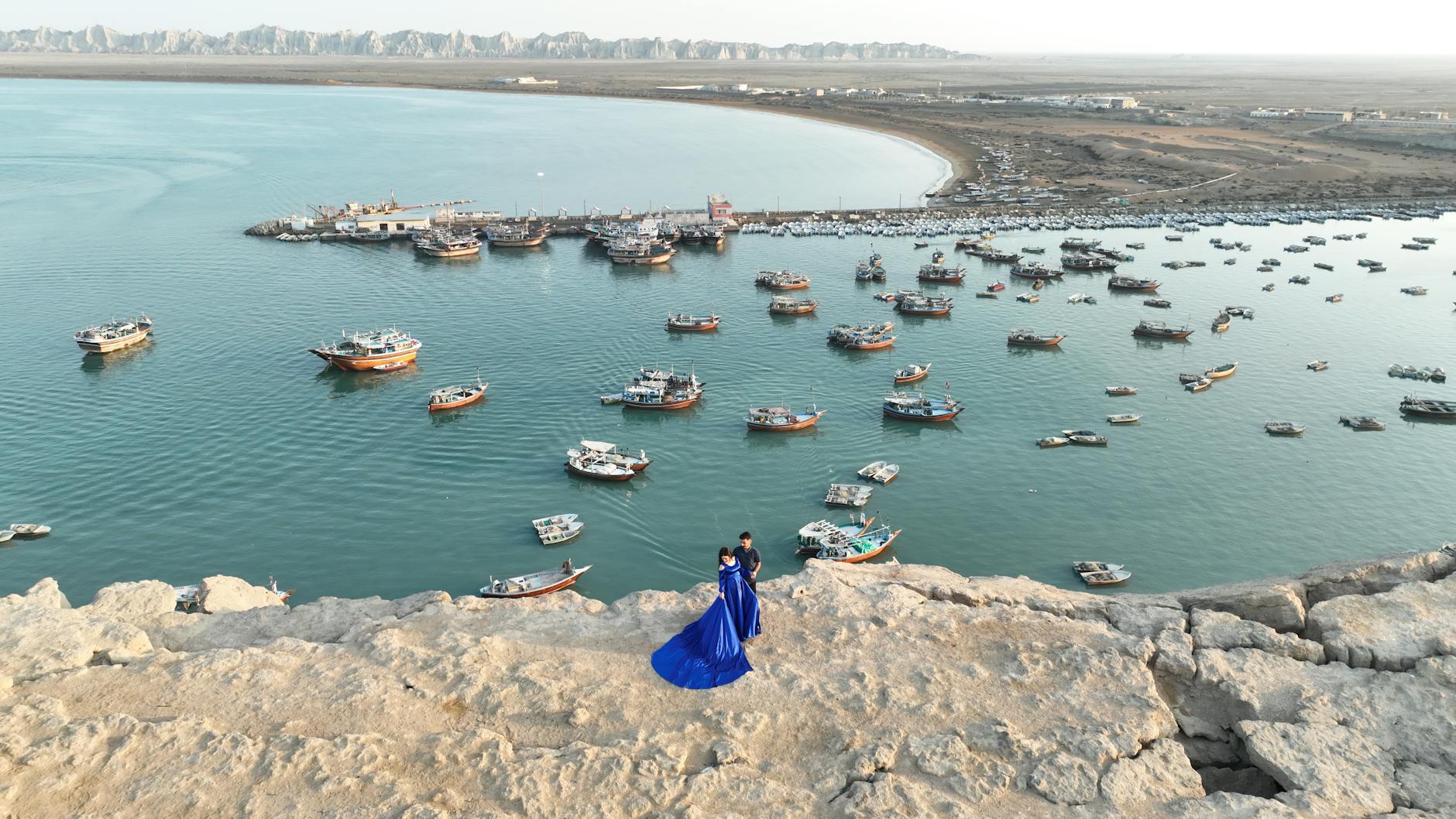
Iran’s Chabahar Port, the country’s only deep-water naval facility on the Gulf of Oman, was struck multiple times during Operation Epic Fury, a coordinated U.S.-Israeli military campaign launched at 1:15 a.m. ET on February 28, 2026. At least two explosions rocked the port city within a span of a few hours, and by March 1, U.S. Central Command confirmed that an Iranian Navy Jamaran-class corvette had been sunk at a pier in Chabahar, with satellite imagery showing smoke rising from the Konarak Naval Basin. The strikes were part of a broader campaign that the U.S.
claims destroyed or sunk nine Iranian naval ships total, with at least eleven additional vessels damaged. The attack on Chabahar carries consequences that extend well beyond the military dimension. India has invested an estimated $350 to $370 million in the port’s Shahid Beheshti Terminal under a ten-year agreement signed in 2024, and roughly $15 billion in India-Iran trade now faces serious uncertainty. Whether the commercial terminal itself sustained damage remains disputed, with some sources reporting direct hits and others saying the freight terminal was unaffected. This article examines what happened at Chabahar, why it matters strategically, how India’s investment hangs in the balance, and what the broader implications are for naval power in the Gulf of Oman.
Table of Contents
- What Exactly Happened When Iran’s Chabahar Port Was Hit Multiple Times?
- Why Chabahar Is Irreplaceable for Iran’s Naval Strategy
- India’s $370 Million Investment in the Crossfire
- The Sanctions Waiver Problem and What Comes Next for Trade
- The Broader Naval Campaign and Its Limits
- What the Joint Exercises With China and Russia Signaled
- The Future of Chabahar and Regional Power Dynamics
- Conclusion
- Frequently Asked Questions
What Exactly Happened When Iran’s Chabahar Port Was Hit Multiple Times?
Operation Epic Fury targeted Iranian military infrastructure across multiple sites, and Chabahar was among the major locations hit by airstrikes. U.S. navy destroyers fired Tomahawk land-attack missiles at targets in the region, while U.S. Air Force B-2 bombers attacked hardened infrastructure with 2,000-pound precision weapons. The port city, located in Iran’s southeastern Sistan-Baluchistan province, experienced at least two separate explosions over the course of a few hours, according to reports from the ground.
The most significant confirmed damage at Chabahar was the sinking of an Iranian Navy Jamaran-class corvette. CENTCOM stated the vessel was “sinking to the bottom of the Gulf of Oman” following the strike. Satellite imagery corroborated this, showing smoke rising from the naval wharf at the Konarak Naval Basin near the port. To put the scale of naval losses in context, across the entire Operation Epic Fury campaign, the U.S. reports having destroyed or sunk nine Iranian warships and damaged at least eleven more. That makes this one of the most significant naval engagements in decades, and the Chabahar strike was a central piece of it.

Why Chabahar Is Irreplaceable for Iran’s Naval Strategy
Chabahar holds a unique position in Iranian military planning because it is the country’s only deep-water port situated on the Gulf of Oman, outside the strategically critical Strait of Hormuz. every other major Iranian naval facility sits inside the Persian Gulf, meaning vessels stationed there must pass through the narrow strait to reach open ocean. That chokepoint has long been a vulnerability. Chabahar gave Iran the ability to project naval power without navigating one of the most surveilled waterways on earth. The port’s strategic value was underscored in the weeks before the strikes.
Iranian naval forces had trained alongside Chinese and Russian warships in the “Marine Security Belt 2026” exercises near Chabahar. These trilateral drills signaled Iran’s intent to position the port as a hub for broader security cooperation with major powers. However, the destruction of the Jamaran-class corvette and damage to surrounding naval infrastructure significantly diminishes Chabahar’s operational capacity in the near term. Rebuilding or replacing a warship is not a quick fix, and the damage to port infrastructure compounds the challenge. If Iran cannot rapidly restore Chabahar’s naval functions, it effectively loses its only avenue for blue-water naval operations outside the Strait of Hormuz chokepoint.
India’s $370 Million Investment in the Crossfire
India’s stake in Chabahar is substantial. Under a ten-year agreement signed in 2024 with Indian Ports Global Limited, India has committed approximately $120 million in direct investment and extended a $250 million line of credit for the development of the Shahid Beheshti Terminal, a commercial freight facility at the port. The terminal was envisioned as a key gateway for Indian trade with Afghanistan and Central Asia, bypassing Pakistan entirely. Whether that investment sustained physical damage is still unclear. Maritime Gateway reported that the commercial terminal was unaffected by the missile strikes, but other sources have indicated the India-funded Shahid Beheshti terminal was directly hit.
This discrepancy matters enormously. If the commercial infrastructure is intact, India’s investment may survive the current conflict. If it was damaged, India faces not only reconstruction costs but the political headache of having its trade infrastructure caught in a U.S.-Israeli military operation against a country India has tried to maintain balanced relations with. India has already had to dismiss reports that the U.S. Navy launched attacks on Iran from Indian ports, a claim that, if believed, could severely damage India-Iran relations regardless of the terminal’s physical condition.
The Sanctions Waiver Problem and What Comes Next for Trade
Even if the Shahid Beheshti Terminal escaped unscathed, India’s Chabahar play faces a separate and arguably more pressing problem. The U.S. sanctions waiver that allows India to operate at Chabahar Port without violating American sanctions on Iran expires on April 26, 2026. That deadline was already generating anxiety before the strikes. Now, with the U.S. having just bombed the very port it granted India permission to use, the likelihood of a waiver renewal is an open question.
The tradeoff for India is stark. Approximately $15 billion in India-Iran trade is now at risk, and Chabahar was central to India’s strategy for accessing markets in landlocked Afghanistan and Central Asia. Without the port, India’s alternatives are limited. Overland routes through Pakistan remain politically unviable, and the northern corridors through Russia face their own complications. India must now weigh whether to push for waiver renewal, a diplomatically delicate ask given the current military situation, or begin contingency planning for a future without reliable access to Chabahar. Neither option is costless, but waiting until April to find out is a gamble India may not be able to afford.
The Broader Naval Campaign and Its Limits
The Chabahar strikes did not occur in isolation. Operation Epic Fury was a sweeping campaign against Iranian military assets, and the naval component was particularly aggressive. The U.S. claims to have destroyed or sunk nine Iranian naval ships and damaged at least eleven vessels across the broader theater, including engagements in the Strait of Hormuz area. This represents a significant degradation of Iranian naval capacity.
But there are limitations to what air and missile strikes can accomplish against a dispersed naval force. Iran has long invested in asymmetric naval capabilities, including fast attack craft, mines, and anti-ship missiles spread across numerous small bases along its coastline. Sinking warships at pier is different from neutralizing the kind of swarm tactics Iran has practiced for years. The destruction of the Jamaran-class corvette at Chabahar is a meaningful loss, as Iran’s conventional fleet is small, but it does not eliminate Iran’s ability to threaten commercial shipping or conduct harassment operations in the Gulf. Anyone interpreting these strikes as the end of Iran’s naval threat should consider that Iran’s most effective maritime weapons have historically been its cheapest and hardest to target.

What the Joint Exercises With China and Russia Signaled
The timing of the strikes relative to Iran’s recent military exercises is worth noting. The “Marine Security Belt 2026” drills brought Iranian, Chinese, and Russian warships together near Chabahar just weeks before Operation Epic Fury was launched. These exercises were meant to signal that Iran is not isolated, that it has partners willing to conduct joint naval operations in its territorial waters. The fact that the strikes went ahead anyway sends its own signal.
📨 Get Free Accountability Coverage Alerts
Free · No spam · Unsubscribe anytime
The U.S. and Israel were evidently undeterred by the implicit backing of Beijing and Moscow. Whether China and Russia will respond with increased military support for Iran, or whether they will quietly recalculate their own exposure, is one of the most consequential unknowns coming out of this operation. For now, neither country has indicated a willingness to escalate on Iran’s behalf, but the destruction of a port where their navies recently trained is not something either capital will overlook.
The Future of Chabahar and Regional Power Dynamics
Chabahar’s future depends on factors that no single government controls. Iran will attempt to rebuild its naval capacity at the port, but that process will take years and will be constrained by sanctions, damaged infrastructure, and the ever-present threat of follow-on strikes. India’s commercial ambitions at the port hinge on both the physical condition of the Shahid Beheshti Terminal and the political decision in Washington about whether to renew the sanctions waiver before it expires in late April.
The broader picture is that Chabahar has become a flashpoint where military strategy, international trade, and great-power competition all collide. The port that was supposed to be Iran’s strategic insurance policy and India’s trade gateway is now a symbol of how quickly infrastructure investments can be overtaken by geopolitical conflict. Whatever happens next at Chabahar will say a great deal about the trajectory of U.S.-Iran tensions, the durability of India’s balancing act, and the willingness of China and Russia to back their partners beyond symbolic exercises.
Conclusion
The strikes on Chabahar Port during Operation Epic Fury represent one of the most strategically significant military actions of the campaign. By hitting Iran’s only deep-water naval facility outside the Strait of Hormuz, sinking a Jamaran-class corvette, and damaging surrounding infrastructure, the U.S. and Israel have degraded a capability Iran cannot easily replace. The broader naval campaign’s toll of nine ships destroyed and eleven damaged further diminishes Iran’s conventional maritime capacity, even as its asymmetric capabilities remain largely intact.
The collateral consequences may prove equally significant. India’s $370 million investment in the Shahid Beheshti Terminal faces an uncertain future, with $15 billion in trade hanging in the balance and a sanctions waiver expiration looming on April 26, 2026. The fact that Chinese and Russian warships exercised at the very port that was subsequently bombed adds a layer of great-power tension that extends well beyond the immediate U.S.-Iran conflict. For anyone tracking government accountability and the downstream effects of military policy decisions, Chabahar is a case study in how a single strike can ripple across economies, alliances, and strategic calculations for years to come.
Frequently Asked Questions
Was the India-funded Shahid Beheshti Terminal at Chabahar directly damaged?
Reports are conflicting. Some sources indicate the terminal was struck, while Maritime Gateway reported the commercial terminal was unaffected by regional missile strikes. The full extent of damage has not been independently verified.
How many Iranian naval ships were destroyed in Operation Epic Fury?
According to U.S. Central Command and military reporting, nine Iranian naval ships were destroyed or sunk across the campaign, with at least eleven additional vessels damaged. At Chabahar specifically, a Jamaran-class corvette was confirmed sunk.
What weapons were used in the Chabahar strikes?
U.S. Navy destroyers fired Tomahawk land-attack missiles, and U.S. Air Force B-2 bombers employed 2,000-pound precision weapons against hardened infrastructure targets.
When does the U.S. sanctions waiver for Chabahar Port expire?
The current waiver expires on April 26, 2026. Whether it will be renewed given the military strikes on the port is uncertain.
Did the U.S. launch attacks on Iran from Indian ports?
India has officially dismissed these reports. Naval Technology reported India’s denial that U.S. Navy forces used Indian ports to launch attacks on Iran.
Why is Chabahar strategically important?
Chabahar is Iran’s only deep-water port on the Gulf of Oman, located outside the Strait of Hormuz. This gives Iran naval access to open ocean without passing through the heavily monitored strait, and it serves as a key trade route for India to reach Afghanistan and Central Asia.
You Might Also Like
- Whether Operation Epic Fury Was Worth It Depends Entirely on What Happens Next
- The Non-Aligned World Is Watching Closely How America Uses Its Military Power
- The Iran War Changed the Middle East Forever — The Only Question Is How