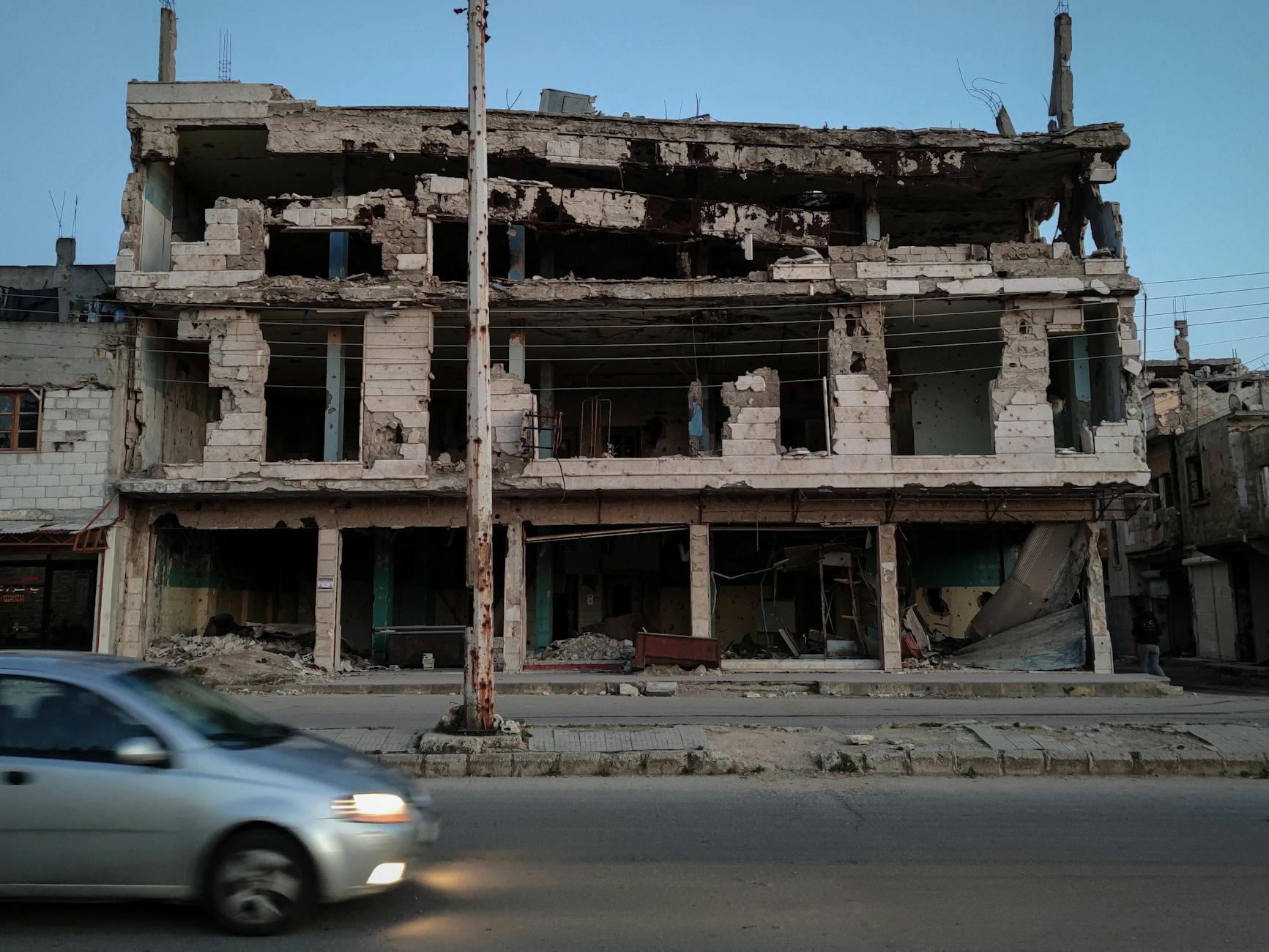
Every post-war scenario for Iran ranges from complicated to catastrophic because there is no clean exit from a conflict involving a nation of 90 million people, deeply entrenched institutions that have survived 47 years of pressure, and a region already destabilized by decades of proxy wars. Whether the United States and Israel achieve their stated military objectives or not, the aftermath will involve some combination of political instability, humanitarian crisis, economic fallout, and diplomatic quagmires that could persist for years. A leaked U.S. intelligence assessment reported by the Washington Post on March 7, 2026, concluded that even a large-scale assault on Iran was unlikely to oust the regime — a finding produced before the war even began that undercuts the most optimistic assumptions driving the current campaign. The economic damage is already measurable.
Oil prices have surged more than 25 percent since the start of the conflict, with Brent crude surpassing $92 per barrel on March 6 — up 28 percent from the prior Friday’s close. U.S. gas prices jumped $0.43 in a single week to a national average of $3.41 per gallon. Oxford Economics estimates that if oil hits $100 per barrel and stays elevated, inflation could run roughly one percentage point higher while GDP growth drops by 0.25 to 0.4 percentage points. This article examines each plausible scenario for how the Iran war ends, what the regional and global consequences look like, and why the range of outcomes offers little comfort to anyone hoping for a quick resolution.
Table of Contents
- What Are the Post-War Scenarios for Iran and Why Do They All Look Grim?
- Why U.S. Intelligence Doubts the War Will Achieve Its Stated Goals
- The Economic Shockwaves Are Already Hitting American Wallets
- Regime Change vs. Managed Degradation — A Comparison of Strategic Dead Ends
- The Humanitarian Catastrophe That Nobody Is Planning For
- What the “Quick War” Predictions Get Wrong
- Where This Goes From Here
- Conclusion
- Frequently Asked Questions
What Are the Post-War Scenarios for Iran and Why Do They All Look Grim?
Axios has outlined five distinct scenarios for how the war could end, and none of them are simple. The first involves nuclear elimination without a political settlement — U.S. and Israel have discussed sending special forces into Iran to physically secure or destroy its stockpile of highly enriched uranium. This would require boots on the ground while Iran is still firing ballistic missiles, a proposition that carries enormous risk for American and Israeli personnel with no guarantee of a stable political outcome even if the nuclear material is secured. The second scenario is a declaration of victory and withdrawal: Trump declares Iran’s missile and drone capabilities sufficiently degraded, claims a historic win, and pulls out regardless of what is actually happening on the ground.
This would mirror past conflicts where premature declarations of success created power vacuums that took decades to fill. The third and fourth scenarios — regime change and civil war — represent the most ambitious and most dangerous possibilities, respectively. Analysts note that the Iranian regime has survived 47 years of sanctions, wars, and internal uprisings, with deeply entrenched military, religious, and political institutions that do not collapse easily. Meanwhile, Kurdish forces backed by Israel could theoretically provide ground support for regime change, but this risks Iran devolving into a Syria-style civil war lasting a decade or more. The fifth scenario, regime resilience with a successor, is already partially unfolding. Despite Ayatollah Khamenei’s death, Iran announced his 56-year-old son Mojtaba Khamenei as the new supreme leader, and there is little evidence of deep institutional fractures so far.

Why U.S. Intelligence Doubts the War Will Achieve Its Stated Goals
The Washington Post’s March 7 report on the pre-war intelligence assessment is perhaps the most damning piece of evidence against the optimistic case. U.S. intelligence agencies concluded before the first missile was launched that a large-scale assault was unlikely to oust the Iranian regime. This assessment was not produced by antiwar activists or partisan critics — it came from the same intelligence community that the administration relies on for targeting data and operational planning.
The disconnect between what the intelligence says and what the policy assumes is a pattern familiar from Iraq, where pre-war intelligence was either ignored or selectively interpreted to justify predetermined conclusions. However, if the administration’s actual goal is not regime change but rather degradation of Iran’s military capabilities — Scenario 2 in the Axios framework — then the intelligence assessment is less damning but the strategic picture remains murky. Suzanne Maloney, vice president at the Brookings Institution, put it plainly: “What we’re seeing is going to be more complicated than the White House may have hoped.” A degraded Iran is not a defeated Iran. It is a humiliated, destabilized nation with a population of 90 million, a successor supreme leader with something to prove, and regional allies who may be weakened but not eliminated. The history of the Middle East is filled with examples of military degradation campaigns that created more problems than they solved.
The Economic Shockwaves Are Already Hitting American Wallets
The economic impact of the Iran conflict is not hypothetical — it is showing up at gas stations and in market data right now. Brent crude has risen 36 percent year-to-date, and WTI futures are up 32 percent. For American consumers, that translates to a national average gas price of $3.41 per gallon, a sharp increase that hits lower-income households hardest since fuel costs consume a larger share of their budgets. Trump said on March 9 that the war would end “very soon” and predicted lower oil prices, but Democrats rebutted that assertion, warning of a potential “forever war” that would keep energy costs elevated indefinitely.
The ripple effects extend well beyond the United States. Pakistan imports 40 percent of its energy and relies heavily on Qatari LNG, which has been cut off by the conflict. Oxford Economics projects that sustained $100-per-barrel oil would shave 0.25 to 0.4 percentage points off global GDP growth while adding roughly a full percentage point to inflation — a stagflationary combination that central banks dread because there is no good monetary policy response. Raise interest rates to fight inflation and you crush growth further; hold rates steady and you let prices spiral. JPMorgan predicted on March 9 that the war would “likely remain limited and end within the next two weeks,” but financial markets are pricing in considerably more uncertainty than that timeline suggests.
Regime Change vs. Managed Degradation — A Comparison of Strategic Dead Ends
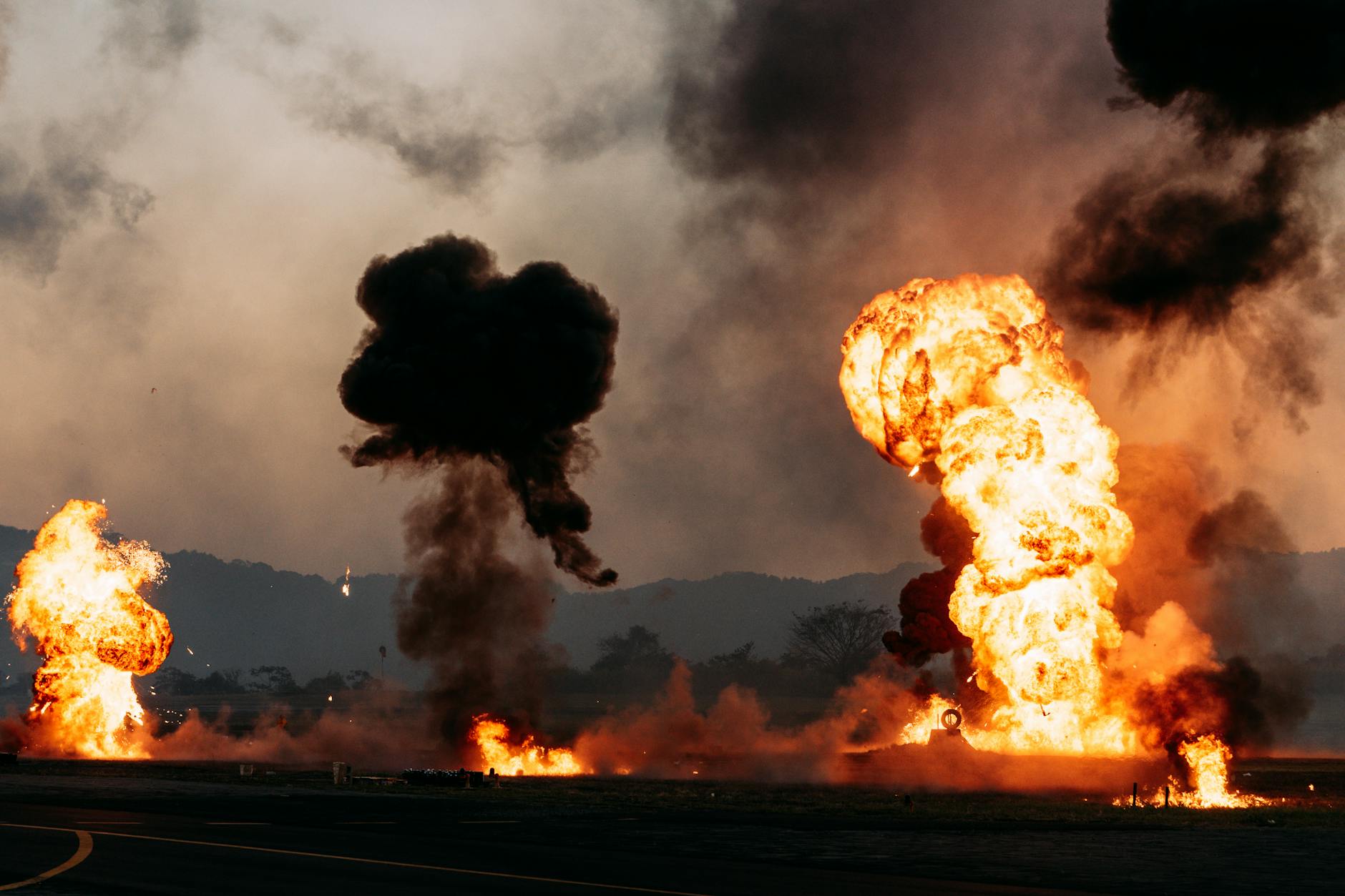
The core tradeoff facing U.S. policymakers is between two unsatisfying options. Full regime change would require a sustained ground campaign, years of occupation or nation-building, and the willingness to absorb casualties and costs that the American public has shown little appetite for since Iraq and Afghanistan. Charles Myers of Signum Global Advisors expected the kinetic part of the war to “be done in the next three to four days,” but kinetic operations are the easy part.
The hard part — establishing governance, preventing civil war, securing weapons stockpiles, managing refugee flows — has no clear timeline and no recent precedent that ended well. Managed degradation, on the other hand, achieves a short-term military objective while leaving the underlying political and strategic problems intact. Iran retains its governing institutions, its population, its geographic position, and its motivation for retaliation. A degraded but intact Iran is arguably more dangerous than a strong one, because the regime would have every incentive to rebuild its capabilities covertly, pursue nuclear weapons with renewed urgency, and use proxy forces to exact revenge on a longer timeline. Neither option addresses the fundamental question of what a stable, post-conflict Middle East actually looks like, because neither option is designed to — they are both optimized for domestic political narratives rather than regional stability.
The Humanitarian Catastrophe That Nobody Is Planning For
Iran’s population of approximately 90 million people means that a collapse scenario would create a refugee crisis dwarfing what Syria produced. Syria’s civil war displaced roughly 13 million people and destabilized the politics of every country that absorbed significant refugee flows, from Lebanon and Jordan to Turkey and the European Union. An Iranian collapse could multiply those numbers several times over, and the geography is even more challenging — evacuations are already underway through the Iran-Turkmenistan and Azerbaijan-Iran borders, but neighboring countries have limited capacity and even less political will to absorb mass displacement.
The Stimson Center has assessed that a full collapse of the Iranian state is unlikely in the short term, which provides some comfort but not much. Gulf state security is directly threatened by instability in Iran, and the Gulf states are neither equipped nor inclined to manage a large-scale humanitarian crisis on their borders. The Washington Institute’s analysis, titled “Epic Fury and Roaring Lion,” addresses pressing postwar questions including the regime’s future after major leadership losses, reactions inside Iran and Lebanon, fallout for Gulf states, and contours of potential diplomacy once fighting stops. What it cannot address is the gap between what diplomacy requires — time, patience, compromise — and what the current political environment in Washington will tolerate.
📨 Get Free Accountability Coverage Alerts
Free · No spam · Unsubscribe anytime
What the “Quick War” Predictions Get Wrong
Every major conflict in the Middle East over the past three decades has been accompanied by predictions of swift resolution, and every one of those predictions has aged poorly. JPMorgan’s two-week timeline and Myers’ three-to-four-day estimate for the kinetic phase may prove accurate for the bombing campaign itself, but they tell us nothing about what comes after.
The kinetic phase of the Iraq war lasted weeks; the aftermath lasted two decades and counting. Democrats’ warnings about a “forever war” may sound partisan, but they are grounded in a pattern of evidence that transcends party lines.
Where This Goes From Here
The most likely near-term outcome is some version of Scenario 2 or Scenario 5 — a declared victory followed by withdrawal, with the Mojtaba Khamenei-led regime battered but intact. This would allow the administration to claim success domestically while leaving the fundamental strategic situation largely unchanged, except with higher oil prices, increased regional instability, and a more motivated Iranian adversary.
The longer-term outlook depends entirely on variables that no analyst can predict with confidence: whether Mojtaba Khamenei can consolidate power, whether proxy networks reconstitute, whether the nuclear program accelerates underground, and whether the economic damage triggers a broader global downturn. What is certain is that the range of outcomes contains no good options — only varying degrees of complicated and catastrophic.
Conclusion
The Iran conflict has already produced measurable economic harm, with oil prices up more than 25 percent, gas prices spiking, and credible forecasts warning of stagflationary effects if energy costs remain elevated. On the strategic front, five plausible scenarios for how the war ends have been identified, and none of them produce a stable, long-term resolution. U.S.
intelligence assessed before the war began that a large-scale assault was unlikely to oust the regime, and the appointment of Mojtaba Khamenei as successor supreme leader suggests institutional continuity rather than collapse. For Americans watching this conflict unfold, the practical implications are immediate: higher energy costs, potential inflationary pressure, and the possibility of extended military engagement in a region where quick exits have historically proven illusory. The administration’s assurances of a swift conclusion deserve scrutiny, not because they are necessarily wrong about the bombing campaign’s timeline, but because the bombing campaign is the least consequential phase of what comes next. What matters is the aftermath, and on that front, the experts, the intelligence community, and the historical record all point in the same sobering direction.
Frequently Asked Questions
How long is the Iran war expected to last?
Estimates vary widely. JPMorgan predicted the war would likely remain limited and end within two weeks. Charles Myers of Signum Global Advisors expected the kinetic phase to last three to four days. However, Brookings Institution VP Suzanne Maloney warned that the situation is “more complicated than the White House may have hoped,” and Democrats have raised concerns about a potential “forever war.” The kinetic phase and the broader conflict resolution are very different timelines.
How is the Iran war affecting oil and gas prices?
Oil prices have surged more than 25 percent since the start of the war. Brent crude surpassed $92 per barrel on March 6, rising 36 percent year-to-date, while WTI futures climbed 32 percent. The national average U.S. gas price reached $3.41 per gallon, up $0.43 in a single week. Oxford Economics estimates that if oil reaches and stays at $100 per barrel, inflation could rise by about one percentage point and GDP growth could fall by 0.25 to 0.4 percentage points.
Could the war lead to regime change in Iran?
A U.S. intelligence assessment reported by the Washington Post concluded that a large-scale assault was unlikely to oust the Iranian regime. Analysts note the regime has survived 47 years of sanctions, wars, and internal uprisings with deeply entrenched military, religious, and political institutions. Following Ayatollah Khamenei’s death, his son Mojtaba Khamenei was named successor, and there is little evidence of deep institutional fractures.
What would happen if Iran’s government collapsed?
Iran has a population of approximately 90 million people, meaning a collapse could create a refugee crisis far larger than Syria’s. Evacuations are already underway through Iran’s borders with Turkmenistan and Azerbaijan. The Stimson Center assesses that full collapse is unlikely in the short term, but Gulf state security would be at serious risk if it occurred.
How is the conflict affecting countries outside the Middle East?
Pakistan imports 40 percent of its energy and relies heavily on Qatari LNG, which has been cut off by the conflict. Broader global economic effects include rising energy prices, potential inflation increases, and slower GDP growth. The Chatham House and CSIS have both analyzed the conflict’s capacity to send shockwaves through global energy markets.
You Might Also Like
- The People With the Most Weapons in Post-War Iran Will Make the Rules
- Every President Since Carter Has Dealt With Iran — Trump Is the First to Launch a Full Campaign
- Trump’s Iran War Could Push Dozens of Countries Closer to China and Russia