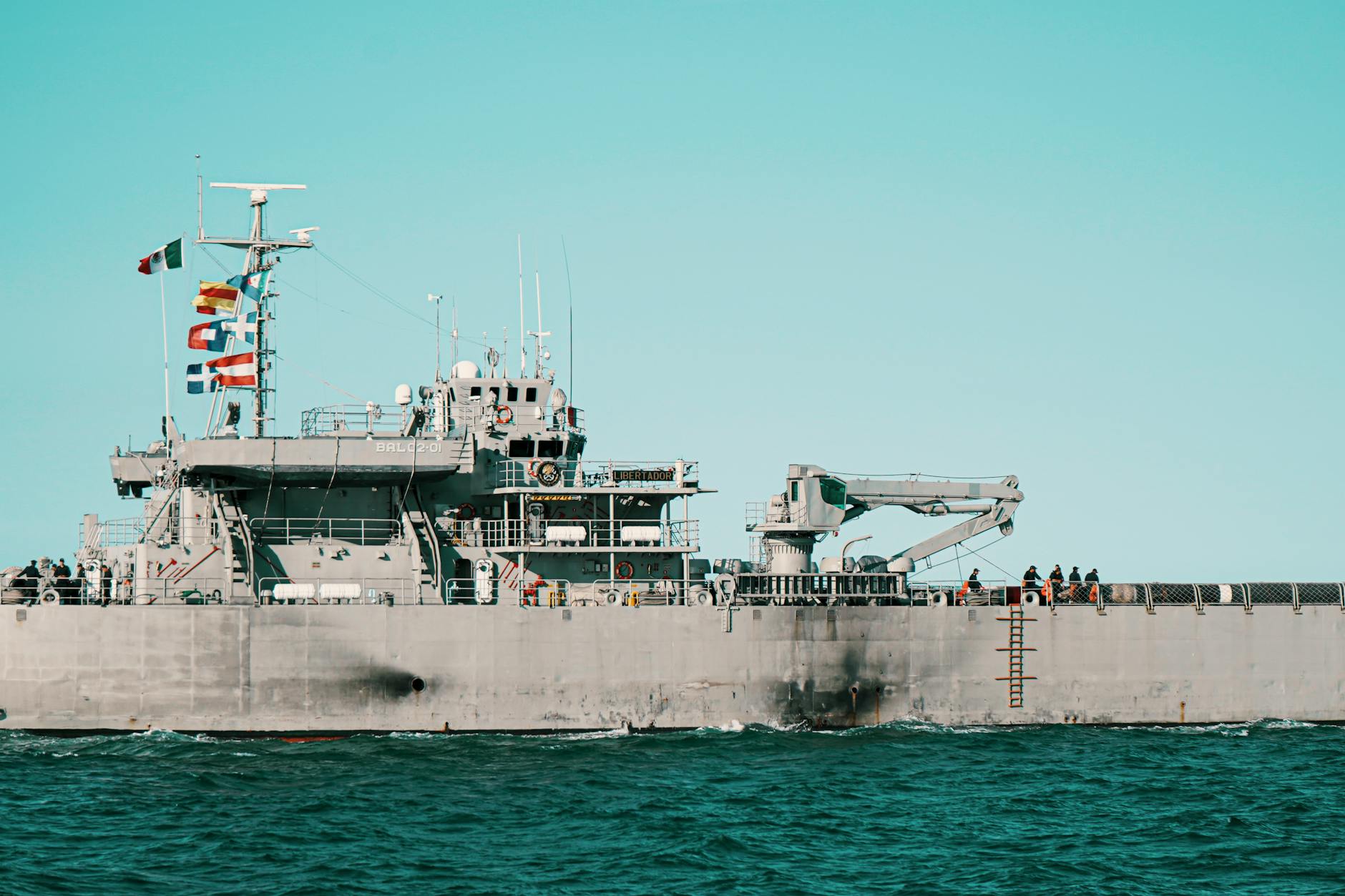
On April 18, 1988, the United States Navy launched Operation Praying Mantis, a single-day retaliatory strike against Iran that resulted in the destruction or severe damaging of half the Iranian navy’s operational fleet. In roughly nine hours of combat across the Persian Gulf, American forces sank or crippled six Iranian vessels — including the frigate Sahand, the missile boat Joshan, and several armed speedboats — marking the largest surface naval engagement the U.S. had fought since World War II. The claim that the Navy destroyed more Iranian ships in one day than it had sunk since WWII is essentially accurate: the United States had not conducted a comparable surface naval battle against any adversary in over four decades, and the concentrated destruction inflicted on Iran’s fleet that day exceeded any single-day tally of enemy warships sunk by the U.S. Navy in the intervening period.
The operation was ordered by President Reagan in direct response to the near-sinking of the USS Samuel B. Roberts, a guided-missile frigate that struck an Iranian mine in international waters on April 14, 1988, injuring ten sailors. The mine had been laid by Iran as part of its campaign to disrupt Gulf shipping during the Iran-Iraq War. What followed was not merely a skirmish but a coordinated, multi-platform assault involving carrier-based aircraft, surface combatants, and Marine forces that exposed the vast technological and tactical gap between the two navies. This article examines the details of the engagement, the strategic context that led to it, the specific ships destroyed, the broader implications for U.S. naval policy, and why the operation remains a relevant case study in military escalation management nearly four decades later.
Table of Contents
- How Did the U.S. Navy Destroy So Many Iranian Ships in a Single Day?
- The Tanker War Context and Why Iran Was Laying Mines in International Waters
- What Happened to the USS Samuel B. Roberts and Its Crew
- Comparing Operation Praying Mantis to Other Post-WWII Naval Engagements
- Iran’s Naval Strategy After Praying Mantis and the Shift to Asymmetric Warfare
- The Legal and Diplomatic Aftermath at the International Court of Justice
- Why Operation Praying Mantis Still Matters for U.S. Naval Policy
- Conclusion
- Frequently Asked Questions
How Did the U.S. Navy Destroy So Many Iranian Ships in a Single Day?
The answer lies in the overwhelming force disparity and the deliberate planning behind operation Praying Mantis. The U.S. Navy deployed elements from the aircraft carrier USS Enterprise and its battle group, the guided-missile cruiser USS Wainwright, destroyers, frigates, and Marine attack helicopters operating from mobile sea bases. The operation targeted two Iranian oil platforms — Sassan and Sirri — that had been converted into surveillance and command posts used to coordinate attacks on commercial shipping. After warnings were issued and Iranian personnel were given time to evacuate, U.S. Marines boarded and demolished both platforms. Iran’s navy responded by dispatching warships and fast attack craft, which is when the engagement escalated dramatically.
The Iranian missile boat Joshan fired a U.S.-made Harpoon missile at the cruiser USS Wainwright — the missile was defeated by countermeasures — and was promptly destroyed by return fire from multiple American ships. The frigate Sahand, one of Iran’s most capable warships, launched missiles at approaching A-6 Intruder aircraft from the Enterprise. The Sahand was struck by Harpoon missiles, laser-guided bombs, and additional munitions until it burned and eventually sank. A second Iranian frigate, the Sabalan, was hit by a laser-guided bomb that disabled it, though President Reagan ordered a ceasefire before it could be finished off. Several Iranian Boghammar speedboats, which had been attacking commercial vessels and the offshore platform Scan Bay, were destroyed by Marine Cobra helicopters and Navy aircraft. The entire sequence unfolded in less than a day, and the Iranian navy never again directly challenged U.S. forces in open combat during the Tanker War.
The Tanker War Context and Why Iran Was Laying Mines in International Waters
Operation Praying Mantis did not occur in a vacuum. It was the culmination of years of escalating tension in the Persian Gulf during the Iran-iraq war, which had raged since 1980. By 1987, both Iran and Iraq were attacking commercial tankers to damage each other’s oil export revenue — a campaign known as the Tanker War. Iran targeted vessels bound for Kuwait and other Gulf states that supported Iraq, using mines, speedboat attacks, and anti-ship missiles fired from oil platforms and shore batteries. The U.S. responded by reflagging Kuwaiti tankers under the American flag and providing naval escorts under Operation Earnest Will, beginning in July 1987. However, the escort mission put American warships directly in the path of Iranian aggression. In October 1987, an Iranian Silkworm missile struck the reflagged tanker Sea Isle City in Kuwaiti waters, prompting Operation Nimble Archer, a more limited U.S.
strike on two Iranian oil platforms. Iran continued mining operations despite these warnings. The critical limitation of the U.S. approach before Praying Mantis was its restraint — Washington wanted to protect shipping without provoking a full-scale war with Iran, which meant responses were calibrated and often perceived as insufficient deterrents. When the Samuel B. Roberts hit a mine that blew a fifteen-foot hole in its hull, nearly breaking the ship in half, the Reagan administration concluded that a proportional but significantly more forceful response was necessary. The mine was traced to Iran through serial numbers matching mines found on the Iranian vessel Iran Ajr, which had been caught laying mines by U.S. forces months earlier.
What Happened to the USS Samuel B. Roberts and Its Crew
The mining of the Samuel B. Roberts on April 14, 1988, was the proximate cause of Operation Praying Mantis, and the damage was nearly catastrophic. The Perry-class frigate was transiting the central Persian Gulf when it struck an M-08 contact mine. The explosion lifted the 4,100-ton ship out of the water, broke its keel, flooded the engine room, and started fires throughout the vessel. Ten sailors were injured, several seriously. The crew fought for nearly five hours to save their ship, shoring up flooded compartments and battling fires in conditions that the ship’s commanding officer, Commander Paul X. Rinn, later described as the most harrowing damage control effort since World War II.
The Samuel B. Roberts did not sink, which is a testament to both the crew’s skill and the resilience of the ship’s design. It was placed on the heavy-lift ship Mighty Servant 2 and transported back to the United States for repairs at Bath Iron Works in Maine. The ship returned to active service and was not decommissioned until 2015. Commander Rinn received the Legion of Merit for his leadership during the crisis. The incident is still studied at the U.S. Naval Academy and Surface Warfare Officers School as a case study in damage control. What made the mining particularly provocative was its location in well-traveled international shipping lanes, combined with the forensic evidence linking the mines directly to Iranian military stocks.

Comparing Operation Praying Mantis to Other Post-WWII Naval Engagements
To understand why the claim about destroying more ships in one day than since World War II holds up, it helps to examine the U.S. Navy’s combat record in the intervening decades. The Korean War involved significant naval operations, but these were primarily shore bombardment, carrier aviation strikes against land targets, and the Inchon amphibious landing — not ship-to-ship engagements. The Vietnam War similarly saw extensive riverine and coastal operations but no fleet-on-fleet surface actions. The Navy’s engagements during the Cold War were characterized by submarine cat-and-mouse games, not the sinking of enemy warships. The 1986 confrontation with Libya during Operation Attain Document and the subsequent strikes under Operation El Dorado Canyon involved attacks on Libyan patrol boats and shore targets, resulting in the sinking of at least two Libyan vessels. However, these were spread across multiple incidents rather than concentrated in a single day of coordinated fleet action.
The Falklands War in 1982, while not involving the U.S. directly, demonstrated what modern anti-ship warfare looked like — but the U.S. Navy had not been a participant. Operation Praying Mantis stands alone in the post-WWII period as a genuine surface naval battle involving coordinated strikes by multiple U.S. warships and aircraft against an adversary’s naval forces, with multiple enemy combatants sunk in a single operational period. The tradeoff of the operation’s success was that it revealed to the world — including potential future adversaries like China — exactly how the U.S. Navy prosecuted surface warfare in the missile age.
Iran’s Naval Strategy After Praying Mantis and the Shift to Asymmetric Warfare
The most consequential lesson Iran took from Operation Praying Mantis was that it could not challenge the U.S. Navy in conventional surface warfare and survive. The destruction of a significant portion of its fleet in a single afternoon made this painfully clear. Rather than rebuilding a conventional navy capable of matching American destroyers and carriers, Iran invested heavily in asymmetric capabilities — fast attack craft armed with anti-ship missiles, midget submarines, naval mines, and shore-based cruise missiles positioned along the narrow Strait of Hormuz. The Islamic Revolutionary Guard Corps Navy, distinct from the regular Iranian navy, became the primary instrument of this swarming, guerrilla-at-sea doctrine.
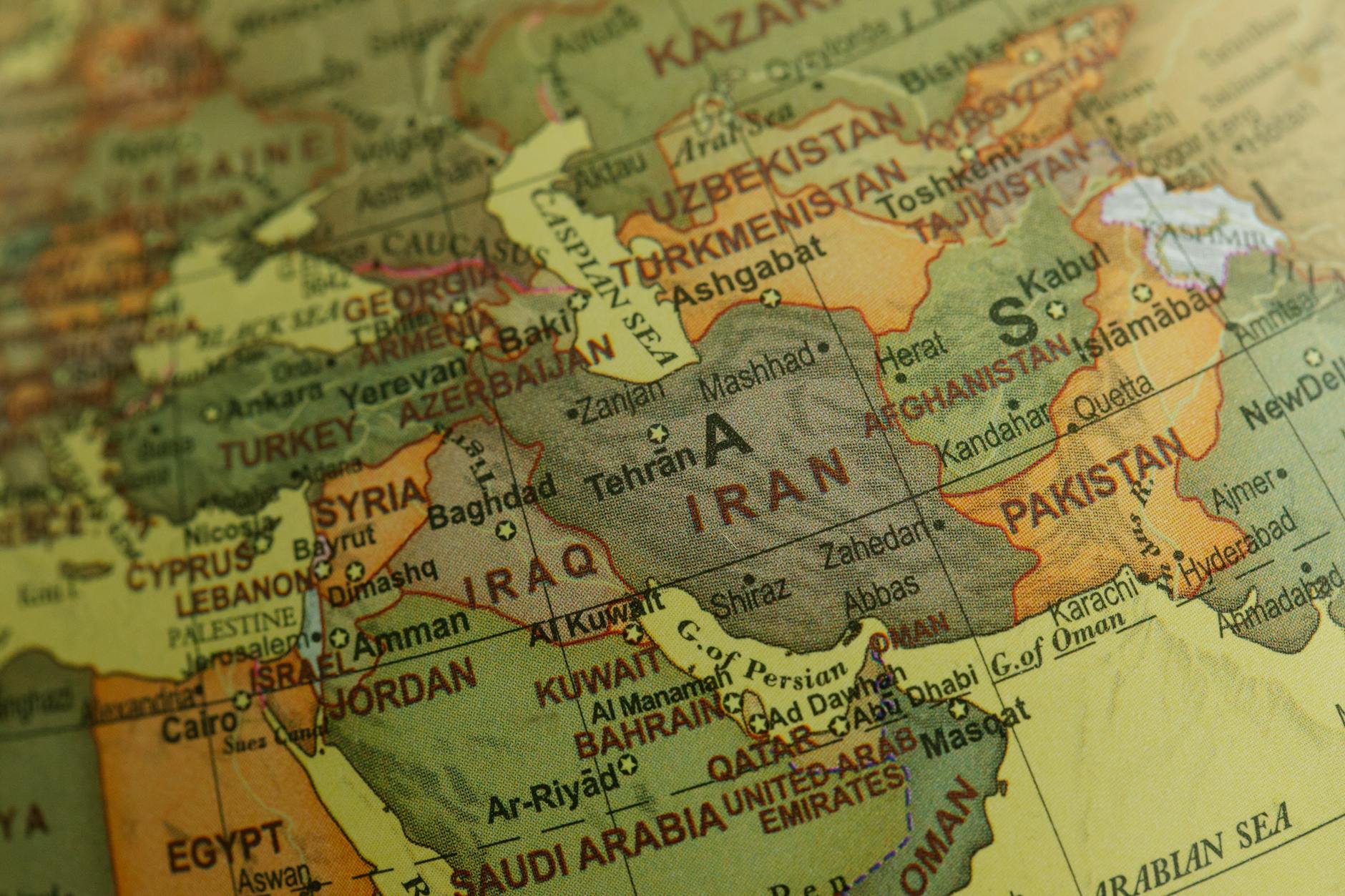
This shift presents a significant limitation for those who would cite Praying Mantis as a template for future confrontations with Iran. The Iran of 1988 sent conventional frigates into battle against carrier groups; the Iran of today would likely employ hundreds of small, fast, expendable boats combined with land-based anti-ship ballistic missiles and sophisticated mine warfare. The Strait of Hormuz, at its narrowest point only 21 miles wide, is an environment where these asymmetric tactics could inflict serious damage even against a technologically superior fleet. Military analysts have warned that a modern conflict in the Gulf would look nothing like the relatively clean, one-sided engagement of 1988. The Pentagon’s own war games have reportedly produced scenarios where swarm attacks overwhelm Aegis combat systems through sheer volume, though the Navy has since developed countermeasures and doctrinal responses.
📨 Get Free Accountability Coverage Alerts
Free · No spam · Unsubscribe anytime
The Legal and Diplomatic Aftermath at the International Court of Justice
Iran brought a case against the United States at the International Court of Justice in 1992, arguing that the destruction of the oil platforms at Sassan and Sirri violated a 1955 Treaty of Amity between the two countries. The case, formally titled Oil Platforms (Islamic Republic of Iran v. United States of America), dragged on for over a decade before the ICJ issued its judgment in 2003. The court ruled that the U.S.
actions could not be justified under the treaty’s commerce provisions but also rejected Iran’s claim for reparations, finding that Iran had not proven that the platform destruction specifically harmed its oil commerce as claimed. The U.S. counterclaim — that Iran’s mining and attacks on shipping violated the same treaty — was also rejected on jurisdictional grounds. The case remains a significant precedent in international law regarding the use of force and treaty obligations, illustrating that military victories do not always translate cleanly into legal vindication.
Why Operation Praying Mantis Still Matters for U.S. Naval Policy
Operation Praying Mantis endures as a reference point in defense policy debates for several reasons. It demonstrated that the U.S. Navy could execute a complex, multi-domain operation on short notice with decisive results. It showed that calibrated escalation — destroying military targets while avoiding civilian casualties and limiting the scope of the conflict — was achievable in practice. And it established a deterrent precedent that held for decades; Iran did not directly attack a U.S.
warship again until the post-2019 tensions in the Gulf, and even those incidents have remained below the threshold of open naval combat. For the current policy landscape, Praying Mantis serves as both an example and a cautionary tale. The operation succeeded in part because the strategic objectives were limited and clearly defined — retaliate for the mining of the Roberts, degrade Iran’s ability to threaten shipping, and avoid broader war. As tensions periodically flare in the Gulf region, policymakers and military planners revisit 1988 to understand what proportional response looks like, while recognizing that the technological and geopolitical environment has changed fundamentally. The proliferation of anti-ship missiles, drone technology, and cyber capabilities means the next Gulf confrontation, should it occur, will be fought under very different rules.
Conclusion
Operation Praying Mantis on April 18, 1988, stands as the largest U.S. naval surface engagement since the Second World War, and the claim that the Navy destroyed more Iranian ships that day than it had sunk of any adversary’s since 1945 is substantiated by the historical record. The operation sank or disabled the frigate Sahand, the missile boat Joshan, at least three armed speedboats, and severely damaged the frigate Sabalan, while American forces suffered no ship losses and only two casualties — both crew members of a Marine helicopter that crashed. The engagement demonstrated American naval superiority in conventional warfare and reshaped Iran’s entire maritime strategy.
The broader significance of Praying Mantis extends beyond the ships destroyed. It remains a case study in escalation management, proportional response, and the political decision-making that determines when and how military force is applied. For readers interested in government accountability and policy fact-checking, the operation illustrates how a single day of military action can have legal, diplomatic, and strategic consequences that play out over decades — from the ICJ courtroom to the ongoing cat-and-mouse dynamic between U.S. and Iranian naval forces in one of the world’s most critical waterways.
Frequently Asked Questions
Did the U.S. Navy actually sink Iranian ships, or just damage them?
Both. The frigate Sahand and missile boat Joshan were sunk outright. The frigate Sabalan was severely damaged by a laser-guided bomb but survived after President Reagan ordered a halt to further attacks. Several Boghammar fast attack boats were also destroyed by helicopter and aircraft fire.
Were there American casualties during Operation Praying Mantis?
Two U.S. servicemembers died when a Marine AH-1T Sea Cobra helicopter crashed during the operation. No American ships were lost or seriously damaged, though the USS Samuel B. Roberts — the ship whose mining triggered the operation — had been severely damaged four days earlier.
Did Iran shoot down any American aircraft during the battle?
No. Despite firing anti-aircraft weapons and launching missiles, Iranian forces did not shoot down any U.S. aircraft or helicopters during Operation Praying Mantis. The Joshan fired a Harpoon missile at the USS Wainwright, but it was defeated by electronic countermeasures and chaff.
Is Operation Praying Mantis related to the Iran Air Flight 655 shootdown?
Indirectly. The USS Vincennes shot down Iran Air Flight 655 on July 3, 1988 — about two and a half months after Praying Mantis — during a separate engagement with Iranian speedboats in the same general area. The heightened tensions from the Tanker War, including the aftermath of Praying Mantis, contributed to the tense environment in which that tragedy occurred, killing all 290 people aboard the civilian airliner.
Has the U.S. Navy fought a comparable surface battle since 1988?
No. Operation Praying Mantis remains the most recent surface naval engagement fought by the U.S. Navy. Subsequent conflicts, including the 1991 Gulf War, operations in Libya, and various engagements in the Middle East, have involved naval forces primarily in strike, support, or missile defense roles rather than ship-to-ship combat.
You Might Also Like
- Iran’s Revolutionary Guard Has More to Lose From Regime Change Than Anyone in the Country
- This Is the First Major U.S. War Announced on Social Media Instead of From the Oval Office
- The Power Struggle Inside Iran Right Now Could Be More Dangerous Than the Bombing