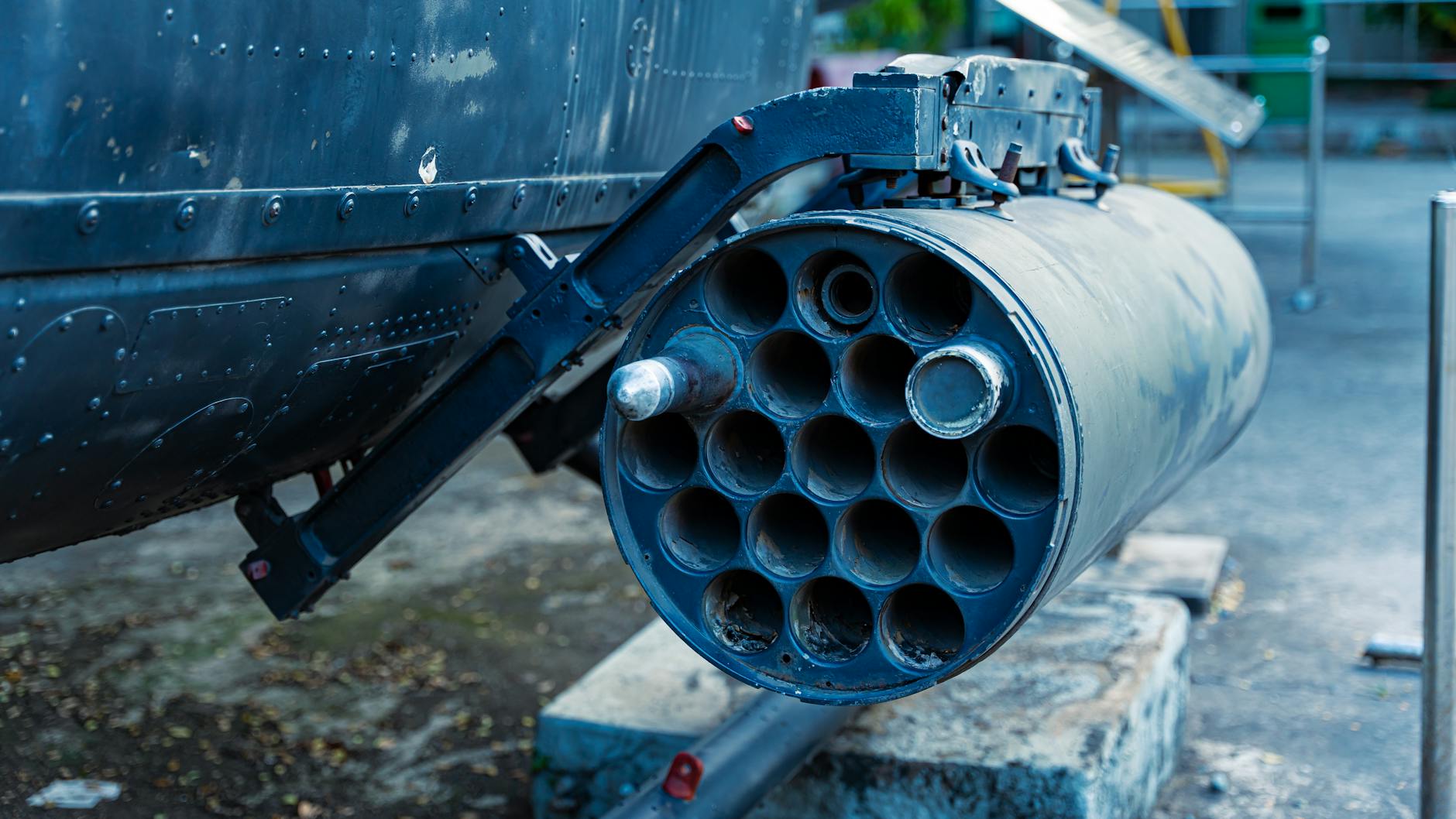
The answer is straightforward and brutal: the Islamic Revolutionary Guard Corps will make the rules in post-war Iran. With Supreme Leader Ayatollah Ali Khamenei killed in the opening hours of Operation Epic Fury on February 28, 2026, the IRGC has moved swiftly to consolidate power, installing Khamenei’s son Mojtaba as the new Supreme Leader on March 8 and placing former Quds Force founding commander Ahmad Vahidi at the center of all high-level decision-making. The organization controls Iran’s ballistic missile arsenal, its drone fleet, its airspace, and an estimated one million Basij paramilitary fighters spread across 31 provinces — each with its own weapons depots and independent command-and-control capability.
In a country where ordinary citizens have no firearms rights, whoever holds the guns holds the future, and that is unambiguously the IRGC. This reality carries echoes of post-invasion Iraq, where the collapse of centralized authority did not produce democracy but rather armed factional chaos that took years and hundreds of thousands of lives to even partially resolve. The difference in Iran is that the IRGC never collapsed — it was designed to survive exactly this kind of decapitation strike through its “Mosaic Defense” strategy, which distributes command authority across dozens of regional headquarters. What follows in this article is a closer examination of how that armed power structure works, why international law has failed to constrain the conflict, what role Turkey and civilian resistance movements may play, and why Congress faces a constitutional deadline that could reshape American involvement entirely.
Table of Contents
- Who Has the Most Weapons in Post-War Iran, and Why Does That Decide Everything?
- The Mosaic Defense Strategy and Why Decapitation Strikes Did Not Break the IRGC
- The Basij Factor and the Economics of Paramilitary Loyalty
- Turkey’s Play for Regional Power and What It Means for Iran’s Future
- The Legal Black Hole — International Law and the War Powers Resolution
- The Kaveh Organization and Civilian Resistance
- What Comes Next — The 90-Day Window and Beyond
- Conclusion
- Frequently Asked Questions
Who Has the Most Weapons in Post-War Iran, and Why Does That Decide Everything?
The irgc‘s dominance is not accidental — it is structural. Unlike a conventional military that answers to civilian leadership, the IRGC was built as a parallel state with its own economy, its own intelligence apparatus, and its own foreign policy arm in the Quds Force. Each of Iran’s 31 provinces hosts an IRGC headquarters capable of operating independently if central command is destroyed. Each regional commander has named successors three ranks deep. This is an organization that planned for the death of its supreme leader and kept functioning without missing a beat.
By contrast, Iran’s elected institutions — the parliament, the presidency — have no armed forces answering to them and no independent security infrastructure. The Citizens Committee for the Right to Keep and Bear Arms highlighted a factor that Americans may find particularly striking: Iranian citizens have no legal right to own firearms. This means the power asymmetry between the IRGC and the Iranian public is nearly absolute. Compare this to post-conflict environments like Libya or Syria, where civilian militias and tribal armed groups created a messy but at least multi-polar power landscape. In Iran, the armed monopoly belongs almost entirely to the IRGC and its Basij auxiliaries. When a single organization controls every weapons depot in the country and the population has no means of armed resistance, the question of who writes the post-war rules answers itself.

The Mosaic Defense Strategy and Why Decapitation Strikes Did Not Break the IRGC
The U.S. and Israeli strikes under Operations Epic Fury and Roaring Lion targeted iranian leadership and military infrastructure with the apparent assumption that eliminating top figures would create chaos within the IRGC’s ranks. That assumption has proven largely wrong. The Mosaic Defense strategy, developed specifically to counter a technologically superior adversary, distributes decision-making authority so that no single strike or series of strikes can paralyze the organization. Regional commanders are empowered to act autonomously, and the three-deep succession planning means that even if a provincial IRGC chief is killed, the next commander steps in with pre-established authority.
However, the strikes were not without effect. As of March 8, Iran’s missile launch rate had dropped to roughly 10 percent of Day 1 levels, indicating significant degradation of launch infrastructure and supply chains. This matters because it suggests the IRGC’s offensive capability has been weakened even as its internal grip on power has tightened. The danger here is a scenario familiar from other conflicts: a wounded military apparatus that cannot project power outward but retains more than enough force to dominate its own population. If the IRGC cannot fire missiles at Israel, it can still deploy a million Basij members against Iranian civilians who dare to protest. Pre-war Israeli intelligence estimates suggested Iran could reach 8,000 ballistic missiles by next year, but that projection assumed a functioning industrial base and economy — both of which are now under severe strain.
The Basij Factor and the Economics of Paramilitary Loyalty
The Basij paramilitary force, estimated at roughly one million members, remains the IRGC’s primary tool for internal control. These are the fighters who suppress protests, enforce religious law, and act as the regime’s eyes and ears in neighborhoods across Iran. They are not professional soldiers in the traditional sense — many are young men and women recruited with stipends, social benefits, and ideological conditioning. They have been the blunt instrument deployed against every major protest movement in recent iranian history, from the 2009 Green Movement to the 2022 Mahsa Amini uprising. But there is a crack in this system.
Basij stipends are losing purchasing power rapidly due to Iran’s accelerating economic crisis, compounded now by the costs of war and further international isolation. History shows that when paramilitary pay cannot keep pace with inflation, participation rates drop. Fighters who joined for economic survival rather than ideological commitment begin to disappear. This happened with Iraqi militias, with Afghan local police forces, and with various Syrian pro-government paramilitaries. If the IRGC cannot pay its foot soldiers, the organization’s ability to project power domestically could erode from the bottom up — not because of American bombs, but because of basic economics. NBC News reported young Iranian men declaring “Either freedom or death,” and the willingness of civilians to resist may grow in direct proportion to the Basij’s declining morale and cohesion.
Turkey’s Play for Regional Power and What It Means for Iran’s Future
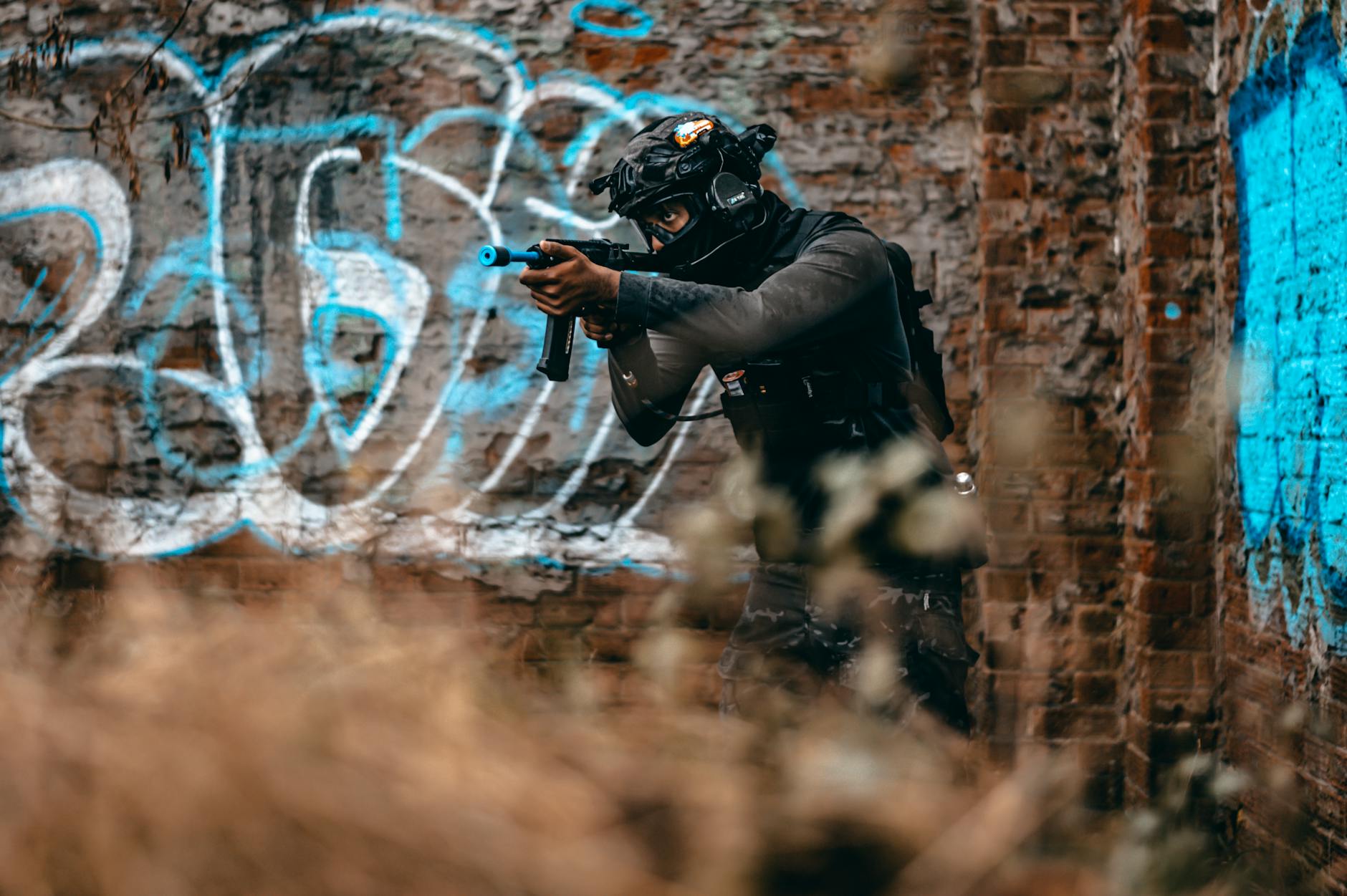
While the world focuses on the U.S.-Israel strikes and the IRGC’s internal consolidation, Turkey is quietly positioning itself to fill the regional vacuum. According to analysis from the Foundation for Defense of Democracies, Ankara has been leveraging its drone industry and existing militia networks across the Muslim world to extend influence into spaces where Iranian proxy power is weakening. Turkey’s Bayraktar drones have already reshaped battlefields in Libya, Syria, and the Nagorno-Karabakh conflict, and the collapse of Iranian forward projection through Hezbollah and Hamas-linked Quds Force operations creates openings that Ankara is eager to exploit. The tradeoff here is significant.
A Turkish-filled vacuum might bring a NATO-aligned power into spaces previously dominated by Iranian proxies, which some in Washington may view as preferable. But Turkey under President Erdogan has its own authoritarian tendencies, its own Kurdish conflict, and its own pattern of supporting Islamist factions that do not align with American interests. Replacing Iranian influence with Turkish influence is not a clear win — it is a lateral move that trades one set of problems for another. For the Iranian people, Turkish involvement may mean little beyond a reshuffling of which foreign power’s proxies operate on their borders.
The Legal Black Hole — International Law and the War Powers Resolution
The U.S.-Israel strikes on Iran sit in deeply contested legal territory. There was no UN Security Council authorization. The self-defense justification under Article 51 of the UN Charter is widely disputed, since Iran had not launched an armed attack against the United States. The Washington Post’s editorial board noted that the strikes represent a moment where “international law no longer fits reality” — a polite way of saying the rules-based international order took a body blow. Whether one supports or opposes the strikes, the legal precedent being set is that major powers can launch preemptive wars against sovereign nations based on threat perception rather than imminent attack.
Domestically, the 1973 War Powers Resolution requires Congress to authorize continued hostilities beyond 90 days. That clock is ticking. The administration will need to either secure congressional approval, withdraw forces, or test whether the War Powers Resolution has any remaining teeth — a question that every president since Nixon has preferred to leave unanswered. The limitation here is real: if Congress does not authorize continued operations, any sustained American involvement in shaping post-war Iran becomes legally indefensible, even by the generous standards of executive war-making authority. Americans should be watching their representatives closely on this vote, because it will determine whether the country is committed to a long-term presence in yet another Middle Eastern conflict zone.
The Kaveh Organization and Civilian Resistance
Not everyone in Iran is waiting for the IRGC to dictate the future. The Kaveh organization was founded in direct response to reported IRGC massacres, representing an attempt to build civilian resistance from the ground up.
📨 Get Free Accountability Coverage Alerts
Free · No spam · Unsubscribe anytime
Named after a mythological Iranian blacksmith who led a revolt against tyranny, the group reflects a pattern seen in other post-conflict societies where ordinary people organize against armed factions out of desperation rather than ideology. The challenge Kaveh and groups like it face is existential: they are organizing against an opponent that controls every significant weapons depot in the country, has a million-strong paramilitary force, and has decades of experience crushing dissent. Without external arms supplies or a fracturing of the IRGC itself, civilian resistance groups face overwhelming odds.
What Comes Next — The 90-Day Window and Beyond
The next three months will likely determine Iran’s trajectory for a generation. The War Powers Resolution deadline will force a congressional debate that could either legitimize or curtail American involvement.
The IRGC’s economic ability to maintain Basij loyalty will be tested as sanctions, war damage, and inflation compound. And the installation of Mojtaba Khamenei as Supreme Leader — a figure with deep IRGC ties but no independent political base — will be tested by whether he can hold the loyalty of regional commanders who now have the weapons and the autonomy to act on their own. The people with the most weapons will make the rules, but how long they can sustain that dominance depends on money, morale, and whether the international community offers the Iranian people anything beyond bombs and sanctions.
Conclusion
The post-war power equation in Iran is defined by a single unavoidable fact: the IRGC controls the weapons, the territory, and the paramilitary manpower, while ordinary Iranians have been systematically disarmed for decades. The killing of Ayatollah Khamenei did not create a democratic opening — it triggered a consolidation of military power under IRGC-aligned figures who had prepared for exactly this scenario. The Mosaic Defense strategy ensured institutional survival, and the rapid installation of Mojtaba Khamenei as Supreme Leader signals continuity, not reform. For Americans, the critical questions are legal and constitutional.
The War Powers Resolution gives Congress 90 days to decide whether this conflict has authorization, and that vote will matter more than any military operation in determining long-term U.S. involvement. For Iranians, the path forward depends on whether economic deterioration erodes the Basij’s loyalty faster than the IRGC can consolidate its grip. History suggests that armed monopolies eventually fracture — but the human cost of waiting for that fracture can be staggering.
Frequently Asked Questions
Did the U.S. strikes on Iran have legal authorization?
The strikes are widely considered to lack both UN Security Council authorization and a clear self-defense justification under Article 51 of the UN Charter. Domestically, the War Powers Resolution requires congressional authorization for continued hostilities beyond 90 days.
Who is Mojtaba Khamenei?
Mojtaba Khamenei is the son of the late Supreme Leader Ayatollah Ali Khamenei. He was elected as the new Supreme Leader on March 8, 2026, following his father’s death in the initial U.S.-Israel strikes. His selection is viewed as representing IRGC-hardliner consolidation of power.
How effective were the strikes at degrading Iran’s military capability?
As of March 8, 2026, Iran’s missile launch rate had dropped to approximately 10 percent of Day 1 levels. However, pre-war Israeli intelligence estimated Iran could reach 8,000 ballistic missiles by next year, though that projection assumed a functioning economy and industrial base.
What is the Mosaic Defense strategy?
Mosaic Defense is the IRGC’s decentralized command structure in which each of Iran’s 31 provinces has its own IRGC headquarters with independent command-and-control capability. Each commander has named successors three ranks deep, allowing the organization to survive leadership decapitation strikes.
Can Iranian civilians resist the IRGC?
Iranian citizens have no legal firearms rights, creating an extreme power asymmetry. Organizations like the Kaveh resistance group have formed, but they face an opponent with overwhelming force advantages. Economic deterioration of Basij stipends may weaken the IRGC’s grip over time more than armed resistance can.
What role is Turkey playing in the aftermath?
Turkey is positioning to fill the regional power vacuum through its drone industry and militia networks. The Foundation for Defense of Democracies has warned about Turkish ambitions in spaces previously dominated by Iranian proxies, particularly as Quds Force-linked operations weaken.
You Might Also Like
- The Iran War Will Cost American Lives, Trillions of Dollars, and Decades of Attention
- The Iran War Started on a Saturday Morning — Most Americans Found Out on Their Phones
- The American Public Was Never Asked Whether They Wanted a War With Iran