
Whether Operation Epic Fury was worth it is not a question anyone can answer on March 2, 2026 — two days into a war that President Trump himself says could last four weeks or longer. The honest answer is that the operation’s worth will be determined entirely by what follows the initial shock-and-awe campaign: whether Iran’s regime actually collapses from within, whether the roughly 400 kilograms of 60% enriched uranium sitting at an unknown location is secured, and whether the United States avoids the kind of open-ended Middle Eastern conflict that has defined — and drained — American foreign policy for a generation. Right now, with six U.S. service members dead, Brent crude surging nearly 8%, and 150-plus ships sitting idle outside the Strait of Hormuz, the ledger is open and the costs are mounting. What we can assess right now are the verifiable facts on the ground.
U.S. Central Command launched nearly 900 strikes in the first 12 hours, hitting over 1,250 targets within 48 hours. Israel’s parallel Operation Roaring Lion killed Supreme Leader Ayatollah Ali Khamenei along with Iran’s defense minister, head of armed forces, and IRGC commander — decapitating the regime’s senior military and political leadership in a single stroke. These are extraordinary military achievements by any measure. But as the Stimson Center and Atlantic Council analysts have already warned, air strikes alone have never toppled a government, and Iran is “likely to emerge battered but not broken.” This article examines the military results so far, the nuclear question that remains unanswered, the economic fallout already rippling through global markets, and the scenarios that will ultimately determine whether this operation was a historic success or a catastrophic miscalculation.
Table of Contents
- What Has Operation Epic Fury Actually Accomplished So Far?
- The Nuclear Question That Strikes Cannot Answer
- The Economic Shockwave Is Already Here
- Iran’s Retaliation Capabilities — Degraded but Not Eliminated
- The Regime Change Gamble and Its Historical Track Record
- What the Next Four Weeks Will Reveal
- The Accountability Question Americans Should Be Asking
- Conclusion
- Frequently Asked Questions
What Has Operation Epic Fury Actually Accomplished So Far?
On paper, the initial results are staggering. The combined U.S.-Israeli campaign struck across multiple domains — air, sea, cyber, and intelligence — targeting Iran’s missile production sites, naval assets, air defenses, and leadership infrastructure. Trump described it as “one of the largest, most complex, most overwhelmingly military offensives” the world has ever seen, and while presidential superlatives deserve skepticism, the scale is genuinely difficult to dispute. Over 1,250 targets in 48 hours represents a tempo that dwarfs the opening of the Iraq War. The killing of Khamenei and Iran’s top military brass represents the most significant leadership decapitation since the U.S. killed Qasem Soleimani in January 2020 — except this time, the entire senior command structure was eliminated simultaneously.
For comparison, the Soleimani strike removed one commander and Iran’s proxy networks continued operating with minimal disruption. Operation Epic Fury’s theory of the case is that removing the entire top layer at once, combined with sustained strikes on military infrastructure, will create the conditions for internal collapse. That theory is unproven, and previous U.S. experiences with regime decapitation — from Iraq to Libya — offer decidedly mixed precedent. The five stated military objectives range from achievable (destroying missile sites and Iran’s navy) to aspirational (regime change from within). The Pentagon can crater a missile factory. Whether it can engineer the political collapse of a 47-year-old theocratic state through external pressure alone is a fundamentally different question, and the one that will define this operation’s legacy.

The Nuclear Question That Strikes Cannot Answer
The centerpiece justification for Operation Epic Fury is preventing Iran from acquiring a nuclear weapon, but the inconvenient truth is that the most critical nuclear threat may already be beyond the reach of airpower. The Center for Strategic and International Studies has assessed that prior strikes under Operation Midnight Hammer in June 2025 already decimated Iran’s primary enrichment facilities at Fordow and Natanz and destroyed metallurgy capabilities at Isfahan. The current campaign is targeting what CSIS calls “peripheral nuclear capabilities” — administrative hubs and dual-use scientific research facilities. These are real targets, but they are not the core of the problem. The core of the problem is approximately 400 kilograms of 60% enriched uranium sitting at an unknown location inside Iran. That material, if enriched further to weapons-grade, represents enough fissile material for multiple nuclear devices.
No amount of precision bombing can destroy material you cannot find. However, if the strikes succeed in collapsing the organizational structure of the Atomic Energy Organization of Iran, the proliferation risk could actually increase rather than decrease. CSIS analysts have flagged that Iran’s nuclear and missile scientists may scatter if institutional control breaks down, creating non-state proliferation risks that are far harder to contain than a centralized state program. This is the paradox at the heart of the nuclear justification. A strike campaign effective enough to destroy Iran’s institutional capacity may simultaneously disperse the human expertise and material that makes a nuclear weapon possible. If the regime falls in an orderly fashion and successor authorities secure nuclear materials, the operation will be vindicated. If the collapse is chaotic — as collapses tend to be — the operation may have accelerated the very proliferation it was designed to prevent.
The Economic Shockwave Is Already Here
Whatever the military outcome, the economic costs of Operation Epic Fury are not theoretical — they are arriving in real time. By the morning of March 2, Brent crude had hit a 52-week high at $78.41, up 7.6%, with WTI rising 7.4% to $72.01. Analysts are already forecasting potential spikes to $100 per barrel if disruptions to the Strait of Hormuz persist. The strait handles roughly 20 million barrels per day, accounting for approximately 20% of global seaborne oil trade. Tanker traffic through the strait has dropped an estimated 70%, with over 150 ships anchored outside, unable or unwilling to transit. The shipping industry’s response has been swift and unambiguous.
Maersk, MSC, Hapag-Lloyd, and other major carriers have suspended all transit through the strait. Very Large Crude Carrier transport rates from the Persian Gulf to China have exploded from roughly $2.50 per barrel to approximately $20 per barrel — an eightfold increase that will be passed directly to consumers and refiners. For context, China imports roughly 10 million barrels per day, a significant portion of which transits the Hormuz chokepoint. The economic ripple effects will reach American gas stations, European factories, and Asian manufacturing hubs within weeks. The administration has not yet addressed the economic dimension in detail. If the operation concludes quickly and the strait reopens, the price spike will be a temporary disruption. If the conflict drags on — and trump himself has acknowledged casualties are expected to be “quite a bit higher” going forward — the cumulative economic damage could become a defining political liability, particularly for an administration that campaigned on lowering costs for American families.

Iran’s Retaliation Capabilities — Degraded but Not Eliminated
Iran has already responded to Operation Epic Fury with strikes against U.S. military installations across the region, targeting Naval Support Activity Bahrain, Al Udeid Air Base in Qatar, Ali Al Salem in Kuwait, Al Dhafra in the UAE, and Muwaffaq Al Salti in Jordan. Six U.S. service members have been killed since the start of hostilities. The geographic spread of these retaliatory strikes demonstrates that Iran retains the ability to threaten American forces across the entire Persian Gulf footprint, even under the most intense bombardment the U.S. has ever directed at a single adversary. The cyber dimension, by contrast, has been surprisingly muted. Recorded Future analysts noted that Iran has largely cut its own internet connectivity, which — while serving domestic censorship purposes — has simultaneously limited its ability to conduct offensive cyber operations against U.S.
targets. This is a meaningful development. Iran’s cyber capabilities were widely considered among its most potent asymmetric tools, and the fact that regime survival instincts (controlling domestic information) have essentially sidelined this capability is an unexpected benefit of the pressure campaign. The tradeoff the administration faces is straightforward: the longer the operation continues, the more opportunities Iran has to inflict casualties on U.S. forces scattered across multiple regional bases, and the more time proxy networks in Iraq, Syria, Lebanon, and Yemen have to organize retaliatory strikes of their own. A short, decisive campaign minimizes these risks. A prolonged one multiplies them. Trump’s estimate of “four weeks or less” is doing a lot of work in this equation, and the “or less” qualifier will matter enormously.
The Regime Change Gamble and Its Historical Track Record
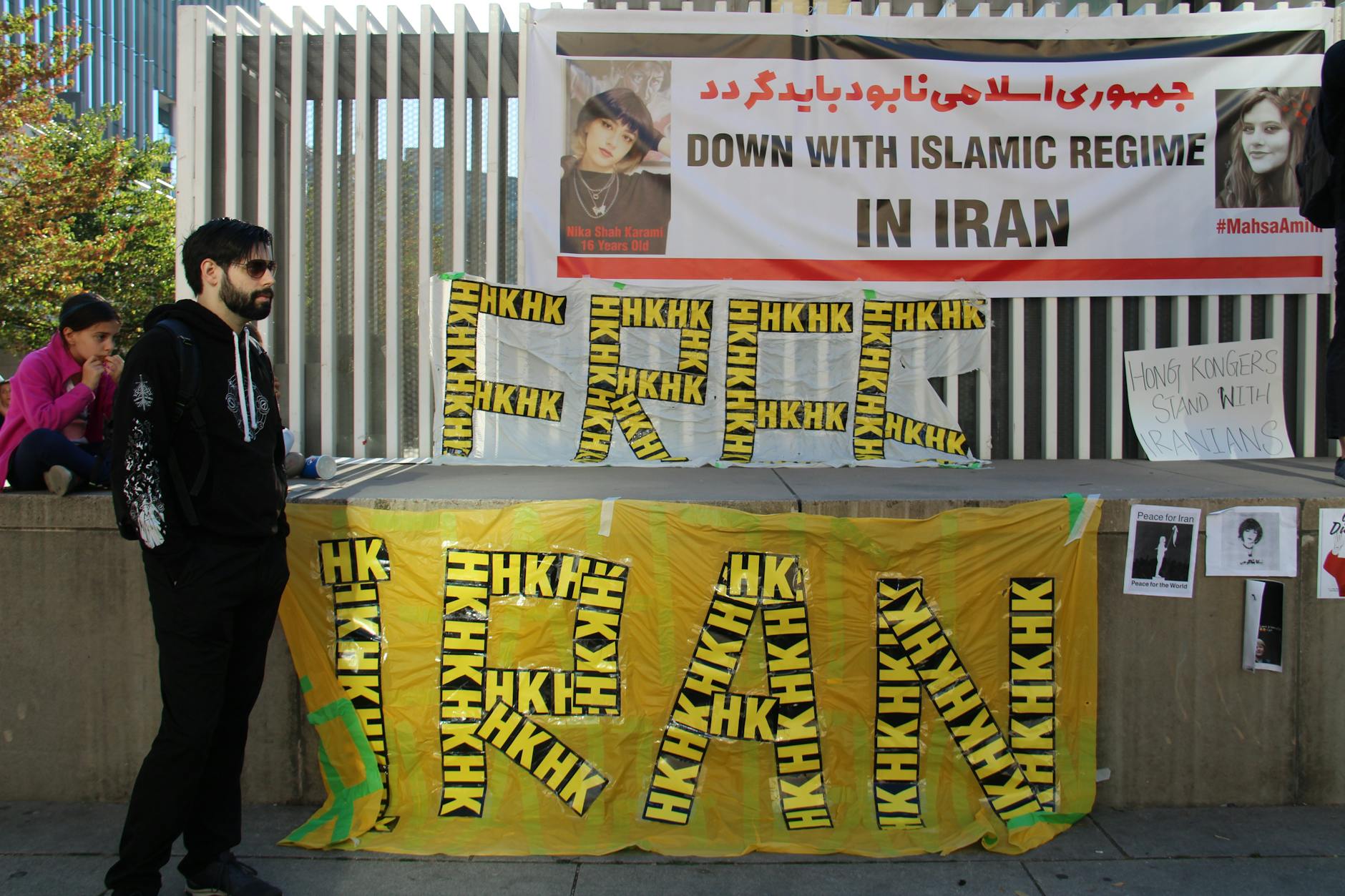
The most ambitious — and most uncertain — objective of Operation Epic Fury is the desired political outcome of regime change from within. The theory is that eliminating Iran’s senior leadership, destroying its military infrastructure, and demonstrating overwhelming force will catalyze an internal uprising or power realignment that produces a fundamentally different Iranian government. It is a theory that has been tried before, with results that should give any honest observer pause. The Atlantic Council and Stimson Center experts have already flagged the most likely post-regime scenario: not democracy, not a liberal reformist government, but what analysts are calling “IRGCistan” — a military-controlled state with a symbolic supreme leader but actual power concentrated in the Islamic Revolutionary Guard Corps.
The IRGC has operated as a parallel state within Iran for decades, controlling vast economic enterprises, intelligence networks, and military forces. The elimination of the supreme leader and top brass does not eliminate this institutional infrastructure. It may, in fact, remove the one civilian authority that could occasionally restrain it. The central question analysts are raising deserves to be stated plainly: Can external military pressure produce internal regime change in a country that has operated under IRGC discipline for 47 years? The historical evidence from Iraq, Libya, and Afghanistan suggests that destroying a regime from the outside is far easier than building a stable replacement. The greatest danger, as multiple analysts have noted, is a prolonged campaign that fails to produce dramatic internal change and lacks a defined exit strategy — “an open-ended conflict with no visible conclusion on the horizon.”.
What the Next Four Weeks Will Reveal
The next four weeks — the timeline Trump has set for the operation — will answer several binary questions that determine everything. Does Iran’s internal power structure fracture or consolidate? Do mass protests erupt, or does the population rally around the flag? Is the 400 kilograms of enriched uranium secured, or does it disappear into a fragmented landscape? Does the Strait of Hormuz reopen, or do oil prices continue climbing toward $100? Each of these outcomes is genuinely uncertain as of March 2, 2026.
📨 Get Free Accountability Coverage Alerts
Free · No spam · Unsubscribe anytime
The administration is betting that the sheer scale and speed of the assault — combined with Israel’s decapitation of the senior leadership — will produce cascading failures within the Iranian state. If that bet pays off, Operation Epic Fury will be remembered as a decisive action that eliminated a nuclear threat and liberated a population. If it does not, it will be remembered as the opening chapter of America’s next forever war.
The Accountability Question Americans Should Be Asking
Regardless of one’s position on the wisdom of this operation, the accountability framework matters. Congress has not authorized this war. The administration’s legal basis has not been publicly detailed. The economic consequences are being borne by global consumers and regional allies who had no voice in the decision. And the human cost — six American service members dead in the first 72 hours, with the administration’s own expectation of “quite a bit higher” casualties ahead — demands that every claim made to justify this operation be rigorously verified against outcomes.
The coming weeks will provide the evidence. Americans should insist on seeing it clearly, without the fog of triumphalism or the distortion of political spin. The question is not whether the strikes were impressive — they were. The question is whether they produce a world that is meaningfully safer, more stable, and less likely to require the next operation. That verdict is still out.
Conclusion
Operation Epic Fury represents the most significant U.S. military action in the Middle East since the 2003 invasion of Iraq, and the parallels — both encouraging and alarming — are difficult to ignore. The military execution has been extraordinary by any technical measure: over 1,250 targets struck in 48 hours, Iran’s senior leadership eliminated, and its conventional military capabilities severely degraded. But the history of American military interventions teaches that the initial campaign is the easy part. The hard part is everything that follows.
The measurable costs are already accumulating — six service members killed, oil prices surging, global shipping disrupted, and an estimated 400 kilograms of enriched uranium unaccounted for. The measurable benefits remain largely in the future tense: regime change that has not yet occurred, a nuclear threat that has been degraded but not eliminated, and regional stability that is further away today than it was a week ago. Whether this operation was worth it is not a question of opinion or partisanship. It is a question that will be answered by facts on the ground over the coming weeks and months. Those facts deserve rigorous, ongoing scrutiny from every American who will bear the consequences.
Frequently Asked Questions
What is Operation Epic Fury?
Operation Epic Fury is a large-scale U.S. military campaign launched on February 28, 2026, by U.S. Central Command in coordination with Israel’s Operation Roaring Lion. It is a multi-domain precision strike campaign targeting Iranian military, nuclear, and leadership infrastructure. Over 1,250 targets were struck in the first 48 hours.
How many U.S. casualties have there been?
As of March 2, 2026, six U.S. service members have been killed since the start of the operation. President Trump told the New York Times that his administration expects casualties to be “quite a bit higher” going forward.
Was Iran’s nuclear program destroyed?
Iran’s primary enrichment facilities at Fordow and Natanz were already damaged in Operation Midnight Hammer in June 2025. Current strikes are targeting peripheral nuclear capabilities. However, Iran still possesses approximately 400 kilograms of 60% enriched uranium at an unknown location, which remains a significant unresolved proliferation risk.
How is the conflict affecting oil prices?
Brent crude hit a 52-week high at $78.41 (up 7.6%) and WTI rose to $72.01 (up 7.4%) as of March 2, 2026. Tanker traffic through the Strait of Hormuz has dropped approximately 70%, with major shipping companies suspending all transit. Analysts forecast prices could reach $100 per barrel if disruptions persist.
What happened to Iran’s leadership?
Supreme Leader Ayatollah Ali Khamenei was killed in an Israeli strike on Tehran, along with Iran’s defense minister, head of armed forces, and IRGC commander. This represents one of the most significant leadership decapitations in modern military history.
How long is the operation expected to last?
President Trump stated the operation could take “four weeks or less,” though the open-ended nature of the stated objectives — particularly the desired outcome of regime change from within — has raised concerns among analysts about the potential for a prolonged conflict without a defined exit strategy.
You Might Also Like
- The 1979 Hostage Crisis Started It All — Here’s How We Got to Operation Epic Fury in 2026
- Putin’s Strategic Calculation Just Changed Because of Operation Epic Fury
- The Geopolitical Fallout From Epic Fury Will Last Far Longer Than the Bombing