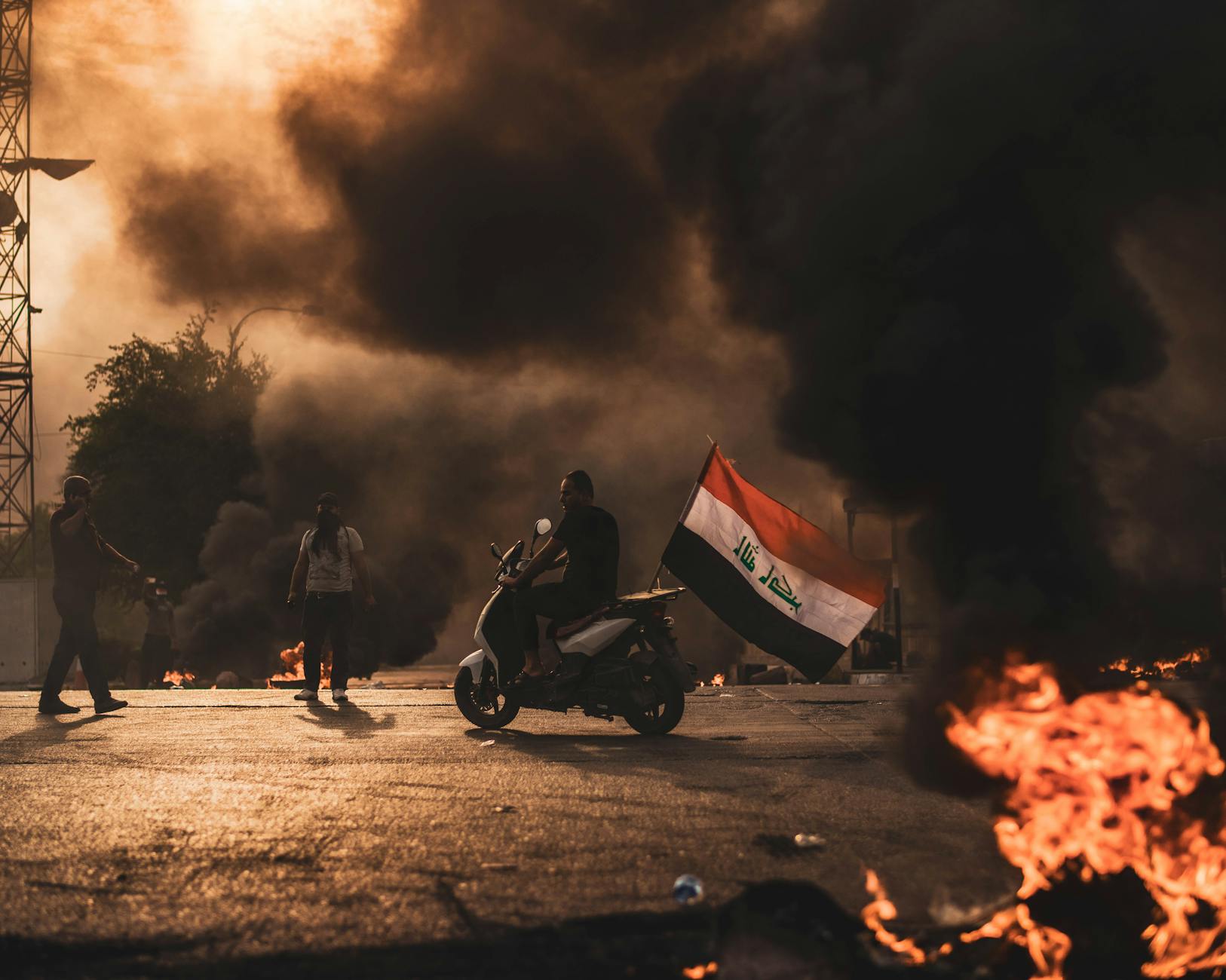
Iraq’s government has formally demanded an immediate ceasefire after US-Israeli military strikes hit targets on Iraqi soil, killing at least six fighters affiliated with Iran-backed paramilitary groups across two separate incidents. Prime Minister Mohammed Shia al-Sudani, chairing an emergency meeting of senior military and security officials, declared that “the Iraqi government and people reject war and aggression in all its forms” and called for all parties to return to the negotiating table. The strikes, which began on February 28, 2026, targeted the Jurf al-Sakher base in southern Iraq — a facility housing the Popular Mobilisation Forces and Kataib Hezbollah — and were followed by a separate airstrike in Diyala province on March 1 that killed four additional PMF members.
The situation represents a serious test of Iraqi sovereignty at a moment when the country has been working to stabilize its internal security environment and maintain functional relationships with both Washington and Tehran. Iraq now finds itself caught in the crossfire of a broader US-Israeli military campaign against Iran, with allied Iran-backed groups inside Iraq already threatening retaliation against American forces. This article examines what the Iraqi government has actually said, the diplomatic maneuvering underway, the legal and sovereignty questions at stake, and what the escalation means for the region’s already fragile stability.
Table of Contents
- What Did Iraq’s Government Actually Demand After Strikes Hit Iraqi Territory?
- The Casualties and Targets — What Actually Happened on the Ground
- Iraq’s Diplomatic Balancing Act Between Washington and Tehran
- What Options Does Iraq Have to Protect Its Sovereignty?
- The Retaliation Threat and the Risk of Escalation Inside Iraq
- Regional Diplomacy and the Oman Channel
- What Comes Next for Iraq and the Region
- Conclusion
- Frequently Asked Questions
What Did Iraq’s Government Actually Demand After Strikes Hit Iraqi Territory?
The Iraqi response was unambiguous in its language, even if the country’s leverage remains limited. Al-Sudani’s government called for an “immediate cessation of military operations” and a return to dialogue and peaceful means consistent with international law. The prime minister personally warned that the region faces “a dangerous slippery slope that threatens its overall security and stability,” framing the strikes not as an isolated incident but as part of a pattern that could pull the entire middle east into wider war.
Critically, Iraq stated explicitly that its territory “will not be used as a passage or launch pad” for attacks on Iran — a message directed at both Washington and Tehran. Foreign Minister Fuad Hussein reinforced this position, stating bluntly that “war cannot be a means to solve problems.” The government’s statement went further than previous Iraqi protests over sovereignty violations, warning that “the entire region will be exposed to unpredictable consequences” and that “major countries, particularly the US, must act responsibly” by pursuing options beyond military force. Compare this to Iraq’s more muted responses to earlier US strikes on Iranian-aligned targets in 2024: the tone this time is sharper, the demands more explicit, and the diplomatic follow-through more immediate — al-Sudani met with British Ambassador Stephen Hitchen on the same day as the initial strikes to discuss the security developments.
The Casualties and Targets — What Actually Happened on the Ground
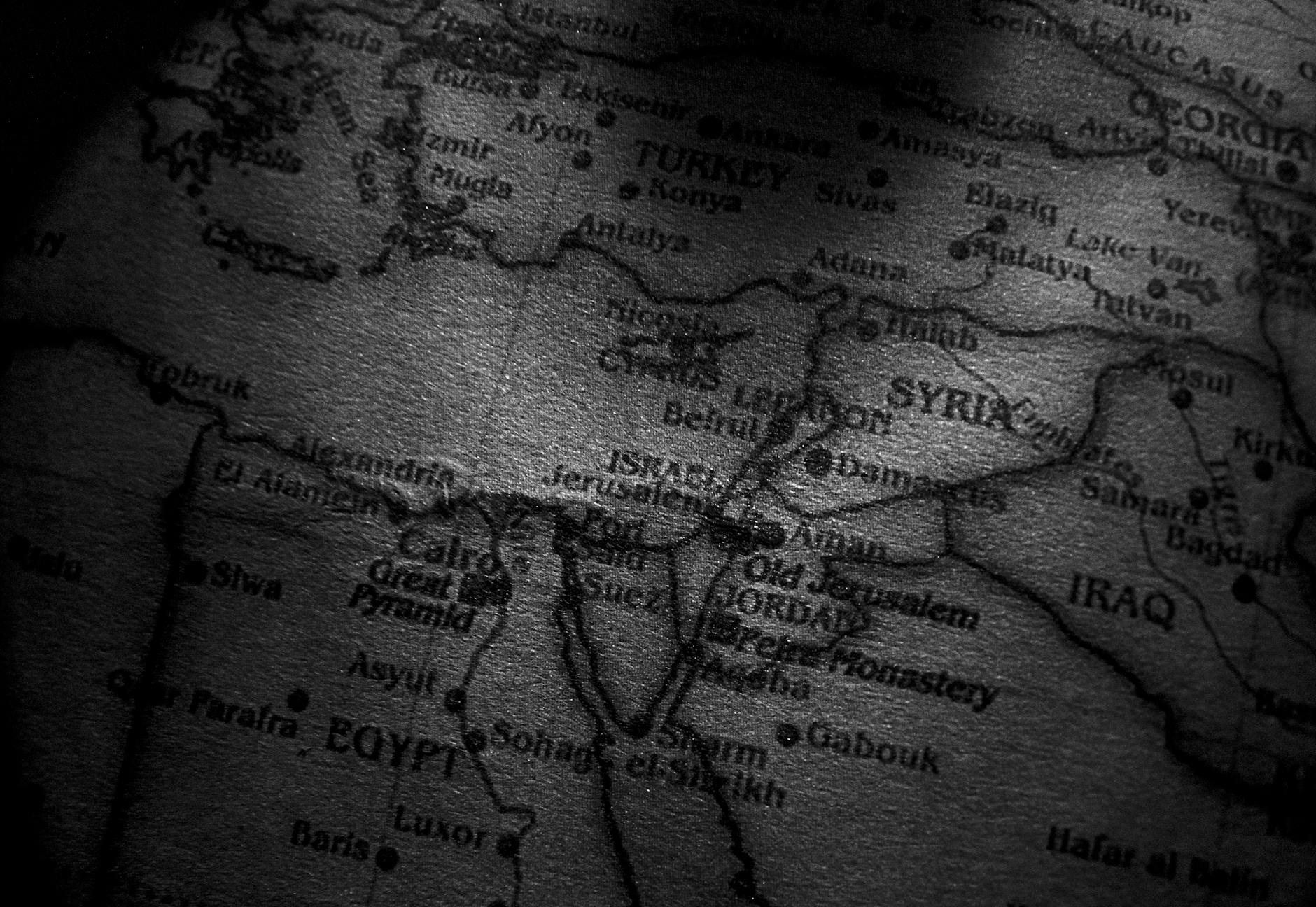
The February 28 strikes hit the Jurf al-Sakher base, also known as Jurf al-Nasr, located in southern Iraq. This facility is significant because it serves as a headquarters for both the state-sanctioned Popular Mobilisation Forces and the Iran-backed paramilitary group Kataib Hezbollah. At least two Kataib Hezbollah fighters were killed and five wounded in that initial attack. A day later, on March 1, a separate airstrike in eastern Diyala province killed four PMF members and wounded two others, bringing the confirmed death toll on Iraqi soil to at least six. The distinction maintains close operational ties to Iran’s Islamic Revolutionary Guard Corps. When the US strikes a PMF base, it is hitting a facility that falls under Iraqi government authority, which is precisely why Baghdad’s sovereignty complaints carry legal weight. However, if the targeted groups were actively facilitating attacks on US forces or coordinating with Iranian military operations, Washington will argue a self-defense justification under international law. The reality is that both claims have merit, and neither fully resolves the underlying tension.
Iraq’s Diplomatic Balancing Act Between Washington and Tehran
Iraq has spent the better part of two decades trying to maintain functional relationships with both the United States and Iran — two countries that view each other as adversaries and that both maintain significant influence inside Iraq. The current crisis pushes that balancing act to a breaking point. Al-Sudani’s meeting with the British ambassador on February 28 signals an effort to engage Western allies in de-escalation, while the explicit pledge that Iraq will not serve as a launchpad for attacks on Iran is clearly directed at reassuring Tehran that Baghdad is not complicit in the US-Israeli campaign. This is not a new dilemma, but the stakes are considerably higher than in previous rounds of US-Iran tensions. When the US killed Iranian General Qassem Soleimani at Baghdad airport in January 2020, Iraq’s parliament passed a non-binding resolution calling for the expulsion of foreign troops.
That resolution was never enforced. The question now is whether al-Sudani’s government has any more practical leverage than its predecessors. The honest answer is: probably not much. Iraq hosts approximately 2,500 US troops under a bilateral security agreement, and Iran-backed factions maintain armed presence across the country. Baghdad can issue statements, but its ability to prevent either side from using Iraqi territory remains constrained by the military realities on the ground.
What Options Does Iraq Have to Protect Its Sovereignty?
Iraq’s options range from diplomatic protest to formal legal action, but each comes with significant tradeoffs. On the diplomatic front, Baghdad can escalate its complaints through the United Nations Security Council, invoking Article 2(4) of the UN Charter, which prohibits the use of force against the territorial integrity of any state. This approach has symbolic value and creates a legal record, but the US holds veto power on the Security Council, making binding enforcement action essentially impossible. A more consequential option would be to revisit the status of US forces in Iraq.
Baghdad could demand a renegotiation or termination of the bilateral security agreement that governs the American military presence. This would carry real costs — Iraq still relies on US support for counterterrorism operations against ISIS remnants, and abruptly severing that relationship could create security vacuums that Iran-backed groups would be happy to fill. The tradeoff is stark: tolerating sovereignty violations to maintain security cooperation, or asserting sovereignty at the risk of losing a counterterrorism partner. Neither choice is costless, and Iraq’s political system — divided among Shia, Sunni, and Kurdish factions with competing interests — makes any decisive action difficult to sustain.
The Retaliation Threat and the Risk of Escalation Inside Iraq
The most immediate danger is not what Iraq’s government does, but what Iran-backed militias inside Iraq decide to do on their own. Allied groups have already threatened retaliation against US forces following the February 28 strikes. This is not an empty threat — between October 2023 and February 2024, Iran-backed factions launched over 170 attacks on US bases in Iraq and Syria during the Gaza conflict. A similar campaign now would put American personnel at direct risk and could trigger further US strikes, creating a cycle of escalation that Baghdad would be powerless to stop.
The limitation of Iraq’s ceasefire demand is precisely this: the Iraqi government does not exercise full operational control over the armed groups operating within its borders. The PMF is nominally under government command, but factions like Kataib Hezbollah, Asaib Ahl al-Haq, and others maintain independent chains of command that answer to Tehran as much as to Baghdad. If these groups launch attacks on US forces in Iraq, the US will likely respond with additional strikes on Iraqi soil, and al-Sudani’s calls for dialogue will be overtaken by events. This is the “dangerous slippery slope” the prime minister warned about — and Iraq’s government, despite its formal authority, may not be able to prevent the slide.
📨 Get Free Accountability Coverage Alerts
Free · No spam · Unsubscribe anytime

Regional Diplomacy and the Oman Channel
Iraq is not alone in calling for de-escalation. Oman’s foreign minister, who had been mediating between the US and Iran prior to the strikes, has separately urged a ceasefire and return to dialogue. Notably, Iran told Oman that it is “open to serious de-escalation efforts,” which suggests at least some diplomatic space remains.
The Omani channel has historically been one of the most reliable back-channel communication routes between Washington and Tehran — it played a key role in the negotiations that led to the 2015 nuclear deal. Whether that channel can produce results now depends on whether the US-Israeli military campaign has defined objectives that can be met and then paused, or whether the operation is open-ended. If the strikes are designed to achieve specific, limited military goals, a negotiated off-ramp is plausible. If the campaign’s objectives expand, or if domestic politics in the US, Israel, or Iran make compromise politically toxic, then diplomatic efforts — including Iraq’s — will struggle to gain traction.
What Comes Next for Iraq and the Region
The next several days will likely determine whether Iraq’s crisis remains a manageable diplomatic challenge or spirals into something far more dangerous. The key variable is not what governments say but what armed groups do. If Iran-backed factions inside Iraq follow through on retaliation threats, the US will almost certainly respond, and Iraq’s sovereignty will take further hits regardless of Baghdad’s protests. If, on the other hand, Tehran exercises restraint over its proxies — and if the US-Israeli campaign winds down — there is a narrow path back to the negotiating table that al-Sudani and others are calling for.
For Iraq’s government, the longer-term challenge is structural. As long as armed groups operating inside Iraq maintain independent relationships with foreign powers, Baghdad’s sovereignty claims will carry an asterisk. The current crisis has exposed, yet again, the gap between Iraq’s formal authority and its practical control over what happens on its own territory. Closing that gap requires not just diplomatic statements but institutional reforms that successive Iraqi governments have struggled to deliver.
Conclusion
Iraq’s demand for an immediate ceasefire after US-Israeli strikes killed at least six paramilitary fighters on its soil is both legally grounded and practically constrained. Prime Minister al-Sudani has made the strongest possible diplomatic case — rejecting aggression, demanding dialogue, and pledging that Iraq will not be used as a launchpad for attacks on Iran. But the gap between what Baghdad demands and what it can enforce remains the central vulnerability. The country is caught between two larger powers, with armed groups on its soil that do not fully answer to its government.
The path forward depends on whether the broader US-Israeli military campaign against Iran finds a stopping point and whether Iran-backed groups inside Iraq exercise restraint or pursue retaliation. Iraq’s government, Oman’s mediators, and other regional actors are pushing for dialogue, and Iran has signaled openness to de-escalation. But the window for diplomacy narrows with every additional strike and every retaliatory threat. What happens next in Iraq will be shaped less by Baghdad’s preferences and more by decisions made in Washington, Tel Aviv, and Tehran — a reality that underscores both the urgency and the limits of Iraq’s ceasefire demand.
Frequently Asked Questions
Did the US strike Iraqi government forces or just militia groups?
The Jurf al-Sakher base houses both the state-sanctioned Popular Mobilisation Forces and Iran-backed Kataib Hezbollah. The PMF is formally part of Iraq’s security apparatus, so the strikes did hit facilities under Iraqi government authority. The Diyala province strike on March 1 specifically killed four PMF members, further underscoring the sovereignty issue.
How many people were killed in the Iraq strikes?
At least six fighters were killed across two incidents. Two Kataib Hezbollah fighters died and five were wounded in the February 28 strike on Jurf al-Sakher. Four PMF members were killed and two wounded in the March 1 airstrike in Diyala province.
Has Iraq threatened to expel US forces?
Not yet in this round, though Iraq’s parliament passed a non-binding resolution calling for the removal of foreign troops after the 2020 killing of Qassem Soleimani. That resolution was never enforced. The current government has focused on demanding a ceasefire and dialogue rather than issuing an expulsion ultimatum.
Is Iraq likely to be drawn into a wider war?
That is the primary concern. Iran-backed groups inside Iraq have already threatened retaliation against US forces, which could trigger further US strikes and create an escalation cycle. Prime Minister al-Sudani has explicitly warned of a “dangerous slippery slope” and pledged Iraq will not be used as a launchpad, but his ability to control all armed factions remains limited.
What role is Oman playing in de-escalation?
Oman’s foreign minister, who had been mediating US-Iran talks prior to the strikes, has urged a ceasefire and return to dialogue. Iran told Oman it is open to serious de-escalation efforts. The Omani back channel has historically been one of the most effective diplomatic routes between Washington and Tehran.
You Might Also Like
- Germany Calls for an Immediate Ceasefire in Iran
- UN Security Council Emergency Meeting Called After Iran Strikes Begin
- South Korea Activates Emergency Energy Reserves After Iran Strikes