Iran’s diaspora community — estimated at several million people spread across North America, Europe, and beyond — is caught in an agonizing emotional split following the February 28, 2026 US-Israeli strikes on Iran and the killing of Supreme Leader Ali Khamenei. Some Iranian Americans celebrated openly, like those in Houston who expressed hope of finally returning home. Others, like a Nashville restaurant owner who told WSMV, “I felt very conflicted… In moments like this, it’s always the ordinary families who carry the fear and the uncertainty, not the governments,” found themselves unable to reconcile relief at the regime’s destabilization with terror for relatives trapped inside a country under bombardment and a months-long internet blackout.
This fracture did not emerge overnight. It was forged across weeks of horrifying developments: the 2025-2026 Iranian protests that left thousands dead, a near-total internet shutdown affecting 92 million citizens since January 8, 2026, and the largest coordinated diaspora mobilization in history on February 14. The emotional toll has been staggering — Iran International reported millions abroad trapped in “prolonged fear, trauma, and emotional paralysis,” refreshing news feeds and bracing for phone calls that never came. This article examines why the diaspora is so deeply divided, what the human cost looks like on both sides of that divide, and what ordinary Iranian families face as the situation continues to deteriorate.
Table of Contents
- Why Is Iran’s Diaspora Community Split Between Relief and Fear for Families Back Home?
- The Internet Blackout That Left Millions in the Dark
- The Largest Diaspora Mobilization in History
- Relief Versus Risk — The Tradeoffs of Regime Change Through Military Force
- The Psychological Toll and Survivor’s Guilt
- Where American Public Opinion Stands
- What Comes Next for Iran’s Diaspora
- Conclusion
- Frequently Asked Questions
Why Is Iran’s Diaspora Community Split Between Relief and Fear for Families Back Home?
The split reflects a fundamental tension that has defined the iranian diaspora for decades, but which the events of early 2026 have sharpened to a breaking point. Many who fled Iran — or whose parents and grandparents fled — after the 1979 revolution have long wished for the fall of the Islamic Republic. When news broke that Operation Epic Fury and Israel’s Operation Roaring Lion had killed Khamenei, cheers erupted in parts of Iran and in diaspora communities worldwide. Iranian Americans in Houston celebrated reports of the strikes, with some telling Click2Houston they hoped to eventually return home. In Ottawa, CBC News described the Iranian diaspora as openly split, with some feeling the strikes were long overdue. But hope and dread are not mutually exclusive.
An Iranian American in California with family still in Iran described her mental state to KERA News: “My brain can’t process it very well… compulsively checking the news and lots of really high emotions, like crying, probably six times a day.” The same woman reported that her brother in Tehran, who has Parkinson’s disease and diabetes, was struggling to find basic medication like insulin. This is the reality for countless diaspora families — they may welcome the political implications of the regime’s weakening while simultaneously confronting the fact that their loved ones are the ones absorbing the immediate consequences of military strikes, supply chain disruptions, and a communications blackout that has severed their ability to even confirm whether family members are alive. The divide is not cleanly ideological. It often runs through individual households and even through individual people. A person can believe the Islamic Republic deserved to fall and still lie awake at night wondering whether their elderly mother survived the latest round of explosions.
The Internet Blackout That Left Millions in the Dark
Since January 8, 2026, Iranian authorities have imposed a near-total internet and phone blackout, cutting off an estimated 92 million citizens from digital communication. Iran’s own Minister of Communications acknowledged the shutdown was costing the economy $35.7 million per day, according to Chatham House reporting, but the regime maintained it anyway — a signal of just how threatened it felt by the protest movement’s ability to organize online. For the diaspora, this blackout has been devastating in ways that go beyond politics. Families who once relied on WhatsApp messages, video calls, and social media updates to stay connected with relatives in Iran were suddenly plunged into silence. Iran International reported that the communications cutoff left millions abroad in a state of “prolonged fear, trauma, and emotional paralysis,” describing days spent refreshing news feeds and bracing for phone calls that never came. Some diaspora members ran bandwidth-sharing applications in an attempt to help users inside Iran circumvent the blackout, but these efforts reached only a fraction of the population.
However, it is worth noting that even before the blackout, information flowing out of Iran was unreliable and often contradictory. The Iranian government confirmed 3,117 deaths from the protests, while HRANA, the US-based Human Rights Activists News Agency, documented 7,015 deaths with 11,744 additional cases under review. Time, The Guardian, and Iran International reported that between 30,000 and 36,500 protesters were killed during January 8-9 alone. The massive discrepancy between these figures illustrates a grim reality: even when communication lines are open, the true scale of suffering inside Iran is difficult to verify. With the blackout in place, diaspora families are left guessing — and fearing the worst.
The Largest Diaspora Mobilization in History
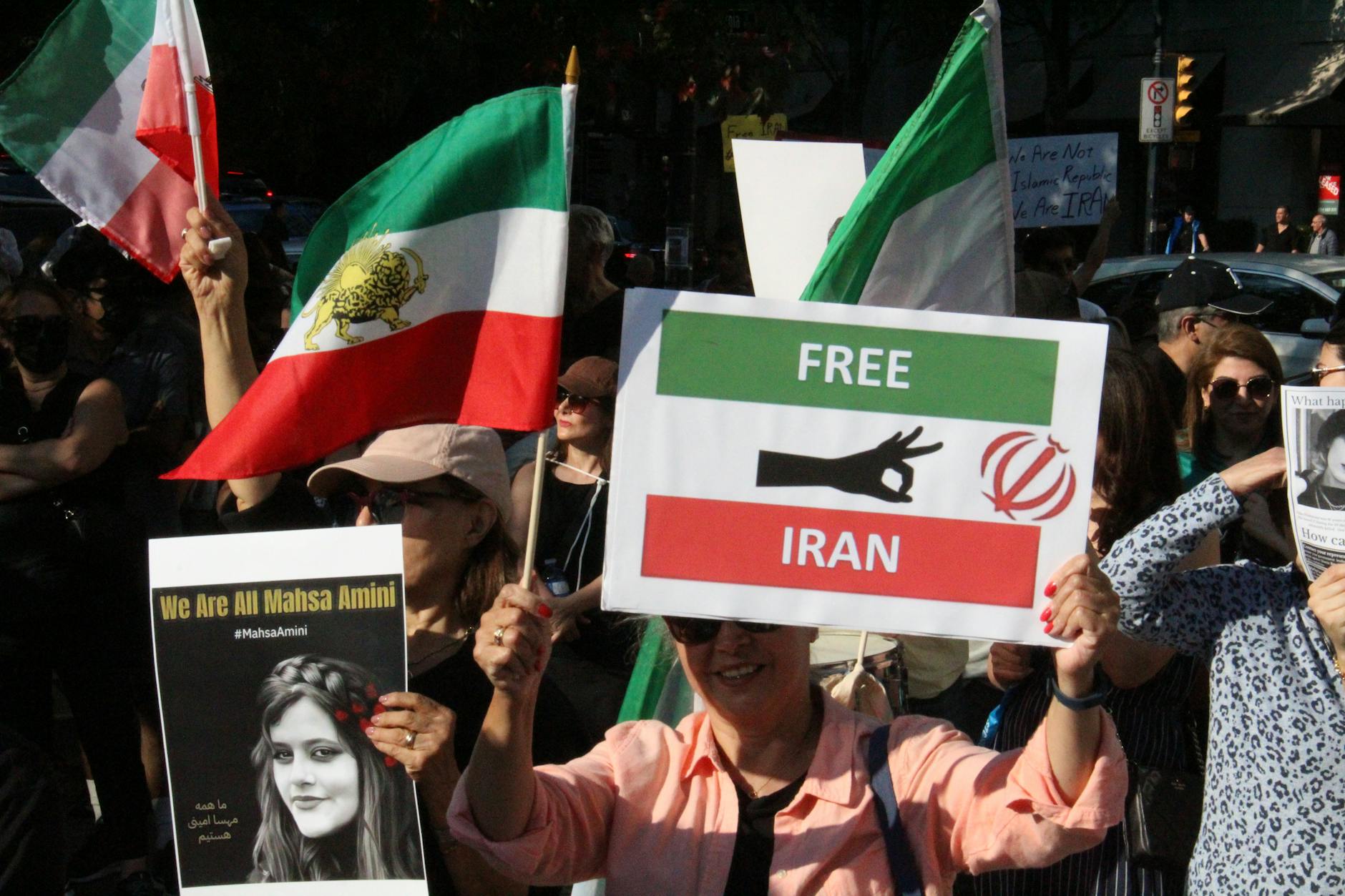
On February 14, 2026, Iranian diaspora communities staged what became the largest coordinated mobilization in their history. An estimated 250,000 people marched in Munich, 350,000 in Toronto, and 350,000 in Los Angeles, according to reports compiled by Wikipedia’s documentation of the 2026 Iranian diaspora protests. Solidarity rallies were held in more than 35 countries spanning every inhabited continent, as documented by the Museum of Protest. These protests served a dual purpose. They were a show of solidarity with protesters inside Iran who had been dying in the streets for weeks, and they were a demand that the international community pay attention.
The Museum of Protest documented how diaspora organizers coordinated across three continents, leveraging social media networks, community organizations, and informal communication chains built over years of smaller-scale activism. The scale of the February 14 mobilization reflected something beyond political organizing — it was a collective expression of grief, rage, and helplessness from people who could see their homeland burning but could not reach the people they loved inside it. The mobilization also revealed the organizational sophistication of the diaspora. Unlike earlier waves of Iranian protest activism, which were often fragmented along political and generational lines, the 2026 movement achieved a degree of unity that surprised even its participants. That unity, however, did not survive the February 28 strikes intact. The question of whether military intervention was justified fractured coalitions that had held together around the simpler demand of supporting the protest movement.
Relief Versus Risk — The Tradeoffs of Regime Change Through Military Force
For diaspora members who celebrated the strikes, the logic was straightforward: the Islamic Republic had been killing protesters by the thousands, and no amount of international condemnation or sanctions had stopped it. From this perspective, military force was the only remaining lever capable of dislodging a regime that had demonstrated its willingness to massacre its own citizens. The confirmed killing of Khamenei represented, for many, a symbolic and strategic turning point that decades of diplomacy had failed to deliver. But the opposing view within the diaspora is equally grounded in reality. Military strikes do not discriminate between regime infrastructure and civilian neighborhoods with surgical precision, and the fog of war makes accountability nearly impossible. Three American troops were killed in connection with the strikes, with President Trump stating more casualties were “likely,” according to NPR.
If American military families are absorbing losses, the toll on Iranian civilians — already battered by weeks of violent crackdowns and a communications blackout — is almost certainly far worse. In Ottawa, CBC News reported that some diaspora members worried openly that war would not bring peace, drawing on the examples of Iraq, Libya, and Afghanistan, where regime change produced years of instability rather than the democratic transitions that exiles had hoped for. The tradeoff is agonizing precisely because both positions contain truth. The regime was killing people. The strikes may also kill people. For a diaspora member whose cousin was shot at a protest and whose aunt lives near a military installation in Tehran, there is no clean moral calculation available.
The Psychological Toll and Survivor’s Guilt
The emotional damage to the diaspora community extends well beyond the immediate anxiety of not knowing whether loved ones are safe. Al Jazeera reported a pervasive sense that “everything is bad” among Iranians abroad, with fear and anxiety gripping the community amid the protests and their aftermath. Iran International documented widespread survivor’s guilt — diaspora members reporting that they feel grateful to be safe yet emotionally anchored to a country still suffering. This psychological burden is compounded by a sense of powerlessness.
Running a bandwidth-sharing app or attending a protest march provides some outlet for action, but it does not change the fundamental reality that diaspora members cannot protect their families. The woman who told KERA News about her brother’s inability to find insulin was describing a situation she could do nothing about from California. The internet blackout meant she could not even send him money through digital channels, let alone arrange for medication to reach him. Mental health professionals who work with diaspora communities have noted that the 2026 crisis is producing trauma responses that mirror those seen in refugee populations — hypervigilance, intrusive thoughts, disrupted sleep, and difficulty functioning at work or in daily life. The critical difference is that many diaspora members are outwardly comfortable, holding jobs and homes in stable countries, which can make their distress invisible to colleagues and neighbors who do not understand why someone would be falling apart over events happening thousands of miles away.
📨 Get Free Accountability Coverage Alerts
Free · No spam · Unsubscribe anytime
Where American Public Opinion Stands
Americans themselves are divided on the military strikes in Iran, according to Newsweek polling. This division matters to the diaspora because US public opinion will shape the political environment in which decisions about Iran’s future are made — including questions about sanctions relief, refugee admissions, and the scope of continued military operations.
For Iranian Americans specifically, the domestic political landscape adds another layer of complexity. Publicly celebrating the strikes risks being perceived as endorsing war; publicly opposing them risks being accused of sympathizing with the regime. Many have chosen to say nothing publicly, processing their conflicted emotions privately or within trusted community circles rather than subjecting themselves to the simplistic framing that dominates American political discourse.
What Comes Next for Iran’s Diaspora
The removal of Khamenei from power does not resolve the diaspora’s fundamental dilemma. If Iran descends into a power vacuum or prolonged instability, the danger to families inside the country may actually increase in the near term. If a transitional government emerges, diaspora members will face questions about whether and how to engage — whether to return, whether to send resources, and whether to trust that any new political arrangement will be more durable than the one that preceded it.
What is clear is that the diaspora’s role has permanently shifted. The February 14 mobilization demonstrated a capacity for organized, large-scale political action that will not simply dissipate. Whether that energy is channeled into reconstruction, advocacy, or continued protest will depend on what happens inside Iran in the coming weeks and months — and on whether the communications blackout lifts enough for diaspora members to finally hear from the families they have been desperately trying to reach.
Conclusion
The split within Iran’s diaspora is not a sign of political confusion — it is a rational response to an irrational situation. People who have spent years or decades hoping for the fall of a regime that tortured and killed their compatriots are now watching that hope materialize through military violence that may be harming the very people they wanted to liberate. Relief and fear are not contradictions in this context; they are the twin emotional realities of watching your homeland convulse from a distance you cannot close.
The coming weeks will determine whether the diaspora’s worst fears are realized or whether the strikes create an opening for genuine political change inside Iran. In the meantime, millions of people scattered across dozens of countries will continue refreshing their phones, hoping for a message from home, and carrying the weight of a crisis they can witness but cannot control. The least the rest of us can do is understand that their silence — or their celebration, or their tears — reflects a complexity that no headline can capture.
Frequently Asked Questions
How many Iranians live outside Iran?
Estimates vary, but the Iranian diaspora numbers several million people worldwide, with the largest concentrations in the United States (particularly Los Angeles and the Washington, DC area), Canada (especially Toronto), Germany, the United Kingdom, and Sweden.
Why can’t diaspora members contact their families in Iran?
Since January 8, 2026, Iranian authorities have imposed a near-total internet and phone blackout affecting an estimated 92 million citizens. This has severely limited the ability of people inside Iran to communicate with anyone outside the country, though some have used VPNs and bandwidth-sharing tools provided by diaspora volunteers.
What were the February 14, 2026 diaspora protests about?
The coordinated protests — which drew 250,000 in Munich, 350,000 in Toronto, and 350,000 in Los Angeles — were held in solidarity with protesters inside Iran who were being killed by the regime. Rallies took place in more than 35 countries, making it the largest Iranian diaspora mobilization in history.
How many people have died in the 2025-2026 Iranian protests?
Figures vary dramatically by source. The Iranian government confirmed 3,117 deaths. HRANA, a US-based human rights organization, documented 7,015 deaths with 11,744 additional cases under review. Some media outlets reported between 30,000 and 36,500 killed during January 8-9 alone, though these higher figures have not been independently verified by all sources.
What was Operation Epic Fury?
Operation Epic Fury was the US codename for the joint US-Israeli military strikes on Iran launched on February 28, 2026. Israel’s parallel operation was codenamed Roaring Lion. The strikes resulted in the killing of Supreme Leader Ali Khamenei. Three American troops were killed in connection with the operation.
You Might Also Like
- India Caught Between Iranian Oil Imports and Its U.S. Alliance
- USS Gerald R. Ford Deployed to the Region Weeks Before the Strike
- UN Security Council Emergency Meeting Called After Iran Strikes Begin