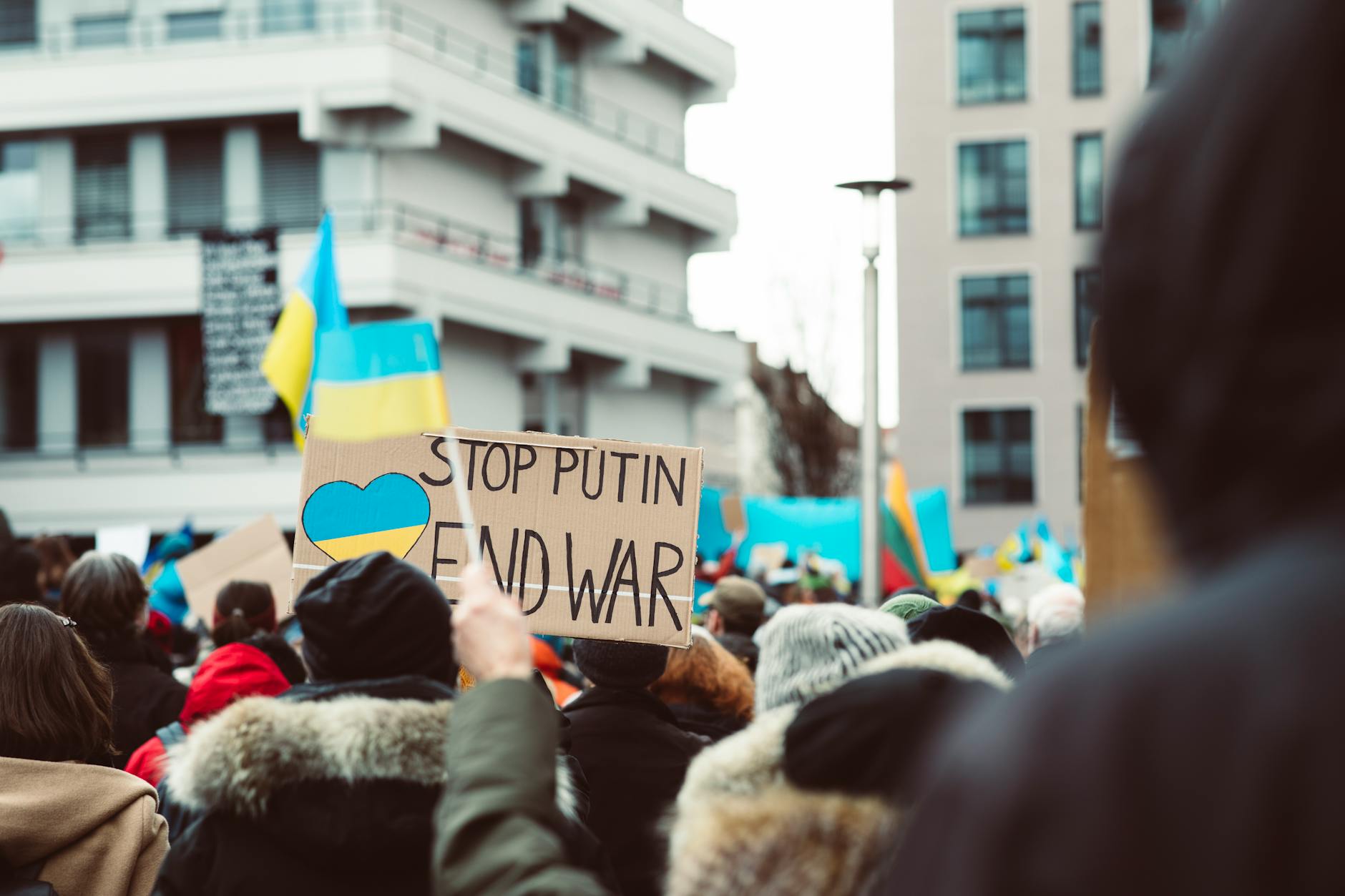
The claim that the anti-war movement has experienced its “largest mobilization since the Iraq War” following the February 28, 2026 US-Israeli strikes on Iran is, at best, aspirational and at worst misleading. While protests erupted rapidly across dozens of American cities and internationally within hours of the strikes, no credible reporting supports the characterization that these demonstrations rival the scale of the 2003 anti-war movement, which drew an estimated 36 million participants across nearly 3,000 protests worldwide. What the current moment does represent is a notable speed of mobilization and geographic breadth — but raw turnout numbers, often in the hundreds per city rather than hundreds of thousands, tell a more measured story. In New York, hundreds gathered in Times Square. In Washington, hundreds more protested near the White House.
Chicago saw roughly 100 people at Federal Plaza. Los Angeles drew demonstrators to City Hall, with actress Jane Fonda among them. Sacramento, Portland, Seattle, Atlanta, Boston, Denver, Miami, Minneapolis, San Francisco, Philadelphia, and other cities all reported protests. The ANSWER Coalition, coordinating with the National Iranian American Council, American Muslims for Palestine, the People’s Forum, Palestinian Youth Movement, and CodePink, declared an “Emergency Nationwide Day of Action” under the banner “Hands Off Iran.” The response was real and widespread — but the framing matters, and overstating it does a disservice to both the current movement and historical precedent. This article examines what actually happened on the ground, how it compares to the Iraq War protests of 2003, the complicating factor of simultaneous pro-strike rallies by Iranian diaspora communities, the international dimension including deadly violence in Pakistan, and what all of this means for the trajectory of anti-war organizing in the United States.
Table of Contents
- How Does the 2026 Anti-War Mobilization Actually Compare to the Iraq War Protests?
- What Triggered the Protests and Why the Response Was Immediate
- The Complicating Factor of Pro-Strike Iranian Diaspora Rallies
- The International Dimension and Its Human Cost
- The Credibility Problem With Inflated Protest Claims
- What Jane Fonda’s Presence Signals About Coalition Building
- Where the Anti-War Movement Goes From Here
- Conclusion
- Frequently Asked Questions
How Does the 2026 Anti-War Mobilization Actually Compare to the Iraq War Protests?
The comparison to the Iraq war protests is the central claim worth scrutinizing, and the numbers are not close. The February 15, 2003 global day of protest drew between 6 and 11 million people across more than 650 cities worldwide. Rome alone saw an estimated 3 million demonstrators, earning a Guinness World Record for the largest anti-war rally in history. Between January and April 2003, an estimated 36 million people participated in anti-war actions globally. These were not scattered gatherings of a few hundred — they were among the largest coordinated civilian demonstrations in human history. By contrast, the protests following the February 28, 2026 strikes on Iran have drawn hundreds of participants at individual locations. CBS Chicago reported approximately 100 people at Federal Plaza.
The Washington Post described “hundreds” near the White House. Al Jazeera documented hundreds in Times Square. These are meaningful expressions of dissent, but they are orders of magnitude smaller than what occurred in 2003. No major news outlet — not CNN, not the Washington Post, not Al Jazeera — has described the current mobilization as the largest since the Iraq War. The descriptor appears to originate from activist organizations rather than independent assessments of crowd size. That does not diminish the significance of the protests. The speed of response — organized demonstrations in more than a dozen major cities within 24 hours of the strikes — reflects a protest infrastructure that has been built and maintained through years of organizing around Palestine, police accountability, and other issues. But speed and scale are different metrics, and conflating them does not serve honest accounting.
What Triggered the Protests and Why the Response Was Immediate
On February 28, 2026, the United States and Israel launched a series of joint military strikes on Iran, representing the largest US military buildup in the Middle East since the 2003 invasion of iraq. The strikes resulted in the death of Iran’s Supreme Leader Ali Khamenei, a development that dramatically escalated regional tensions and introduced the specter of a wider war. For many americans already skeptical of military intervention in the Middle East, the parallels to Iraq were immediate and alarming. The ANSWER Coalition’s “Emergency Nationwide Day of Action” was not built from scratch — it activated existing networks and pre-established protest infrastructure. Organizations like CodePink and American Muslims for Palestine have maintained active mobilization capacities through years of advocacy.
This explains how protests could materialize in cities from Portland to Philadelphia within hours rather than weeks. The chants heard in Chicago — “War is not the solution” — and Los Angeles — “Down with war” and “No more blood for oil” — echoed the language and grievances of the 2003 movement almost exactly. However, it is worth noting a critical difference in political context. In 2003, the anti-war movement had months to build momentum between the September 2001 attacks and the March 2003 invasion, with the Bush administration’s case for war publicly debated and increasingly doubted. The 2026 strikes came with far less public lead-up, which may explain both the rapid but smaller response: people were caught off guard, and the organizational window was measured in hours, not months. Whether the movement grows or dissipates from here depends heavily on what happens next in Iran and whether the conflict escalates.
The Complicating Factor of Pro-Strike Iranian Diaspora Rallies
One of the most unusual and often overlooked aspects of the current moment is that the largest demonstrations related to the Iran strikes were not anti-war protests at all — they were celebrations. Massive pro-strike rallies by iranian diaspora communities dwarfed the anti-war turnout by staggering margins. On February 14, 2026 — before the strikes even occurred — an estimated 350,000 people rallied in Toronto, another 350,000 in the Westwood neighborhood of Los Angeles, 250,000 in Munich, 50,000 in London, and 45,000 in Vancouver. These demonstrators were celebrating the prospect of the fall of the Iranian regime, not opposing military action. This creates a deeply complicated political landscape for the anti-war movement.
Unlike in 2003, when opposition to the Iraq invasion was relatively unified across ethnic and political lines, the 2026 situation involves a genuine split within communities most directly affected by the conflict. Many Iranian Americans who fled the Islamic Republic or lost family members to its repression view the strikes as a long-overdue reckoning. Their rallies, often featuring images of Reza Pahlavi, drew crowds that numbered in the hundreds of thousands — not the hundreds that characterized the anti-war demonstrations. For media outlets and political observers, this complicates any simple narrative about public opinion on the strikes. The anti-war movement is real, but it operates alongside a countervailing force of equal or greater visible size. Any honest assessment of public sentiment must account for both, and claims about the anti-war mobilization being historically significant look even more strained when the pro-strike rallies drew attendance figures that actually do approach Iraq War-era protest numbers.

The International Dimension and Its Human Cost
The protests were not limited to the United States, and the international response carried far graver consequences. In Karachi, Pakistan, a pro-Iran protest at the US consulate on March 1, 2026 turned deadly when at least 10 people were killed, primarily among Shia Muslim communities. This was not a peaceful demonstration that escalated — it was a flashpoint in a region where sectarian tensions and geopolitical allegiances run deep, and where the consequences of American military action are measured in blood, not hashtags. In Athens, Greece, over 1,300 demonstrators — mainly affiliated with the Communist Party of Greece — marched on March 1 with “Hands off Iran” banners. Protests erupted across multiple countries in the Middle East and Europe, though detailed attendance figures for most locations remain unavailable. The international response, like the domestic one, was rapid but difficult to quantify with precision.
What is clear is that the geographic spread was significant, spanning at least three continents within 48 hours of the strikes. The tradeoff for the anti-war movement is between breadth and depth. A protest in 30 cities that draws 100-300 people each is politically different from a protest in five cities that draws 100,000 each. The former demonstrates broad sentiment; the latter demonstrates the kind of political force that historically shifts policy. The 2003 anti-war movement had both breadth and depth, and it still failed to prevent the invasion of Iraq. Whether the 2026 movement can scale up its depth while maintaining its breadth will determine its political relevance.
The Credibility Problem With Inflated Protest Claims
Overstating the size and significance of protests is not a new phenomenon, and it carries real costs for the movements that do it. When activist organizations describe modest demonstrations as historic mobilizations, they invite scrutiny that undermines their credibility on substantive points. The anti-war movement has legitimate arguments to make about the legality, wisdom, and consequences of the Iran strikes — arguments that stand on their own merits without needing to be propped up by inflated crowd estimates. The “largest mobilization since the Iraq War” framing is particularly risky because it is so easily disproven. Anyone with access to photographs from February 15, 2003 can see that the current protests are not in the same category.
This does not mean the protests are unimportant — a few hundred people willing to take to the streets on a few hours’ notice represent a much larger constituency of sympathizers who did not march. But claiming a scale that did not occur gives opponents an easy line of attack and distracts from the substantive policy debate about whether the strikes were justified, legal, or strategically sound. There is also a warning here for media consumers: always look for sourcing when confronted with claims about protest size. If a headline says “largest since” or “historic,” check whether that characterization comes from organizers, independent crowd scientists, law enforcement estimates, or journalists on the ground. In this case, no independent source has validated the “largest since Iraq” claim, and the available evidence — hundreds per city across the United States — suggests it is not accurate.
📨 Get Free Accountability Coverage Alerts
Free · No spam · Unsubscribe anytime

What Jane Fonda’s Presence Signals About Coalition Building
The participation of actress Jane Fonda at the Los Angeles protest at City Hall is worth noting not for celebrity gossip value but for what it signals about coalition formation. Fonda, who has a decades-long history of anti-war activism dating to the Vietnam era, questioned the justification for the attacks on Iran and lent her public profile to the demonstration. Her presence drew media coverage that the protest’s modest size alone might not have generated — KTLA covered the event in part because of her involvement.
This highlights both a strength and a vulnerability of the current anti-war movement. Celebrity participation attracts cameras and amplifies messaging, but it can also shift the narrative from the substance of the protest to the celebrity themselves. The broader question is whether the movement can build the kind of sustained, institutional coalition — involving labor unions, religious organizations, veterans’ groups, and elected officials — that characterized the most effective moments of the 2003 anti-war effort. Early signs suggest the organizational backbone exists through groups like ANSWER Coalition and CodePink, but the rank-and-file turnout has not yet matched the infrastructure.
Where the Anti-War Movement Goes From Here
The trajectory of the anti-war movement in the coming weeks and months depends almost entirely on events beyond its control. If the conflict with Iran escalates — if there are retaliatory strikes, if American troops are deployed in larger numbers, if casualties mount — history suggests the protests will grow significantly. The 2003 anti-war movement did not begin at 36 million participants; it built over months as the case for war eroded and the human costs became visible. The 2026 movement is at the beginning of that potential arc, not the peak.
What is different this time is the media landscape and the political polarization of the country. In 2003, anti-war sentiment crossed party lines in ways that seem almost unimaginable today. The simultaneous existence of massive pro-strike rallies by Iranian diaspora communities adds a dimension that did not exist during the Iraq debate. The anti-war movement will need to articulate a message that acknowledges the legitimate grievances of those who suffered under the Iranian regime while making the case that military strikes are not the answer — a more nuanced argument than “no blood for oil,” and one that remains to be convincingly made.
Conclusion
The anti-war protests following the February 28, 2026 US-Israeli strikes on Iran were real, rapid, and geographically widespread. Demonstrations in more than two dozen American cities and multiple countries, organized within hours through established activist networks, demonstrated that opposition to military intervention in Iran exists and can mobilize quickly. The ANSWER Coalition, CodePink, and allied organizations showed that protest infrastructure built through years of advocacy can be activated on short notice. But the claim that this represents the “largest mobilization since the Iraq War” is not supported by any credible evidence.
Protests drawing hundreds of people per city are not comparable to a global movement that put millions in the streets. Honest assessment of the current moment requires acknowledging both what it is — a significant and rapid expression of anti-war sentiment — and what it is not — a mass movement on the scale of 2003. The coming weeks will determine whether this was the opening chapter of a larger mobilization or a brief flash of dissent that recedes as events unfold. For those tracking government accountability and the use of military force, the facts on the ground matter more than the framing.
Frequently Asked Questions
Have the 2026 anti-war protests actually been the largest since the Iraq War?
No credible source has made this claim. The protests have been notable for their speed and geographic spread across dozens of US cities and internationally, but individual turnout has generally been in the hundreds per city. The 2003 Iraq War protests drew an estimated 36 million participants worldwide, with single-city turnouts in the millions.
Who organized the anti-war protests against the Iran strikes?
The ANSWER Coalition declared an “Emergency Nationwide Day of Action” under the “Hands Off Iran” banner, coordinating with the National Iranian American Council, American Muslims for Palestine, the People’s Forum, Palestinian Youth Movement, and CodePink. These organizations activated existing networks to stage protests in over two dozen cities within 24 hours of the strikes.
What were the pro-strike rallies by Iranian diaspora communities?
Large rallies celebrating the fall of Iran’s regime occurred in several cities, including an estimated 350,000 in Toronto, 350,000 in Los Angeles (Westwood), 250,000 in Munich, 50,000 in London, and 45,000 in Vancouver. These demonstrators supported the military action and were distinct from the anti-war protests.
Were there any casualties at protests related to the Iran strikes?
Yes. In Karachi, Pakistan, at least 10 people were killed during a pro-Iran protest at the US consulate on March 1, 2026, primarily among Shia Muslim communities. US domestic protests have not reported similar violence.
How do the 2026 protests compare to the February 15, 2003 global anti-war day?
The February 15, 2003 protests drew between 6 and 11 million people across more than 650 cities worldwide. Rome alone saw approximately 3 million demonstrators, a Guinness World Record. The 2026 protests, while spread across many cities, have drawn a fraction of that attendance at each location.
You Might Also Like
- This Was the Largest U.S. Military Buildup in the Middle East Since Iraq
- Universities Cancel Classes as Students Organize Iran War Protests Nationwide
- Stock Market Braces for Volatility as Iran War Escalates