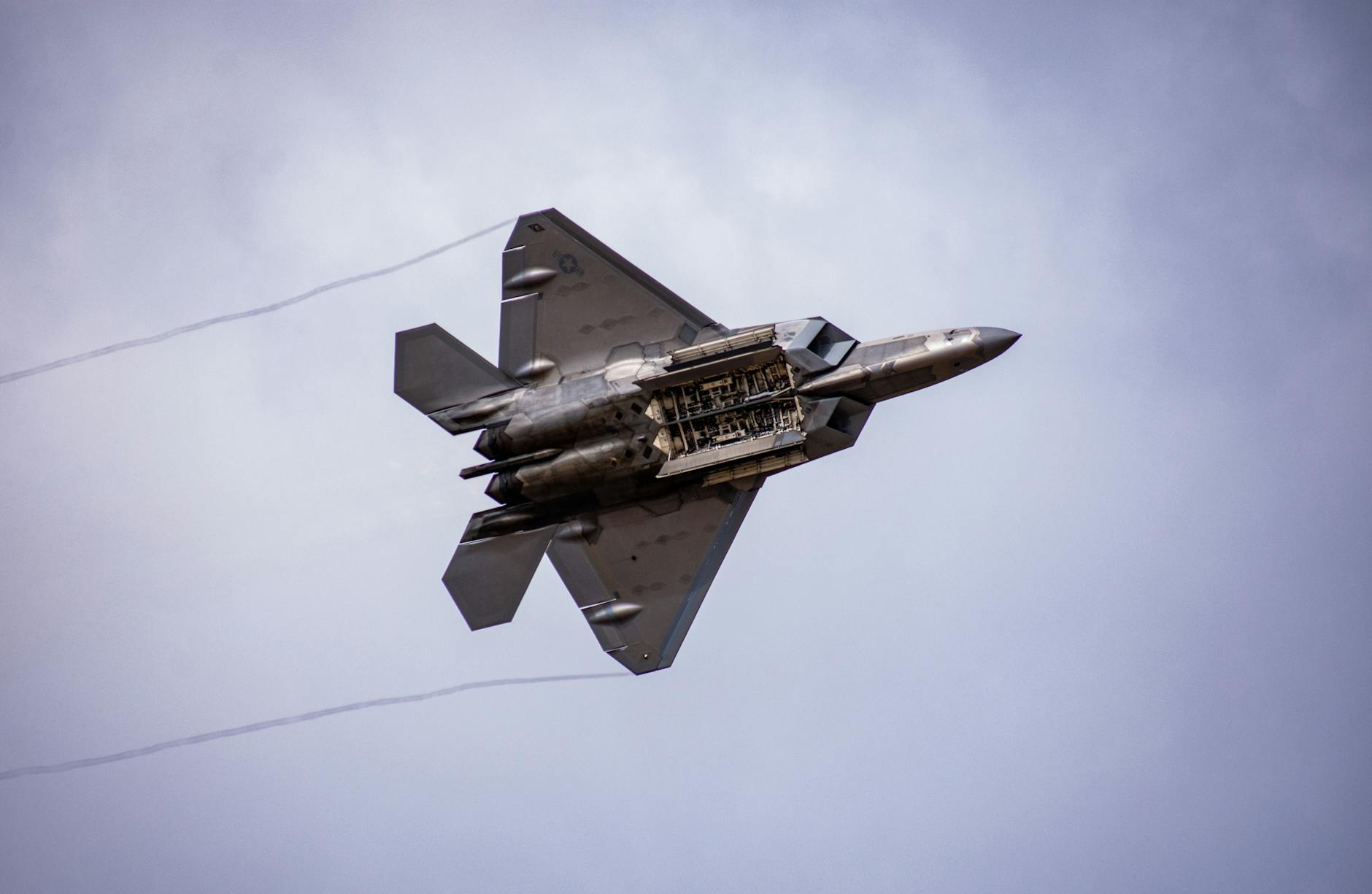
Before a single American bomb struck Iranian soil on February 28, 2026, U.S. electronic warfare aircraft had already won the opening battle. Eighteen EA-18G Growlers launched from the USS Abraham Lincoln in the Arabian Sea, alongside at least one EA-37B Compass Call II forward-deployed to Ramstein Air Base in Germany, flooded Iranian radar and communications frequencies with noise — effectively blinding Tehran’s integrated air defense network before it ever had the chance to respond. Gen.
Dan Caine, Chairman of the Joint Chiefs of Staff, confirmed on March 2 that U.S. Cyber Command and Space Command were the “first movers” in Operation Epic Fury, “layering non-kinetic effects, disrupting and degrading and blinding Iran’s ability to see, communicate and respond.” The electronic warfare campaign that preceded the kinetic strikes represents one of the most comprehensive demonstrations of airborne jamming, cyber operations, and space-based signal disruption in modern military history. A total SEAD (Suppression of Enemy Air Defenses) package of more than 42 aircraft focused exclusively on neutralizing Iran’s ability to detect and engage incoming strikes. The result was catastrophic for Iran’s defense posture: Russian-supplied S-300 systems and domestically produced air defense networks failed to mount a coordinated response during the critical opening hours. This article examines the specific aircraft and electronic warfare assets deployed, how the jamming technology actually works, the role of cyber and space operations in the broader campaign, and what Iran’s defense failure reveals about the limitations of even advanced air defense systems against a full-spectrum electronic assault.
Table of Contents
- How Did U.S. Electronic Warfare Aircraft Jam Iranian Communications Before the First Strikes?
- What Role Did Cyber Command and Space Command Play in Blinding Iran?
- The EA-18G Growler — Why This Aircraft May Have Been the Most Important Plane in the Opening Hours
- The Wild Weasel Mission — Turning Iran’s Radar Against Itself
- Why Iran’s Russian-Built S-300 Air Defense Systems Failed
- Pre-Positioning and the January 2026 Compass Call Deployment
- What the Electronic Warfare Campaign Reveals About Future Conflicts
- Conclusion
- Frequently Asked Questions
How Did U.S. Electronic Warfare Aircraft Jam Iranian Communications Before the First Strikes?
The jamming campaign began before any kinetic weapons were launched, establishing what military planners call “electromagnetic superiority.” Eighteen EA-18G Growlers — the Navy’s dedicated electronic attack aircraft — equipped with ALQ-99 tactical jamming pods launched from the USS Abraham Lincoln’s flight deck in the Arabian Sea. Six additional Growlers were forward-deployed to Muwaffaq Salti Air Base in Jordan, positioning them closer to Iranian airspace. These 24 Growlers collectively drowned out Iranian radar signals across multiple frequencies, targeting surveillance radars, fire-control radars, communications networks, and tactical data links simultaneously. The jamming forced Iranian air defense operators into an impossible tactical dilemma. They could increase their radar emission power to try to burn through the electronic interference — but doing so would reveal their exact coordinates to the 24 F-16CJ “Wild Weasel” aircraft carrying AGM-88E HARM anti-radiation missiles, which home in on radar emissions.
Or they could shut down their radars and go blind. Either choice was catastrophic. This is the fundamental logic of modern SEAD operations: electronic warfare does not merely degrade the enemy’s capability, it transforms every defensive action into a potential death sentence for the operators. Complementing the tactical jamming was the EA-37B Compass Call II, a next-generation wide-area airborne electronic attack platform built on a modified Gulfstream G550 airframe. At least one Compass Call II — serial number 17-5579, callsign FAZE41 — had been forward-deployed to Ramstein Air Base, Germany as early as January 2026, which defense analysts assessed as pre-positioning for Middle East operations. Unlike the Growlers, which focus on radar jamming at the tactical level, the Compass Call II is designed to jam enemy communications, navigation systems, and command-and-control networks across a much wider area, effectively severing the links between Iranian military leadership and the units tasked with defending the country.
What Role Did Cyber Command and Space Command Play in Blinding Iran?
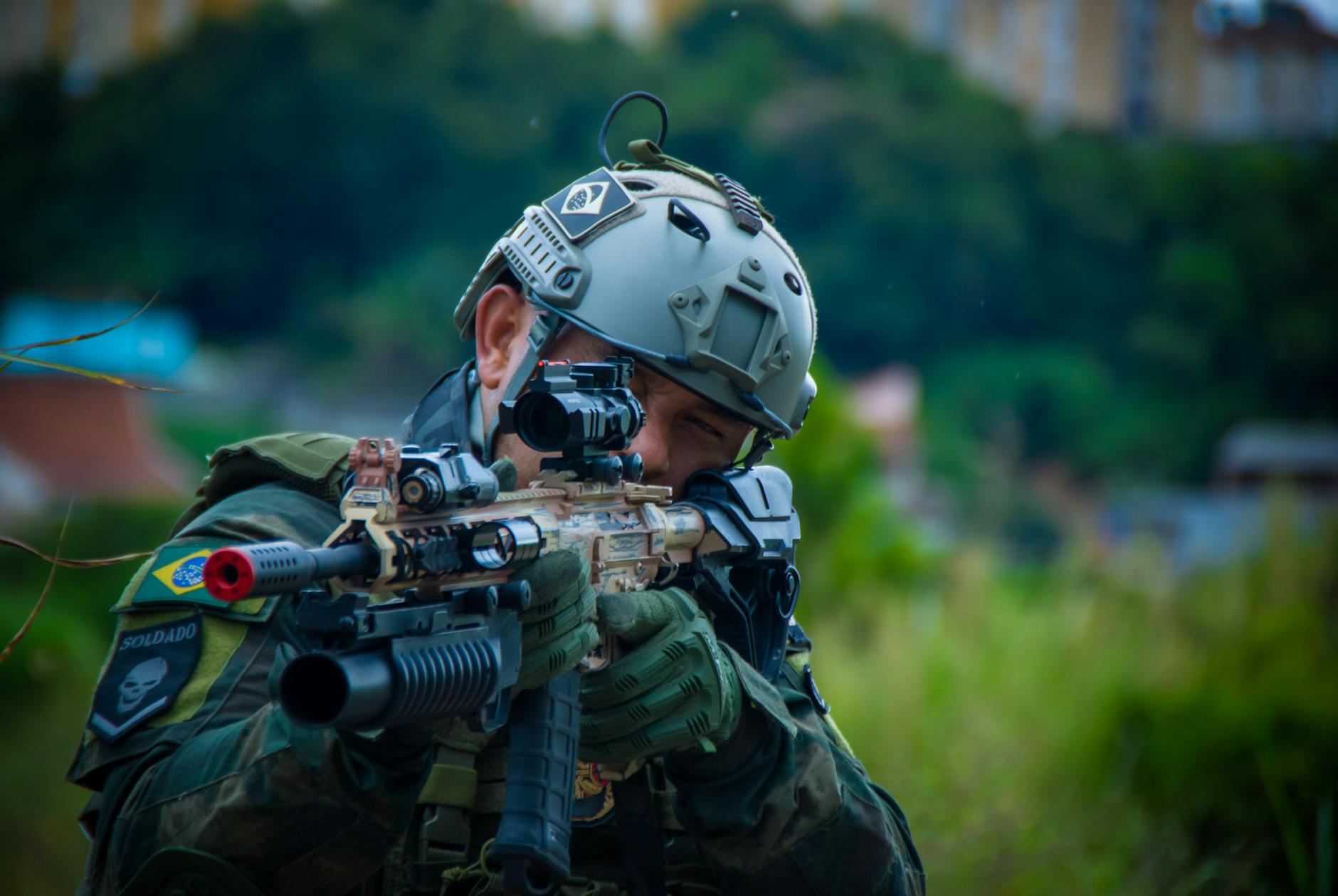
The electronic warfare aircraft were only one component of a broader non-kinetic offensive. Gen. Caine’s March 2 statement made clear that U.S. Cyber Command deployed military-grade malware targeting Iranian missile launchers, drones, and communications networks. While the full scope of cyber operations remains classified, the chairman stated that the U.S. “effectively disrupted communications and sensor networks… leaving the adversary without the ability to see, coordinate or respond effectively.” This suggests the cyber campaign went beyond jamming to actively compromise the software and firmware running on Iranian military systems. U.S. Space Command executed targeted uplink and downlink jamming of Iranian and proxy satellite communications systems. This is a critical but often overlooked dimension of electronic warfare.
Modern militaries, even those with less advanced space capabilities than the United States, rely on satellite communications for command-and-control links between dispersed units. By jamming these satellite links, Space Command severed the connections between Tehran’s military command structure and forward-deployed air defense batteries, missile units, and ground forces. However, satellite jamming has limitations — it can be partially mitigated by frequency-hopping communications, backup terrestrial networks, or simply reverting to hardened landline communications. The fact that Iran’s coordination still collapsed suggests either these backup systems were also compromised or were insufficient to handle the volume and speed of communication required during an active attack. The convergence of airborne electronic warfare, cyber operations, and space-based jamming created what military theorists call a “multi-domain” attack on Iran’s ability to process information. No single capability would have been sufficient on its own. The Growlers could jam radars but not necessarily military satellite links. Cyber Command could compromise software systems but needed time to establish access. Space Command could disrupt satellite communications but not tactical radio nets. Together, they created conditions under which Iran’s military was functionally deaf, blind, and mute.
The EA-18G Growler — Why This Aircraft May Have Been the Most Important Plane in the Opening Hours
The EA-18G Growler does not drop bombs. It does not dogfight enemy aircraft. It is a modified F/A-18F Super Hornet airframe packed with electronic warfare equipment, and during Operation Epic Fury, it was arguably the single most important aircraft in the U.S. arsenal. The 24 Growlers deployed — 18 from the USS Abraham Lincoln and six from Jordan — carried ALQ-99 tactical jamming pods capable of broadcasting across a wide range of radar and communications frequencies. Each Growler can simultaneously jam multiple emitters, and a formation of Growlers working in concert can blanket an entire theater’s electromagnetic spectrum. The Growler’s importance becomes clear when you consider what happens without it.
Stealth aircraft like the B-2 Spirit bomber rely on low radar cross-sections to avoid detection, but stealth is not invisibility — advanced radar systems like Iran’s Russian-supplied S-300 can potentially detect stealth aircraft at reduced ranges. The Growlers ensure that even if an S-300 radar could theoretically detect a B-2, the radar operators cannot distinguish the real signal from the wall of electronic noise the Growlers generate. This layered approach — stealth combined with active jamming — dramatically reduces the risk to strike aircraft and their crews. The deployment of Growlers from both a carrier at sea and a land base in Jordan also illustrates a practical advantage of the aircraft. Unlike larger electronic warfare platforms, the Growler operates from the same carriers and air bases as the strike fighters it supports. It can take off alongside F/A-18E/F Super Hornets and F-35C Lightning IIs, providing real-time jamming protection throughout the entire strike mission. The Jordan-based Growlers likely provided a jamming corridor from the west while the carrier-based aircraft operated from the south, creating overlapping coverage that left few gaps in the electromagnetic blanket.
The Wild Weasel Mission — Turning Iran’s Radar Against Itself
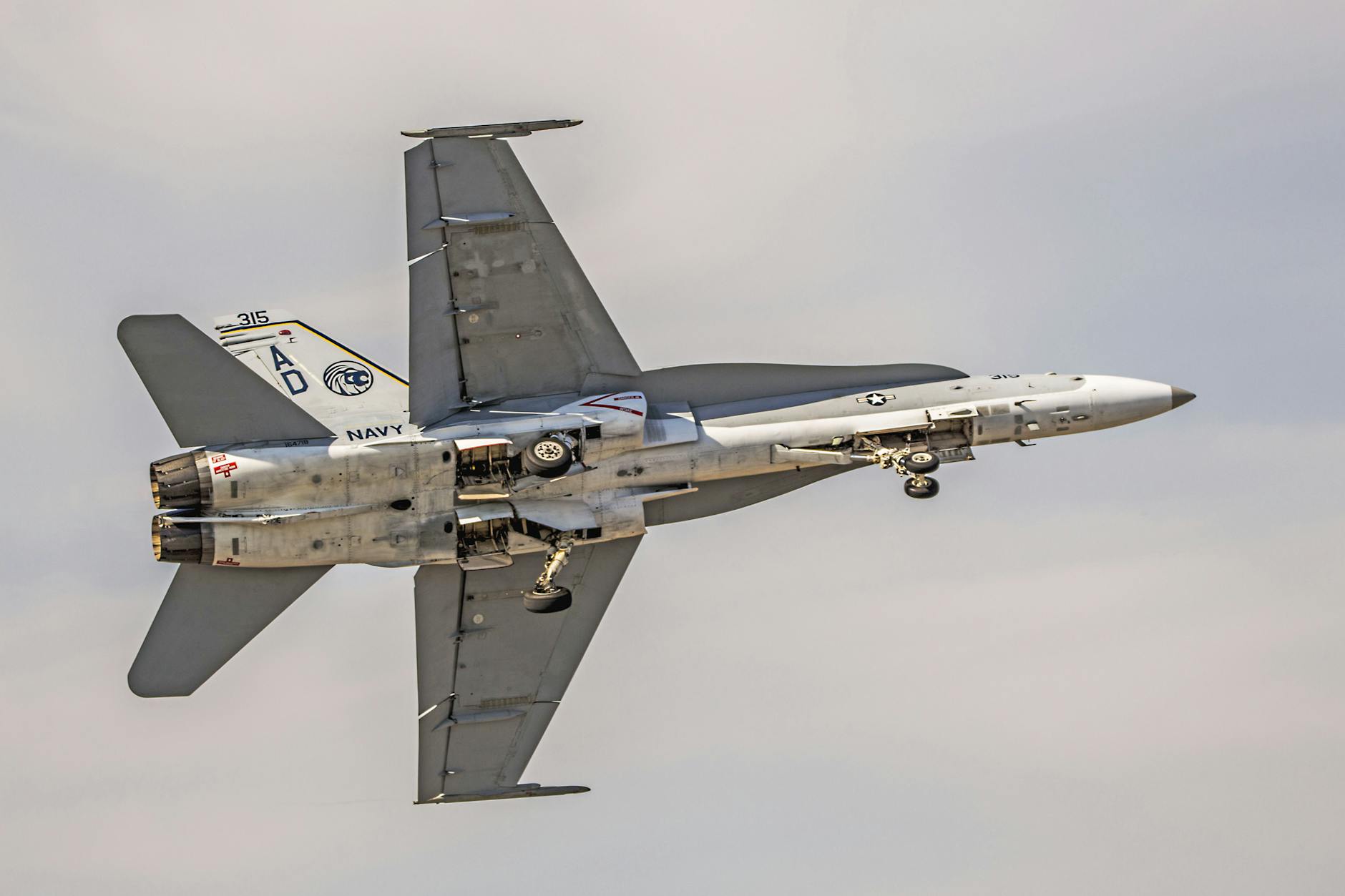
While the Growlers jammed Iranian radar signals, 24 F-16CJ “Wild Weasel” aircraft stood ready with a complementary mission: destroy any radar that dared to transmit. The Wild Weasel concept dates back to the Vietnam War, when the U.S. Air Force first developed tactics for hunting and killing enemy surface-to-air missile radars. The modern F-16CJ carries the AGM-88E Advanced Anti-Radiation Missile (AARM), which homes in on radar emissions. When an Iranian air defense operator turned on a radar — whether to try to see through the Growler jamming or to guide a missile — the HARM missile would lock onto that signal and follow it back to its source. This creates a compounding problem for the defender. The jamming degrades the radar’s ability to detect incoming aircraft.
The defender’s natural response is to increase radar power or switch to different frequencies. But every transmission becomes a targeting beacon for anti-radiation missiles. The tradeoff for Iranian operators was existential: attempt to fight back and likely be killed by a HARM missile within minutes, or remain silent and allow strike aircraft to operate unopposed. Most chose silence or were destroyed before they could make the choice. The 42-plus aircraft in the total SEAD package — Growlers, Wild Weasels, and Compass Call — represented an overwhelming concentration of electronic attack capability that left Iranian air defense commanders with no good options. The combination of jamming and anti-radiation missiles is not new, but the scale of the SEAD package in Operation Epic Fury was remarkable. During the 1991 Gulf War, coalition forces deployed a similar but smaller mix of EF-111 Ravens and F-4G Wild Weasels. The 2026 operation reflects three decades of refinement in both equipment and tactics, with more capable jamming systems, more precise anti-radiation missiles, and tighter integration between electronic attack and kinetic strike platforms.
Why Iran’s Russian-Built S-300 Air Defense Systems Failed
Iran’s integrated air defense network — including the S-300PMU-2 systems acquired from Russia — was supposed to present a formidable challenge to any attacker. The S-300 family is widely regarded as one of the most capable long-range air defense systems in the world, with engagement ranges exceeding 150 kilometers and the ability to track multiple targets simultaneously. Yet during Operation Epic Fury, these systems failed catastrophically to coordinate a meaningful response. The failure has several likely explanations, and electronic warfare was central to all of them. First, the S-300’s effectiveness depends on its integration into a broader air defense network — early warning radars detect incoming threats, command centers assign targets, and individual batteries engage. The Compass Call II and Cyber Command operations severed the command-and-control links that make this integration work, reducing the S-300 batteries to isolated, uncoordinated units. Second, the Growler jamming degraded the S-300’s own engagement radars, making it difficult to acquire and track targets accurately.
Third, Iranian operators likely faced the Wild Weasel dilemma: any S-300 battery that activated its fire-control radar became an immediate target for HARM missiles. However, it is worth noting a limitation of the electronic warfare narrative. Some defense analysts have pointed out that Iran’s S-300 systems may not have been fully integrated or maintained to Russian operational standards. Sanctions have complicated Iran’s ability to procure spare parts and software updates. The systems may have had pre-existing vulnerabilities unrelated to U.S. electronic warfare capabilities. It would be a mistake to conclude that American jamming technology can neutralize S-300 systems under all conditions — a fully integrated Russian air defense network with current software, trained operators, and redundant communications might present a significantly harder challenge.
📨 Get Free Accountability Coverage Alerts
Free · No spam · Unsubscribe anytime

Pre-Positioning and the January 2026 Compass Call Deployment
One of the more revealing details about Operation Epic Fury is that the EA-37B Compass Call II was forward-deployed to Ramstein Air Base, Germany in January 2026 — more than a month before the first strikes. Aircraft serial 17-5579, tracked under callsign FAZE41, was identified by open-source intelligence analysts at Ramstein, and its deployment was assessed as pre-positioning for Middle East operations. This timeline suggests that the electronic warfare component of the operation was planned well in advance, not improvised in the days before the strikes.
The Compass Call II itself represents a generational leap over its predecessor, the EC-130H Compass Call, which was based on the aging C-130 Hercules airframe. The new platform uses a modified Gulfstream G550 business jet, giving it greater range, higher operating altitude, and more internal space for electronic warfare equipment and operators. Its mission profile — jamming enemy communications, radars, and navigation systems across a wide area — makes it a strategic asset that shapes the battlefield before tactical aircraft like Growlers and Wild Weasels even enter the fight.
What the Electronic Warfare Campaign Reveals About Future Conflicts
Operation Epic Fury’s electronic warfare campaign establishes a template that will likely define the opening hours of future major conflicts. The sequence — cyber operations compromising enemy systems, space-based jamming severing satellite communications, airborne platforms blinding radars and disrupting tactical networks, followed by kinetic strikes against a disoriented enemy — represents a maturation of concepts the U.S. military has been developing for over a decade under the banner of “multi-domain operations.” For potential adversaries watching closely, the lesson is stark: an integrated air defense network, no matter how advanced its individual components, is only as strong as the communications and command structures that hold it together. The U.S.
did not simply overpower Iran’s air defenses with superior numbers or more advanced missiles. It systematically dismantled the network’s ability to function as a network, reducing sophisticated weapon systems to expensive, isolated pieces of hardware that could not coordinate a response. Whether this approach would succeed against a peer competitor with more advanced electronic warfare capabilities of its own — particularly one with the ability to jam or degrade U.S. communications in return — remains an open and deeply consequential question.
Conclusion
The electronic warfare campaign that preceded Operation Epic Fury’s kinetic strikes was not a supporting element of the operation — it was the operation’s foundation. More than 42 aircraft dedicated to suppression and destruction of enemy air defenses, combined with cyber attacks on military networks and space-based jamming of satellite communications, created conditions under which Iran’s air defense network ceased to function as a coherent system. Gen. Caine’s characterization of Cyber Command and Space Command as the “first movers” reflects a fundamental shift in how the United States initiates military operations: the first battle is now fought in the electromagnetic spectrum, not with explosives. The broader implications extend well beyond Iran.
The demonstrated ability to blind an adversary’s air defenses through electronic means raises urgent questions about the vulnerability of every nation’s military communications and sensor networks. For the American public and policymakers, understanding the role of electronic warfare in modern conflict is essential for evaluating the costs, capabilities, and limitations of military power. The technology is extraordinarily effective, but it is not a guarantee — adversaries will adapt, develop counter-jamming techniques, and invest in hardened communications. The advantage the U.S. demonstrated on February 28, 2026, is real, but it is not permanent.
Frequently Asked Questions
What is an EA-18G Growler and what does it do?
The EA-18G Growler is the U.S. Navy’s dedicated electronic attack aircraft, built on the F/A-18F Super Hornet airframe. It carries ALQ-99 tactical jamming pods that can jam surveillance radars, fire-control radars, communications networks, and data links. During Operation Epic Fury, 24 Growlers were deployed from both the USS Abraham Lincoln and Muwaffaq Salti Air Base in Jordan.
What is the EA-37B Compass Call II?
The EA-37B Compass Call II is a next-generation wide-area airborne electronic attack platform based on a modified Gulfstream G550 airframe. It jams enemy communications, radars, and navigation systems across a broad area. At least one was forward-deployed to Ramstein Air Base, Germany in January 2026, weeks before Operation Epic Fury began.
How did electronic warfare cause Iran’s S-300 air defenses to fail?
The U.S. electronic warfare campaign severed the command-and-control links connecting S-300 batteries to the broader air defense network, jammed the batteries’ own engagement radars, and created conditions where any radar activation would attract AGM-88E anti-radiation missiles. This reduced the S-300 systems from an integrated network to isolated, uncoordinated units unable to mount a coherent defense.
What role did U.S. Cyber Command play in the operation?
Gen. Dan Caine confirmed that Cyber Command was one of the “first movers” in Operation Epic Fury. Cyber Command deployed military-grade malware targeting Iranian missile launchers, drones, and communications networks, complementing the airborne jamming campaign by compromising the software and firmware running on Iranian military systems.
What does SEAD mean in military operations?
SEAD stands for Suppression of Enemy Air Defenses. It refers to military operations designed to neutralize, destroy, or temporarily degrade enemy air defense systems. During Operation Epic Fury, the SEAD package included more than 42 aircraft — EA-18G Growlers for jamming, F-16CJ Wild Weasels carrying anti-radiation missiles, and EA-37B Compass Call II for wide-area communications disruption.
You Might Also Like
- Bahrain Hosts the U.S. Fifth Fleet and Was One of the First Targets of Iranian Retaliation
- The U.S. Navy Destroyed More Iranian Ships in One Day Than It Has Sunk Since World War II
- Saudi Arabia Allowed U.S. Aircraft to Use Its Airspace for the Iran Strikes — Report