
The Pentagon has not publicly announced a formal policy restricting embedded journalists from covering U.S. military operations against Iran, but the practical reality on the ground tells a different story. Between Iran’s record-breaking internet blackout, the fog of a fast-moving joint military campaign dubbed “Operation Epic Fury,” and a Defense Department that has offered no evidence to support its core justification for the strikes, independent reporting from the theater of operations has been effectively strangled.
The absence of a written ban does not mean the press has meaningful access — and that distinction matters enormously when three American service members are dead and legal experts are calling the entire operation illegal. What we do know is that the information environment surrounding the February 28, 2026 U.S.-Israel strikes on Iran has been shaped far more by government talking points than by on-the-ground journalism. Reporters Without Borders has condemned the near-total communications blackout inside Iran, noting that contact with journalists in the country is “nearly impossible.” Meanwhile, POLITICO has reported that the Pentagon offered no evidence to back up claims that the attack was defensive or preemptive. This article examines the media landscape around Operation Epic Fury, the legal questions the press should be pressing harder on, and what the lack of embedded coverage means for public accountability.
Table of Contents
- Why Has the Pentagon Limited Press Access to Iran Military Operations?
- Operation Epic Fury and the Information Blackout Inside Iran
- Legal Challenges and the War Powers Question
- What Iranian Retaliation Reveals About the Stakes of This Conflict
- The Dangerous Precedent of Wartime Information Control
- Three Service Members Killed — What We Know and What We Do Not
- Where This Goes From Here
- Conclusion
- Frequently Asked Questions
Why Has the Pentagon Limited Press Access to Iran Military Operations?
The short answer is that “limited” may be generous — “absent” is closer to the truth. Unlike the Iraq War in 2003, which featured hundreds of embedded reporters traveling with military units in real time, Operation Epic Fury launched with no comparable press integration that has been publicly disclosed. The joint U.S.-Israel strikes hit hundreds of targets including Iranian Revolutionary Guard facilities, air defense systems, and naval installations. That is an enormous military footprint, and yet the American public has been largely reliant on Pentagon briefings and official CENTCOM statements for information about what happened and why. This is not entirely without precedent. The 2011 raid that killed Osama bin Laden involved zero embedded journalists, justified by operational security.
But that was a single raid lasting hours. Operation Epic Fury is an ongoing campaign involving strikes across an entire country, Iranian retaliatory missile and drone launches across the Persian Gulf, and combat operations that have already killed three U.S. service members. The scale demands scrutiny that official channels alone cannot provide. The comparison to the early days of the Afghanistan war is also instructive. In late 2001, the Pentagon initially kept reporters at arm’s length before public pressure forced greater access. The question now is whether that same pressure will materialize — or whether the speed of modern military operations and the fractured media landscape will let the information vacuum stand.

Operation Epic Fury and the Information Blackout Inside Iran
On February 28, 2026, the United States and Israel launched coordinated military strikes against Iran. The U.S. operation carried the codename “Operation Epic Fury” while Israel’s parallel campaign was called “Roaring Lion.” According to military officials, the strikes targeted hundreds of sites including Revolutionary Guard facilities, air defense networks, and naval assets. President Trump stated the objectives were to destroy Iran’s missile and military capabilities, prevent nuclear weapons acquisition, and topple the iranian regime.
However, independent verification of damage assessments, civilian casualties, and the actual scope of the operation has been severely hampered by Iran’s longest internet blackout on record. Beginning in early January 2026, Iran severed foreign internet routing, mobile connectivity, and access to digital platforms. Reporters Without Borders condemned the blackout and warned that communication with journalists inside Iran had become “nearly impossible.” This means that even if Western reporters wanted to file stories from inside Iran, the infrastructure to transmit those reports simply does not exist right now. The dual effect is chilling: the Pentagon controls the narrative from the American side, and the Iranian government has eliminated the ability of its own citizens and any remaining foreign journalists to counter or supplement that narrative. If there are significant civilian casualties, infrastructure damage beyond military targets, or operational failures, the public may not learn about them for weeks or months — if ever.
Legal Challenges and the War Powers Question
The legal foundation for Operation Epic Fury is already under serious challenge. Former U.S. military officials have alleged in interviews with The Intercept that the strikes were illegal under both the war Powers Resolution and the United Nations Charter. The War Powers Resolution requires the president to notify Congress within 48 hours of committing armed forces to military action and limits unauthorized deployments to 60 days. Whether the administration properly complied with these requirements is a matter of active dispute.
POLITICO’s reporting that the Pentagon has offered no evidence to support its characterization of the strikes as defensive or preemptive adds fuel to this legal fire. Under international law, preemptive self-defense requires an imminent threat — not a theoretical or aspirational one. If the administration cannot demonstrate that Iran was on the verge of attacking the United States or its allies, the legal justification for striking first collapses. This is precisely where embedded reporting would serve its most critical function. Independent journalists on the ground or traveling with military units could observe and report on the nature of targets being struck, the intelligence driving targeting decisions, and the operational realities that either support or undermine the official justification. Without that independent layer, the American public is being asked to take the government’s word at a moment when that word is being directly challenged by former military leaders and legal scholars.
What Iranian Retaliation Reveals About the Stakes of This Conflict
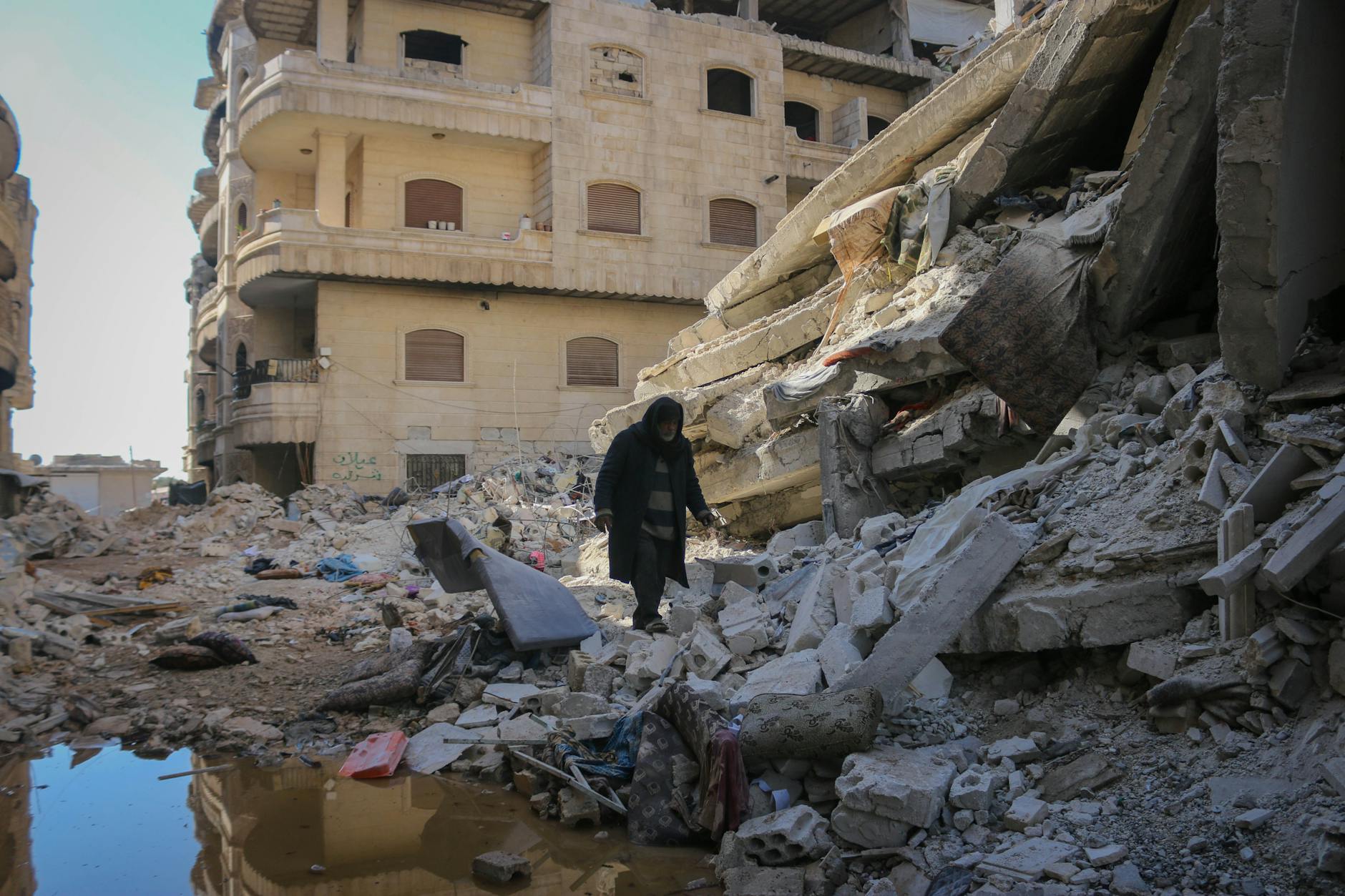
Iran’s response to Operation Epic Fury has been swift and far-reaching. The country launched dozens of drones and ballistic missiles across the Persian Gulf, targeting Israel and U.S. military bases in Jordan, Kuwait, Bahrain, Qatar, Iraq, Saudi Arabia, and the United Arab Emirates. The geographic spread of those retaliatory strikes illustrates a critical point: this is not a contained conflict. It is a regional confrontation with the potential to destabilize the entire Middle East. The civilian impact has already been significant. Some 1,579 flights in and out of major Middle East airports were canceled in the immediate aftermath, with Dubai International Airport alone seeing 747 flights — roughly 70 percent of its schedule — scrubbed.
For context, Dubai International is one of the busiest airports on the planet, serving as a hub connecting Europe, Asia, and Africa. The economic ripple effects of sustained disruption at that scale would be enormous. The tradeoff the administration faces is stark. Escalation carries the risk of a broader regional war that disrupts global energy markets and puts tens of thousands of U.S. service members in the crossfire. Restraint, on the other hand, could be framed as weakness after three Americans have already been killed. What the public needs in order to evaluate these tradeoffs is accurate, independent information — the very thing that restricted press access makes harder to obtain.
The Dangerous Precedent of Wartime Information Control
The most concerning aspect of the current media environment is the precedent it sets. If a major military operation can be launched, service members can die, an entire region can be destabilized, and the legal basis can be questioned by former military officials — all without meaningful independent press coverage from the operational theater — then the concept of wartime accountability is effectively dead. This is not a partisan observation. Administrations of both parties have historically pushed back against press access during military operations, citing operational security. The Obama administration faced criticism for its lack of transparency around drone strikes. The George W.
Bush administration embedded reporters in Iraq but also carefully managed access to shape coverage. The difference now is that the combination of Iran’s internet blackout and the apparent absence of embedded Western journalists creates a near-total information vacuum that neither side of the political aisle should find acceptable. There is also a practical warning here for news consumers: in the absence of embedded reporting, much of what circulates on social media and even in some news outlets will be based on unverified claims from both the U.S. and Iranian governments. Neither is a reliable narrator. Readers should prioritize reporting that cites named sources, acknowledges what is unknown, and distinguishes between confirmed facts and government assertions.
Three Service Members Killed — What We Know and What We Do Not
CENTCOM confirmed that three U.S. service members were killed during Operation Epic Fury. President Trump vowed to “avenge” their deaths and indicated that combat operations would continue. Beyond those basic facts, the public knows remarkably little.
📨 Get Free Accountability Coverage Alerts
Free · No spam · Unsubscribe anytime
The circumstances of their deaths, the specific engagement in which they were killed, and whether the mission that cost their lives achieved its objectives are all unanswered questions. In past conflicts, embedded reporters have provided crucial context around service member casualties — context that honors their sacrifice by ensuring the public understands what they died for. Without that reporting, the families of those three Americans and the broader public are left with a press release and a presidential promise of vengeance. That is not accountability. That is stagecraft.
Where This Goes From Here
The trajectory of U.S.-Iran hostilities remains deeply uncertain. The Stimson Center convened experts to assess what the Epic Fury strikes signal to the world, and the consensus was that the operation represents a significant escalation with unpredictable consequences. Whether the conflict expands into a sustained air campaign, triggers a ground component, or settles into a tense standoff will depend on decisions being made right now in Washington, Tehran, and Jerusalem.
What should concern every American regardless of their position on the strikes themselves is whether they will have access to trustworthy, independent information as those decisions unfold. Press freedom during wartime is not a luxury or a distraction from national security — it is a precondition for democratic accountability. The current information environment around Operation Epic Fury fails that test, and the longer it persists, the harder it will be to reconstruct what actually happened and why.
Conclusion
The Pentagon may not have issued a formal order banning embedded reporters from covering operations in Iran, but the effect is the same. Between Iran’s record internet blackout, the absence of visible embedded press programs, and a Defense Department that has provided no evidence for its central claim that the strikes were defensive, the American public is operating in an information vacuum at the most consequential moment in U.S. foreign policy in decades. Three service members are dead, former military officials are calling the operation illegal, and nearly 1,600 flights have been canceled across a destabilized region.
The path forward requires sustained pressure from Congress, the press, and the public for greater transparency. That means demanding evidence for the administration’s legal justification, pushing for embedded reporting access as operations continue, and holding both the U.S. and Iranian governments to account for their claims. Wars fought in the dark do not end well — not for the service members fighting them, not for the civilians caught in the crossfire, and not for the democratic principles that are supposed to distinguish the United States from the authoritarian regimes it claims to oppose.
Frequently Asked Questions
Did the Pentagon formally ban embedded reporters from covering Iran operations?
No formal ban has been publicly documented. However, the practical effect of Iran’s internet blackout, the fast-moving nature of the strikes, and the absence of any confirmed embedded press programs has resulted in a near-total lack of independent frontline reporting.
What is Operation Epic Fury?
Operation Epic Fury is the U.S. codename for joint military strikes launched on February 28, 2026, alongside Israel’s parallel “Roaring Lion” operation. The strikes targeted hundreds of Iranian military sites including Revolutionary Guard facilities, air defense systems, and naval targets.
How many U.S. service members have been killed?
CENTCOM confirmed that three U.S. service members were killed during Operation Epic Fury. Details about the specific circumstances of their deaths have not been publicly released as of this writing.
Is the attack on Iran legal?
That is actively disputed. Former U.S. military officials have alleged the strikes violate both the War Powers Resolution and the United Nations Charter. POLITICO reported that the Pentagon offered no evidence to support its claim that the attack was defensive or preemptive, which is the legal threshold required for a first strike under international law.
How has Iran responded to the strikes?
Iran launched dozens of drones and ballistic missiles across the Persian Gulf, targeting Israel and U.S. military bases in Jordan, Kuwait, Bahrain, Qatar, Iraq, Saudi Arabia, and the UAE. The retaliation caused the cancellation of 1,579 flights at major Middle East airports.
What is Iran’s internet blackout?
Beginning in early January 2026, Iran imposed its longest internet blackout on record, severing foreign internet routing, mobile connectivity, and access to digital platforms. Reporters Without Borders condemned the blackout and said communication with journalists inside Iran is “nearly impossible.”
You Might Also Like
- Trump’s Iran Policy Went From “Maximum Pressure” to Airstrikes in 14 Months
- Syria Braces for Spillover From the Iran Conflict
- Japan Fears Oil Supply Disruption From Iran War Could Hit Its Economy