Yes, the Federal Reserve may be forced to delay further rate cuts — or even consider raising interest rates — as the U.S.-led military strikes on Iran send oil prices surging and threaten to reignite inflation just as it appeared to be cooling. With Brent crude jumping roughly 9% to $79.41 per barrel on March 2, 2026, and traffic through the Strait of Hormuz grinding to a near-complete halt, the Fed faces a scenario it has not confronted since the 1970s oil shocks: a second supply-side inflation shock layered on top of an economy already dealing with tariff-driven price pressures. Prior to the conflict, markets had priced in the first 2026 rate cut as early as June. Traders now see that pushed back to September, with bets on a third cut this year “almost evaporating,” according to Bloomberg.
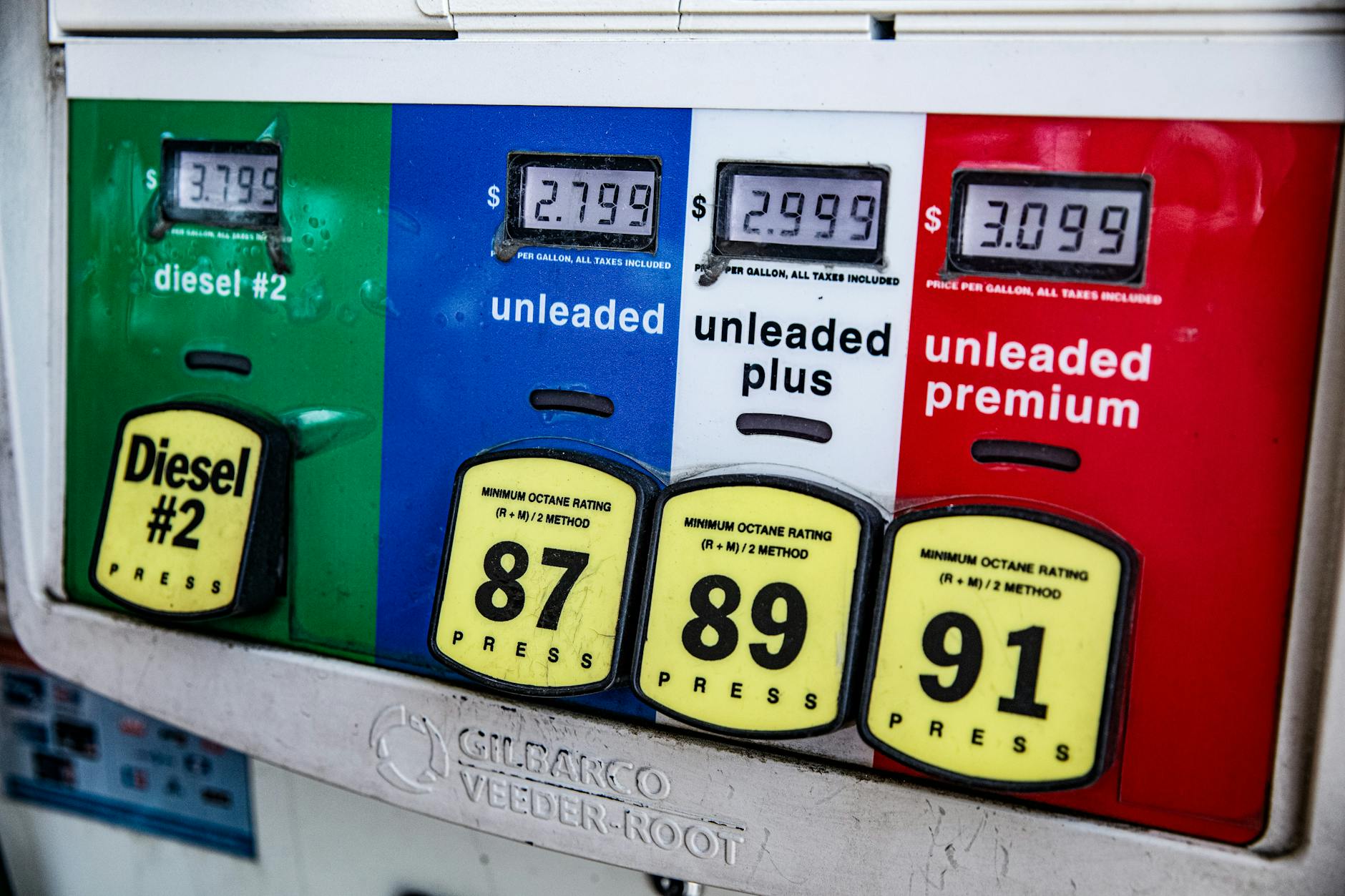
The stakes for American consumers are immediate and concrete. The national average gas price sits at $2.98 per gallon and is expected to cross $3.00 imminently, with GasBuddy analysts warning that some stations could see increases of up to 85 cents per gallon in the coming days. January’s Producer Price Index already pushed the 12-month inflation rate to 3.6% — well above the Fed’s 2% target — and the ISM manufacturing prices index showed more than 70% of purchasing managers reporting higher input costs in February, an 11.5 percentage point jump from the month prior. This article examines how the Iran conflict reshapes the Fed’s calculus, what the oil supply disruption means for prices across the economy, the risk of stagflation, and what ordinary Americans should watch for in the weeks ahead.
Table of Contents
- How Could the Iran War Force the Federal Reserve to Adjust Its Interest Rate Policy?
- Why the Strait of Hormuz Disruption Changes the Inflation Calculus
- What Rising Gas Prices Mean for American Households Right Now
- The Stagflation Risk — Higher Prices, Slower Growth, and Fewer Good Options
- Global Central Banks Are Watching — and the Fed Is Not Alone
- The Tariff Overlay — Why This Shock Comes at the Worst Possible Time
- What Comes Next for the Fed and the Economy
- Conclusion
- Frequently Asked Questions
How Could the Iran War Force the Federal Reserve to Adjust Its Interest Rate Policy?
The Federal Reserve held its benchmark rate steady at 3.5%–3.75% at its January 28, 2026 meeting, following three consecutive cuts in late 2025 that totaled 75 basis points. The message from policymakers was cautious optimism: inflation was trending in the right direction, and the economy was strong enough to absorb a pause. Market odds of a rate cut at the March FOMC meeting reflected that patience, with a 99.5% probability of a hold. The plan, such as it was, involved watching data and resuming cuts once inflation moved convincingly toward 2%. The Iran conflict upends that timeline. Economists estimate that a $10 increase in oil prices translates to roughly a 0.2 percentage point rise in inflation and a 0.1 percentage point drag on GDP growth, according to the Atlantic Council.
Brent crude has already jumped more than $6 in a single session. If oil pushes toward the $100 per barrel mark that analysts warn is possible should the Strait of Hormuz disruption persist, the Fed would face a familiar dilemma with no clean answer: raise rates to fight inflation and risk tipping the economy into recession, or hold steady and watch prices climb. Morningstar has explicitly raised the question of whether the Fed could be forced to hike rates in 2026 if oil-driven inflation proves sticky — a scenario that seemed unthinkable just a week ago. By comparison, when oil prices spiked during Russia’s invasion of Ukraine in 2022, the Fed was already in the early stages of an aggressive tightening cycle. This time, the central bank has been moving in the opposite direction. Reversing course would represent a dramatic policy whiplash that could rattle financial markets and undermine consumer confidence in the Fed’s ability to manage the economy.

Why the Strait of Hormuz Disruption Changes the Inflation Calculus
The Strait of Hormuz is the single most important chokepoint in global energy markets. Roughly 20% of the world’s oil consumption passes through this narrow waterway between iran and the Arabian Peninsula, and analysts describe the current disruption in traffic as “unprecedented.” Iran is the world’s sixth-largest oil producer, and a protracted conflict risks taking a significant share of global supply offline for an extended period. This is not a theoretical risk. Brent crude surged to $79.41 per barrel on March 2 — its highest level in over a year — while West Texas Intermediate jumped 6.2% to $71.19. These are not modest fluctuations; they represent the kind of supply-driven price shock that feeds directly into consumer costs for gasoline, heating oil, petrochemicals, and virtually every product that moves by truck, ship, or plane.
Axios reports that “the Iran conflict matters more for inflation than growth,” characterizing it as a second supply-side shock arriving while tariff-driven inflation is still working through the system. However, if the conflict is resolved quickly or the Strait of Hormuz reopens within days, much of the price spike could reverse. Oil markets are famously reactive to geopolitical headlines, and the premium built into current prices reflects worst-case scenarios. The danger lies in duration. If the disruption stretches into weeks, the price increases become embedded in contracts, supply chains adjust to scarcity, and the inflationary effects become far harder to unwind. The Fed’s challenge is that it cannot set monetary policy based on what might happen next week — it must plan for the range of plausible outcomes, and the range just got considerably wider.
What Rising Gas Prices Mean for American Households Right Now
The most immediate impact of the Iran conflict hits Americans at the gas pump. The national average sits at $2.98 per gallon, and GasBuddy analysts predict increases of 10 to 30 cents per gallon on average in the coming days, with some stations — particularly in regions dependent on imported crude — seeing spikes of up to 85 cents. For a household that drives 1,000 miles per month in a vehicle averaging 25 miles per gallon, even a 30-cent increase adds roughly $12 per month. An 85-cent spike at the extremes would cost that same household an extra $34 monthly — real money for families already stretched by elevated grocery and housing costs. Gas prices function as a regressive tax. Lower-income households spend a larger share of their income on fuel and are less likely to have the flexibility to work remotely, combine trips, or switch to public transit.
In rural communities with no mass transit options and longer average commutes, the burden is even heavier. The political implications are significant: gas prices are among the most visible daily reminders of economic conditions, and they shape consumer sentiment in ways that abstract inflation statistics do not. The knock-on effects extend well beyond the pump. Diesel prices, which closely track crude oil, directly affect shipping costs. Every product that travels by truck — which is nearly everything on store shelves — becomes marginally more expensive to transport. These costs get passed through to consumers with a lag of weeks to months, meaning the inflationary effects of today’s oil spike will continue to surface in CPI data well into the summer.
The Stagflation Risk — Higher Prices, Slower Growth, and Fewer Good Options
The word “stagflation” — a combination of stagnant economic growth and persistent inflation — has been conspicuously absent from mainstream economic commentary for most of the post-pandemic recovery. The Iran conflict is bringing it back. Some economists warn that higher energy prices coinciding with slower growth represents a genuine stagflation risk, depending on how long the conflict lasts, according to ING’s analysis. The tradeoff facing the Fed is stark. If it raises rates to combat oil-driven inflation, it increases borrowing costs for businesses and consumers at precisely the moment when higher energy prices are already squeezing margins and household budgets.
The result could be job losses and a recession. If it holds rates steady or cuts, it risks letting inflation expectations become unanchored — a far more dangerous outcome in the long run, because once consumers and businesses begin expecting persistent inflation, they adjust wages, prices, and contracts accordingly, creating a self-reinforcing cycle. By contrast, the supply-side inflation of 2021–2023 was eventually tamed by a combination of aggressive rate hikes and the resolution of pandemic-era supply chain disruptions. This time, the supply shock is geopolitical rather than logistical, and there is no clear timeline for resolution. The Fed cannot bomb open the Strait of Hormuz, and it cannot drill more oil. Its tools — interest rates and forward guidance — are blunt instruments for a problem rooted in physical supply disruption, which is precisely why the stagflation comparison to the 1970s keeps surfacing.
Global Central Banks Are Watching — and the Fed Is Not Alone
The Federal Reserve operates in a global context, and it is not the only central bank recalibrating expectations. Australia’s Reserve Bank Governor Michele Bullock said publicly that the RBA is “very alert” to inflation risks from the Iran conflict, signaling that central banks worldwide are reassessing their policy trajectories. When multiple major central banks simultaneously shift toward tighter or more cautious stances, the cumulative effect on global financial conditions can be significant. A key limitation to understand: the Fed’s dual mandate requires it to balance maximum employment against price stability.
In a stagflationary environment, those goals pull in opposite directions. Raising rates fights inflation but hurts employment; cutting rates supports growth but risks runaway prices. There is no policy response that satisfies both objectives simultaneously, which is why Fed officials have historically described supply-side inflation shocks as the most difficult scenarios to navigate. The dollar surged on March 1 as traders braced for the war’s market impact, which provides a small buffer — a stronger dollar makes imports cheaper, partially offsetting the oil price increase for American consumers. But this benefit is limited and unevenly distributed, and it does nothing for domestic services inflation or the psychological impact of rising gas prices on consumer behavior.

The Tariff Overlay — Why This Shock Comes at the Worst Possible Time
The Iran-driven oil shock does not arrive in a vacuum. The Trump administration’s tariff policies have already been generating inflationary pressure across a range of consumer goods, from electronics to building materials. Axios describes the current situation as a “second supply-side inflation shock” layered on top of the tariff-driven price increases still working through the economy. For the Fed, parsing how much inflation comes from tariffs versus oil versus underlying demand is an analytical nightmare — and one that will directly influence whether and when it can resume cutting rates.
📨 Get Free Accountability Coverage Alerts
Free · No spam · Unsubscribe anytime
Consider a manufacturer that imports steel components subject to tariffs and ships finished goods by diesel-powered trucks. That company is now absorbing higher input costs on two fronts simultaneously. Those costs will either compress profit margins — leading to potential layoffs or reduced investment — or get passed to consumers. Most likely, it will be some combination of both, which is exactly the kind of dynamic that feeds stagflationary conditions.
What Comes Next for the Fed and the Economy
The next FOMC meeting will be one of the most closely watched in years. With the January PPI already at 3.6% and oil prices potentially headed higher, the Fed’s forward guidance will carry enormous weight. Markets are currently pricing in the first rate cut no sooner than September, but that timeline could shift further depending on how the conflict evolves and how quickly — or slowly — the Strait of Hormuz situation resolves. The uncomfortable truth is that the Fed’s ability to manage this situation is limited.
Monetary policy works with long and variable lags, and the current inflation pressures are driven by factors entirely outside the central bank’s control. The best-case scenario involves a swift de-escalation that allows oil markets to normalize. The worst case involves a prolonged conflict, sustained supply disruption, and a Fed forced to choose between fighting inflation and supporting an economy sliding toward recession. For consumers, the practical advice is straightforward if unsatisfying: budget for higher gas and energy costs in the near term, lock in fixed-rate borrowing where possible, and watch the Fed’s statements carefully for signals about where rates are headed.
Conclusion
The Federal Reserve entered 2026 on a path toward gradual rate normalization, but the U.S.-led strikes on Iran have fundamentally altered the landscape. With Brent crude at its highest level in over a year, the Strait of Hormuz effectively shut down, and inflation data already running above target, the central bank faces its most difficult policy environment since the aggressive tightening cycle of 2022–2023. The combination of oil-driven price pressures and existing tariff inflation creates a dual supply shock with no easy monetary policy solution.
For American households, the effects are already showing up at gas stations and will soon ripple through grocery stores, shipping costs, and utility bills. The Fed’s next moves will depend on data that has not yet been collected and a geopolitical situation that remains deeply uncertain. What is clear is that the rate cuts many had anticipated for 2026 are, at minimum, delayed — and the possibility of rate hikes, however remote it seemed just days ago, is now part of the conversation. Consumers and investors alike should prepare for a period of elevated uncertainty and resist the temptation to assume that any single outcome is inevitable.
Frequently Asked Questions
Will the Federal Reserve raise interest rates because of the Iran war?
It is possible but not yet the base case. Morningstar has raised the question of whether persistent oil-driven inflation could force a rate hike in 2026. The current federal funds rate is 3.5%–3.75%, and markets overwhelmingly expect a hold at the March meeting. A hike would require sustained, elevated inflation data over multiple months.
How much will gas prices increase because of the Iran conflict?
GasBuddy analysts project the national average will rise 10 to 30 cents per gallon in the near term, with some stations seeing increases up to 85 cents. The national average was $2.98 per gallon as of March 2, 2026, and is expected to cross $3.00 imminently.
What happens if the Strait of Hormuz stays closed?
Roughly 20% of global oil consumption transits the Strait of Hormuz. Analysts warn that a prolonged disruption could push oil above $100 per barrel, which would significantly accelerate inflation and create drag on economic growth. The current near-complete halt in traffic is described as unprecedented.
When is the next Fed rate cut expected?
Before the Iran conflict, markets expected the first 2026 rate cut as early as June. Traders have now pushed expectations to September at the earliest, and bets on a third cut in 2026 have almost entirely evaporated.
What is stagflation and should I be worried about it?
Stagflation describes an economy experiencing both rising prices and stagnant or declining growth simultaneously. Some economists warn that the combination of oil-driven inflation and the growth drag from higher energy costs could create stagflationary conditions, particularly if the conflict is prolonged. The risk is real but not yet certain — much depends on the duration and scope of the disruption.
How does the oil price spike affect inflation beyond gasoline?
Economists estimate that every $10 increase in oil prices adds approximately 0.2 percentage points to inflation and subtracts 0.1 percentage points from GDP growth. Higher diesel costs increase shipping expenses for virtually all consumer goods, and petrochemical-dependent products from plastics to fertilizers also see price increases, typically with a lag of weeks to months.
You Might Also Like
- The Supreme Court May Eventually Have to Weigh In on Iran War Authorization
- War Crimes Allegations Are Already Emerging From the Iran Bombing Campaign
- Wall Street’s Biggest Winners and Losers From the Iran War