
Gas prices are climbing again, and if they breach the $4 national average this spring, electric vehicle sales could see a meaningful bump — though the picture is more complicated than a simple price-at-the-pump narrative. As of March 2, 2026, the national average sits around $3.00 per gallon, up from $2.90 just two weeks ago. But a sudden geopolitical shock — U.S.-Israeli strikes on Iranian facilities that triggered Strait of Hormuz disruption fears — sent Brent crude surging roughly 13% to about $82 per barrel on March 2, with pump prices jumping around 30 cents in a matter of days. California drivers are already staring down a $4.66 average, with some San Diego stations creeping toward $5. The math favoring EVs gets louder at those price levels.
At $4.50 a gallon, a typical 25 MPG vehicle costs about $2,700 a year in fuel over 15,000 miles. An EV owner covering the same distance spends $500 to $800 on electricity — a savings gap of roughly $1,900 to $2,200 annually. That is real money for real households. But whether sticker shock at the gas pump actually translates into a surge in EV purchases depends on affordability, federal incentive policy, charging infrastructure, and consumer sentiment. This article digs into all of it: where EV sales actually stand right now, what the cost math looks like, which affordable models are available, and why the used EV market may matter more than anything in 2026.
Table of Contents
- Could Rising Gas Prices Past $4 Actually Surge Electric Vehicle Sales?
- The Real Cost Comparison Between Gas and Electric in 2026
- Which Affordable EVs Are Actually Available Right Now?
- Why the Used EV Market May Matter More Than New Sales
- The Federal Tax Credit Expiration Changes the Equation
- The Geopolitical Wildcard Behind the Price Spike
- What Comes Next for EV Sales in 2026
- Conclusion
- Frequently Asked Questions
Could Rising Gas Prices Past $4 Actually Surge Electric Vehicle Sales?
History suggests a correlation, but not an automatic one. High gas prices have pushed consumers toward fuel-efficient vehicles before — the 2008 oil spike made the Toyota Prius a cultural phenomenon — and the EV market is better positioned to absorb a demand surge than at any prior point, with more than 70 fully electric models now available in the U.S. and an expanded charging network. CarEdge analysts have noted that the current geopolitical energy shock is the key wildcard that could push national averages toward or past $4 during the spring and summer driving season. AAA has flagged the seasonal shift toward rising gas prices that typically accompanies warmer months, which means the March crude oil spike may be landing at the worst possible time for drivers. But the recent sales data tells a sobering story. January 2026 saw 86,480 plug-in vehicles sold — 72,802 battery electrics and 13,678 plug-in hybrids — which was down 25.6% from January 2025.
EVs captured just 7.82% of total light-duty vehicle sales. For all of 2025, EVs accounted for 7.8% of new car sales, actually slipping from 8.1% in 2024. Cox Automotive forecasts essentially flat performance in 2026, projecting EVs at roughly 8% of sales. So any surge would be starting from a position of stagnation, not momentum. The Q3 2025 peak is instructive. EVs hit 10.5% market share that quarter, then plunged to 5.8% in Q4 after federal tax credit changes took effect. That collapse shows how sensitive EV demand is to policy — and right now, the policy environment is not favorable.

The Real Cost Comparison Between Gas and Electric in 2026
The fuel savings case for EVs is straightforward and hard to argue with at elevated gas prices. At $3.25 per gallon, a driver putting 15,000 miles a year on a vehicle averaging 25 MPG spends about $1,950 annually on gas. Push that to $4.50 a gallon — which California is already past and which the rest of the country could approach if Strait of Hormuz tensions persist — and that annual cost jumps to $2,700, a $750 increase. Meanwhile, EV drivers spending $500 to $800 a year on electricity are insulated from the volatility entirely. However, fuel savings only matter if you can afford the vehicle in the first place. The average new EV still costs above $55,000, and more than 70% of upcoming battery electric models are priced above $50,000, according to the IEA’s global EV Outlook 2025.
The federal $7,500 EV tax credit has expired, removing what was the single most effective purchase incentive for middle-income buyers. So while the per-mile operating cost argument is strong, the upfront cost barrier is higher than it was a year ago. A consumer saving $2,000 a year on fuel still needs years to recoup a $20,000 price premium over a comparable gas vehicle — and that is before accounting for higher insurance costs that many EV owners report. Electricity rates also vary dramatically by region and time of use. A driver charging at home on an off-peak residential rate in the Southeast pays far less per kilowatt-hour than someone relying on DC fast chargers in the Northeast. The $500 to $800 annual estimate assumes predominantly home charging. If you are renting an apartment and relying on public charging infrastructure, your costs could be significantly higher and less predictable.
Which Affordable EVs Are Actually Available Right Now?
The entry-level EV market has improved meaningfully heading into 2026, even without the federal tax credit. The 2026 Chevrolet Bolt EV returns at $28,995, offering 255 miles of range on an LFP battery — a chemistry that is cheaper and more durable than the nickel-based cells in many premium EVs. The redesigned 2026 Nissan Leaf starts at $29,990 and delivers a genuinely competitive 303 miles of range. Both of these vehicles place a new EV under $30,000, which was essentially impossible just two years ago outside of heavy incentive stacking. Tesla’s Model 3, still the brand most associated with EVs in the American market, starts at $36,990 with 321 miles of range.
Tesla holds roughly 45% of U.S. EV sales in 2026, down from 49% in 2024, as GM has solidified its position in second place with models like the Bolt and the Equinox EV. The competitive landscape is broader than it has ever been, which is good for consumers but also means the market is fragmenting — no single model or brand is likely to drive a dramatic sales surge on its own. The problem is that these sub-$30,000 options are a small slice of what is available. The bulk of new EV inventory sits at $50,000 and above, which prices out the exact consumers most hurt by high gas prices. Someone spending $200 a month on gas in a paid-off Honda Civic is not going to take on a $500 monthly car payment to save on fuel, no matter how compelling the per-mile math looks.
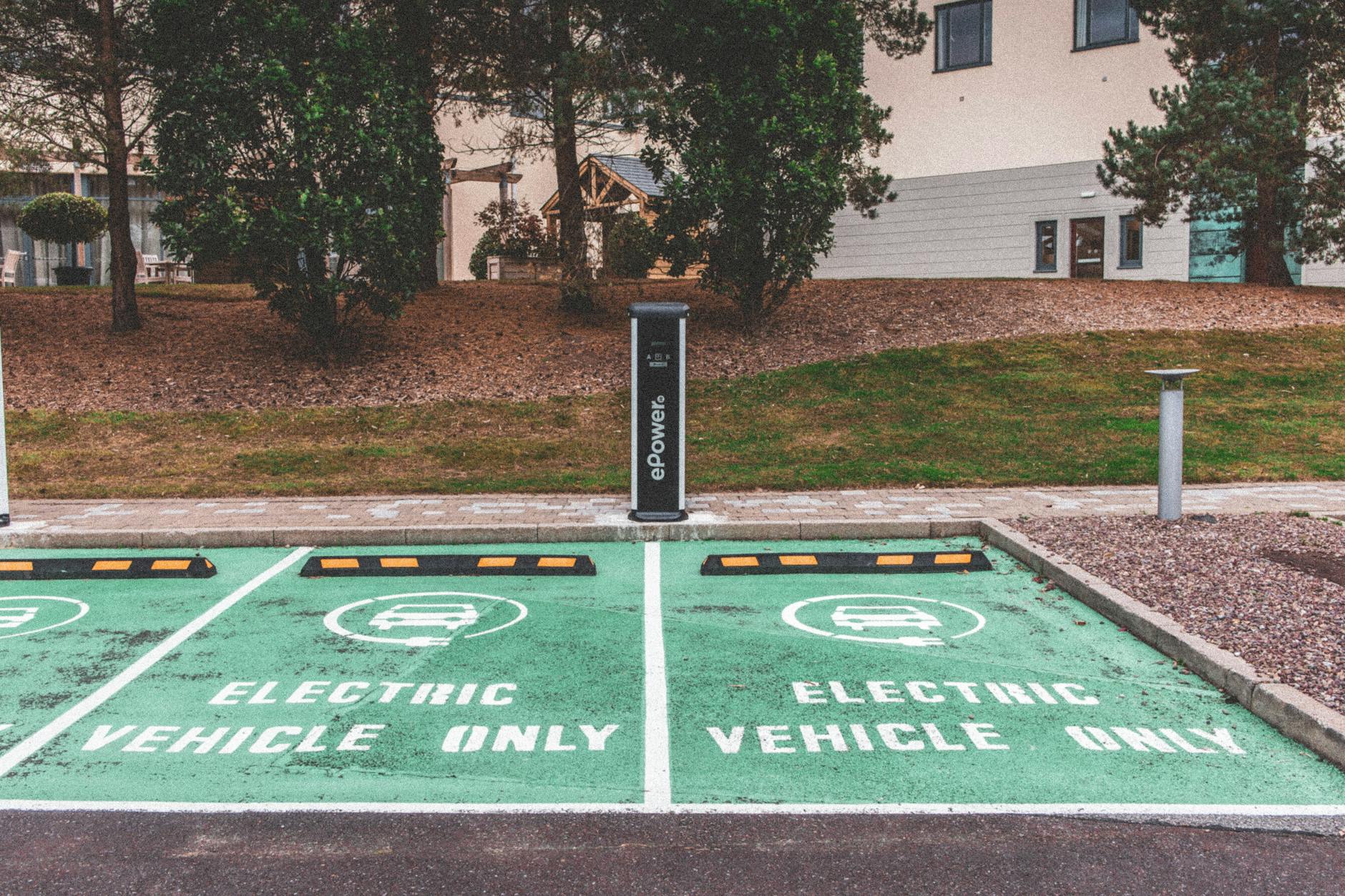
Why the Used EV Market May Matter More Than New Sales
Analysts have dubbed 2026 the “year of the used EV,” and this may be where the real action happens if gas prices spike. A wave of lease returns is flooding the market with two- and three-year-old electric vehicles at prices that are genuinely accessible. You can find used Tesla Model 3s, Chevrolet Bolt EVs, and Hyundai Ioniq 5s at price points between $18,000 and $28,000 — territory where the fuel savings math becomes compelling almost immediately. The tradeoff is uncertainty.
Used EV buyers face questions about battery degradation, warranty coverage, and whether the vehicle’s charging capabilities will keep pace with evolving network standards. A 2023 Bolt with 40,000 miles might still have 90% or more of its original battery capacity, but buyers have limited tools to verify that independently. Unlike a used gas car, where a $50 compression test gives you a reasonable read on engine health, battery state-of-health assessment for used EVs remains inconsistent across brands and dealerships. Still, for a household that is watching gas prices climb and wants to cut fuel costs without taking on a $30,000-plus loan, a used EV in the low $20,000s with 200 miles of range is a genuinely practical option in a way it was not even 18 months ago. The combination of lease returns, depreciation on early-generation models, and a more mature charging network makes the used market the most likely channel through which gas price pain could translate into EV adoption.
The Federal Tax Credit Expiration Changes the Equation
The expiration of the $7,500 federal EV tax credit is the elephant in the room. When EVs hit 10.5% market share in Q3 2025, that credit was still available for qualifying vehicles. By Q4, after changes took effect, market share cratered to 5.8%. That is not a coincidence. The credit was effectively a $7,500 discount at the point of sale for many buyers, and removing it raised the real cost of an EV by that same amount overnight. Without the credit, the breakeven calculation shifts significantly.
A buyer choosing a $29,000 Bolt EV over a $26,000 gas-powered compact sedan is now looking at a $3,000 premium that fuel savings can recoup in about two years at $4-plus gas prices — still a reasonable proposition. But a buyer cross-shopping a $55,000 EV against a $38,000 gas-powered SUV faces a $17,000 gap that will take the better part of a decade to close on fuel savings alone. For the average new EV purchase, the credit’s absence makes the financial case much harder to make, particularly for buyers who do not drive high annual mileage. Some states still offer their own incentives, and manufacturers have responded with promotional pricing and lease deals to compensate. But the patchwork nature of state-level credits means the affordability picture varies enormously depending on where you live. A Colorado buyer might have access to meaningful state incentives. A Texas buyer likely does not.

The Geopolitical Wildcard Behind the Price Spike
The March 2, 2026 oil price surge was not a gradual market shift — it was a shock. Brent crude jumped roughly 13% in a single session to about $82 per barrel after U.S.-Israeli strikes on Iranian facilities raised the specter of Strait of Hormuz disruptions. WTI crude rose more than 6% to approximately $72 per barrel.
📨 Get Free Accountability Coverage Alerts
Free · No spam · Unsubscribe anytime
Pump prices responded almost immediately, with reports of 30-cent jumps within days. For context, the Strait of Hormuz handles roughly 20% of global oil transit, and any sustained disruption there would dwarf the price impact of typical seasonal fluctuations. If this remains a one-off geopolitical event that de-escalates, gas prices may settle back toward $3 nationally and the EV demand signal fades. But if tensions persist or escalate through the spring driving season, the combination of geopolitical risk premium and seasonal demand could push national averages toward or past $4 — a threshold that historically concentrates consumer attention on fuel costs in a way that $3 gas simply does not.
What Comes Next for EV Sales in 2026
The most honest forecast is that EV sales in 2026 will be shaped more by gas price volatility and used vehicle availability than by any single policy or product launch. Cox Automotive’s projection of roughly 8% market share assumes a relatively stable price environment. A sustained move past $4 at the pump could push that number higher, but the expired federal credit and high average new-EV prices create a ceiling that did not exist two years ago.
The charging network continues to expand, and the variety of available models — more than 70 fully electric options — means that range anxiety and model selection are less of a barrier than they used to be. The real question is whether the economic pressure of high gas prices can overcome the sticker shock of buying electric without a $7,500 federal subsidy. For many households, the answer in 2026 may come from a used EV lot, not a new car showroom.
Conclusion
Rising gas prices do create a stronger economic case for electric vehicles, and the math is undeniable at $4-plus per gallon — savings of $1,900 to $2,200 a year compared to a typical gas vehicle. The EV market has more models, better range, and improved infrastructure compared to any previous oil price spike. The geopolitical shock from the Iran-related Strait of Hormuz tensions adds genuine uncertainty about where prices go this spring.
But a surge in EV sales is far from guaranteed. The federal tax credit is gone, average new EV prices remain above $55,000, and recent sales data shows the market losing momentum rather than gaining it. The most promising bright spot is the used EV market, where lease returns are making electric vehicles accessible to budget-conscious buyers for the first time at scale. If gas prices stay elevated through summer 2026, watch the used EV segment — that is where consumer behavior is most likely to shift first.
Frequently Asked Questions
How much can I save per year by switching to an EV if gas prices hit $4.50 a gallon?
At $4.50 per gallon, a typical 25 MPG gas vehicle costs about $2,700 a year in fuel over 15,000 miles. EV drivers spend $500 to $800 on electricity for the same distance, yielding savings of roughly $1,900 to $2,200 annually. This assumes primarily home charging — reliance on public fast chargers will reduce those savings.
Is the $7,500 federal EV tax credit still available in 2026?
No. The federal $7,500 EV tax credit has expired. Some state-level incentives still exist depending on where you live, and manufacturers are offering promotional deals to offset the loss, but the federal credit is no longer a factor in the purchase equation.
What is the cheapest new electric vehicle available in 2026?
The 2026 Chevrolet Bolt EV starts at $28,995 with 255 miles of range. The redesigned 2026 Nissan Leaf follows closely at $29,990 with 303 miles of range. Both represent a significant affordability improvement over previous years.
Why did EV sales drop in late 2025?
EV market share hit 10.5% in Q3 2025 but fell sharply to 5.8% in Q4 after federal tax credit changes took effect. The removal of the $7,500 incentive effectively raised prices for consumers overnight, dampening demand. January 2026 sales were down 25.6% compared to January 2025.
Are used EVs a good option in 2026?
Analysts call 2026 the “year of the used EV” because a flood of lease returns is bringing two- and three-year-old electric vehicles to market at prices between $18,000 and $28,000. The main concern is battery health verification, which remains inconsistent across brands, but for buyers priced out of new EVs, the used market offers a practical entry point.
How high could gas prices go in spring 2026?
That depends heavily on geopolitical developments. The March 2 oil price spike — Brent crude surging 13% after U.S.-Israeli strikes near Iran — combined with seasonal driving demand could push national averages toward or past $4 if tensions persist. AAA has already noted a seasonal shift toward rising prices heading into spring and summer.
You Might Also Like
- Turkey, Iraq, Pakistan, and Afghanistan Could See Millions of Iranian Refugees
- Trump’s Approval Rating Could Shift Dramatically Based on How the Iran War Goes
- The Refugee Crisis From Iran Could Dwarf Anything the Region Has Ever Seen