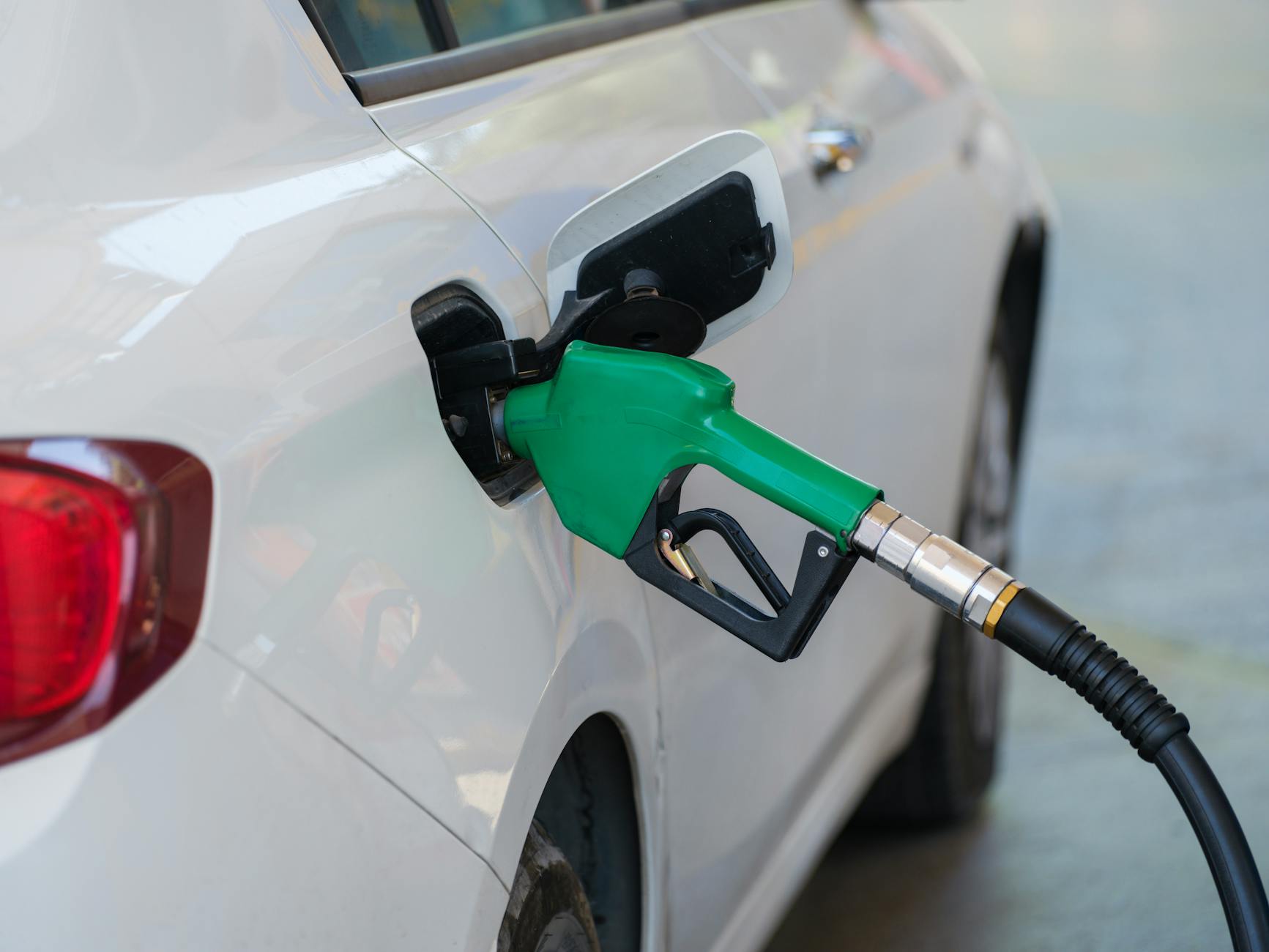
The short answer is yes, gasoline could hit $5 per gallon — but only if the Iran war drags on for weeks and the Strait of Hormuz remains effectively closed to tanker traffic. As of March 2, 2026, the national average sits at $2.98 per gallon according to AAA, already up 2% from a week ago. Most analysts say the more likely near-term scenario pushes prices into the $3.25 to $3.75 range nationally, with states like California seeing significantly higher. But worst-case projections from CNBC suggest that a prolonged strait disruption could spike Brent crude by $40 to $80 per barrel, potentially hitting $120 per barrel if the war lasts more than three weeks — territory that would absolutely drag retail gas prices toward and past that $5 mark.
This matters right now because just days ago, GasBuddy had forecast that 2026 yearly averages would fall below $3 per gallon — the lowest since 2020. That forecast is already obsolete. Joint U.S.-Israeli military strikes on Iran began February 28, 2026, reportedly killing Iran’s Supreme Leader Ali Khamenei, and the retaliation has been swift and destabilizing. What follows is a breakdown of how the conflict is reshaping oil markets, what the realistic price scenarios look like, how this compares to the 2022 gas spike, and what consumers can actually do to prepare.
Table of Contents
- How Could the Iran War Push Gasoline Past $5 Per Gallon?
- What Are Analysts Actually Predicting for Gas Prices This Week?
- The Strait of Hormuz — Why One Waterway Controls Your Gas Bill
- How to Prepare for a Gas Price Spike — Practical Steps That Actually Help
- The Wild Card — Could the Conflict Escalate Beyond Current Projections?
- What the 2022 Gas Price Record Tells Us About What Comes Next
- Where Do Gas Prices Go From Here?
- Conclusion
- Frequently Asked Questions
How Could the Iran War Push Gasoline Past $5 Per Gallon?
The mechanism is straightforward: the Strait of Hormuz. Between 20% and 30% of all global oil and gas passes through this narrow waterway between iran and Oman. Iran’s Islamic Revolutionary Guard Corps has issued warnings prohibiting vessel passage, and the result has been a 70% reduction in shipping traffic — a de facto blockade, according to Bloomberg. At least three tankers have been struck near the strait, including one off Oman that was set ablaze. Major shipping firms Maersk and Hapag-Lloyd have suspended transits through both the strait and Red Sea routes entirely. When you choke off that much of the global oil supply, the price math gets ugly fast. Brent crude already rose as much as 13% to $82.37 per barrel — its highest level since January 2025 — before settling around $77.79, up 6.75%.
U.S. crude oil surged more than 7%, rising nearly $6 per barrel. That kind of move in crude translates directly to what you pay at the pump, typically with a lag of a few days to a couple of weeks. The $5 threshold is not some far-fetched number. The last time we hit it — a national average of $5.016 in June 2022 — was after Russia invaded Ukraine and oil breached $100 per barrel. If Brent were to reach $120, which analysts say is plausible in a three-week-plus conflict scenario, gas prices would almost certainly follow that same trajectory. A full strait closure involving mines and anti-ship missiles could theoretically push Brent toward $200 per barrel, according to CNBC — a scenario that would make $5 gas look like a bargain.

What Are Analysts Actually Predicting for Gas Prices This Week?
In the near term, the picture is more manageable but still painful. Patrick De Haan of GasBuddy expects U.S. gas prices to rise 10 to 30 cents on average in the coming days, with some stations seeing increases as high as 85 cents. That is not a uniform increase — stations in already-expensive markets like California and Hawaii will feel the spike harder, while Gulf Coast states with closer proximity to domestic refining may see smaller jumps. Independent oil analyst Tom Kloza expects retail gas prices to rise 5 to 10 cents per day for at least a short period. However, most analysts say $5 per gallon is not the base case. CNN Business reports that there is enough global supply to prevent reaching the 2022 record, assuming the conflict does not fully shut the Strait of Hormuz long-term.
The Strategic Petroleum Reserve, while diminished from its 2022 drawdowns, still exists as a buffer. OPEC+ members outside the conflict zone have spare capacity they could theoretically bring online. And U.S. domestic production is at historically high levels. The critical variable nobody can predict is duration. If the strait reopens within a week or two — through a ceasefire, a negotiated passage agreement, or a decisive military operation to secure shipping lanes — prices could stabilize and even retreat. If the blockade holds for a month or longer, every one of those analyst estimates gets thrown out the window.
The Strait of Hormuz — Why One Waterway Controls Your Gas Bill
It is hard to overstate how much the global energy system depends on this single chokepoint. The Strait of Hormuz is roughly 21 miles wide at its narrowest point, and the shipping lanes that tankers actually use are even tighter. Saudi Arabia, Iraq, Kuwait, Qatar, the UAE, and Iran itself all export oil through this passage. When The Conversation describes it as the world’s most critical oil chokepoint, that is not hyperbole — no other waterway handles anywhere close to 20-30% of global oil and gas flows. The current crisis illustrates exactly why energy analysts have warned about this vulnerability for decades. Iran’s retaliation after the February 28 strikes included missile and drone attacks on Israeli territory and U.S.
military bases in Gulf states, but the economic weapon — threatening tanker traffic — may prove more consequential than any missile. The 70% reduction in shipping traffic is already reshaping global oil flows, forcing buyers to seek longer, more expensive routes around Africa or to source crude from other regions at premium prices. For American consumers, this is a reminder that “energy independence” — a phrase politicians love — has limits. The U.S. produces more oil than it consumes, but oil is a global commodity priced on global markets. When supply gets disrupted anywhere, prices rise everywhere. Your gas station in Kansas does not get a discount because American wells are pumping at record levels.

How to Prepare for a Gas Price Spike — Practical Steps That Actually Help
If prices do climb significantly, the difference between preparation and panic is real money. The most immediate action is to fill up your tank now, before the next round of increases hits your local station. Tom Kloza’s estimate of 5 to 10 cents per day means that waiting even a few days on a 15-gallon tank costs you an extra $0.75 to $1.50 per fill-up — annoying, but the increases compound if the crisis stretches over weeks. Beyond that, the playbook is familiar from the 2022 spike. Apps like GasBuddy let you comparison-shop stations in your area, and the price spread between the cheapest and most expensive station within a five-mile radius can easily be 30 to 50 cents per gallon.
Warehouse clubs like Costco and Sam’s Club consistently undercut surrounding stations by 10 to 25 cents. If you have been putting off that tune-up or have been driving on underinflated tires, fixing either can improve fuel economy by 3% to 5% — not life-changing, but it adds up over months of elevated prices. The tradeoff worth mentioning: do not make expensive decisions based on temporary spikes. Rushing out to buy a hybrid or EV to “save on gas” rarely makes financial sense unless you were already planning to buy a new vehicle. The math on recovering a $5,000 to $10,000 premium through fuel savings takes years, and by then, prices may have normalized.
The Wild Card — Could the Conflict Escalate Beyond Current Projections?
The scenarios most analysts are modeling assume the conflict remains roughly where it is: a serious but contained military engagement with significant but not total disruption to strait traffic. That assumption could prove wrong in several ways, all of them bad for gas prices. If Iran deploys naval mines in the strait — which its military has trained for extensively — clearing operations could take weeks or months, even with U.S. Navy minesweepers deployed. Anti-ship missile batteries along Iran’s coastline can threaten tankers even if escort vessels are present. And if the conflict draws in additional regional actors, the disruption zone could expand beyond the strait to include other critical infrastructure.
CNBC’s worst-case estimate of Brent at $200 per barrel is built on this kind of full-closure scenario. At that oil price, $5 gas would not be the ceiling — it would be the floor. There is also a less-discussed risk on the demand side. A sharp and sustained gas price increase acts as a tax on consumers and businesses alike. If prices spike fast enough, it can tip an already fragile economy into recession — which would then destroy demand and crash oil prices in the other direction. This boom-bust cycle played out in 2008 when oil hit $147 per barrel in July and collapsed to $32 by December. Consumers should be aware that volatility, not just high prices, is the real threat.

What the 2022 Gas Price Record Tells Us About What Comes Next
The June 2022 experience is the closest comparison we have. After Russia invaded Ukraine, Brent crude surged past $100 per barrel and the national average hit $5.016 per gallon. But that peak lasted only about two weeks before prices began a slow, uneven decline. The Biden administration released roughly 180 million barrels from the Strategic Petroleum Reserve, OPEC+ members increased production, and demand destruction — people simply driving less — all contributed to the pullback. The current situation differs in important ways.
📨 Get Free Accountability Coverage Alerts
Free · No spam · Unsubscribe anytime
The SPR is smaller than it was in early 2022 after those drawdowns. But U.S. domestic production is higher, and the starting price of oil is significantly lower — around $73 per barrel for Brent before the strikes, compared to already-elevated prices in early 2022. That lower starting point means there is more room for prices to rise before hitting the thresholds that trigger $5 gas. It also means that a resolution to the conflict could bring prices back down faster than in 2022.
Where Do Gas Prices Go From Here?
The next two to three weeks will determine whether this is a short-lived spike or a sustained crisis. If diplomatic channels produce a ceasefire or if military operations secure the strait for commercial traffic, the 10-to-30-cent increase that GasBuddy’s De Haan projects may be the extent of the damage. If the blockade holds and tanker attacks continue, we enter uncharted territory — the strait has never been effectively closed for a prolonged period in the modern oil era.
What is certain is that the pre-conflict forecast of sub-$3 averages for 2026 is dead. Even an optimistic resolution leaves prices elevated for months as markets rebuild confidence in strait security and shipping companies reassess risk premiums. For consumers, the practical advice is to budget for gas prices in the $3.25 to $3.75 range as a baseline, hope for the best, and plan for the possibility that it gets worse before it gets better.
Conclusion
Gasoline at $5 per gallon is a realistic worst-case outcome, not a certainty. It requires a sustained closure of the Strait of Hormuz lasting several weeks and oil prices surging past $120 per barrel. The more probable near-term scenario is a national average in the $3.25 to $3.75 range, with significant regional variation. California, which already pays far above the national average, could see $5 before anyone else.
The conflict that began on February 28 has already wiped out earlier predictions of the cheapest gas since 2020. The situation is evolving daily, and no analyst can tell you with confidence where prices will be in a month. What you can control is your own preparation: fill up now, comparison-shop stations, maintain your vehicle, and resist making expensive long-term financial decisions based on what may be a temporary spike. Keep an eye on credible sources like AAA’s gas price tracker and GasBuddy for real-time updates rather than relying on social media speculation.
Frequently Asked Questions
Has gas actually hit $5 per gallon yet?
No. As of March 2, 2026, the national average is $2.98 per gallon according to AAA. Prices are rising and expected to increase 10 to 30 cents on average in the coming days, but $5 is a worst-case scenario, not the current reality.
How fast could gas prices rise?
Independent oil analyst Tom Kloza estimates retail prices could rise 5 to 10 cents per day for at least a short period. GasBuddy’s Patrick De Haan says some individual stations could see increases as high as 85 cents, depending on location and supply chain factors.
Why does a conflict in the Middle East affect gas prices in the U.S. when we produce our own oil?
Oil is a globally traded commodity. When supply is disrupted anywhere — especially at a chokepoint handling 20-30% of global oil and gas flows — it raises prices on world markets. U.S. producers sell at global prices, so domestic production does not insulate American consumers from international disruptions.
What would it take for gas to actually hit $5 per gallon?
Analysts say it would require a sustained, full closure of the Strait of Hormuz lasting weeks, pushing Brent crude to $120 per barrel or higher. A full closure involving mines and anti-ship missiles could theoretically push Brent toward $200 per barrel, which would drive gas prices well past $5.
Should I buy an electric vehicle to avoid high gas prices?
Unless you were already planning to buy a new vehicle, rushing into an EV purchase to avoid a temporary gas price spike rarely makes financial sense. The premium over a comparable gas vehicle takes years to recover through fuel savings, and prices may normalize well before you break even.
When was the last time gas hit $5 per gallon?
The national average reached a record $5.016 per gallon in June 2022, following Russia’s invasion of Ukraine when oil prices surged past $100 per barrel. That peak lasted roughly two weeks before prices began declining.
You Might Also Like
- Trump’s Approval Rating Could Shift Dramatically Based on How the Iran War Goes
- The Iran War Could Disrupt Global Food Supplies and International Grain Markets
- War Crimes Allegations Are Already Emerging From the Iran Bombing Campaign