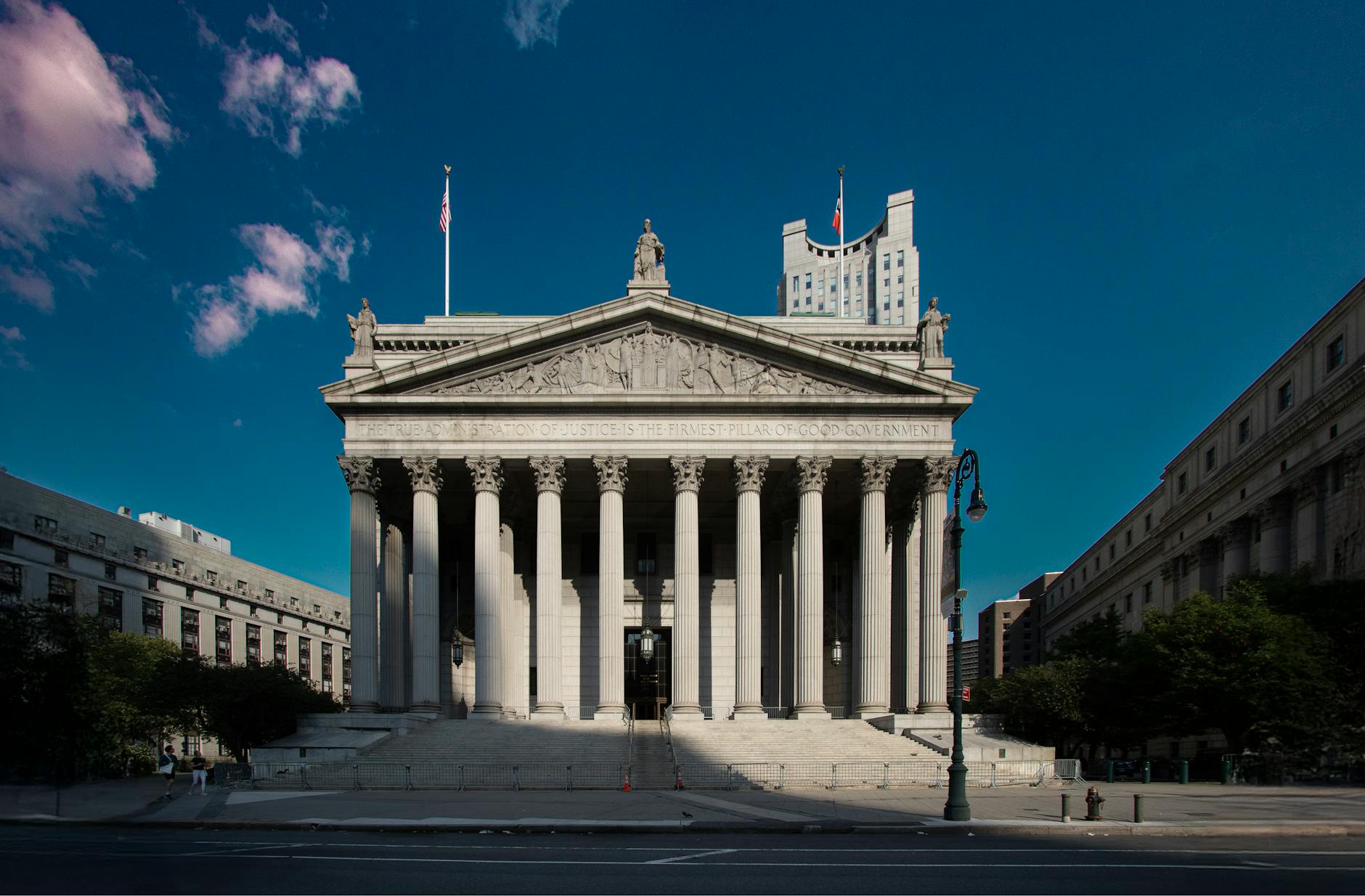
Yes, the Supreme Court really did strike down President Trump’s tariffs as unconstitutional. On February 20, 2026, in a 6-3 decision in *Learning Resources, Inc. v. Trump*, the Court ruled that Trump exceeded his authority by using the International Emergency Economic Powers Act (IEEPA) to impose sweeping tariffs on imports. And yes, an estimated $175 billion in collected tariffs is now at stake for potential refunds.
Costco did file a lawsuit — back in December 2025 — to preserve its right to get that money back. But here is where the viral headlines get sloppy. The $175 billion has not been “refunded.” Not a cent of it has gone back to anyone yet. The Supreme Court did not order refunds — it left that question to lower courts, and the process is expected to take 12 to 18 months. Perhaps most importantly, those refunds will go to importers — the businesses that paid the tariffs at the border — not to you, the consumer who paid higher prices at the register. This article breaks down exactly what the Court ruled, what happens next with the refund process, how Trump responded within hours, and what this all actually means for your wallet.
Table of Contents
- Did the Supreme Court Really Rule Trump’s Tariffs Unconstitutional?
- Where Does the $175 Billion Refund Figure Come From?
- Why Costco Filed Its Lawsuit Before the Ruling
- Will Consumers Actually See Lower Prices?
- Trump’s Response and the New Legal Battlefield
- What Importers Should Do Right Now
- What This Ruling Means Going Forward
- Conclusion
Did the Supreme Court Really Rule Trump’s Tariffs Unconstitutional?
It did, but not all of them. Chief Justice John Roberts, writing for the six-justice majority, held that the president lacked peacetime authority to use IEEPA as a vehicle for imposing tariffs. Roberts wrote: “In light of the breadth, history, and constitutional context of that asserted authority, he must identify clear congressional authorization to exercise it.” In plain terms, the Court said IEEPA was designed for genuine national emergencies — freezing foreign assets, blocking transactions — not for rewriting the country’s trade policy by executive decree. The ruling specifically struck down what the administration called “reciprocal” tariffs and the tariffs tied to drug-trafficking justifications, all imposed under IEEPA. It does not touch tariffs on steel and aluminum, which were imposed under a completely different law — Section 232 of the Trade Expansion Act of 1962.
So if you have seen people claiming that all tariffs are gone, that is wrong. Section 232 tariffs remain fully in effect, and as we will get to shortly, trump moved within hours to replace the struck-down tariffs using yet another legal authority. The distinction matters for businesses trying to figure out which tariffs they can seek refunds on. Only the IEEPA-based tariffs are affected. If your company paid duties under Section 232, you are out of luck — those were not part of this case and remain legally valid.
Where Does the $175 Billion Refund Figure Come From?
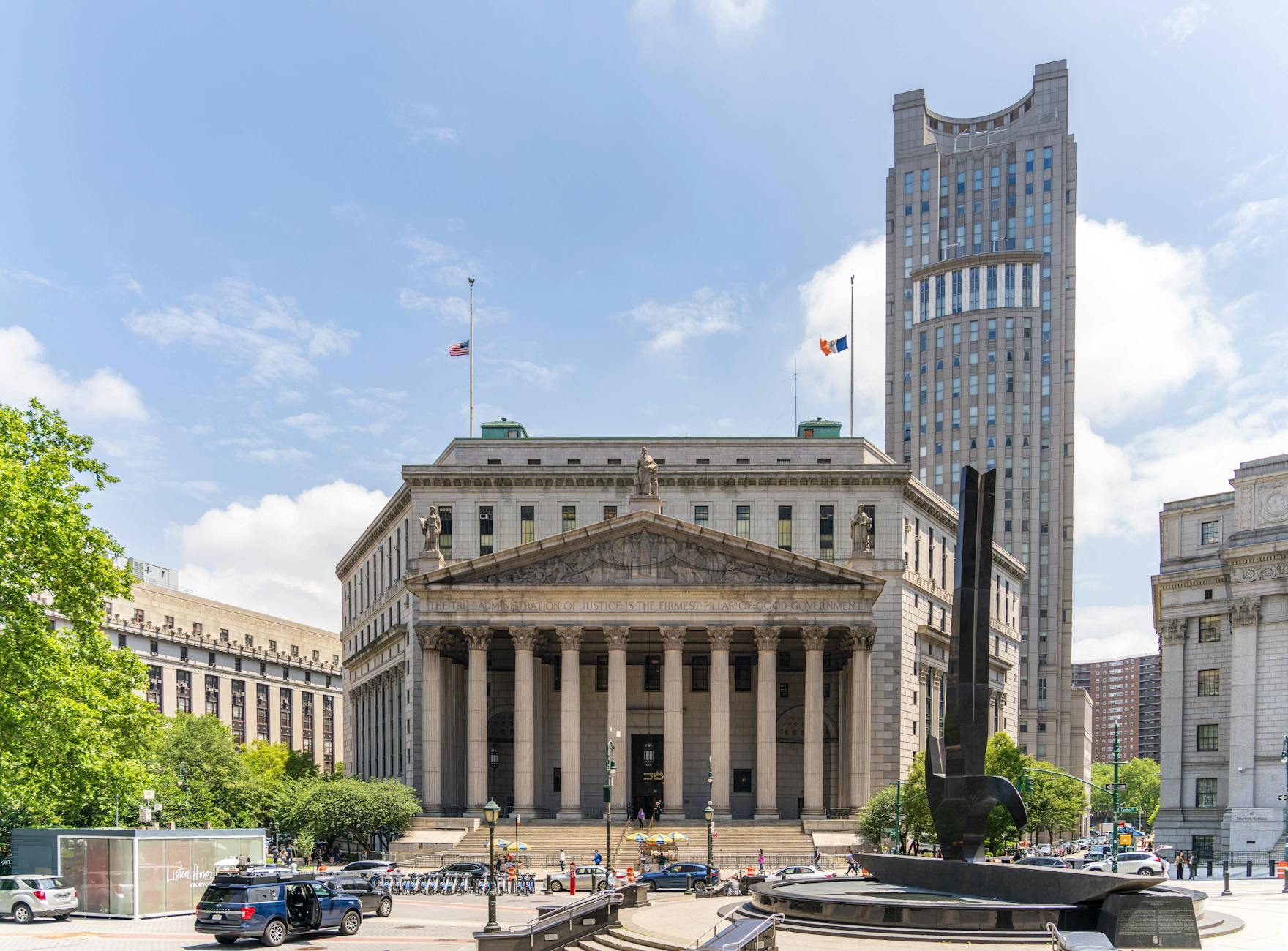
The $175 billion estimate comes from the Penn Wharton Budget Model, which calculated the total amount collected under IEEPA tariffs that could potentially be refunded. U.S. Customs and Border Protection data shows that approximately $130 to $142 billion was collected under IEEPA tariffs in 2025 alone, with additional collections continuing into early 2026 before the ruling came down. However, “potentially refundable” and “actually refunded” are very different things. The Supreme Court did not order CBP to cut checks. It left the mechanics of refunds to the U.S. Court of International trade in New York, where over 2,000 cases have already been filed by companies seeking their money back.
TD Securities estimates the process could take 12 to 18 months. If you are a small importer who paid $50,000 in IEEPA tariffs, you will likely need to file your own case or join existing litigation. Nobody is mailing you a refund automatically. There is another wrinkle. Costco filed its lawsuit in December 2025 specifically because it feared that U.S. Customs would “liquidate” — finalize — the tariff entries before the Supreme Court ruled, which could have made refunds legally impossible. Companies that did not take similar protective action may find that some of their tariff payments have already been liquidated and are harder to recover. The lesson: timing and legal strategy matter enormously here.
Why Costco Filed Its Lawsuit Before the Ruling
Costco did not wait for the Supreme Court to act. In December 2025, the retailer filed suit with the U.S. Court of International Trade to preserve its refund eligibility. The concern was straightforward: under customs law, once tariff entries are “liquidated” — meaning CBP finalizes the assessment — challenging them becomes significantly harder. Costco wanted a court order preventing liquidation of its entries while the constitutional challenge worked its way through the system. Costco was one of thousands of businesses that took this proactive step.
Large importers with legal departments and the resources to file preemptive lawsuits were well-positioned. Smaller businesses — the ones least able to absorb tariff costs in the first place — were often the ones who did not file protective suits and may now face an uphill battle recovering their payments. This is a pattern worth paying attention to. When the government collects money under a legally questionable authority, the burden of getting it back almost always falls on the people and businesses who paid it. The system does not self-correct. You have to fight for your refund, and fighting costs money.

Will Consumers Actually See Lower Prices?
This is the question most people care about, and the honest answer is: probably not much, and not soon. The refunds at stake go to importers — companies like Costco, Walmart, and thousands of smaller businesses that paid tariffs when goods crossed the border. Whether those companies pass savings along to consumers is entirely up to them. Some companies, particularly those competing aggressively on price like Costco, may lower prices on affected goods once they recover tariff costs. But many businesses already absorbed tariff costs by raising retail prices, shrinking product sizes, or switching suppliers. They are under no legal obligation to reverse those changes.
In competitive markets, price drops are more likely. In markets dominated by a few players, do not hold your breath. There is also the replacement tariff problem. Within hours of the ruling, Trump announced a 10% global tariff under the Trade Act of 1974 (Section 122), which he raised to 15% the next day — the maximum allowed under that statute. So even as IEEPA tariffs are being refunded to importers, new tariffs under different legal authority are kicking in. For consumers, the net price effect could be close to zero on many products, at least in the near term.
📨 Get Free Accountability Coverage Alerts
Free · No spam · Unsubscribe anytime
Trump’s Response and the New Legal Battlefield
Trump did not take the ruling quietly. He called the decision “deeply disappointing” and said he was “ashamed” of some of the justices — notable given that three of the nine were his own appointees. But the more consequential response came in policy, not rhetoric. Hours after the ruling, he invoked Section 122 of the Trade Act of 1974 to impose a 10% blanket tariff on all imports, increasing it to 15% the following day. Section 122 is a narrower authority than IEEPA. It caps tariffs at 15% and limits their duration to 150 days without congressional approval.
The Treasury Department claimed the switch would “result in virtually unchanged tariff revenue in 2026,” but trade analysts are skeptical. The IEEPA tariffs were targeted and variable — some countries faced rates well above 15%. A flat 15% rate is a different beast, hitting some imports harder and others more lightly than before. The legal challenges are not over. Constitutional scholars and trade lawyers are already examining whether Section 122 can be used as broadly as the administration intends. If the Supreme Court’s ruling established that the president cannot unilaterally reshape trade policy through emergency powers, a similar argument could be made about stretching Section 122 beyond its intended purpose. Expect more litigation.
What Importers Should Do Right Now
If your business paid IEEPA tariffs in 2025 or 2026, the clock is ticking. The Court of International Trade in New York is the venue for refund claims, and over 2,000 cases have already been filed. Companies that proactively filed protective suits — like Costco did in December 2025 — are in the strongest position. Those that did not should consult a customs attorney immediately to determine whether their entries have been liquidated and what recovery options remain. Do not assume this will be handled automatically.
U.S. Customs and Border Protection has no mechanism to issue mass refunds without court orders or administrative action. You need to actively pursue your claim. For larger importers, the potential recovery justifies the legal costs. For smaller businesses that paid tens of thousands rather than millions, joining a consolidated action may be the most practical path.
What This Ruling Means Going Forward
The *Learning Resources* decision is one of the most significant checks on presidential trade authority in decades. It establishes that IEEPA — a law designed for genuine national emergencies — cannot be repurposed as a general-purpose tariff tool. That principle will constrain future presidents, not just this one. Any administration that wants to impose tariffs will need to work within statutes specifically designed for trade policy, or go to Congress.
But the ruling also revealed how quickly executive power adapts. The same-day pivot to Section 122 showed that striking down one legal authority does not end the policy — it just shifts the legal battlefield. The real question going forward is whether courts will apply the same skepticism to other creative uses of presidential authority for trade purposes, or whether *Learning Resources* will be treated as a narrow ruling about IEEPA alone. Either way, the $175 billion refund process will be a test of whether the legal system can deliver meaningful accountability when the government collects money it was never authorized to take.
Conclusion
The core facts behind the viral headline are true. The Supreme Court did rule 6-3 that Trump’s IEEPA tariffs were unconstitutional. Roughly $175 billion in tariff payments is at stake for potential refunds. Costco did file a protective lawsuit. But the framing that money has been “refunded” or that consumers will see direct benefits is misleading. Refunds go to importers, not shoppers.
The process will take 12 to 18 months. And new tariffs under different legal authority were imposed within hours of the ruling. If you are a business that paid IEEPA tariffs, pursue your refund claim now — do not wait for someone else to handle it. If you are a consumer hoping for lower prices, temper your expectations. The legal victory is real, but the practical impact on your grocery bill or electronics purchase will depend on whether businesses pass savings through, whether replacement tariffs stick, and whether the courts process over 2,000 pending cases with any reasonable speed. Watch the Court of International Trade docket, not the headlines.
You Might Also Like
- A $3 Billion Auto Settlement Is Open. Here’s How Many People Have Filed and What’s Left in the Fund.
- Trump Blocked $16 Billion for Gateway Tunnel Until NY Agreed to Rename Penn Station
- IBM Crashes 11% in 4 Hours — $24 Billion Wiped Out After Claude Code Threatens COBOL Jobs