
If you’ve seen headlines about a “$3 billion auto settlement” and wondered whether you can still file a claim, the short answer is: you cannot. The claims window is closed. The settlement in question appears to be the massive Auto Parts Antitrust Litigation, the largest criminal antitrust investigation in U.S. history, which resulted in approximately $1.2 billion in consumer settlements across five rounds of payouts.
The “$3 billion” figure likely reflects the combined total of consumer settlements, dealer-side settlements, and criminal fines levied by the Department of Justice against the manufacturers involved. Payments of $100 or more per claimant were still being distributed as recently as October 2025, but no new claims are being accepted. This case spanned more than 12 years, involved over 160 defendants across 40-plus separate legal actions, and affected virtually anyone who purchased or leased a new vehicle in the United States between 2002 and 2018. The scope was staggering, and the payout process has been equally drawn out. In this article, we’ll break down exactly what the settlement covered, how the money was divided across five rounds, what claimants have actually received, and why the “$3 billion” number circulating online requires some important context.
Table of Contents
- What Is the Auto Parts Antitrust Settlement, and Where Does the $3 Billion Figure Come From?
- Who Was Eligible to File a Claim, and Why Is It Too Late Now?
- How Much Money Have Claimants Actually Received?
- What Happens to Unclaimed Settlement Money?
- Why Do Misleading Dollar Figures Circulate Around Class Action Settlements?
- The DOJ’s Criminal Case and What It Meant for the Auto Industry
- What Consumers Should Watch for Going Forward
- Conclusion
- Frequently Asked Questions
What Is the Auto Parts Antitrust Settlement, and Where Does the $3 Billion Figure Come From?
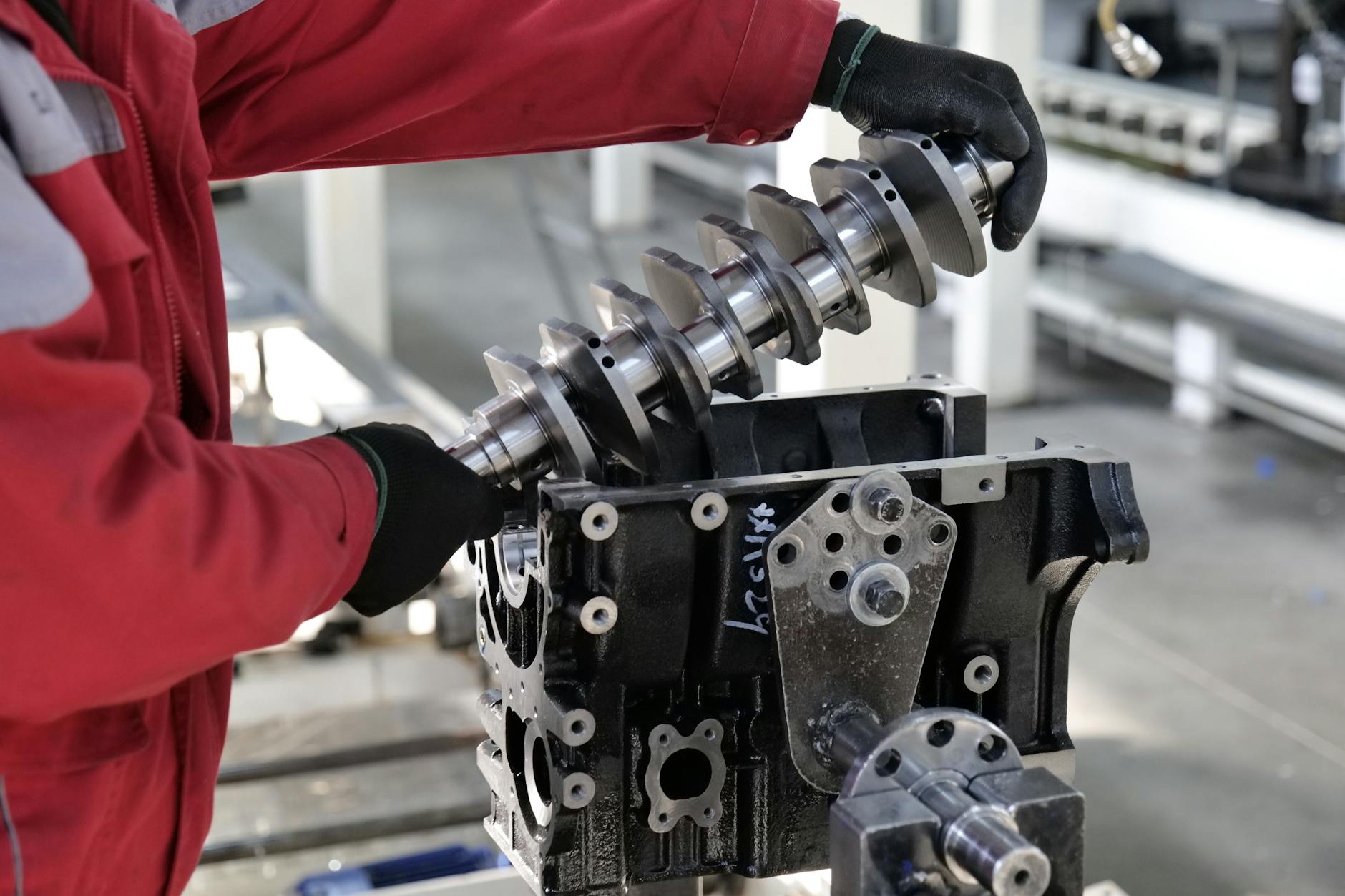
The Auto Parts Antitrust Litigation arose from a sprawling price-fixing, bid-rigging, and market allocation scheme across the auto parts industry. Dozens of Japanese and other international manufacturers conspired to inflate the prices of components like wire harnesses, airbags, seatbelts, steering wheels, and other parts installed in vehicles sold across North America. The DOJ’s criminal investigation resulted in guilty pleas from numerous corporate defendants and prison sentences for individual executives. On the criminal side alone, fines exceeded $2.9 billion. When you combine those criminal penalties with the roughly $1.2 billion in consumer class action settlements, you land in the neighborhood of $3 billion or more, which is likely the origin of the figure making the rounds online.
The consumer-facing settlement, however, totaled approximately $1.2 billion spread across five rounds. Round 1 distributed about $225 million. Round 2 brought roughly $379 million. Round 3, the largest single tranche, totaled about $433 million. Round 4 added $184 million. And the final Round 5 contributed approximately $3.15 million. These are the funds that went directly to people who bought or leased vehicles, not the criminal fines paid to the government. So when you see “$3 billion auto settlement,” it’s important to understand that the consumer payout was roughly a third of that figure, and the rest went to federal penalties and dealer-class settlements that most individuals never saw.
Who Was Eligible to File a Claim, and Why Is It Too Late Now?
Eligibility was broad: anyone who purchased or leased a new vehicle in the United States between 2002 and 2018 for personal use, not for resale, could potentially qualify. That covered tens of millions of Americans. The class was defined this way because the price-fixing affected components installed across virtually every major automaker’s lineup, from Honda and Toyota to Ford and GM. If you bought a new car during that window, the inflated parts costs were baked into the sticker price whether you knew it or not. However, the filing deadlines for all five rounds have now passed.
If you never submitted a claim, there is no mechanism to file one retroactively. This is a common point of frustration with large class action settlements: the window to act is finite, and many eligible people simply never hear about the case until distribution is underway or complete. The settlement administrators sent notices via mail and email to identified class members, but in a case this large, reaching every eligible consumer was practically impossible. If you did file and haven’t received payment yet, the distribution process is still ongoing, and checks and notification emails were sent as recently as October 2025.
How Much Money Have Claimants Actually Received?
According to settlement administrators and reporting from consumer finance outlets, claimants who filed valid claims have received payments of $100 or more per person. The exact amount varies depending on which rounds a claimant participated in, how many vehicles they purchased or leased during the eligible period, and the specific allocation formulas used by the court-appointed administrators. Someone who bought three new cars between 2002 and 2018 and filed in the earlier rounds likely received more than someone who leased a single vehicle and only caught the Round 4 notice. The per-claimant amounts, while meaningful, underscore a recurring reality of large consumer class actions: the individual payout rarely feels proportional to the underlying harm.
Auto parts price-fixing added an estimated hundreds of dollars to the cost of each new vehicle sold during the conspiracy period. Multiply that across millions of vehicles and you get a sense of the total consumer harm, which dwarfed even the $1.2 billion settlement fund. Defense attorneys, of course, argued the settlements were generous. Consumer advocates noted that the filing rates, while not publicly disclosed in precise figures, represented only a fraction of the eligible class, which is typical for cases of this scale.
What Happens to Unclaimed Settlement Money?
One of the most common questions in any class action is what happens to funds that go unclaimed. In the Auto Parts case, the settlement agreements and court orders govern the disposition of residual funds. Generally, unclaimed money in class action settlements can be redirected in several ways: it may be distributed pro rata to claimants who did file, increasing their individual payouts; it may go to cy pres recipients, typically nonprofit organizations whose work relates to the subject matter of the litigation; or in some cases, it reverts to the defendants. The tradeoff here is between efficiency and fairness.
Pro rata redistribution rewards people who took the time to file but may still result in modest per-person increases. Cy pres donations direct money toward a public good but don’t compensate actual victims. And reversion to defendants, while contractually permitted in some settlements, is the outcome most criticized by consumer advocates. In the Auto Parts litigation, given the multi-round structure and the sheer volume of defendants, the precise handling of residual funds has varied by settlement tranche. Claimants who want to know the status of their specific payment should check AutoPartsClass.com, the official settlement website, for updates.
Why Do Misleading Dollar Figures Circulate Around Class Action Settlements?
The “$3 billion” framing is a useful case study in how settlement figures get inflated or distorted in online coverage. The actual consumer settlement fund was approximately $1.2 billion. The $3 billion-plus figure appears to combine criminal fines, consumer settlements, and dealer-class recoveries into a single headline number. This isn’t necessarily wrong in a technical sense, the total economic impact of the case did exceed $3 billion, but it creates a misleading impression that individual consumers have access to a $3 billion pool of money.
This matters because inflated figures drive clicks and, in some cases, lead people to scam websites that promise to help them “claim their share” of settlements that are already closed. If you encounter a site asking for your Social Security number, bank account details, or an upfront fee to file a class action claim on your behalf, that is almost certainly a scam. Legitimate class action claims are free to file and are processed through court-approved administrators. The official site for the Auto Parts settlement is AutoPartsClass.com, and any communication about the case should reference the multidistrict litigation docket in the Eastern District of Michigan.
The DOJ’s Criminal Case and What It Meant for the Auto Industry
Beyond the civil settlements, the DOJ’s Antitrust Division prosecuted the auto parts conspiracy as the largest criminal antitrust investigation ever undertaken. More than 40 companies pleaded guilty, and dozens of individual executives were sentenced to prison or agreed to cooperate with investigators.
📨 Get Free Accountability Coverage Alerts
Free · No spam · Unsubscribe anytime
The criminal fines alone topped $2.9 billion. The investigation reshaped compliance practices across the global auto parts supply chain and led to reforms in how manufacturers interact during bidding processes. For consumers, the criminal case validated what the civil litigation alleged: that the price-fixing was real, deliberate, and industry-wide.
What Consumers Should Watch for Going Forward
The Auto Parts case is winding down, but the auto industry continues to generate class action litigation at a steady clip. Ongoing and emerging cases involve defective airbag inflators, emissions cheating scandals, and disputes over vehicle pricing transparency in the post-pandemic market.
Consumers who want to stay informed about settlements they may be eligible for should monitor court-approved settlement websites and reputable legal news sources rather than relying on social media posts or ad-driven aggregator sites. The next large-scale auto settlement could surface at any time, and the filing window is always finite. The lesson from the Auto Parts case is clear: if you’re eligible, file early and file through official channels.
Conclusion
The so-called “$3 billion auto settlement” is real in the sense that the Auto Parts Antitrust Litigation generated over $3 billion in combined criminal fines and civil recoveries. But the consumer settlement fund was approximately $1.2 billion, and all five rounds of claims are now closed. Payments are still being distributed to those who filed valid claims, with checks of $100 or more going out as recently as late 2025. If you filed, check AutoPartsClass.com for the status of your payment.
If you didn’t, there is unfortunately no way to submit a new claim. The broader takeaway is one of vigilance. Large class action settlements move slowly, and the window to participate is easy to miss. When you see headlines with eye-catching dollar figures, take a moment to verify the actual consumer fund size, the filing deadline, and the official source before clicking through or sharing the story. In an era of misinformation and settlement scams, a few minutes of due diligence can save you from frustration or fraud.
Frequently Asked Questions
Is the $3 billion auto parts settlement still accepting claims?
No. All five rounds of the Auto Parts Antitrust Settlement are closed. No new claims are being accepted. However, distribution of payments to existing claimants is ongoing.
How much are people getting from the auto parts settlement?
Claimants have been receiving payments of $100 or more, depending on the number of vehicles purchased or leased during the 2002-2018 eligibility period and which settlement rounds they filed for.
Who was eligible for the auto parts class action settlement?
Anyone who purchased or leased a new vehicle in the United States between 2002 and 2018 for personal use (not for resale) was potentially eligible. The price-fixing scheme affected parts installed across virtually all major automakers.
Where does the “$3 billion” figure come from if the consumer settlement was only $1.2 billion?
The $3 billion-plus total combines the approximately $1.2 billion consumer class action settlement, dealer-class recoveries, and over $2.9 billion in criminal fines levied by the DOJ against the parts manufacturers.
What happens to unclaimed settlement money?
Depending on the terms of each settlement round, unclaimed funds may be redistributed to existing claimants on a pro rata basis, donated to relevant nonprofit organizations through cy pres provisions, or in some cases, returned to the defendants.
How can I check the status of my auto parts settlement payment?
Visit AutoPartsClass.com, the court-approved official settlement website, for updates on payment distribution timelines and to verify the status of any claim you previously filed.
You Might Also Like
- Americans Paid $310 Billion in Interest Last Year. Here’s What That Means for Your Household Budget.
- A $500 Phone Settlement Is Going Viral. Most Claims Will Be Under $40. Here’s the Payout Formula.
- A $10 Million Privacy Settlement Sounds Big. The Average Check May Be $27. Here’s How It’s Calculated.