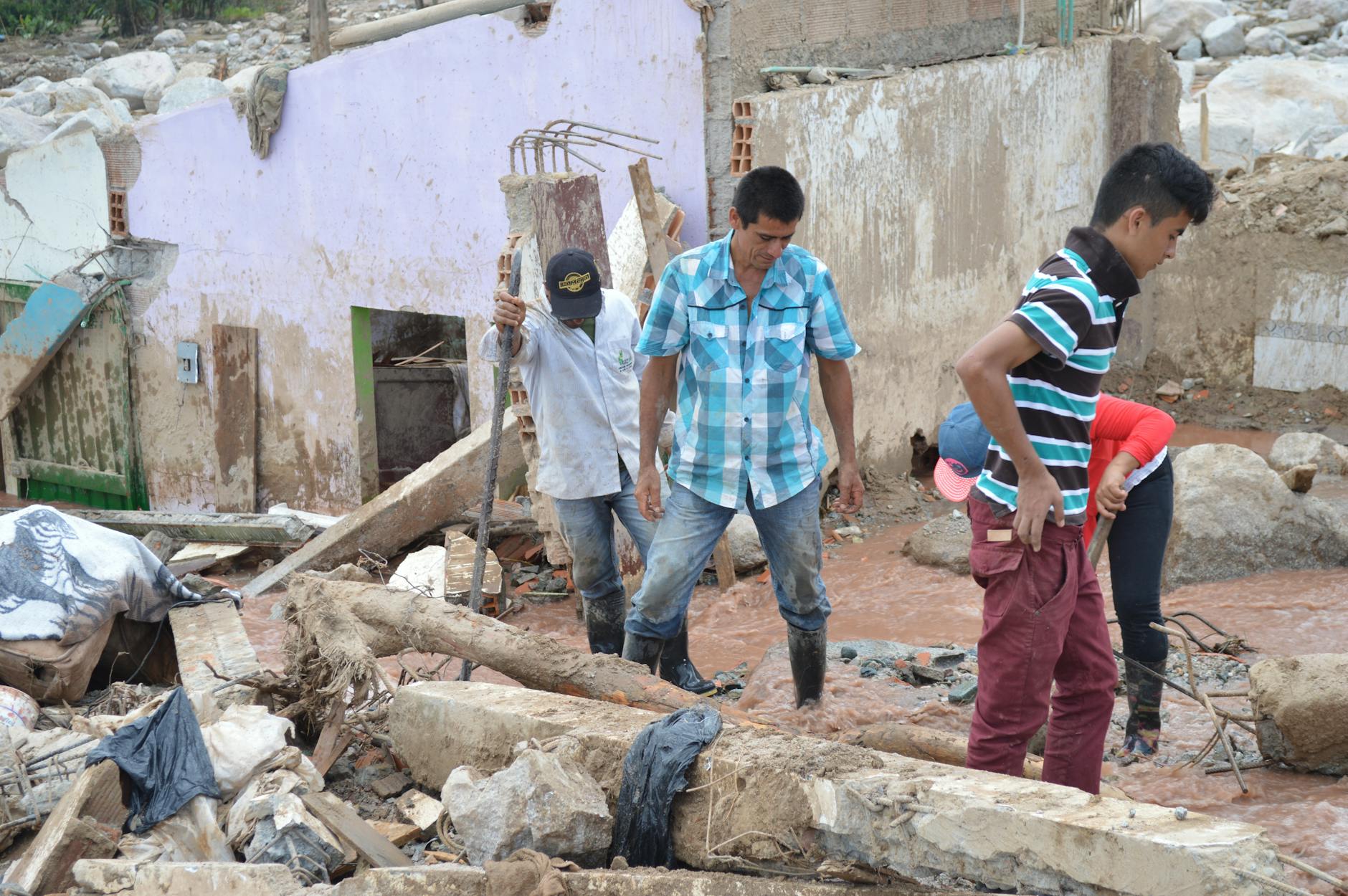
At least 44 people are dead across Colombia after catastrophic flooding struck 16 departments beginning in late January 2026, displacing tens of thousands of families during what should have been the country’s dry season. Meanwhile, the geopolitical landscape in Latin America has been reshaped by the Trump administration’s unprecedented military capture of Venezuelan President Nicolás Maduro on January 3, 2026, an operation that removed one of the hemisphere’s most entrenched authoritarian leaders and opened a complicated new chapter in U.S.-Venezuela relations. These two stories, one a natural disaster compounded by climate anomalies and the other a deliberate act of American military force, are unfolding simultaneously across neighboring nations. In Córdoba, Colombia’s hardest-hit department, 80 percent of the territory sat underwater as 157,000 hectares of farmland were destroyed.
In Caracas, Delta Force operators seized Maduro and his wife Cilia Flores from their residence in a predawn raid, transporting them to a U.S. warship. Both events carry serious implications for regional stability, humanitarian aid, and American foreign policy accountability. This article examines the full scope of Colombia’s flooding disaster, the details and legal trajectory of Maduro’s capture and prosecution, and what these concurrent crises mean for the people caught in the middle.
Table of Contents
- How Bad Is the Colombia Flooding Disaster, and What Led to Maduro’s Capture?
- What Is Happening on the Ground in Colombia’s Worst-Hit Regions?
- Inside Operation Absolute Resolve and the Legal Case Against Maduro
- What Are the Political Consequences of Maduro’s Removal for Venezuela?
- Why Dry-Season Flooding in Colombia Is a Warning Sign
- The Humanitarian and Agricultural Toll in Numbers
- What Comes Next for Venezuela’s Legal Proceedings and Colombia’s Recovery
- Conclusion
- Frequently Asked Questions
How Bad Is the Colombia Flooding Disaster, and What Led to Maduro’s Capture?
Colombia’s National Unit for Disaster Risk Management (UNGRD) confirmed at least 44 deaths across 16 departments as of February 11, 2026. Persistent heavy rainfall beginning January 26 triggered flooding that affected 72,000 families across 104 municipalities, damaging 12,000 homes and completely destroying another 4,000. Ideam director Ghisliane Echeverry captured the severity bluntly: “In one day we received the amount of rain expected for an entire month.” Colombia declared a state of emergency, and as late as February 25, NASA Terra satellite imagery showed flooding remained widespread across the northern part of the country. The Maduro capture unfolded through a very different kind of force. On January 3, 2026, the U.S. military launched Operation Absolute Resolve at approximately 2 a.m. local time. Delta Force operators, supported by CIA ground intelligence, carried out the raid while the U.S.
Armed Forces bombed infrastructure across northern Venezuela to suppress air defenses. Maduro and his wife were captured at a residence in Caracas, transported to the USS Iwo Jima, and subsequently flown to Stewart Air National Guard Base in New York. Two days later, on January 5, both appeared before U.S. District Judge Alvin Hellerstein in Manhattan federal court and pleaded not guilty. These are not abstract policy debates. In Colombia, families are wading through destroyed homes and submerged cropland. In Venezuela, a political establishment that ruled through repression is fracturing in real time. Both situations demand scrutiny of how governments respond and whether that response serves ordinary people or political agendas.

What Is Happening on the Ground in Colombia’s Worst-Hit Regions?
The department of Córdoba bore the worst of the flooding. According to disaster management reports, approximately 156,000 people were affected there alone, with 80 percent of the territory submerged. Some 157,000 hectares of farmland in Córdoba were destroyed, wiping out crops of plantain, yucca, watermelon, and African palm that communities depend on for both food and income. The agricultural losses alone will take seasons to recover from, and for subsistence farmers, recovery may not come at all without sustained aid. What makes this disaster particularly alarming is its timing.
This flooding hit during what is normally Colombia’s dry season, a period when farmers plant, infrastructure dries out, and communities rebuild from the previous rainy season. The anomaly suggests that seasonal weather patterns that Colombian agriculture and disaster planning have relied on for decades may no longer be dependable. However, attributing any single weather event directly to long-term climate change requires caution. What can be said is that a dry-season disaster of this magnitude was not anticipated by existing infrastructure or emergency planning, and that gap cost lives. The humanitarian toll extends well beyond the death count. With 72,000 families affected and thousands of homes destroyed, the displacement crisis is straining local and national resources. France 24 reported residents in flooded areas saying, “We’ve lost everything.” For communities in rural municipalities with limited access to relief infrastructure, the path back to normalcy is measured in years, not weeks.
Inside Operation Absolute Resolve and the Legal Case Against Maduro
The charges against Nicolás Maduro stem from a Southern District of New York indictment that was originally unsealed during the first trump administration in 2020. The indictment alleges narco-terrorism conspiracy, cocaine importation conspiracy, and weapons offenses. The narco-terrorism charge carries a mandatory minimum sentence of 20 years in federal prison and applies not only to Maduro but also to Diosdado Cabello Rondón and Ramón Rodríguez Chacín, two other senior figures in Venezuela’s ruling apparatus. Maduro retained Barry Joel Pollack, a Washington, D.C.-based defense attorney, while Cilia Flores is represented by Mark Donnelly of Houston. Legal experts have broadly concluded that a trial is unlikely to take place in 2026, given the extraordinary legal complexities involved.
This is not a typical drug trafficking prosecution. The defendant is a sitting head of state who was removed from power by military force, which raises serious questions about jurisdiction, sovereignty, and the legal framework under which the capture was authorized. Defense attorneys will almost certainly challenge the legality of the operation itself before any trial on the underlying charges proceeds. The prosecution is being handled by the same federal district that has taken on high-profile terrorism and international narcotics cases for decades. Manhattan federal court is familiar ground for complex, politically charged trials. But prosecuting a foreign president captured in a military raid is genuinely without precedent, and the legal process will be watched closely by international law scholars, foreign governments, and human rights organizations alike.
What Are the Political Consequences of Maduro’s Removal for Venezuela?
The immediate aftermath of Maduro’s capture produced at least one tangible shift: Venezuela’s ruling party began releasing hundreds of political prisoners. This was widely interpreted as a concession to the Trump administration and a signal from the remaining leadership that they were willing to negotiate. The Trump administration has been working with acting President Delcy Rodriguez, who assumed power in the vacuum left by Maduro’s removal, though the nature and terms of that relationship remain opaque. However, the comparison between removing an authoritarian leader and achieving democratic stability is not straightforward. Venezuela’s institutional rot runs far deeper than one man.
The military, intelligence services, judiciary, and state-owned oil company PDVSA were all restructured over two decades of Chavismo to serve the ruling party. Removing Maduro does not automatically dismantle those structures, and there is a real risk that the power vacuum simply reshuffles control among the same network of loyalists. The release of political prisoners is a positive step, but it should be measured against whether free elections, independent courts, and press freedom follow. The Trump administration has framed the capture as a decisive blow against narco-terrorism and authoritarianism. Critics argue it sets a dangerous precedent for unilateral military action against sovereign governments. Both perspectives have merit, and the true measure will be what Venezuela looks like in two years, not two months.
Why Dry-Season Flooding in Colombia Is a Warning Sign
The fact that Colombia’s worst flooding in recent memory occurred during the dry season is not a minor meteorological footnote. It represents a fundamental disruption to the seasonal patterns that underpin agriculture, water management, infrastructure maintenance, and disaster preparedness across the country. When Ideam director Ghisliane Echeverry says a single day delivered a month’s worth of rainfall, the implication is that existing drainage systems, levees, and flood plains were engineered for conditions that no longer apply. This creates a compounding problem. If dry seasons can no longer be relied upon for recovery and rebuilding, then Colombia faces the prospect of near-continuous disaster cycles in its most flood-prone regions. Córdoba, with its flat terrain and extensive river systems, is particularly vulnerable.
The destruction of 157,000 hectares of farmland is not just a current-year loss. If those fields cannot be replanted during the expected dry window, the economic damage cascades into the next growing season and beyond. International disaster response organizations and the Colombian government will need to reassess baseline assumptions about seasonal risk. Planning that treats dry-season flooding as an anomaly rather than a recurring possibility will continue to leave vulnerable communities exposed. NASA satellite imagery confirming that flooding remained widespread as late as February 25 underscores that this is not a crisis that came and went. It is ongoing.
The Humanitarian and Agricultural Toll in Numbers
The scale of Colombia’s disaster is best understood through its agricultural impact. In Córdoba alone, 157,000 hectares of submerged farmland represents the livelihoods of thousands of farming families who grow plantain, yucca, watermelon, and African palm. These are not luxury export crops.
📨 Get Free Accountability Coverage Alerts
Free · No spam · Unsubscribe anytime
They are staples of local diets and regional economies. When subsistence crops are destroyed along with the homes of the people who grow them, the result is not just displacement but food insecurity that can persist long after floodwaters recede. Across the 16 affected departments, the 4,000 homes completely destroyed and 12,000 damaged translate to rebuilding costs that will strain municipal and national budgets already stretched by other priorities. Colombia’s state of emergency declaration unlocks some emergency funding mechanisms, but the gap between what is available and what is needed is typically enormous in disasters of this scale.
What Comes Next for Venezuela’s Legal Proceedings and Colombia’s Recovery
For Venezuela, the legal road ahead is long and uncertain. Maduro’s defense team will challenge jurisdiction, the legality of the military operation, and the applicability of U.S. narco-terrorism statutes to a foreign head of state. These are not frivolous arguments. They will require extensive briefing and could result in years of pretrial litigation before any jury is seated.
Meanwhile, the political situation in Caracas remains fluid, with the Trump administration navigating a relationship with acting President Delcy Rodriguez that has no clear template or endgame. For Colombia, the immediate priority is saving lives and stabilizing displaced communities. But the longer-term question is whether this disaster prompts a genuine reassessment of climate resilience and infrastructure investment in flood-prone regions, or whether it becomes another crisis absorbed and eventually forgotten by a news cycle that moves on. The 44 confirmed dead and 72,000 affected families deserve more than emergency aid. They deserve infrastructure and planning that accounts for the reality that the dry season can no longer be taken for granted.
Conclusion
The simultaneous crises in Colombia and Venezuela represent two very different expressions of vulnerability in Latin America. Colombia’s flooding disaster has killed at least 44 people, displaced tens of thousands, and destroyed vast stretches of agricultural land during a season when none of this was supposed to happen. The Trump administration’s capture of Nicolás Maduro has removed a dictator from power but opened a legal and geopolitical process with no clear precedent and no guaranteed outcome.
Both stories demand sustained attention, not just headlines. What connects these events is the question of accountability. Who is responsible for ensuring that Colombian communities in flood-prone areas are protected by adequate infrastructure? Who determines whether the use of military force to capture a foreign leader serves justice or sets a destabilizing precedent? These are not questions with simple answers, but they are questions that governments, courts, and citizens will be grappling with for years to come.
Frequently Asked Questions
How many people have died in the Colombia flooding?
At least 44 people were killed across 16 departments as of February 11, 2026, according to Colombia’s National Unit for Disaster Risk Management (UNGRD). The number may have risen since that reporting date.
Why is the Colombia flooding unusual?
The flooding occurred during what is normally Colombia’s dry season. Ideam director Ghisliane Echeverry stated that some areas received an entire month’s worth of rain in a single day, overwhelming infrastructure designed for normal seasonal conditions.
What charges does Nicolás Maduro face in the United States?
Maduro faces charges of narco-terrorism conspiracy, cocaine importation conspiracy, and weapons offenses under a Southern District of New York indictment. The narco-terrorism charge carries a mandatory minimum of 20 years in prison.
When will Maduro’s trial take place?
Legal experts say a trial is unlikely in 2026 given the legal complexities involved, including challenges to jurisdiction and the legality of the military capture itself.
What happened to political prisoners in Venezuela after Maduro’s capture?
Following Maduro’s capture, Venezuela’s ruling party began releasing hundreds of political prisoners. The Trump administration has been working with acting President Delcy Rodriguez in the aftermath.
How much farmland was destroyed in the Colombia floods?
Approximately 157,000 hectares of farmland were submerged in the department of Córdoba alone, destroying crops of plantain, yucca, watermelon, and African palm.
You Might Also Like
- At Least 14 Killed, 252 Roadblocks…Mexico’s Cartel Backlash After El Mencho’s Death
- At Least 14 Dead, 252 Roadblocks…Mexico’s Cartel Retaliation After El Mencho’s Death
- At Least $264 Million in Payouts…Largest Claims Scam in Class Action History