During Iran’s major missile and drone attacks on Israel in 2024, some Iranian ballistic missiles did penetrate Israel’s vaunted multi-layer defense system and struck targets on the ground. While Israel and its allies intercepted the vast majority of incoming projectiles, particularly the slower-moving drones and cruise missiles, a number of fast-moving ballistic missiles evaded or overwhelmed the defense network. In the October 2024 strike alone, satellite imagery confirmed that several missiles hit or landed near Israeli Air Force bases, including Nevatim in the Negev desert, demonstrating that no missile defense system operates at a perfect 100 percent interception rate.
This reality matters for American taxpayers and policymakers because the United States has invested billions of dollars in Israeli missile defense technology, including co-development of the Arrow system and significant funding for Iron Dome. The fact that some missiles got through raises serious questions about the actual effectiveness of these systems, the cost-per-intercept calculations that drive defense budgets, and what it means for broader U.S. defense strategy in the Middle East. This article examines which missiles penetrated the defenses, why they got through, what it cost to stop the ones that were intercepted, and what the implications are for American defense spending and regional policy.
Table of Contents
- How Did Iranian Missiles Penetrate Israel’s Multi-Layer Defense System?
- What Israel’s Defense Layers Are Designed to Stop and Where They Fall Short
- The Cost to American Taxpayers of Funding Israeli Missile Defense
- How Iran Adapted Its Strategy Between the April and October Attacks
- The Political Narrative vs. the Technical Reality
- What the U.S. Military Is Learning from These Engagements
- What Comes Next for Missile Defense in the Region
- Conclusion
- Frequently Asked Questions
How Did Iranian Missiles Penetrate Israel’s Multi-Layer Defense System?
Israel operates what is arguably the most sophisticated layered missile defense architecture in the world. iron Dome handles short-range rockets and artillery shells. David’s Sling covers medium-range threats. The Arrow 2 and Arrow 3 systems are designed to intercept ballistic missiles at high altitudes, including outside the atmosphere. During Iran’s April 2024 attack, which included over 300 projectiles, the combined system along with U.S. Navy destroyers and allied air forces intercepted roughly 99 percent of incoming threats. But ballistic missiles travel at significantly higher speeds than drones or cruise missiles, some reaching Mach 8 or faster on their terminal descent, which gives interceptors only seconds to react. The October 2024 attack was more telling.
Iran launched approximately 180 ballistic missiles, deliberately omitting the slower drones and cruise missiles that had padded the interception statistics in April. Without those easier targets diluting the numbers, the ballistic missile interception rate dropped considerably. Multiple missiles struck near or on the Nevatim and Tel Nof air bases. Israeli officials acknowledged some impacts but emphasized that operational capacity was not significantly degraded. However, the physical evidence of crater impacts visible in commercial satellite imagery told a more complicated story than the official narrative suggested. The missiles that got through were likely Iran’s newer Fattah-series hypersonic or maneuvering ballistic missiles, which can adjust their trajectory during the terminal phase of flight. Traditional ballistic missile defense relies on predicting a projectile’s parabolic path, but a warhead that can maneuver as it descends complicates the intercept calculation enormously. This is the same challenge that U.S. defense planners worry about with Chinese and Russian hypersonic weapons, and Iran appears to have achieved at least a rudimentary version of this capability.
What Israel’s Defense Layers Are Designed to Stop and Where They Fall Short
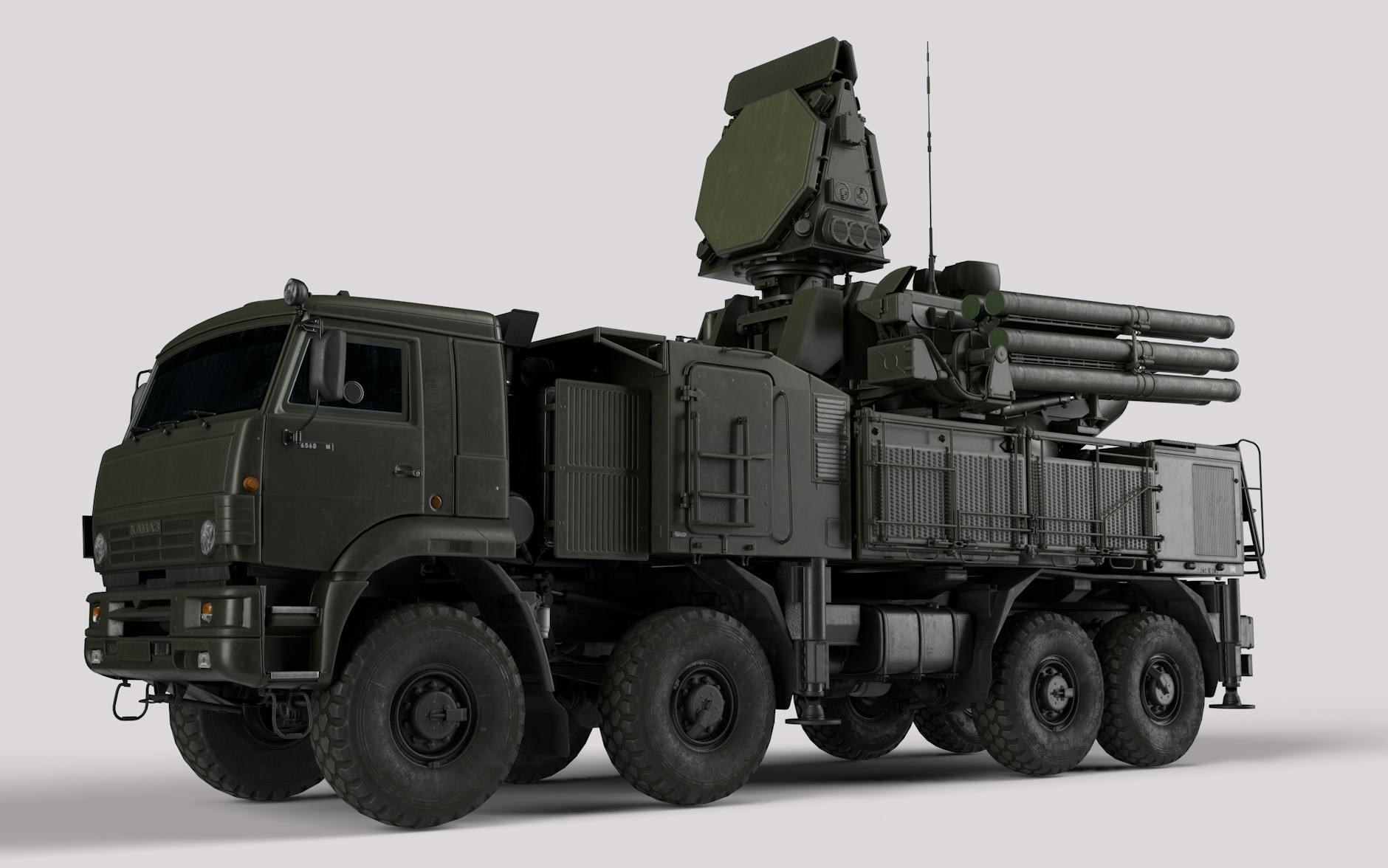
Each layer of Israel’s defense system was built to address a specific threat envelope. Iron Dome, the most publicly recognized component, is designed for short-range rockets fired from Gaza and southern Lebanon, typically crude projectiles traveling relatively short distances. It has an impressive track record against Hamas rockets, but it was never designed to stop ballistic missiles traveling at several kilometers per second from 1,000 miles away. David’s Sling handles the middle tier, targeting larger rockets and cruise missiles at ranges of roughly 40 to 300 kilometers, which covers threats from Hezbollah’s more advanced arsenal. The Arrow systems are where the ballistic missile defense happens. Arrow 2 intercepts inside the atmosphere during a missile’s descent, while Arrow 3 is designed for exo-atmospheric interception, destroying warheads in space before they begin their terminal dive. In theory, a ballistic missile would have to survive both Arrow 3 and Arrow 2 engagement windows to reach its target. However, if a salvo is large enough, it can saturate the system.
Each interceptor battery has a finite number of ready missiles and a finite radar tracking capacity. When dozens of ballistic missiles arrive in a compressed timeframe, some will inevitably slip through because the system simply cannot engage all of them simultaneously. There is also the problem of cost asymmetry that defense analysts have warned about for years. An Arrow 3 interceptor costs an estimated $2 million to $3 million per missile. Iran’s ballistic missiles, while not cheap, are substantially less expensive to produce. If an adversary can fire 10 missiles for the cost of one interceptor, the math eventually works against the defender regardless of how good the technology is. This is not a hypothetical concern. It is a real strategic vulnerability that played out in real time during the October attack.
The Cost to American Taxpayers of Funding Israeli Missile Defense
The United States has provided over $10 billion in missile defense aid to Israel since the early 2000s, with the pace of funding accelerating sharply in recent years. Iron Dome alone has received approximately $2.6 billion in U.S. funding. The Arrow program was co-developed with American defense contractors, primarily Boeing and Israel Aerospace Industries, with the U.S. covering a significant portion of development costs through the Missile Defense Agency. David’s Sling was similarly developed with Raytheon as the American partner. After the April and October 2024 attacks, the Biden administration pushed through emergency supplemental funding that included additional missile defense replenishment for Israel.
The October attack alone reportedly consumed hundreds of interceptor missiles across all defense tiers, with resupply costs running into the hundreds of millions of dollars. U.S. navy destroyers stationed in the Eastern Mediterranean fired their own SM-3 interceptors during the engagements, and those missiles cost approximately $12 million each. American taxpayers footed the bill for every one of those shots, in addition to the operational costs of maintaining a carrier strike group and destroyer flotilla in the region. The Government Accountability Office has raised concerns in multiple reports about the lack of transparency in missile defense co-development agreements and the difficulty of tracking how U.S. funds are allocated within these joint programs. When missiles still get through after billions in investment, legitimate questions arise about whether the money is being spent effectively or whether alternative defense strategies might provide better value. These are not fringe concerns but rather the kind of fiscal accountability questions that Congress is supposed to be asking.

How Iran Adapted Its Strategy Between the April and October Attacks
Iran’s shift in tactics between its two major attacks on Israel in 2024 demonstrated a deliberate learning process. The April attack used a diverse mix of over 170 drones, 30-plus cruise missiles, and more than 120 ballistic missiles. The drones, which took hours to reach Israeli airspace, served partly as a telegraphed warning that gave Israel and its allies time to prepare. Many were shot down by Jordanian, American, and British forces before they even reached Israeli territory. The cruise missiles traveled faster but were still well within the engagement envelope of conventional air defenses. By October, Iran stripped away the drones and cruise missiles entirely and focused exclusively on ballistic missiles fired in rapid salvos.
This approach reduced the warning time from hours to roughly 12 minutes and concentrated the threat in the hardest-to-defend category. The change suggested that Iranian military planners analyzed the April results and concluded that drones and cruise missiles were essentially wasted resources that only inflated Israel’s interception statistics without achieving meaningful impact. The October approach was leaner, faster, and more difficult to defend against. This adaptation carries broader implications. It suggests that future Iranian attacks or those by Iranian proxies equipped with similar technology will continue to evolve toward faster, harder-to-intercept munitions. The tradeoff for Iran is that ballistic missiles are more expensive than drones, so a pure ballistic missile strategy limits the total volume of fire. But if even a small percentage of those missiles get through, the strategic calculus may still favor the attacker, especially if they target critical infrastructure like air bases, energy facilities, or desalination plants.
The Political Narrative vs. the Technical Reality
One of the most significant issues surrounding these attacks is the gap between the political narrative and the technical facts. After the April attack, both Israeli and U.S. officials declared the defense an extraordinary success. President Biden reportedly told Israeli Prime Minister Netanyahu to “take the win.” The 99 percent interception figure was repeated widely in media coverage and became a political talking point used to justify continued defense spending and demonstrate the strength of the U.S.-Israel security partnership. The October results complicated that narrative, but political messaging adapted to maintain the same tone.
Israeli officials emphasized that no critical military infrastructure was destroyed and that air operations continued without interruption. What went less reported was that base personnel had been evacuated in advance, that aircraft had been relocated, and that the “no damage” narrative relied partly on the targets being emptied before impact rather than the missiles being stopped. A missile that hits an evacuated hangar is still a missile that got through the defense system, even if the operational impact was mitigated through early warning and dispersal. For American voters and taxpayers trying to evaluate whether their defense dollars are well spent, this blurring of defensive success and damage mitigation creates a transparency problem. The systems work well but not perfectly, and overselling their capabilities can lead to policy decisions based on inflated expectations. Congress should be demanding honest interception rate data broken down by threat type rather than accepting aggregate figures that lump slow-moving drones together with maneuvering ballistic warheads.
📨 Get Free Accountability Coverage Alerts
Free · No spam · Unsubscribe anytime

What the U.S. Military Is Learning from These Engagements
The Pentagon has been closely studying both Iranian attacks as real-world validation tests for missile defense concepts that the U.S. military may one day need to rely on for its own defense. The U.S. homeland missile defense system, the Ground-based Midcourse Defense system based in Alaska and California, has never been tested in combat and faces the same fundamental challenges of intercepting fast-moving warheads.
The Israeli experience provides data that cannot be replicated on a test range, including the effects of electronic warfare, decoys, and salvo fire against a layered defense under actual combat conditions. One key takeaway is the confirmation that directed energy weapons and other emerging technologies may be necessary to close the gap. Laser defense systems, which Israel is developing under the Iron Beam program, could theoretically provide unlimited shots at near-zero marginal cost per engagement, eliminating the cost asymmetry problem. However, Iron Beam remains limited in range and struggles with atmospheric conditions like dust and cloud cover, meaning it is not a near-term replacement for kinetic interceptors against ballistic missiles.
What Comes Next for Missile Defense in the Region
The trajectory of this confrontation points toward an escalating technological competition between offensive missile development and defensive interception capabilities. Iran has signaled that it continues to invest in longer-range, more accurate, and potentially maneuverable ballistic missiles. Israel is working on next-generation interceptors and laser systems. The United States is caught in the middle as the primary funder and technology partner for the defensive side of this equation while simultaneously trying to manage a broader strategic relationship with Iran that involves nuclear negotiations and regional stability.
For American policy, the honest assessment is that missile defense is a necessary but insufficient component of security strategy. No system will achieve a perfect interception rate against a determined adversary with enough missiles. Diplomatic efforts to constrain Iran’s missile program, while politically difficult, may ultimately provide more security per dollar spent than additional layers of interceptors. The Trump administration’s approach to this balance, whether emphasizing military solutions or diplomatic engagement, will have direct consequences for both Middle East stability and the U.S. defense budget for years to come.
Conclusion
The fact that some Iranian missiles penetrated Israel’s multi-layer defense system is not an indictment of the technology so much as a confirmation of what defense analysts have long understood. No missile shield is impenetrable, particularly against ballistic missiles fired in large salvos with increasingly sophisticated maneuvering capabilities. The systems performed well enough to prevent catastrophic damage, but the gap between political claims of near-perfect defense and the reality of ground impacts deserves honest public discussion, especially when American taxpayers are funding much of the architecture.
Moving forward, policymakers need to resist the temptation to treat missile defense as a silver bullet and instead pursue a realistic combination of defensive technology, offensive deterrence, and diplomatic pressure. The billions being spent on interceptors are justified only if accompanied by clear-eyed assessments of what those systems can and cannot do. Congress owes it to taxpayers to demand transparent data on interception rates by missile type and to scrutinize whether the current funding model represents the most effective use of limited defense dollars.
Frequently Asked Questions
Did Israel’s Iron Dome fail during the Iranian attacks?
Iron Dome was not the primary system engaged against Iranian ballistic missiles. It is designed for short-range rockets from Gaza and Lebanon. The Arrow 2, Arrow 3, and David’s Sling systems, along with U.S. Navy SM-3 interceptors, handled the Iranian ballistic missile threat. Iron Dome continued to perform its intended role against shorter-range threats from Hezbollah and Hamas.
How many Iranian missiles actually hit targets in Israel?
Exact figures remain classified or disputed. In October 2024, satellite imagery confirmed multiple impact craters at or near Israeli air bases including Nevatim. Israeli officials acknowledged some hits but stated no critical infrastructure was destroyed. Independent analysts estimated that several missiles, likely in the range of a dozen or more out of approximately 180 launched, reached their intended target areas.
How much does it cost to shoot down one Iranian ballistic missile?
An Arrow 3 interceptor costs an estimated $2 million to $3 million. Arrow 2 interceptors are somewhat less expensive. U.S. Navy SM-3 interceptors cost approximately $12 million each. In practice, defense doctrine often calls for firing two interceptors at each incoming missile to increase the probability of a kill, effectively doubling the per-engagement cost.
Does the United States have similar missile defense vulnerabilities?
Yes. The U.S. Ground-based Midcourse Defense system designed to protect the homeland against limited intercontinental ballistic missile attacks from nations like North Korea has a mixed testing record and has never been used in combat. It faces the same fundamental challenges of intercepting fast-moving warheads, potentially equipped with decoys and countermeasures.
Why does the U.S. fund Israeli missile defense?
U.S. funding serves multiple strategic purposes. It protects a key ally, provides real-world testing data for missile defense technologies that benefit U.S. programs, supports American defense contractors who co-develop the systems, and reduces the likelihood that Israel will feel compelled to take preemptive military action that could destabilize the region.
You Might Also Like
- The Iron Dome, Arrow, and David’s Sling Systems All Activated to Defend Israel From Iranian Missiles
- UAE Provided Logistical Support Despite Later Being Hit by Iranian Retaliation
- U.S. Electronic Warfare Aircraft Jammed Iranian Communications Before the First Bomb Fell