
The United Arab Emirates found itself in an impossible position in early 2026 — publicly denying any role in facilitating military operations against Iran while simultaneously hosting one of the most strategically important American air bases in the Middle East. When the coordinated US-Israeli strikes hit Iran on February 28, 2026, Tehran made no distinction between active participants and passive hosts. Iran launched a staggering 189 ballistic missiles, 941 drones, and 3 cruise missiles at the UAE in the days that followed, making it the most heavily targeted Gulf state in the retaliatory campaign — receiving more incoming fire than even Israel, according to CNN reporting.
The UAE’s official position had been unambiguous. On January 26, 2026, the UAE foreign ministry stated plainly: “The UAE confirms its commitment to not allowing its airspace, land or waters to be used in any hostile military actions against Iran.” But the presence of Al Dhafra Air Base, a shared installation housing US Air Force assets including MQ-9 Reaper drones and U-2 surveillance aircraft, told a different story in Iran’s calculus. The gap between diplomatic rhetoric and military reality is the central tension of this episode. This article examines how the UAE ended up absorbing the heaviest Iranian bombardment of any Gulf state, what role Al Dhafra Air Base played in making it a target, the human and military toll of the attacks, and why decades of strategic partnership with Washington made neutrality claims functionally meaningless in Tehran’s eyes.
Table of Contents
- Did the UAE Actually Provide Logistical Support for the US Attack on Iran?
- The Scale of Iran’s Retaliation Against the UAE
- Al Dhafra Air Base — The Target Iran Could Not Ignore
- The Economic Paradox — Why Iran Attacked Its Own Trading Partner
- Why UAE Neutrality Claims Were Never Credible to Tehran
- The Gulf-Wide Pattern of Retaliation
- What This Means for Gulf Security Going Forward
- Conclusion
- Frequently Asked Questions
Did the UAE Actually Provide Logistical Support for the US Attack on Iran?
The question of what the UAE did or did not provide remains murky, and that ambiguity is precisely the point. In January 2026, an Israeli media report indicated that Jordan, the UAE, and the UK would provide logistical and intelligence support to the US military in the event of an attack on iran. The UAE immediately denied this through its foreign ministry, pledging that no Emirati airspace, land, or waters would be used for hostile military actions against Iran. Both Iran International and Anadolu Agency reported the denial. But denials only go so far when the physical infrastructure tells a different story. Al Dhafra Air Base, located roughly 20 miles south of Abu Dhabi, has been a critical node in US military operations in the region for decades. The base hosts American surveillance and strike-capable assets.
Whether the UAE actively facilitated the February 28 strikes or simply continued hosting the same military footprint it had maintained for years, Iran treated the distinction as irrelevant. For comparison, consider the difference between handing someone a weapon and letting them store their weapons in your garage — in a shooting, both parties face consequences. The broader pattern across the Gulf was similar. saudi Arabia, Kuwait, Iraq, Qatar, and Bahrain all host US military assets and all faced Iranian retaliation following the strikes, as Al Jazeera reported. The UAE simply bore the heaviest share. This raises a fundamental question about the viability of hosting foreign military bases while claiming neutrality in a conflict involving that foreign power.

The Scale of Iran’s Retaliation Against the UAE
The numbers are difficult to comprehend. Between February 28 and March 4, 2026, the UAE Ministry of Defence reported absorbing 189 ballistic missiles, 941 drones, and 3 cruise missiles from Iran. On the first day alone, Iran fired 137 ballistic missiles and 209 drones at the UAE — the highest volume directed at any Gulf state that day, according to reporting by the Foundation for Defense of Democracies’ Long War Journal. By March 10, the cumulative total had climbed past 1,700 missiles and drones fired at the UAE. The country’s air defense systems performed remarkably, intercepting over 90 percent of incoming projectiles. However, no missile defense system is perfect.
The attacks killed 4 civilians and injured 112 others. Those casualties, while relatively low given the volume of fire, represent real people caught in the crossfire of a conflict the UAE had publicly tried to distance itself from. One critical limitation of the interception figures is that they come from the UAE Ministry of Defence itself, which has obvious incentive to portray its defenses as effective. Iran’s Islamic Revolutionary Guard Corps told a very different story, claiming significant damage to US assets at Al Dhafra. The truth likely sits somewhere between the two narratives, as is typical in wartime. If a country’s only source for damage assessment is its own military, skepticism is warranted — on both sides.
Al Dhafra Air Base — The Target Iran Could Not Ignore
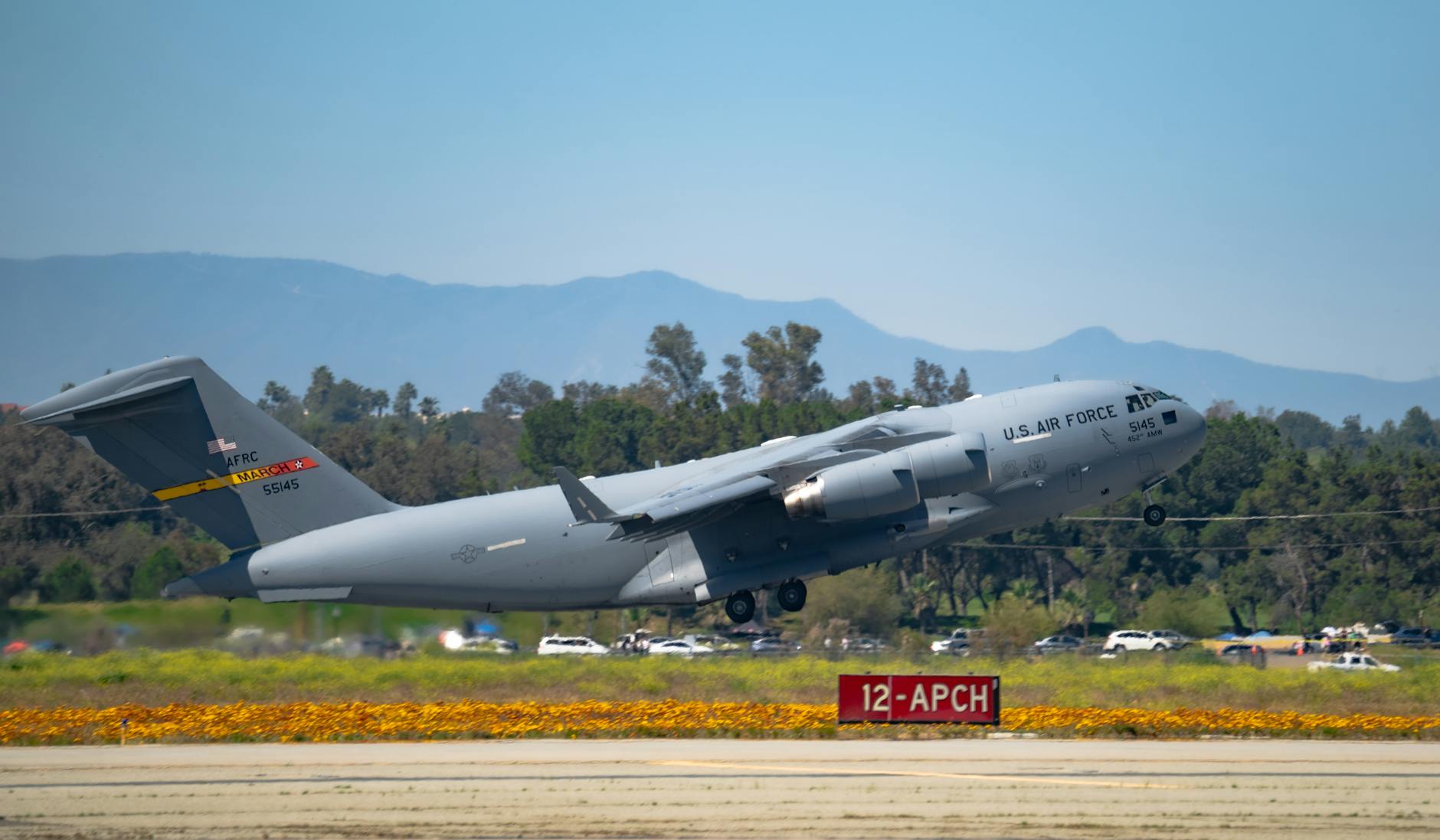
Al Dhafra was the primary focus of Iran’s strikes against the UAE, and the reasons are straightforward. The base housed US military assets that Iran considered directly relevant to the strikes it had just absorbed. Defence Security Asia reported that the IRGC claimed to have destroyed an American AN/TPY-2 missile-warning radar at the base, along with causing damage to MQ-9 Reaper drones and U-2 surveillance aircraft. These are not minor systems — the AN/TPY-2 is a forward-deployed radar designed specifically to track ballistic missiles, making it a high-priority target in any Iranian retaliation scenario. The UAE Ministry of Defence pushed back hard on these claims.
According to Shafaq News, the ministry stated that 15 of 16 missiles and 119 of 121 drones targeting Al Dhafra specifically were intercepted. That would mean only one missile and two drones penetrated the base’s defenses — a remarkable interception rate if accurate, but one that still acknowledges some projectiles got through. The specific targeting of Al Dhafra illustrates a painful irony for the UAE. The base existed as part of a security partnership meant to protect the Emirates from regional threats. Instead, it became the primary reason the UAE was targeted in the first place. This is the strategic bargain that every country hosting foreign military bases must reckon with: the protection such bases offer in peacetime can become a liability the moment the host nation’s ally goes to war.
The Economic Paradox — Why Iran Attacked Its Own Trading Partner
Perhaps the most striking dimension of this episode is the economic relationship Iran chose to set on fire. According to World Trade Organization data cited by CNN, bilateral trade between the UAE and Iran stood at $28 billion in 2024, making the UAE Iran’s second-largest trading partner after China. The UAE had been, in practical terms, an economic lifeline for Iran under years of international sanctions. The decision to launch over 1,700 missiles and drones at your second-largest trading partner is not one made lightly. It suggests that Iran’s leadership calculated the geopolitical imperative — demonstrating that hosting American military assets carries consequences — outweighed the economic cost of damaging a critical commercial relationship.
The tradeoff is revealing. Iran chose strategic deterrence over economic self-interest, wagering that the message sent to every Gulf state about the price of hosting US forces would be worth the commercial fallout. For the UAE, the economic dimension cuts the other way. The Emirates had invested heavily in maintaining a working relationship with Iran even as it deepened ties with Washington and, more recently, Israel through the Abraham Accords. That balancing act collapsed entirely on February 28. Going forward, the UAE faces a choice between doubling down on its Western security partnerships or attempting to rebuild some version of the balanced approach that just failed catastrophically.
Why UAE Neutrality Claims Were Never Credible to Tehran
The UAE’s January 2026 denial of any logistical role was addressed to multiple audiences — domestic, regional, and Iranian — but it was never going to satisfy Tehran. The reason is structural, not rhetorical. You cannot host a foreign military superpower’s air base, surveillance assets, and strike platforms for decades and then credibly claim neutrality when that superpower goes to war. The physical infrastructure is the logistical support. This is a limitation that applies to every Gulf state in a similar position.
Saudi Arabia, Kuwait, Qatar, and Bahrain all faced the same problem and all absorbed Iranian strikes. The warning for any nation considering hosting foreign military installations is clear: in a conflict, the distinction between active belligerent and passive host disappears. Iran targeted multiple Gulf Arab states that host US assets, as Al Jazeera documented, treating presence as participation. The broader implication is that diplomatic statements become functionally irrelevant when military geography contradicts them. The UAE could have issued the most forceful denial imaginable, and it would not have changed the targeting calculus for a single Iranian missile. This is not a failure of UAE diplomacy — it is a structural feature of security alliances that cannot be wished away with press releases.
The Gulf-Wide Pattern of Retaliation
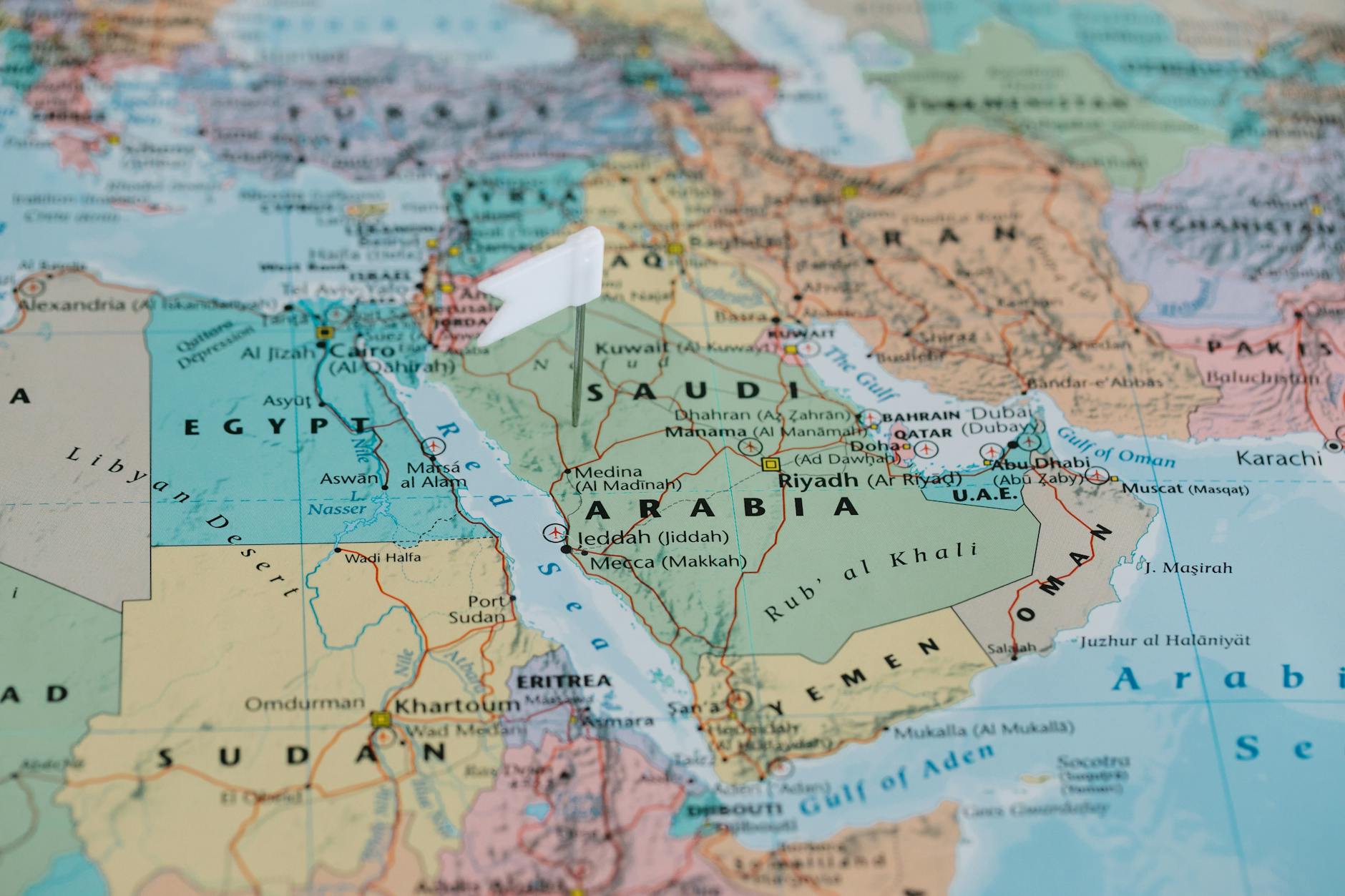
The UAE was not alone in absorbing Iranian fire. Al Jazeera reported that multiple Gulf Arab states hosting US assets — including Saudi Arabia, Kuwait, Iraq, Qatar, and Bahrain — were targeted in Iran’s retaliation for the February 28 strikes. The pattern was consistent: any nation with a significant US military footprint became a target.
📨 Get Free Accountability Coverage Alerts
Free · No spam · Unsubscribe anytime
What distinguished the UAE was the sheer volume of fire directed at it. More projectiles were reportedly launched at the Emirates than at any other country, including Israel. This disproportionate targeting likely reflects Al Dhafra’s particular importance as a US military hub and the UAE’s geographic proximity to Iran, which makes it reachable by a wider range of Iranian missile systems, including shorter-range ballistic missiles that might not reach more distant targets.
What This Means for Gulf Security Going Forward
UAE President Sheikh Mohamed bin Zayed’s March 7 statement that the UAE was “prepared to confront threats” as Iranian attacks continued signaled a shift from attempted neutrality to acknowledged confrontation. The question now is what that confrontation looks like going forward — whether it means an expanded US military presence in the Gulf, new investments in missile defense, or a fundamental rethinking of the security architecture that made the UAE a target. The 90-percent-plus interception rate, if accurate, may actually encourage deeper investment in missile defense rather than a reassessment of the alliance structures that created the threat.
But interception rates are statistics, and the 4 dead and 112 injured are people. The next time tensions escalate between the US and Iran, every Gulf state will face the same impossible math: the protection offered by hosting American forces versus the targeting that comes with it. The UAE’s experience in late February and early March 2026 is now the definitive case study in that calculation.
Conclusion
The UAE’s experience exposes a fundamental contradiction in Gulf security strategy. Hosting major US military installations while claiming neutrality in a US-led conflict was never a viable position, and Iran’s unprecedented barrage of over 1,700 missiles and drones made that reality impossible to ignore. The Emirates’ air defenses performed well — intercepting over 90 percent of incoming fire — but performance under fire is not the same as avoiding fire altogether. Four civilians are dead and 112 were injured because the gap between diplomatic rhetoric and military reality finally collapsed.
Going forward, the key takeaway is not that the UAE made a wrong choice, but that the choice was never as simple as it appeared. Decades of strategic partnership with Washington brought genuine security benefits and helped build the UAE into a regional power. But those same partnerships created vulnerabilities that no amount of diplomatic distancing could erase. Every Gulf state now has hard evidence of what Iranian retaliation looks like when it comes, and that evidence will shape security calculations across the region for years to come.
Frequently Asked Questions
Did the UAE officially participate in the US-Israeli strikes on Iran?
The UAE publicly denied any role. On January 26, 2026, the foreign ministry stated it would not allow its airspace, land, or waters to be used in hostile military actions against Iran. However, the UAE hosts Al Dhafra Air Base, which houses significant US military assets.
How many missiles and drones did Iran fire at the UAE?
According to the UAE Ministry of Defence, Iran launched 189 ballistic missiles, 941 drones, and 3 cruise missiles between February 28 and March 4, 2026. By March 10, the total exceeded 1,700 missiles and drones.
What was the interception rate of UAE air defenses?
The UAE reported an overall interception rate exceeding 90 percent. At Al Dhafra Air Base specifically, the UAE claimed 15 of 16 missiles and 119 of 121 drones were intercepted. Iran disputed these figures.
Were there casualties from the Iranian strikes on the UAE?
Yes. As of March 10, 2026, the attacks had killed 4 civilians and injured 112 others, according to CNN reporting.
Why did Iran target the UAE more heavily than other Gulf states?
Iran cited the UAE’s decades-long strategic alliance with Washington and the presence of US military assets, particularly at Al Dhafra Air Base. The UAE reportedly received more incoming fire than any other targeted country, including Israel.
What was the economic relationship between the UAE and Iran before the strikes?
Bilateral trade between the two countries stood at $28 billion in 2024 according to WTO data, making the UAE Iran’s second-largest trading partner after China.
You Might Also Like
- The U.S. Navy Destroyed More Iranian Ships in One Day Than It Has Sunk Since World War II
- The Decision to Hit Iran a Second Time Was Made Weeks Before the Actual Strike
- Satellite Photos From January Showed New Construction at Iranian Military Sites