Based on every modern historical precedent — Iran in 1979, Iraq in 2003, Libya in 2011 — regime change triggered by outside military force or internal upheaval almost never produces the stable, democratic outcome its architects promise. What it produces, with remarkable consistency, is a power vacuum, factional violence, and years of instability. The assassination of Supreme Leader Ali Khamenei on February 28, 2026, in joint US-Israeli strikes has thrust Iran into exactly this kind of uncertain territory, and the historical record offers more warnings than reassurances about what comes next.
Iran is now governed by a three-person interim Leadership Council — Ayatollah Alireza Arafi of the Assembly of Experts, President Masoud Pezeshkian, and Chief Justice Gholam-Hossein Mohseni-Ejei — while the 88-member Assembly of Experts scrambles to appoint a new supreme leader. Foreign Minister Araghchi has suggested the process could wrap up in days, but there is no consensus successor, and the Islamic Revolutionary Guard Corps looms as the real power broker. This article examines what regime change in Iran could actually look like by measuring the current crisis against the historical record, the structural realities of Iranian power, and the frank assessments of intelligence agencies and foreign policy analysts who have studied this question for decades.
Table of Contents
- What Does History Tell Us About Regime Change in Iran and the Middle East?
- Why the CIA Warned That Killing Khamenei Wouldn’t Collapse the Regime
- The Protests That Shook Iran Before the Strikes
- The Succession Crisis and Who Actually Holds Power
- Why Iran in 2026 Is Not Iran in 1979
- The Scale of Violence Already Inflicted
- What Comes Next and Why Nobody Honestly Knows
- Conclusion
- Frequently Asked Questions
What Does History Tell Us About Regime Change in Iran and the Middle East?
The track record is bleak. In Iraq, the 2003 “shock and awe” air campaign was supposed to decapitate Saddam Hussein’s regime and usher in democracy. Instead, the United States remained on the ground for more than eight years, the aftermath produced a sectarian civil war, and the power vacuum directly enabled the rise of ISIS — which then triggered a second round of military intervention from 2013 to 2017. In Libya, Muammar Gaddafi was killed by rebels in 2011, but the state didn’t transition — it collapsed. Within three years, roughly one-third of Libya’s pre-2011 population had fled to neighboring Tunisia. The country remains fractured among rival militias to this day, with no functioning central government.
Even Iran’s own 1979 revolution — often held up as a successful popular uprising — carries a critical warning. The Shah commanded a 400,000-strong modern military and enjoyed broad international support, yet fell to largely unarmed demonstrators when up to 9 million Iranians took to the streets. But the revolution replaced one autocracy with another. Khomeini’s clerical faction systematically consolidated power over the secularists, nationalists, and leftists who had also participated in the uprising. The people who risked their lives in the streets did not get the government most of them wanted. In all three cases, removing the leader did not automatically produce stability or democracy.

Why the CIA Warned That Killing Khamenei Wouldn’t Collapse the Regime
Before the strikes were carried out, the CIA assessed that even if Khamenei were killed, the iranian regime would “almost certainly not collapse.” The more likely outcome, according to that assessment, was that the system would harden under IRGC hardline commanders who would use the crisis to consolidate their own authority. This is a critical distinction that gets lost in political rhetoric: there is a difference between removing a leader and removing a regime. Iran’s theocratic system was specifically designed with redundancies — the Assembly of Experts, the Guardian Council, the IRGC’s parallel chain of command — to survive exactly this kind of decapitation. The Brookings Institution has described Iran as a “tough regime for protests to topple” because of its oil wealth, its ideologically loyal security forces, and what researchers acknowledge is some genuine popular support for the system among certain segments of the population.
Iran has survived four mass uprisings in two decades. However, if the succession process stalls or produces a leader the IRGC does not respect, the situation could shift rapidly. The Atlantic Council has warned that Iran’s system is “particularly complex” and that a violent collapse could fragment the country and trigger mass migration on the scale seen in Iraq, Libya, and Syria. Military analysts have been even more direct: “You cannot facilitate regime change through air strikes alone” without ground forces or a fully armed organic uprising.
The Protests That Shook Iran Before the Strikes
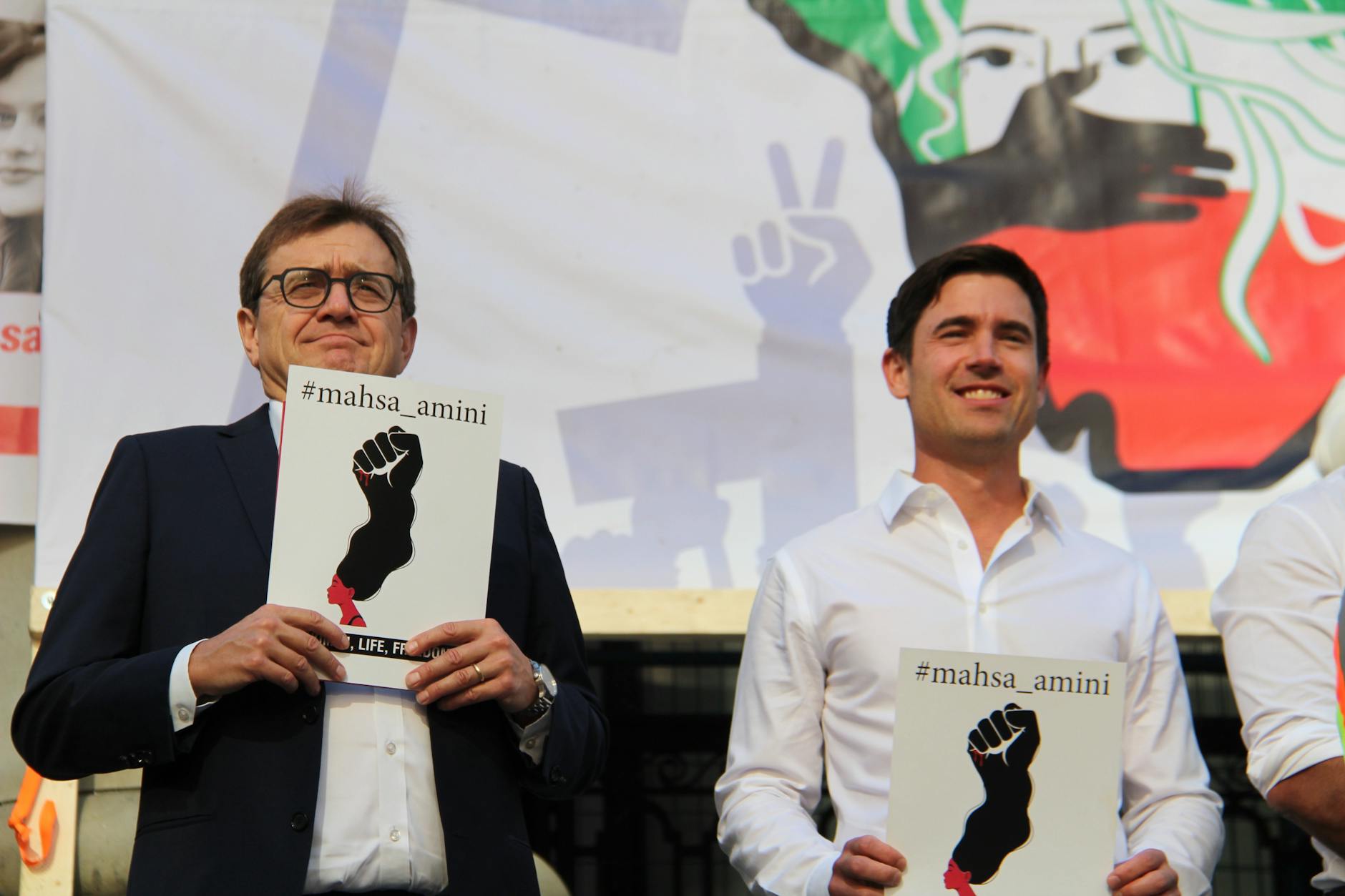
The strikes did not happen in a vacuum. On December 28, 2025, massive protests erupted across Iran after the rial collapsed from roughly 1.07 million per US dollar in early November to approximately 1.4 million per dollar by late December. These were the largest demonstrations since the 1979 revolution itself, and they started as economic grievances — inflation, collapsing purchasing power, the inability of ordinary Iranians to afford basic goods. But protest demands evolved. What began as anger over the economy shifted into open opposition to the clerical establishment.
Some protesters chanted in support of exiled crown prince Reza Pahlavi, directly challenging the Islamic Republic’s foundational legitimacy. The government responded with lethal force. Estimates of protesters killed range from 2,000 to 40,000, with human rights activists confirming at least 7,000 deaths. Iran cut all internet access starting January 8, 2026, in an attempt to smother coordination. On February 11, President Pezeshkian publicly apologized for the crackdown — a remarkable admission from within the regime — and on February 21, a second wave of protests broke out, this time led by university students. These protests were still underway when the US-Israeli strikes killed Khamenei one week later.
The Succession Crisis and Who Actually Holds Power
The New York Times reported that Khamenei had nominated three potential successors before his death: Mohseni-Ejei (the current chief justice and interim council member), Asghar Hejazi, and Hassan Khomeini — the grandson of the 1979 revolution’s founder. Khamenei’s own son, Mojtaba, has deep IRGC ties and has been discussed as a possibility, but a dynastic succession is politically awkward for a regime that overthrew a monarchy. The Assembly of Experts holds the constitutional authority to appoint a new supreme leader by simple majority vote, but reaching consensus in the current environment is a different matter entirely. The real comparison here is between a managed transition and a contested one.
If the Assembly of Experts quickly coalesces around a candidate acceptable to both the clerical establishment and the IRGC, the regime could stabilize — diminished, perhaps, but intact. If the process stalls or produces a figurehead without real authority, the IRGC effectively becomes the governing institution, ruling from behind a clerical facade. And if factions within the IRGC itself disagree about direction, you get something closer to the post-Gaddafi scenario — armed groups with competing visions and no mechanism for resolving disputes peacefully. The tradeoff is stark: a quick succession preserves the autocratic system, but a contested one risks the kind of fragmentation that has devastated every other country in the region that has gone through this.
Why Iran in 2026 Is Not Iran in 1979
The most dangerous analytical mistake being made right now is assuming that what happened in 1979 can simply happen again with a better outcome. The structural differences are enormous. The 1979 revolution succeeded in part because Shia Islam’s culture of martyrdom motivated protesters to persist despite thousands being killed, and because mosque networks provided pre-existing organizational infrastructure that the Shah’s security forces could not easily dismantle. Critically, the revolution had a single unifying figure in Ayatollah Khomeini, whose authority was accepted across most factions — at least until he consolidated power and turned on his former allies.
Today’s opposition has no such figure. The movement is fragmented between monarchists who support Reza Pahlavi, secular democrats, ethnic minorities with their own regional agendas, and reformists who want to change the system from within rather than overthrow it. And the security apparatus they face is far more capable than anything the Shah deployed. The IRGC is not comparable to the Shah’s SAVAK secret police — it controls large sectors of the Iranian economy, operates its own military and intelligence services, and commands the Basij paramilitary wing that has been the primary instrument of protest suppression. Multiple experts warn that if the regime collapsed entirely, these different factions “would battle it out” — and the conflict could attract intervention from Russia and China, both of which have strategic interests in Iran.
The Scale of Violence Already Inflicted
The human cost of the current crisis deserves direct accounting. The joint strikes, codenamed “Roaring Lion” by Israel and “Operation Epic Fury” by the United States, killed not only Khamenei but also his daughter-in-law, grandchild, and son-in-law. Over 40 Iranian officials were killed across 24 provinces, with at least 201 total deaths from the strikes.
📨 Get Free Accountability Coverage Alerts
Free · No spam · Unsubscribe anytime
This followed a domestic crackdown in which the Iranian government itself killed thousands of its own citizens — at minimum 7,000 confirmed by human rights organizations, with some estimates running as high as 40,000. For context, the Iranian Revolution of 1979 resulted in an estimated 2,000 to 3,000 deaths. The scale of killing in late 2025 and early 2026 already dwarfs the revolution that created the Islamic Republic.
What Comes Next and Why Nobody Honestly Knows
The honest answer is that no one — not the CIA, not the Atlantic Council, not the IRGC commanders currently jockeying for position — knows what Iran looks like in six months. The range of plausible outcomes runs from a managed clerical succession that preserves the system in weakened form, to a military-dominated government that drops the theocratic facade, to a prolonged period of instability and factional violence that draws in regional and global powers.
What the historical record tells us with high confidence is that the most optimistic scenario — a smooth transition to a stable, democratic Iran — is also the least likely one. Every precedent points toward messiness, duration, and unintended consequences that outlast the political cycles of the governments that set the process in motion.
Conclusion
History does not offer a single example of externally driven regime change in the Middle East producing the outcome its proponents promised. Iraq, Libya, and Iran’s own 1979 revolution all followed the same pattern: the old regime falls, the power vacuum fills with whatever faction is best armed and best organized rather than whatever faction is most democratic, and the civilian population bears the cost for years or decades afterward.
The killing of Khamenei has removed the apex of Iran’s political system, but it has not removed the IRGC, the clerical networks, the factional divisions, or the economic collapse that drove millions of Iranians into the streets in the first place. What happens next depends on variables that are genuinely unpredictable — whether the Assembly of Experts can agree on a successor, whether the IRGC holds together or fractures, whether the protest movement can organize around a unified vision, and whether outside powers resist the temptation to pick winners. The only thing the historical record tells us with certainty is that this will take longer, cost more, and look less like the plan than anyone currently in power is willing to admit.
Frequently Asked Questions
Who is running Iran right now after Khamenei’s death?
A three-person interim Leadership Council consisting of Ayatollah Alireza Arafi (head of the Assembly of Experts), President Masoud Pezeshkian, and Chief Justice Gholam-Hossein Mohseni-Ejei. The Assembly of Experts has constitutional authority to appoint a permanent successor by simple majority vote.
Who are the leading candidates to become Iran’s next supreme leader?
Khamenei reportedly nominated three potential successors before his death: Mohseni-Ejei (the current chief justice), Asghar Hejazi, and Hassan Khomeini (grandson of the 1979 revolution’s founder). Khamenei’s son Mojtaba has also been discussed but a dynastic succession is politically fraught for a regime that overthrew a monarchy.
Did the CIA think killing Khamenei would cause the regime to collapse?
No. The CIA assessed before the strikes that even if Khamenei were killed, the regime would “almost certainly not collapse” and would more likely harden under IRGC hardline commanders.
How many people have died in the Iranian protests and strikes?
Human rights activists have confirmed at least 7,000 deaths from the government’s crackdown on protests, with some estimates as high as 40,000. The US-Israeli strikes killed at least 201 people, including over 40 Iranian officials across 24 provinces.
Has US-backed regime change ever worked in the Middle East?
The historical record is consistently negative. Iraq (2003) produced civil war and the rise of ISIS. Libya (2011) produced state collapse and mass migration. Even Iran’s own 1979 revolution — a domestic uprising — replaced one autocracy with another. In no case did removing the leader produce the stable democracy that was promised.
What role does the IRGC play in Iran’s political future?
The IRGC is likely the most powerful institution in Iran right now. It is answerable only to the supreme leader, controls significant economic assets, operates its own military and intelligence services, and commands the Basij paramilitary forces. With the supreme leader position vacant, the IRGC is almost certainly exercising power behind the scenes and will be the decisive factor in who becomes the next leader.
You Might Also Like
- Who Actually Profits From the Iran War — A Look at the Money
- Weapons Scattered Across Iran After Regime Collapse Could Arm Extremists for Decades
- The Iran War Could Last Weeks, Months, or Years — Nobody Knows