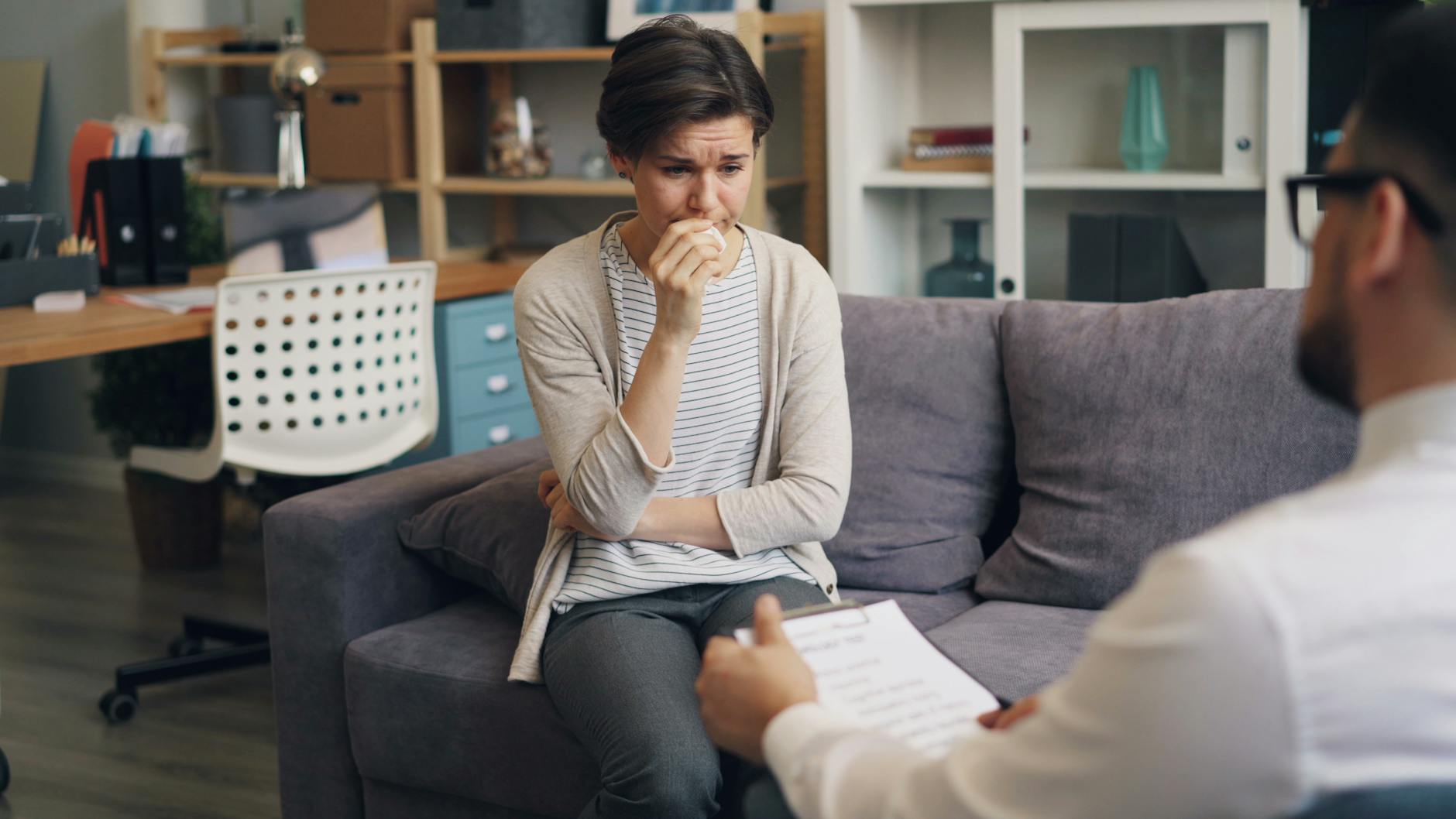
Constant exposure to war coverage is measurably harming the mental health of millions of Americans, and the problem is getting worse. According to the American Psychological Association’s 2025 Stress in America survey, two-thirds of Americans — approximately 66% — are now anxious about current events happening around the world, a figure that climbed 4% from the previous year. Researchers at Boston University found that extensive media exposure after the Boston Marathon bombings was actually a stronger predictor of psychological distress than being physically present at the bombings themselves, a finding that upends assumptions about who suffers most from traumatic events.
The science is no longer ambiguous: watching war from your couch can wound you in ways that mimic direct exposure to violence. This article breaks down what mental health professionals are seeing in their practices, the clinical mechanisms behind media-induced anxiety, who is most vulnerable, and what practical steps people can take to stay informed without destroying their well-being. It also examines the growing phenomenon of “headline stress disorder,” the physical toll of chronic news consumption, and why younger generations appear to be bearing the heaviest burden.
Table of Contents
- Why Are Mental Health Experts Warning About the Impact of War Coverage on Americans?
- How Vicarious Trauma From Media Exposure Rivals Direct Experience
- Doomscrolling and the Generational Divide in News Anxiety
- What Mental Health Professionals Recommend for Managing War-Related Anxiety
- The Physical Toll of Chronic News Consumption
- When Staying Informed Becomes a Compulsion
- The Long-Term Outlook for a News-Saturated Society
- Conclusion
- Frequently Asked Questions
Why Are Mental Health Experts Warning About the Impact of War Coverage on Americans?
The warnings are coming from nearly every corner of the mental health field because the data has become impossible to ignore. The APA’s 2025 report found that 76% of U.S. adults say the future of the nation is a significant source of stress, and 69% cite the spread of misinformation as a major stress source — up from 62% in 2024. These are not marginal increases. They represent a population that is becoming progressively more distressed with each news cycle, each conflict, each round of graphic footage shared across social media platforms. Therapist Steven Stosny, PhD, coined the term “headline stress disorder” to describe perpetual anxiety tied to the 24/7 news cycle.
He first noticed a surge in anger, resentment, and anxiety symptoms in his patients leading into the 2016 election, and the trend has intensified with ongoing global conflicts. While headline stress disorder is not an official DSM diagnosis, many psychologists report seeing a growing number of patients suffering from news-related stress and anxiety, according to the APA Monitor. The pattern Stosny identified nearly a decade ago has not faded — it has compounded. What makes this different from previous eras is the sheer volume and immediacy of coverage. Americans are not reading about wars in the next morning’s newspaper. They are watching them unfold in real time on their phones, often with raw, unfiltered footage that previous generations would never have encountered outside of a combat zone.
How Vicarious Trauma From Media Exposure Rivals Direct Experience
The most alarming finding in recent research is that watching traumatic events on screen can produce psychological damage comparable to — or worse than — direct exposure. Research from the University of Utah Health has shown that people who watched traumatic events on television were just as likely, or more likely, to develop trauma-like symptoms than those who lived in the affected area. This is not a fringe finding. It has been replicated across multiple studies and multiple types of events. A study of Israeli citizens found that those who increased their TV news consumption at the start of the Gaza conflict were 1.6 times more likely to develop anxiety symptoms than those who maintained their normal viewing habits. The mechanism is straightforward: the brain’s threat-detection systems do not reliably distinguish between danger on a screen and danger in the room. When you watch a bombing, your amygdala fires.
When you watch it again in a loop, your amygdala fires again. The body keeps score whether the threat is real or mediated. However, this does not mean all news consumption is equally harmful. Context matters. Reading a text-based summary of events is not the same as watching graphic video footage on autoplay. Consuming a single daily briefing is not the same as refreshing a live feed every ten minutes. The dose makes the poison, and the research consistently shows that the format, frequency, and graphic intensity of consumption all modulate the psychological impact.
Doomscrolling and the Generational Divide in News Anxiety
Younger Americans are absorbing the worst of it. According to a 2024 Morning Consult survey, 51% of Gen Z and 46% of Millennials doomscroll regularly, compared to significantly lower rates among older generations. Overall, 31% of American adults doomscroll regularly — a figure that likely understates the problem, since many people do not recognize their own consumption patterns as compulsive. The American Psychiatric Association’s 2025 annual poll found that 40% of employed Americans report that anxiety about current events is affecting their work. Consider what that means in practical terms: nearly half the workforce is showing up distracted, exhausted, or emotionally depleted because of what they consumed on their phones before arriving at the office.
This is not a personal failing. It is a public health pattern with economic consequences that extend far beyond individual well-being. The generational gap is partly structural. Younger adults are more likely to encounter war coverage passively — through algorithmic feeds, autoplay videos, and social media shares — rather than through deliberate choices to turn on the evening news. The content finds them. And because social media platforms are engineered to maximize engagement, the most graphic and emotionally provocative content is precisely what the algorithms surface most aggressively.
What Mental Health Professionals Recommend for Managing War-Related Anxiety
Mental health professionals are converging on a set of practical recommendations, but they come with tradeoffs. The most common advice is to limit daily news consumption and take periodic “news fasts” — intentional breaks from all news media lasting anywhere from a day to a week. Research published in JMIR Mental Health in 2025 found that media-induced uncertainty is a principal driver of anxiety and psychopathology, and that reducing exposure reliably reduces symptoms. The tension, of course, is between self-protection and civic engagement. Many Americans feel a moral obligation to stay informed, particularly about conflicts that their government is funding or influencing. Going dark on the news can feel irresponsible.
Clinicians generally advise a middle path: choose one or two trusted sources, set specific times for consumption, avoid graphic imagery when possible, and never consume news within an hour of bedtime. The goal is not ignorance — it is managed exposure. There is also a meaningful difference between passive and active engagement with difficult news. Reading about a conflict and then taking some form of action — donating, contacting a representative, volunteering — tends to reduce feelings of helplessness. Scrolling through the same footage for hours without any outlet for the resulting distress tends to amplify it. The research suggests that agency is protective, while passivity in the face of overwhelming information is corrosive.
The Physical Toll of Chronic News Consumption
The damage is not limited to mood and cognition. According to Harvard Health, the body responds to repeated bad news consumption as if it were in continuous danger. Stress hormone surges, increased heart rate, and chronic exhaustion accumulate over time, contributing to clinical anxiety and depression. The stress response was designed for acute threats — a predator, a fire, a falling rock. It was not designed to be activated for hours each day by a glowing rectangle. The World Health Organization has documented that in armed conflict situations, 10% of people who experience traumatic events develop serious mental health problems, and another 10% develop behaviors that hinder their ability to function effectively.
Those figures describe people in actual war zones. What the newer research on vicarious trauma suggests is that heavy media consumers in safe countries may be developing milder but structurally similar patterns of dysfunction — sleep disruption, hypervigilance, emotional numbing, and difficulty concentrating. One limitation worth noting: most of the research on media-induced trauma is observational rather than experimental. Researchers cannot ethically force people to watch war coverage and measure the damage. This means the studies show strong associations but cannot always prove direct causation. That said, the consistency of findings across different populations, different conflicts, and different research teams makes the overall picture difficult to dismiss.
📨 Get Free Accountability Coverage Alerts
Free · No spam · Unsubscribe anytime
When Staying Informed Becomes a Compulsion
For some people, news consumption crosses the line from habit into compulsion. Clinicians describe patients who cannot stop checking their phones even when they recognize the behavior is making them miserable. The pattern resembles other behavioral addictions: the person feels temporarily relieved by checking, then anxious again within minutes, prompting another check. One therapist quoted in NBC News described a patient who was setting alarms throughout the night to check for breaking news about an overseas conflict — a pattern that had destroyed her sleep and was beginning to affect her physical health.
The distinction matters because the interventions are different. For most people, setting boundaries around news consumption is sufficient. For those whose consumption has become compulsive, professional support — including cognitive behavioral therapy — may be necessary. Recognizing the difference between “I want to be informed” and “I cannot stop even though I want to” is the first step.
The Long-Term Outlook for a News-Saturated Society
The trajectory is not encouraging. Every year, the APA’s stress surveys show more Americans reporting higher levels of news-related anxiety. The platforms that deliver the news continue to optimize for engagement over well-being. Conflicts around the world show no signs of abating.
And the misinformation that 69% of adults now cite as a stress source adds a layer of cognitive burden on top of the emotional weight — people are not only distressed by what is happening but uncertain about what is actually true. The most realistic hope may not be structural change from media companies or platforms but rather a growing cultural norm around media hygiene — the same way public health campaigns around smoking, seatbelts, and sun exposure gradually shifted behavior over decades. Mental health professionals are increasingly vocal about treating news consumption as a health behavior that deserves the same intentionality people bring to diet and exercise. Whether that message breaks through the noise remains to be seen.
Conclusion
The evidence is clear that constant war coverage is taking a measurable toll on American mental health, from clinical anxiety and sleep disruption to workplace dysfunction and physical stress responses. The research — from Boston University, the APA, Harvard Health, and international studies — consistently shows that heavy media consumption of violent and distressing content produces harm that can rival direct exposure to traumatic events. Younger generations, who encounter this content passively through algorithmic feeds, are bearing a disproportionate share of the burden.
The practical path forward is not to disengage entirely but to consume news deliberately: set time limits, choose text over graphic video when possible, take regular breaks, and channel distress into action rather than passive scrolling. Anyone who finds they cannot control their consumption despite wanting to should consider speaking with a mental health professional. Staying informed is important. Staying intact is not optional.
Frequently Asked Questions
Is “headline stress disorder” an official mental health diagnosis?
No. The term was coined by therapist Steven Stosny, PhD, to describe a pattern of anxiety tied to the 24/7 news cycle. While many psychologists recognize the pattern in their patients, it is not listed in the DSM and is not a formal clinical diagnosis.
Can watching war coverage on TV really cause trauma comparable to being there?
Research suggests it can come close. Boston University researchers found that extensive media exposure after the Boston Marathon bombings was a stronger predictor of distress than being physically present. University of Utah Health researchers found that TV viewers were just as likely — or more likely — to develop trauma-like symptoms as people in the affected area.
How much news consumption is too much?
There is no universal threshold, but mental health professionals recommend limiting consumption to specific times of day, avoiding graphic imagery, and taking periodic news fasts. If news consumption is disrupting your sleep, concentration, or daily functioning, it has likely crossed a harmful line.
Are younger people more affected by war coverage than older generations?
The data suggests yes. A 2024 Morning Consult survey found that 51% of Gen Z and 46% of Millennials doomscroll regularly, compared to significantly lower rates among older adults. Younger people are also more likely to encounter graphic content passively through social media algorithms.
What are the physical health effects of constant news consumption?
According to Harvard Health, the body responds to repeated bad news as if in continuous danger, producing stress hormone surges, increased heart rate, and chronic exhaustion. Over time, this contributes to clinical anxiety, depression, and other stress-related health problems.
You Might Also Like
- Veterans With PTSD Report Being Triggered by Nonstop Iran War Coverage
- Veterans Groups Across the Country Issue Statements on the New Middle East War
- Universities Cancel Classes as Students Organize Iran War Protests Nationwide