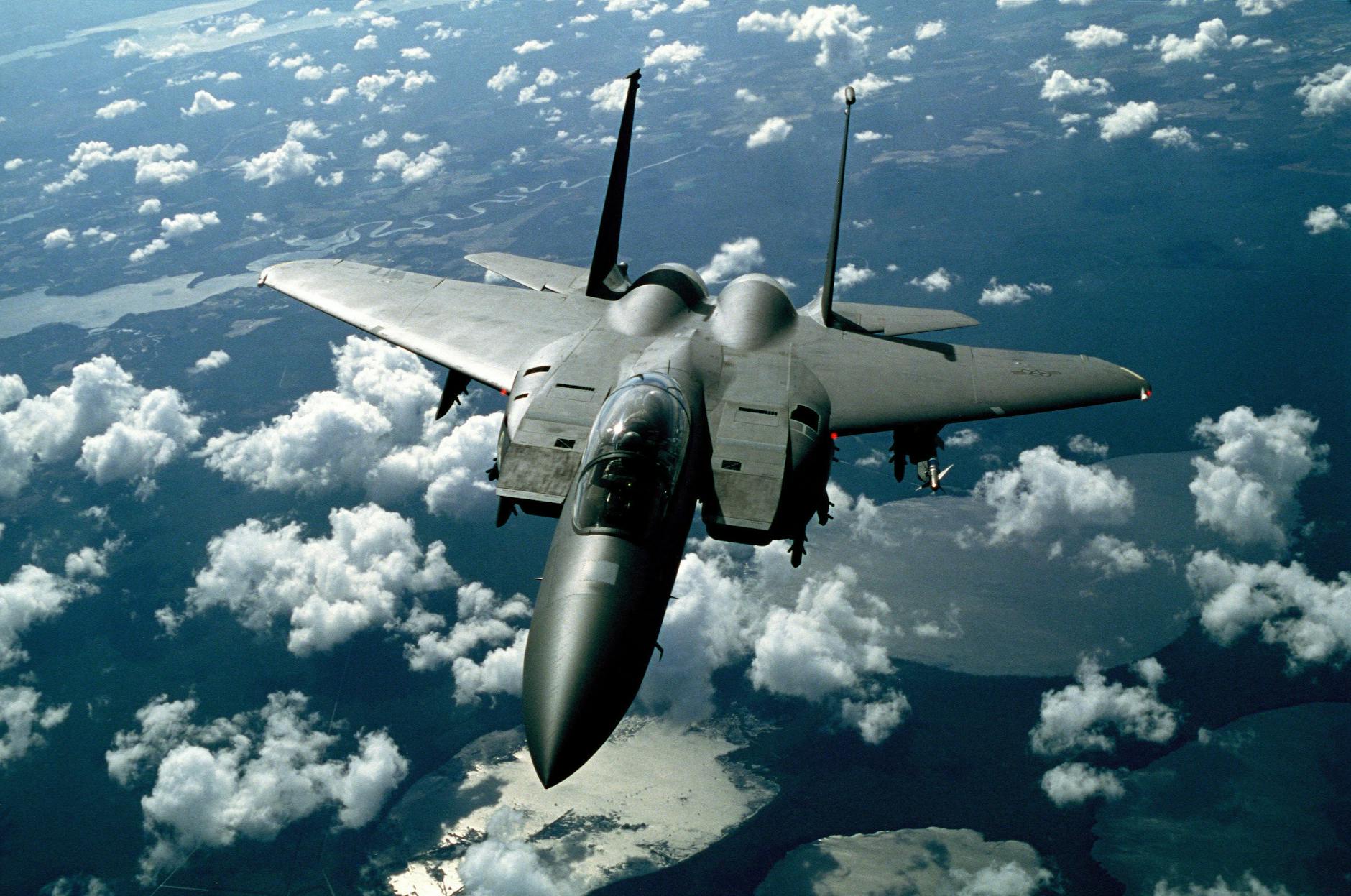
Israel’s claim that it “paved the path to Tehran” is not mere rhetoric — it is a statement backed by a methodical, multi-phase military campaign that systematically dismantled Iran’s layered air defense network over the course of nearly 18 months. On October 26, 2024, Israel launched three waves of strikes against 20 locations in Iran, Iraq, and Syria, destroying nearly all of Iran’s Russian-supplied S-300 surface-to-air missile systems. That initial operation laid the groundwork for what came next: a massive combined US-Israeli air campaign in early 2026 that, according to IDF Chief of Staff Lt. Gen. Eyal Zamir and Air Force Commander Maj.
Gen. Tomer Bar, destroyed approximately 80 percent of Iran’s air defense systems and achieved “almost complete air superiority over the skies of Iran” within 24 hours. The joint declaration by Israel’s top military brass — “The road to Tehran has been paved” — came after Israel conducted its largest air combat operation in history, deploying roughly 200 fighter jets and striking over 500 military targets across western and central Iran. The campaign, dubbed the “Twelve-Day War,” also eliminated over 60 percent of Iran’s ballistic missile launchers and 70 air defense batteries. This article examines the October 2024 strikes that started the process, the full-scale 2026 campaign that finished it, the failures of Russian and Chinese air defense systems sold to Iran, the strategic implications for the broader Middle East, and what this means for US foreign policy accountability going forward.
How Did Israel Destroy Iran’s Outer Ring of Air Defenses Starting in October 2024?
The story begins on October 26, 2024, when Israel launched what was described as the largest attack on iran since the Iran-Iraq War. Three coordinated waves of strikes hit 20 locations spread across Iran, Iraq, and Syria, with a specific focus on Iran’s surface-to-air missile infrastructure and ballistic missile production sites. The primary targets were Iran’s Russian-supplied S-300 systems — the backbone of Iran’s outer defensive ring, designed to detect and intercept incoming aircraft and missiles at long range. An IDF official told Axios at the time that Israel now enjoyed “greater freedom of operation over Iran” as a direct result of hitting those air defense and ballistic missile assets. What made the October 2024 strikes so consequential was not just the immediate damage but the strategic hole they punched in Iran’s defensive posture. The S-300 is a capable system — widely exported by Russia and considered one of the
What Was Operation Epic Fury and How Did the 2026 Campaign Unfold?
Starting in late February 2026, the United States and Israel launched a combined military campaign against Iran, with the US portion operating under the codename operation epic Fury. Israel’s contribution was staggering in scale: approximately 200 fighter jets — the largest air combat operation in Israeli history — struck over 500 military targets in western and central Iran. Targets included missile arrays, surface-to-air missile batteries, radar installations, and command nodes spread across multiple Iranian provinces. The strikes were conducted nearly simultaneously, a deliberate tactic designed to overwhelm Iran’s integrated air defense network before it could mount a coordinated response. The results were devastating for Iran’s military infrastructure. The IDF reported destroying 70 air defense batteries during the campaign, and the combined US-Israeli force established effective control of airspace from western Iran to central Tehran within 24 hours. Lt. Gen.
Eyal Zamir and Maj. Gen. Tomer Bar jointly declared that Israel had destroyed roughly 80 percent of Iran’s air defense systems and achieved “almost complete air superiority over the skies of Iran.” Over 60 percent of Iran’s ballistic missile launchers were also knocked out. However, the scale of these claims warrants careful scrutiny. Military officials on all sides tend to overstate battlefield success, and independent verification of destruction percentages in an active conflict zone is extraordinarily difficult. The 80 percent figure comes directly from the IDF — not from neutral observers or third-party assessments. That does not mean the number is fabricated, but readers should understand the difference between a military’s own damage assessment and independently confirmed data. What is less disputable is the observable outcome: Israeli and American aircraft operated over Iranian airspace with apparent freedom, which strongly suggests that Iran’s air defense network was, at minimum, severely degraded.
Why Did Russian and Chinese Air Defense Systems Fail to Protect Iran?
One of the most significant takeaways from both the 2024 and 2026 campaigns is the documented failure of foreign-supplied air defense systems to protect Iranian targets. Iran’s air defense network relied heavily on Russian S-300 systems, supplemented by Chinese-supplied components and domestically produced variants. According to reporting from Vision Times and other outlets, these China and Russia-backed air defenses failed to prevent Israeli-US strikes from reaching Tehran itself — a city that should have been among the most heavily defended airspaces in the country. This failure carries enormous implications for the global arms market and for other nations that have purchased Russian and Chinese defense systems. The S-300’s poor showing in Iran follows a pattern already visible in Ukraine, where Russian air defense systems have underperformed against Western-supplied precision munitions.
For countries like India, Turkey, and various Middle Eastern and African states that have invested billions in Russian and Chinese air defense platforms, the Iran campaign raises uncomfortable questions about whether those systems can actually perform as advertised against a technologically advanced adversary. It is worth noting, though, that system performance depends heavily on operator training, maintenance, integration with broader defense networks, and the sheer volume of incoming threats — factors that vary significantly from one military to another. The specific vulnerability exploited by Israel appears to have been a combination of precision intelligence on system locations, simultaneous multi-axis strikes designed to saturate defensive coverage, and the prior degradation achieved in October 2024. When Israel destroyed the S-300 batteries in 2024, Iran lost its most capable long-range detection and interception layer. What remained was a patchwork of shorter-range systems and older technology that could not compensate for the gap.
What Does “Air Superiority Over Iran” Actually Mean in Practice?
When Israeli commanders declared they had achieved “almost complete air superiority” over Iran, they were making a specific military claim with concrete operational meaning. Air superiority means that one side can conduct air operations without effective opposition from the other side’s air force or ground-based defenses. In practical terms, it means Israeli aircraft could fly over Iranian territory, identify targets, and strike them without facing meaningful risk of being shot down. This is a qualitative shift — not just a temporary tactical advantage during a specific raid, but a sustained condition that allows for ongoing operations. The tradeoff, however, is that air superiority is not the same as air supremacy, and it is certainly not the same as political or strategic victory. The United States maintained near-total air superiority over Afghanistan for 20 years without achieving its broader strategic objectives.
Israel’s ability to fly freely over Iran does not automatically translate into the ability to compel Iranian political behavior, eliminate Iran’s nuclear program permanently, or prevent Iran from rebuilding its defenses over time. Air power is a tool, not an outcome. The “road to Tehran” may be paved in a military aviation sense, but the road to a durable resolution of the US-Israel-Iran confrontation involves factors — diplomacy, economics, regional alliances, domestic politics — that no amount of precision bombing can address on its own. The comparison to previous campaigns is instructive. In the 1991 Gulf War, the US-led coalition achieved air superiority over Iraq within the first 48 hours and maintained it throughout the conflict. That air dominance was decisive in the short-term military outcome but did not prevent decades of subsequent instability. The 2026 campaign against Iran appears to follow a similar pattern — overwhelming initial success in the air domain, with the longer-term strategic picture remaining far more uncertain.
What Are the Accountability Questions Surrounding US Involvement?
The US role in Operation Epic Fury raises significant questions about executive authority, congressional oversight, and the legal basis for military action against Iran. The combined nature of the campaign — with American forces operating alongside Israeli forces in strikes on a sovereign nation — implicates the War Powers Act and the question of whether Congress authorized the use of military force against Iran. These are not abstract legal debates; they go to the core of democratic accountability for decisions that risk escalation into a broader regional or even global conflict. There is also the question of what the American public was told before, during, and after the strikes. The administration’s framing of the campaign — the language of “paving roads” and “freedom of operation” — is inherently optimistic and forward-looking.
What it does not address are the potential consequences: Iranian retaliation against US bases and allies in the region, the impact on global energy markets, the risk of drawing in other actors like Russia or China, and the long-term cost of sustained military operations. Accountability journalism and congressional oversight exist precisely to ask these harder questions, and the fact that the initial military operation was successful does not exempt it from scrutiny. Readers should be wary of accepting military press conferences as the final word on any campaign’s success or justification. The “Twelve-Day War” framing, for example, implicitly compares the conflict to Israel’s Six-Day War of 1967 — a comparison designed to evoke decisive, clean victory. Wars are rarely that simple, and the aftermath of this campaign will unfold over months and years, not days.
How Does the “Twelve-Day War” Compare to Previous Israeli Military Operations?
The campaign against Iran has been described in multiple sources as the “Twelve-Day War,” placing it in a lineage of named Israeli conflicts — the Six-Day War (1967), the Yom Kippur War (1973), and the various Lebanon and Gaza operations. In terms of scale, the deployment of 200 fighter jets and the striking of over 500 targets across multiple provinces of a country the size of Iran represents a significant escalation beyond anything Israel has undertaken before. Previous operations, even large ones like the 2006 Lebanon War, were conducted against non-state actors or small neighboring states, not a major regional power with a sophisticated (if ultimately inadequate) air defense network.
📨 Get Free Accountability Coverage Alerts
Free · No spam · Unsubscribe anytime
The October 2024 strikes themselves were already described as the largest attack on Iran since the Iran-Iraq War of the 1980s. The fact that the 2026 campaign dwarfed even those strikes in scope and ambition underscores how rapidly the military dimension of the Israel-Iran conflict has escalated. Whether this escalation produces lasting security gains or simply sets the stage for the next round of confrontation is the defining question that no amount of sortie counts or destroyed battery tallies can answer.
What Comes Next After Iran’s Air Defenses Are Gone?
The destruction of 80 percent of Iran’s air defense systems and 60 percent of its ballistic missile launchers creates a new strategic reality in the Middle East, but it is a reality that remains deeply unstable. Iran will seek to rebuild and reconstitute its defenses — the question is how quickly and with whose help. Russia and China, whose systems failed in this campaign, face reputational pressure to either improve their offerings or distance themselves from future Iranian defense procurement.
Meanwhile, Iran’s domestic missile and drone programs, which have proven more resilient and harder to target than fixed air defense batteries, remain a factor. For the United States and Israel, the near-term military advantage is real but not permanent. Sustaining air superiority over a country of 87 million people indefinitely is not a viable long-term strategy. The “paved road to Tehran” is a powerful talking point, but roads run in both directions, and the political, economic, and human costs of what comes next will determine whether this campaign is remembered as a decisive strategic achievement or as the opening chapter of a much longer and costlier conflict.
Conclusion
Israel’s claim that it “paved the path to Tehran” rests on a documented, two-phase military campaign that began with the October 26, 2024 strikes on Iran’s S-300 systems and culminated in the massive 2026 air campaign that destroyed 70 air defense batteries, over 500 military targets, and an estimated 80 percent of Iran’s air defense network. The operational facts — 200 fighter jets deployed, air superiority established within 24 hours, Russian and Chinese defense systems neutralized — represent a genuine and dramatic military achievement. The IDF’s own commanders used language that leaves little ambiguity about the scale of what was accomplished.
But military facts exist within a political context, and the accountability questions remain. Congressional authorization, long-term strategic consequences, the reliability of self-reported damage assessments, and the risk of escalation are all issues that demand continued scrutiny from journalists, lawmakers, and the public. The road to Tehran may indeed be paved — but where that road leads, and at what cost, is a question that remains very much unanswered.
Frequently Asked Questions
When did Israel first strike Iran’s air defenses?
On October 26, 2024, Israel launched three waves of strikes against 20 locations in Iran, Iraq, and Syria, destroying nearly all of Iran’s Russian-supplied S-300 surface-to-air missile systems.
What was Operation Epic Fury?
Operation Epic Fury was the US codename for the combined American-Israeli military campaign against Iran that began in late February 2026, involving massive airstrikes on military targets across western and central Iran.
How many fighter jets did Israel deploy in the 2026 campaign?
Israel deployed approximately 200 fighter jets in what the IDF described as its largest air combat operation in history, striking over 500 military targets.
What percentage of Iran’s air defenses were destroyed?
According to IDF Chief of Staff Lt. Gen. Eyal Zamir and Air Force Commander Maj. Gen. Tomer Bar, approximately 80 percent of Iran’s air defense systems were destroyed within 24 hours. The IDF also reported destroying 70 air defense batteries specifically.
Why did Russia’s S-300 systems fail to protect Iran?
The S-300 systems were largely destroyed in the October 2024 strikes before the broader 2026 campaign began. Remaining Chinese and Russian-supplied systems were overwhelmed by simultaneous multi-axis strikes designed to saturate Iran’s integrated defense network.
What does “air superiority” mean in this context?
Air superiority means Israeli and American aircraft could operate over Iranian airspace without facing effective opposition from Iranian air defenses or fighter jets, allowing them to identify and strike targets with minimal risk of being shot down.
Owed money from a settlement? Check what is open at OpenClassActions.com. Caring for someone with dementia? Find practical guides at HelpDementia.com. Working out a skin routine? Evidence-based answers at AcneAdvocate.com. Forgot the name of a movie? Identify it at FindThisMovie.com. Was your data exposed? Track active breaches at DataBreachRadar.com.
⚠️ OPINION & EDITORIAL CONTENT: All articles, commentary, and analysis on donaldtrumpclassaction.com represent the personal opinions of the authors and are presented for informational and editorial purposes only. This site is not affiliated with Donald Trump, the Trump Organization, or any government agency. Nothing here constitutes legal, financial, or professional advice. Read full disclaimer.
We use essential cookies to make this site work and remember your preferences. We do not use advertising or analytics cookies. Privacy Policy. Cookie Policy.