The claim that $100 billion flowed to Iran under the Joint Comprehensive Plan of Action and funded the weapons America is now destroying contains a kernel of truth wrapped in significant exaggeration. Iran’s frozen foreign reserves were estimated at $100–$120 billion when the JCPOA was implemented on January 16, 2016, but Iranian Central Bank officials stated only $29–$32 billion was immediately accessible, and the U.S. Treasury estimated Iran would ultimately access about $50 billion after meeting existing financial obligations. Much of the remainder was tied up as collateral for Chinese trade projects (roughly $22 billion) or was otherwise illiquid. Critically, this was not U.S.
taxpayer money — it was Iran’s own foreign-held assets that had been frozen by international sanctions. What is not in dispute is that Iran spent lavishly on proxy warfare and military buildup both before and after the deal, and that the United States is now spending billions to destroy Iranian military infrastructure in Operations Midnight Hammer and Epic Fury. Whether the JCPOA meaningfully accelerated that spending or simply failed to prevent it is the real debate. The Foundation for Defense of Democracies estimated Iran spent $16 billion annually supporting proxy groups and rogue regimes — a figure that dwarfs even the most generous estimate of accessible sanctions relief spread over several years. This article breaks down what Iran actually received, where the money went, what the U.S. military is now targeting, and the contested question of whether the nuclear deal’s tradeoffs were worth it.
Table of Contents
- How Much Money Did Iran Actually Receive Under the JCPOA Nuclear Deal?
- Where Did the Money Go — Iran’s $16 Billion Annual Proxy Network
- Iran’s Ballistic Missile Arsenal — The IRGC’s Windfall
- Operation Midnight Hammer and the Cost of Destroying What Iran Built
- Operation Epic Fury — The Largest U.S.-Israel Joint Strike on Iran
- The Taxpayer Math — Sanctions Relief Versus Military Costs
- What Comes Next — The Post-JCPOA Security Landscape
- Conclusion
- Frequently Asked Questions
How Much Money Did Iran Actually Receive Under the JCPOA Nuclear Deal?
The $100 billion figure has become a political fixture, but the reality is more complicated. When the JCPOA went into effect in January 2016, iran‘s total frozen foreign reserves sat between $100 and $120 billion on paper. However, the gap between paper wealth and spendable cash was enormous. Iranian Central Bank officials publicly acknowledged that only $29–$32 billion was immediately accessible. The U.S. Treasury’s own assessment pegged the realistic figure at about $50 billion after Iran settled outstanding debts and financial obligations. Roughly $22 billion was locked up as collateral for Chinese infrastructure and trade projects and could not simply be withdrawn. To put this in perspective, consider the difference between your total net worth and your checking account balance.
You might be worth $500,000 on paper, but if $350,000 is in home equity and retirement accounts, you cannot spend it tomorrow. Iran faced a similar situation. The frozen assets were real, but they were spread across banks and accounts in multiple countries, subject to various legal holds, and not sitting in a pile waiting to be collected. Critics of the deal who cite the $100 billion figure are technically referencing real assets, but they are conflating total reserves with disposable income in a way that overstates the windfall by a factor of two to three. None of this money came from American taxpayers. This distinction matters because the political framing often implies the U.S. government wrote Iran a check. In reality, these were Iranian oil revenues and other assets held in foreign banks that had been frozen under international sanctions. The JCPOA lifted the freeze, allowing Iran to access its own money — a crucial difference that changes the moral calculus of the debate, even if it does not change what Iran did with the funds.

Where Did the Money Go — Iran’s $16 Billion Annual Proxy Network
Regardless of whether Iran received $30 billion or $50 billion in accessible funds, the regime’s spending priorities were never a mystery. According to the Foundation for Defense of Democracies, Iran spent an estimated $16 billion annually supporting proxy groups and rogue regimes across the Middle East. That annual figure is worth pausing on — it means Iran’s proxy spending in just two years would have consumed the entire accessible sanctions relief, even at the high end of estimates. The breakdown tells a story of regional destabilization at industrial scale. Hezbollah received an estimated $700 million to $1 billion per year from Tehran. Hamas collected approximately $70–$100 million annually prior to October 2023. The Houthis in Yemen received an estimated $100–$200 million annually in direct transfers plus weapons.
And Iran propped up the Assad regime in Syria at a staggering cost of roughly $6 billion or more each year. These are not speculative numbers — they come from a range of defense analysts, intelligence estimates, and regional reporting. However, defenders of the JCPOA make an important point: Iran’s proxy spending predated the nuclear deal by decades. Hezbollah has been on Iran’s payroll since the 1980s. The Assad support pipeline was well established before 2016. The sanctions relief may have made proxy funding easier, but the regime was already committed to these expenditures when sanctions were at their tightest. The honest question is not whether Iran spent money on proxies after the JCPOA — of course it did — but whether the sanctions relief meaningfully increased that spending beyond what Iran would have managed anyway through oil smuggling, shadow banking, and other sanctions evasion techniques it had already perfected.
Iran’s Ballistic Missile Arsenal — The IRGC’s Windfall
The most concrete military consequence of sanctions relief may be what it did for Iran’s missile program. The Islamic Revolutionary Guard Corps was identified as a primary beneficiary of the unfrozen funds, and the IRGC used that access to accelerate Iran’s ballistic missile development. By U.S. military estimates, Iran now possesses the Middle East’s largest ballistic missile arsenal — over 3,000 missiles capable of reaching targets across the region. The JCPOA was deliberately narrow in scope.
It addressed Iran’s nuclear enrichment program but did not restrict missile development, conventional arms purchases, or proxy funding. This was a conscious tradeoff made by the Obama administration and its P5+1 negotiating partners, who argued that loading the deal with non-nuclear demands would have killed negotiations entirely. Critics, including many in the current Trump administration, have called this the deal’s fatal flaw — that it addressed uranium enrichment while ignoring the delivery systems that would make a nuclear weapon operational. The IRGC’s missile buildup is now the direct target of american military operations. The over 3,000 missiles Iran accumulated represent a concrete, targetable military asset that grew during and after the JCPOA period. Whether those missiles would have been built regardless of sanctions relief is debatable, but the fact remains that the deal did nothing to prevent their development, and American forces are now expending significant resources to destroy them.
Operation Midnight Hammer and the Cost of Destroying What Iran Built
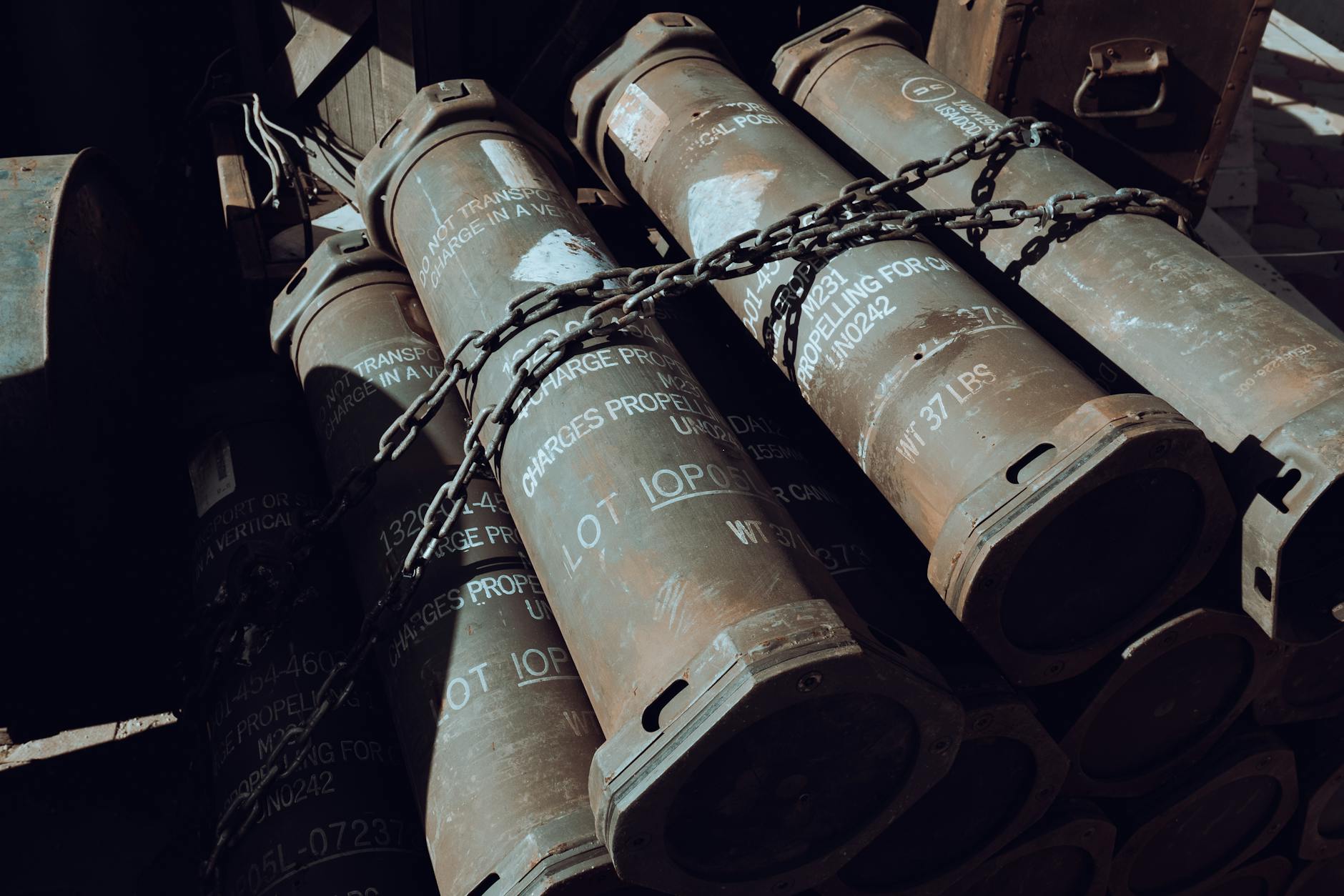
On June 22, 2025, the United States launched Operation Midnight Hammer, striking three Iranian nuclear facilities — Fordow, Natanz, and Isfahan — using 14 GBU-57A/B Massive Ordnance Penetrator “bunker buster” bombs delivered by B-2 stealth bombers, supplemented by Tomahawk cruise missiles. The Pentagon stated the operation set Iran’s nuclear program back one to two years. The estimated cost of the operation ran between $4.8 and $7.2 billion. Compare that figure to the sanctions relief debate. Even if Iran accessed only $30 billion in unfrozen assets and directed a fraction toward nuclear and missile infrastructure, the U.S.
is now spending billions to undo the results. The GBU-57 alone costs approximately $3.5 million per bomb, and 14 were dropped in a single operation. Tomahawk cruise missiles run about $2 million each. These are expensive tools being used to destroy facilities that were, at least in theory, supposed to be kept in check by diplomatic means under the JCPOA. Iran responded to Operation Midnight Hammer by officially announcing the termination of the JCPOA on October 18, 2025 — a largely symbolic move, since the deal had been functionally dead since the Trump administration’s first withdrawal in 2018. But the formal termination closed the book on any pretense that the diplomatic framework still existed, setting the stage for the far larger military confrontation that followed.
Operation Epic Fury — The Largest U.S.-Israel Joint Strike on Iran
On February 28, 2026, the United States and Israel launched Operation Epic Fury (also called Roaring Lion), a coordinated joint attack on Iran that dwarfed Midnight Hammer in scope. In the first 48 hours alone, over 1,250 targets were struck, including IRGC headquarters, command and control centers, ballistic missile sites, Iranian navy vessels, and communications infrastructure. By March 1, approximately 2,000 total strikes had been conducted. The operation included the largest B-2 operational strike in U.S. history — 14 GBU-57 Massive Ordnance Penetrators dropped on the underground nuclear facilities at Fordow and Natanz. An Iranian Jamaran-class corvette was also sunk.
The sheer scale of the operation reflects just how deeply Iran had embedded its military infrastructure over the preceding decade. The human cost, while far lower than the material destruction, is not zero. Three U.S. service members were killed during Operation Epic Fury, bringing the total to six American fatalities since the start of the conflict. These losses are a reminder that the debate over the JCPOA is not merely academic. The question of whether sanctions relief funded the weapons America is now destroying has a body count attached to it, and that reality should discipline the conversation on all sides.

The Taxpayer Math — Sanctions Relief Versus Military Costs
The bitter arithmetic is straightforward enough to state, even if its implications are contested. Iran accessed somewhere between $30 billion and $50 billion in unfrozen assets under the JCPOA. The U.S. has now spent an estimated $4.8–$7.2 billion on Operation Midnight Hammer alone, with Operation Epic Fury’s costs likely exceeding that figure significantly given its scale of 2,000 strikes across 48 hours.
📨 Get Free Accountability Coverage Alerts
Free · No spam · Unsubscribe anytime
When you add the ongoing costs of naval deployments, air operations, intelligence assets, and the long-term expense of replacing expended munitions, the total U.S. expenditure on degrading Iranian military capability will almost certainly reach the tens of billions. Critics frame this as paying twice — once by releasing Iran’s money, and again by spending American tax dollars to destroy what that money built. Defenders argue the alternative was worse: without the JCPOA, Iran might have achieved nuclear breakout capability years ago, making the current military operations far more dangerous or even impossible without risking nuclear retaliation.
What Comes Next — The Post-JCPOA Security Landscape
The JCPOA is dead, and no serious diplomatic framework has replaced it. Iran’s nuclear program has been set back by military strikes, but the knowledge and expertise that built those centrifuges and enrichment facilities still exist. History suggests that bombed nuclear programs — from Iraq’s Osirak reactor in 1981 to Syria’s Al Kibar facility in 2007 — can motivate regimes to redouble their efforts rather than abandon them.
The forward-looking question is whether the United States has a strategy beyond periodic military strikes to prevent Iran from rebuilding. Operations Midnight Hammer and Epic Fury demonstrated overwhelming conventional capability, but they also demonstrated the cost of relying on military force as the primary tool of nonproliferation. Whether one supported or opposed the JCPOA, the current trajectory — cycles of Iranian buildup followed by American military strikes — is expensive, dangerous, and lacks a clear endpoint. The $100 billion debate matters less than the question no one in Washington seems eager to answer: what is the long-term plan?.
Conclusion
The claim that $100 billion in JCPOA sanctions relief funded the weapons America is now destroying is a simplification of a more complicated reality. Iran’s accessible funds were likely $30–$50 billion, not $100 billion. The money was Iran’s own frozen assets, not American taxpayer funds. And Iran’s proxy spending and missile development predated the deal. But the JCPOA undeniably failed to constrain Iran’s conventional military buildup, and the regime clearly used whatever financial relief it received to strengthen the very capabilities the U.S. military is now expending billions to neutralize.
The costs are mounting on both sides. Six American service members have been killed. Thousands of Iranian military targets have been destroyed. Billions of dollars in American munitions have been expended. The debate over who is responsible for this situation — the architects of the JCPOA, the administration that withdrew from it, or the Iranian regime that exploited every gap in both approaches — will continue long after the current operations end. What should concern every American taxpayer and voter is not relitigating 2015, but demanding a coherent strategy for what comes after the bombs stop falling.
Frequently Asked Questions
Was the $100 billion in JCPOA sanctions relief U.S. taxpayer money?
No. The frozen assets were Iran’s own money — oil revenues and other funds held in foreign banks that had been frozen by international sanctions. The JCPOA lifted the freeze, allowing Iran to access its own assets. No U.S. government funds were transferred to Iran as part of the nuclear deal.
How much money did Iran actually access under the JCPOA?
Estimates vary significantly. While total frozen reserves were $100–$120 billion on paper, Iranian Central Bank officials said only $29–$32 billion was immediately accessible. The U.S. Treasury estimated Iran would end up with about $50 billion after existing obligations. Roughly $22 billion was tied up as collateral for Chinese trade projects.
How much does Iran spend on proxy groups annually?
The Foundation for Defense of Democracies estimated Iran spent $16 billion annually on proxy groups and rogue regimes. The largest recipient was the Assad regime in Syria (roughly $6 billion), followed by Hezbollah ($700 million–$1 billion), the Houthis ($100–$200 million), and Hamas ($70–$100 million).
What is Operation Epic Fury?
Operation Epic Fury (also called Roaring Lion) was a joint U.S.-Israel military operation launched on February 28, 2026, targeting Iranian military infrastructure. Over 2,000 strikes were conducted in approximately 48 hours, hitting IRGC facilities, missile sites, naval vessels, and communications networks. Three U.S. service members were killed during the operation.
How many ballistic missiles does Iran have?
By U.S. military estimates, Iran possesses the Middle East’s largest ballistic missile arsenal with over 3,000 missiles. The JCPOA did not restrict Iran’s missile development, which critics consider the deal’s most significant shortcoming.
Did the JCPOA prevent Iran from developing nuclear weapons?
While the JCPOA was in effect and being observed, it successfully limited Iran’s enrichment capacity and extended the estimated breakout time to produce enough fissile material for a weapon. However, after the U.S. withdrawal in 2018 and subsequent Iranian violations, those constraints eroded. Iran formally terminated the JCPOA on October 18, 2025, following the U.S. strikes on its nuclear facilities.
You Might Also Like
- The Iran War Creates New Demand for the Same Weapons America Was Shipping to Ukraine
- Wall Street’s Biggest Winners and Losers From the Iran War
- U.S. Weapons Stockpiles Were Already Strained From Sending Aid to Ukraine