
Operation Epic Fury, launched on February 28, 2026, will be studied by historians for generations because it represents one of the most consequential unilateral military actions of the 21st century — a massive joint U.S.-Israeli air campaign against Iran that began just two days after what Oman called “a major breakthrough” in nuclear negotiations. In its first 12 hours alone, nearly 900 strikes hit targets across Iran. Within 48 hours, roughly 2,000 strikes had been conducted across 24 of Iran’s 31 provinces. The operation killed Supreme Leader Ali Khamenei, destroyed over 50 Iranian naval vessels, and as of Day 11, has left more than 1,000 people dead, including at least 160 killed when a missile struck a girls’ school adjacent to a naval base in Minab, near Bandar Abbas.
The speed and scale of the campaign, combined with its diplomatic timing, make it unlike anything in recent American military history. Seven U.S. service members have been killed and approximately 140 wounded in just 10 days of operations. President Trump has declared the war “nearly complete,” while Secretary of Defense Pete Hegseth has stated that the U.S. “will not relent until the enemy is totally and decisively defeated.” This article examines the diplomatic collapse that preceded the strikes, the military dimensions of the campaign, the human cost on all sides, the legal and constitutional questions it raises, and what the long-term consequences may look like for the region and for American foreign policy.
Table of Contents
- What Led to Operation Epic Fury and Why Will Historians Question the Timing?
- The Scale of Military Force and Its Unprecedented Nature
- The Human Cost on Both Sides
- Five Stated Objectives and the Challenge of Measuring Success
- Constitutional and Legal Questions That Will Define the Debate
- Regional Consequences and the Proxy Network Problem
- What Comes After the Bombs Stop Falling
- Conclusion
- Frequently Asked Questions
What Led to Operation Epic Fury and Why Will Historians Question the Timing?
The most damning fact pattern historians will scrutinize is the diplomatic timeline. On February 6, U.S. envoys Steve Witkoff and Jared Kushner sat across from Iranian Foreign Minister Abbas Araghchi in Muscat, Oman for a first round of nuclear talks. On February 17, a second round took place in Geneva, where both sides agreed to draft deals. On February 26 — just two days before the bombs started falling — a third round in Geneva produced what Oman described as Iran’s agreement to never stockpile enriched uranium.
Then, on February 28, operation Epic Fury launched. Israel’s parallel operation, codenamed Roaring Lion, commenced simultaneously. The question that will haunt this chapter of American foreign policy is straightforward: Were the negotiations ever genuine, or were they a diplomatic screen to buy time for military positioning? If Iran had genuinely agreed to halt uranium stockpiling — the ostensible core demand — the decision to launch a war days later will require an explanation that goes beyond the stated objectives. By comparison, the 2003 Iraq invasion at least followed months of public debate over UN inspections and Security Council resolutions. Here, the pivot from breakthrough talks to massive bombardment happened in 48 hours, with no public congressional debate in between.

The Scale of Military Force and Its Unprecedented Nature
The numbers associated with Operation Epic Fury are staggering even by the standards of modern American military campaigns. Over 5,000 targets have been struck across Iran, including leadership compounds, nuclear infrastructure, ballistic missile production sites, naval assets, military installations, and dual-use research facilities in Tehran, Isfahan, Qom, Karaj, and Kermanshah. More than 50 Iranian naval vessels were destroyed, effectively annihilating Iran’s naval capacity as President Trump stated he intended. The campaign achieved rapid tactical results.
Iranian ballistic missile attacks dropped 90 percent from Day 1 levels. One-way attack drone strikes fell 83 percent. The killing of Supreme Leader Ali Khamenei — along with Iran’s defense minister, army chief of staff, and irgc commander-in-chief, all killed in a strike on a defense council meeting — decapitated Iran’s military and political leadership in a single blow. However, if the stated goal was to prevent nuclear proliferation, historians will ask whether a diplomatic agreement — which appeared within reach — might have achieved the same result without the destruction and destabilization that follows regime decapitation. Tactical success and strategic wisdom are not the same thing, and the distinction matters enormously when the consequences will unfold over decades.
The Human Cost on Both Sides
The initial strikes killed over 160 people when a missile hit a girls’ school adjacent to a naval base in Minab, near Bandar Abbas. As of March 10, attacks have left more than 1,000 people dead and hundreds of thousands of travelers stranded across the country. These are the figures available just 11 days into the operation, and the full civilian toll remains unknown. On the American side, the cost has been real and personal. Six U.S. soldiers were killed on March 1 when an Iranian one-way attack drone struck a makeshift operations center at a civilian port in Kuwait.
A seventh, Sgt. Benjamin N. Pennington, 26, of Glendale, Kentucky, serving with the 1st Space Battalion, 1st Space Brigade out of Fort Carson, Colorado, was wounded in the same period at Prince Sultan Air Base in Saudi Arabia and died on March 8. NYPD Officer Sorffly Davius also died in Kuwait during the operation. Approximately 140 troops have been wounded in 10 days, according to Pentagon figures released on March 10. Each of these casualties has a family, a community, and a story that will be told long after the policy arguments have been settled.

Five Stated Objectives and the Challenge of Measuring Success
President Trump laid out five objectives for Operation Epic Fury on TruthSocial: preventing Iran from acquiring a nuclear weapon, destroying its missile arsenal and production sites, degrading its proxy networks, annihilating its navy, and achieving regime change from within. The first four are concrete military objectives with measurable outcomes. The fifth is something else entirely. The destruction of naval vessels and the 90 percent reduction in ballistic missile capacity suggest objectives two and four are being met in the short term.
However, the comparison to draw is between destruction and lasting disarmament. The United States destroyed much of Iraq’s military infrastructure in 2003 and Libya’s in 2011; in neither case did the destruction produce the stable, cooperative governments that the operations envisioned. The tradeoff is stark: military force can degrade capability quickly, but the political outcomes — especially the desired “regime change from within” — depend on factors that bombs cannot control. Iran is a country of nearly 90 million people with a complex political landscape. Whether its population rallies around a successor regime or fractures into instability will determine whether historians judge this operation as decisive or catastrophic.
Constitutional and Legal Questions That Will Define the Debate
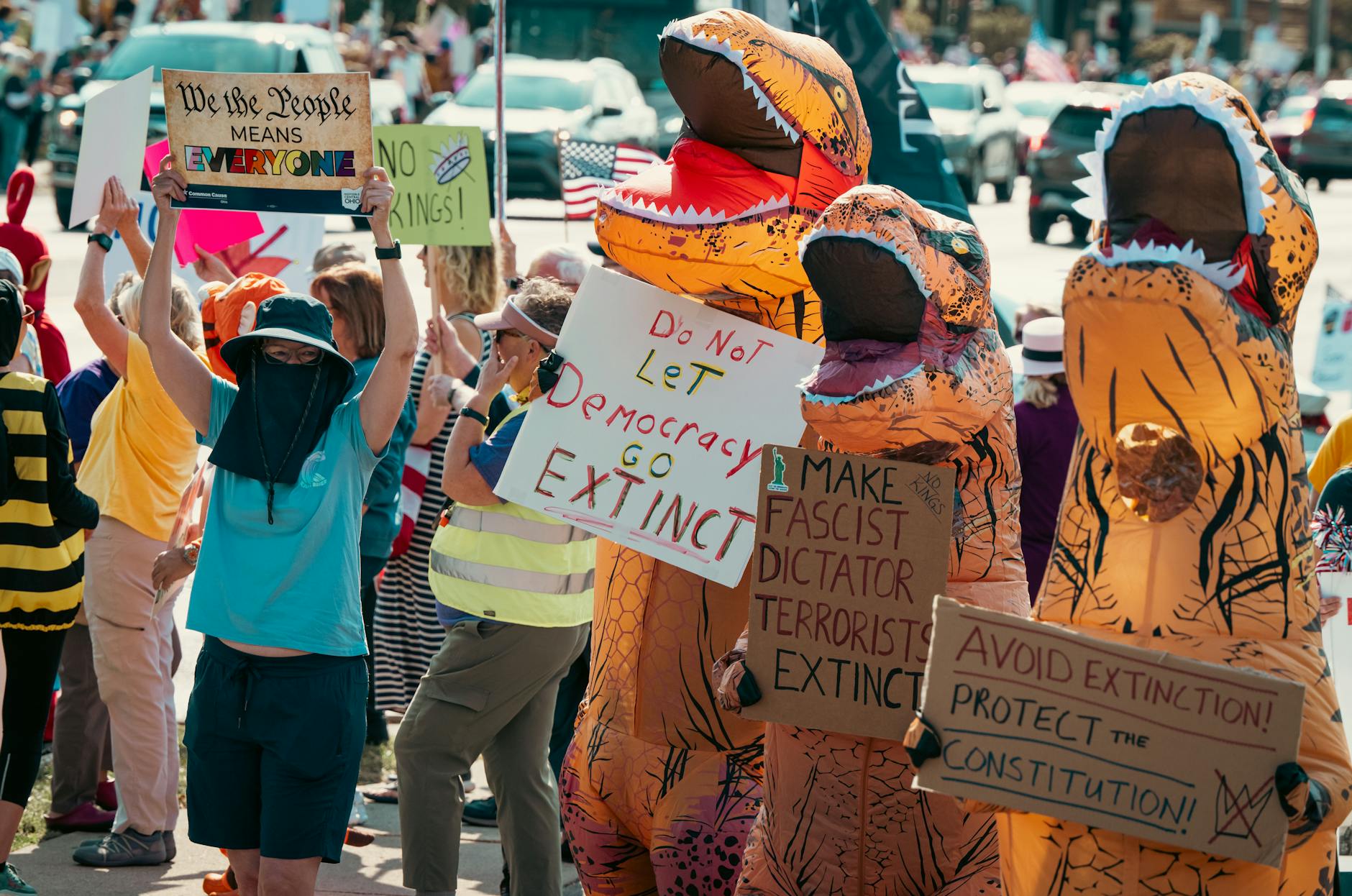
One of the most significant dimensions of Operation Epic Fury for American governance is the question of congressional authorization. A military campaign of this scale — thousands of strikes, thousands of casualties, regime decapitation — traditionally falls under the kind of action the War Powers Act was designed to address. As of Day 11, there has been no formal declaration of war and no Authorization for Use of Military Force specific to Iran passed by Congress. This matters for a practical reason beyond constitutional theory: sustained military campaigns require sustained public support, and public support is more durable when it is built through democratic debate rather than executive fiat.
The limitation of unilateral executive action is that it concentrates both the decision and the accountability in a single branch. If the operation achieves all five stated objectives cleanly, few will complain. But if complications arise — a prolonged occupation, a regional escalation, a humanitarian crisis — the absence of congressional buy-in will become a serious political vulnerability. History suggests complications are more common than clean outcomes.
Regional Consequences and the Proxy Network Problem
One of Trump’s stated objectives was to degrade Iran’s proxy networks, which include Hezbollah in Lebanon, various militia groups in Iraq and Syria, and the Houthis in Yemen. The decapitation of Iran’s senior military leadership, particularly the IRGC commander-in-chief, presumably disrupts the command-and-control infrastructure that supports these groups. However, proxy networks are by definition decentralized.
📨 Get Free Accountability Coverage Alerts
Free · No spam · Unsubscribe anytime
Hezbollah, for example, has deep roots in Lebanese politics and society that exist independently of Iranian direction. The killing of Qasem Soleimani in 2020 disrupted but did not dismantle Iran’s proxy apparatus, and there is no guarantee that a far larger campaign will produce a fundamentally different result. The risk is that these groups, cut loose from central control, become less predictable rather than less dangerous.
What Comes After the Bombs Stop Falling
President Trump said on March 9-10 that the war is “nearly complete.” If that is true, the next phase will matter more than the bombing campaign itself. Iran without Khamenei, without its defense minister, without its army chief of staff, and without its IRGC commander is a country in a leadership vacuum. Whether that vacuum is filled by reformists, hardliners, military remnants, or factional chaos will shape the Middle East for a generation.
The United States has learned — or should have learned — from Iraq and Libya that removing a regime is far simpler than building what comes next. Historians will study Operation Epic Fury not primarily for its military execution, which by the Pentagon’s metrics has been effective, but for what followed. The consequences of those 5,000 strikes will unfold over years and decades, and the judgment of history will rest on outcomes that no one can yet predict.
Conclusion
Operation Epic Fury is an event of genuine historical magnitude. A joint U.S.-Israeli military campaign that launched nearly 900 strikes in its first 12 hours, killed a sitting supreme leader, destroyed a nation’s navy, and began two days after a reported diplomatic breakthrough will be analyzed, debated, and argued over for generations. The tactical achievements are measurable and significant. The strategic, political, and humanitarian consequences are not yet knowable.
What is knowable right now is the cost already paid: seven American service members dead, approximately 140 wounded, over 1,000 Iranians killed including the students and staff of a girls’ school in Minab, and hundreds of thousands of people displaced or stranded. These are not abstractions. They are the down payment on a policy choice whose full price remains to be calculated. For Americans watching this unfold, the most important thing to understand is that the decisions being made this week will shape the world their children inherit — and that informed, engaged citizenship has never mattered more.
Frequently Asked Questions
When did Operation Epic Fury begin?
Operation Epic Fury launched on February 28, 2026. Israel’s parallel campaign, Operation Roaring Lion, began simultaneously.
How many U.S. service members have been killed or wounded?
As of March 10, 2026, seven U.S. service members have been killed in action and approximately 140 have been wounded in 10 days of operations, according to the Pentagon.
Was Congress consulted before the operation began?
This remains a significant open question. No formal declaration of war or Iran-specific Authorization for Use of Military Force has been publicly reported as of March 10, 2026.
What happened to Iran’s leadership?
Supreme Leader Ali Khamenei was killed when his compound was destroyed. Iran’s defense minister, army chief of staff, and IRGC commander-in-chief were also killed in a separate strike that hit a defense council meeting.
Were diplomatic negotiations underway before the strikes?
Yes. Three rounds of nuclear talks occurred between February 6 and February 26, 2026, in Muscat, Oman and Geneva. Oman reported that Iran had agreed to never stockpile enriched uranium at the third round, just two days before the operation launched.
Is the operation still ongoing?
As of March 10, 2026 (Day 11), yes. President Trump has said the war is “nearly complete,” while Secretary of Defense Pete Hegseth stated the U.S. “will not relent until the enemy is totally and decisively defeated.”
You Might Also Like
- Whether Operation Epic Fury Was Worth It Depends Entirely on What Happens Next
- The Geopolitical Fallout From Epic Fury Will Last Far Longer Than the Bombing
- The 1979 Hostage Crisis Started It All — Here’s How We Got to Operation Epic Fury in 2026