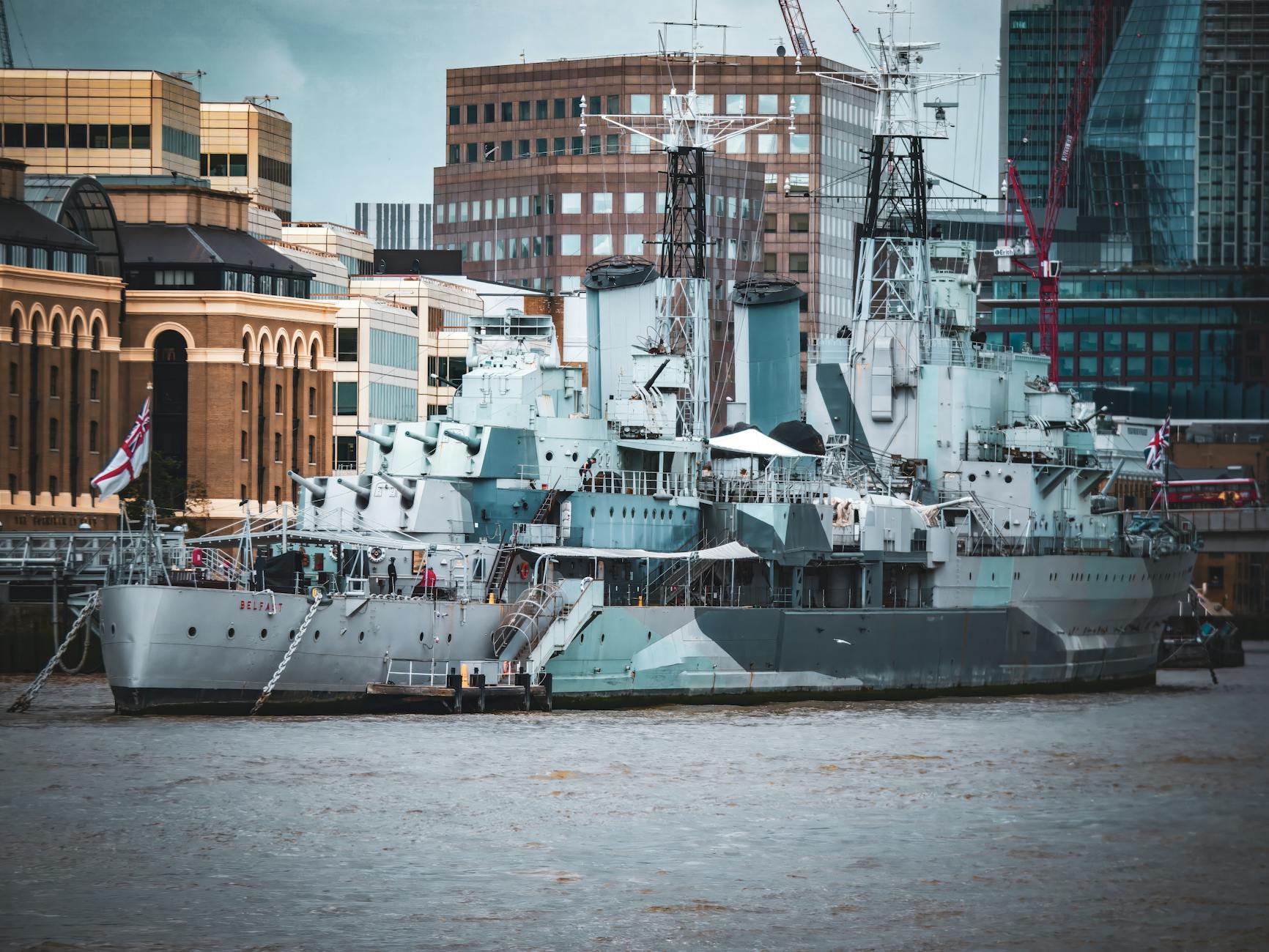
President Donald Trump claimed in late February 2026 that Iran’s naval headquarters had been “largely destroyed” as part of the United States’ military strikes against the country, a statement that immediately drew scrutiny from military analysts, journalists, and foreign policy experts. The strikes, which Trump authorized in response to what the administration described as escalating Iranian provocations in the Persian Gulf, targeted multiple military installations across Iran’s southern coastline. Independent satellite imagery and reporting from the region have partially corroborated damage to Iranian naval facilities near Bandar Abbas, though the full extent of the destruction remains difficult to verify given restricted media access to the area.
Trump made the claim during a press conference at the White House, adding that the operation demonstrated American military superiority and would serve as a deterrent against future Iranian aggression. Pentagon officials offered more measured language, stating that “significant damage” had been inflicted on Iranian naval command-and-control infrastructure without confirming the “largely destroyed” characterization. This gap between presidential rhetoric and official military assessments is worth examining closely, particularly given the broader geopolitical stakes involved. This article breaks down what we know about the strikes, the credibility of Trump’s claim, the strategic implications, and what this means for U.S.-Iran relations going forward.
Table of Contents
- What Did Trump Say About Iran’s Naval Headquarters Being “Largely Destroyed”?
- How Verified Is the Damage to Iranian Naval Facilities?
- What Is the Strategic Significance of Bandar Abbas for Iran’s Navy?
- How Does This Compare to Previous U.S. Military Claims About Strike Damage?
- What Are the Risks of Escalation Following These Strikes?
- What Has Been the International Response?
- What Comes Next for U.S.-Iran Relations?
- Conclusion
- Frequently Asked Questions
What Did Trump Say About Iran’s Naval Headquarters Being “Largely Destroyed”?
Trump’s specific language during the February 2026 press conference was that Iran’s naval headquarters had been “largely destroyed, totally wiped out in many cases,” a characteristically superlative framing that blended broad claims with hedging qualifiers. He pointed to the strikes as evidence that the U.S. military could neutralize Iranian threats quickly and decisively, without the need for a prolonged ground campaign. He also suggested that the damage would set back Iran’s naval capabilities by “many, many years.” The headquarters in question appears to be the Iranian Navy’s southern command base near Bandar Abbas, which serves as a critical hub for Iran’s conventional naval forces operating in the Strait of Hormuz. This is distinct from the Islamic Revolutionary Guard Corps Navy (IRGCN), which operates its own parallel fleet and command structure.
The distinction matters because the IRGCN, not the regular Iranian Navy, is typically responsible for the fast-boat swarming tactics and mine-laying operations that most directly threaten commercial shipping and U.S. naval vessels in the region. Whether IRGCN facilities were also struck is something the administration has been less specific about. Comparing Trump’s language to verified information reveals a familiar pattern. During previous military actions, including the 2020 strike that killed IRGC General Qasem Soleimani, Trump’s public statements ran ahead of what military and intelligence officials were willing to confirm on the record. In this case, commercial satellite imagery analyzed by firms like Planet Labs and Maxar Technologies showed substantial damage to port infrastructure and what appeared to be administrative buildings at the Bandar Abbas naval complex, but the images alone cannot confirm whether the facilities constituted a “headquarters” in the operational sense or whether they were largely evacuated before the strikes.

How Verified Is the Damage to Iranian Naval Facilities?
Independent verification of military strikes in iran is notoriously difficult. Iran restricts foreign press access to military installations, and the government has a long history of both downplaying and exaggerating damage depending on the political narrative it wants to project. In this case, iranian state media initially denied any significant damage, then shifted to acknowledging strikes while claiming that air defenses had intercepted the majority of incoming missiles. Neither account can be taken at face value. What open-source intelligence analysts have been able to confirm is that multiple structures at or near the Bandar Abbas naval base sustained visible damage, including what appear to be docking facilities, warehouse-type buildings, and at least one structure consistent with a command-and-control center.
However, “largely destroyed” is a characterization that implies the facility has been rendered non-functional, and that is a much harder claim to substantiate from satellite imagery alone. A building can be visibly damaged from above while its underground or hardened components remain intact. Iran has invested heavily in underground military infrastructure precisely to survive this kind of strike. The limitation here is significant: even the best commercial satellite imagery has a resolution floor, and it cannot reveal what is happening below ground or inside reinforced structures. Military analysts from the Center for Strategic and International Studies (CSIS) noted that Iran’s naval command functions are likely distributed across multiple sites, meaning that destroying one headquarters, even completely, would not necessarily cripple the navy’s ability to coordinate operations. If Iran followed standard military redundancy practices, backup command facilities would have been activated within hours.
What Is the Strategic Significance of Bandar Abbas for Iran’s Navy?
Bandar Abbas is the most important naval port in Iran, situated directly on the Strait of Hormuz through which roughly twenty percent of the world’s oil supply passes daily. The base hosts a significant portion of Iran’s conventional naval fleet, including its frigates, corvettes, and submarine fleet. Damaging this facility is strategically meaningful regardless of whether “largely destroyed” is precisely accurate. The port also serves as a logistics and maintenance hub. Iran’s naval vessels, many of which are aging and require frequent repair, depend on the drydock and maintenance facilities at Bandar Abbas. If those facilities were significantly damaged, Iran’s ability to keep its conventional fleet operational would be degraded over time, even if the ships themselves were moved before the strikes. For comparison, when the U.S.
struck Iraqi naval infrastructure during the 1991 Gulf War, the immediate destruction of vessels mattered less than the long-term degradation of Iraq’s ability to maintain and deploy its remaining fleet. However, Iran’s most asymmetric naval threat does not come from the conventional ships based at Bandar Abbas. It comes from the IRGCN’s fleet of fast attack craft, midget submarines, and anti-ship missile batteries distributed along the coastline and on islands in the Persian Gulf. These assets are deliberately dispersed and concealed to survive exactly this type of strike. Destroying the conventional navy’s headquarters, while symbolically and strategically important, does not eliminate the threat that most concerns U.S. naval commanders operating in the region.

How Does This Compare to Previous U.S. Military Claims About Strike Damage?
There is a well-documented history of U.S. administrations overstating the effectiveness of military strikes in public communications, a tendency that is not unique to any one president but has been a recurring feature of wartime rhetoric. During the 2003 invasion of Iraq, the “shock and awe” campaign was presented as having devastated Iraqi command structures, yet many facilities turned out to be empty or had already been abandoned. Similarly, during the 2017 cruise missile strike on Syria’s Shayrat airbase, Trump declared the mission a success, but the base was partially operational again within hours. The tradeoff in making bold public claims about strike effectiveness is straightforward.
On one hand, projecting decisive military success can serve deterrence goals and rally domestic political support. On the other hand, if the claims are later shown to be exaggerated, it undermines credibility with allies, emboldens adversaries who can point to the gap between rhetoric and reality, and erodes public trust in government statements about military operations. In the current situation, the Pentagon’s decision to use more cautious language than the president suggests an awareness of this dynamic. Defense Secretary statements referred to “degrading” Iran’s naval capabilities rather than destroying them, a word choice that leaves room for the reality that military infrastructure can often be repaired or replaced. The divergence between presidential rhetoric and Pentagon assessments is itself a data point worth tracking as more information becomes available.
What Are the Risks of Escalation Following These Strikes?
The most immediate concern following strikes of this magnitude is the risk of escalatory response from Iran. Iran has multiple avenues for retaliation that do not require a functioning naval headquarters: proxy forces across the Middle East, ballistic missile capabilities, cyber operations, and the ability to disrupt oil shipping through the Strait of Hormuz using mines and shore-based anti-ship missiles. The destruction of naval facilities could, paradoxically, increase the likelihood that Iran relies on these asymmetric capabilities rather than conventional naval operations. There is a historical warning here. After the U.S. struck Iranian naval assets during Operation Praying Mantis in 1988, Iran shifted its strategy away from conventional naval confrontation and toward the asymmetric approach it employs today.
Destroying more conventional infrastructure could accelerate this shift further, pushing Iran to rely even more heavily on the IRGCN’s guerrilla-style tactics, proxy operations through groups like the Houthis, and cyber attacks against U.S. and allied infrastructure. The limitation of military strikes as a policy tool is that they address the symptom rather than the underlying strategic competition. Iran’s naval buildup is driven by its perception of vulnerability to U.S. power projection in the Persian Gulf. Destroying facilities does not change this calculus; it may reinforce it. Analysts at the International Crisis Group have warned that without a diplomatic off-ramp, the cycle of provocation and retaliation could escalate beyond either side’s intentions.
📨 Get Free Accountability Coverage Alerts
Free · No spam · Unsubscribe anytime

What Has Been the International Response?
The international response has been divided along predictable lines. U.S. allies in the Gulf, particularly Saudi Arabia and the United Arab Emirates, offered tacit support for the strikes while publicly calling for de-escalation. European allies, including France and Germany, expressed concern about the proportionality of the response and urged diplomatic engagement.
Russia and China condemned the strikes and called for an emergency session of the United Nations Security Council. The UN Secretary-General called for restraint from all parties, a formulation that effectively treats the striker and the struck as equivalent actors. Oil markets reacted sharply in the immediate aftermath, with Brent crude prices spiking above $95 per barrel before settling somewhat as it became clear that oil shipping through the Strait had not been physically disrupted. The price volatility itself illustrates one of the structural risks of military action near the world’s most critical oil chokepoint: even successful strikes that achieve their military objectives can impose significant economic costs on the global economy, including on the United States.
What Comes Next for U.S.-Iran Relations?
The trajectory of U.S.-Iran relations following these strikes depends heavily on whether either side chooses to pursue a diplomatic channel or continues the cycle of escalation. The Trump administration has signaled that it views the strikes as a one-time response to specific provocations rather than the opening of a sustained military campaign, but this framing depends on Iran’s response. If Iran retaliates in a way that causes American casualties or significant disruption to oil shipping, pressure for further strikes will mount. The broader question is whether the destruction of naval infrastructure changes the fundamental dynamics of the U.S.-Iran relationship.
History suggests it will not. Iran has repeatedly demonstrated the ability to rebuild military capabilities after strikes, and its strategic posture in the region is driven by factors that military action alone cannot address. For Americans watching these events, the most important thing to track is not whether a particular building was “largely destroyed” but whether the strikes bring the region closer to stability or further from it. The answer to that question will take months, not days, to become clear.
Conclusion
Trump’s claim that Iran’s naval headquarters was “largely destroyed” appears to be at least partially supported by satellite imagery showing significant damage to facilities near Bandar Abbas, but the characterization likely overstates the operational impact of the strikes. The gap between presidential rhetoric and verified damage assessments is consistent with patterns seen in previous administrations and previous military operations. What is clear is that real damage was inflicted on Iranian naval infrastructure, though the degree to which this degrades Iran’s actual military capabilities, particularly its asymmetric threat posture, remains an open question.
The strikes and their aftermath underscore the importance of skeptical, evidence-based evaluation of government claims about military operations. Whether you support or oppose the decision to strike, the factual question of what was actually destroyed deserves a more precise answer than political rhetoric typically provides. As more information becomes available through independent reporting and satellite analysis, the public record will either validate or complicate the administration’s claims. In the meantime, the focus should be on whether these strikes contribute to a more stable security environment in the Persian Gulf or set the stage for further escalation.
Frequently Asked Questions
Did the U.S. actually destroy Iran’s naval headquarters?
Satellite imagery confirms significant damage to naval facilities near Bandar Abbas, but independent analysts have not confirmed the “largely destroyed” characterization. The full extent of damage, particularly to underground or hardened facilities, cannot be determined from publicly available information.
What is the Strait of Hormuz and why does it matter?
The Strait of Hormuz is a narrow waterway between Iran and Oman through which approximately twenty percent of the world’s oil supply is transported daily. Any military conflict near the Strait has the potential to disrupt global energy markets, which is why strikes on nearby naval facilities attract intense international attention.
Could Iran retaliate for these strikes?
Iran has multiple options for retaliation, including ballistic missiles, proxy forces across the Middle East, cyber attacks, and disruption of shipping through the Strait of Hormuz. Whether and how Iran retaliates will be a critical factor in determining whether the situation escalates further.
How does this affect oil prices?
Oil prices spiked immediately following reports of the strikes, with Brent crude temporarily rising above $95 per barrel. Prices moderated somewhat after it became clear that shipping through the Strait had not been physically disrupted, but sustained instability in the region could keep prices elevated.
Has the U.S. struck Iranian military targets before?
Yes. Notable precedents include the 1988 Operation Praying Mantis, which destroyed Iranian naval vessels and oil platforms, and the January 2020 drone strike that killed IRGC General Qasem Soleimani. Each prior engagement was followed by a period of heightened tensions before an uneasy equilibrium was restored.
You Might Also Like
- Trump Says 9 Iranian Naval Ships Destroyed — “They Will Soon Be Floating at the Bottom of the Sea”
- U.S. Ambassador Waltz at the UN: “President Trump Has Met the Moment”
- Trump Warns Iran: Hit Us Again and You’ll Face “A Force That Has Never Been Seen Before”