Al Udeid Air Base, the largest US military installation in the Middle East, was struck by two Iranian missiles and a drone on the night of February 28, 2026, as part of a massive retaliatory barrage that saw 65 missiles fired toward Qatar alone. The attack, launched by Iran’s Islamic Revolutionary Guard Corps in response to joint US-Israeli military operations against Iranian targets, damaged a clinic on the base and targeted an early warning radar system. Remarkably, no US or coalition military casualties were reported from the direct strikes, though 16 Qatari civilians were injured by missile shrapnel and debris scattered across the country.
The strike on Al Udeid was not an isolated incident. It was one piece of a coordinated IRGC offensive targeting American military facilities across the Persian Gulf, including Al-Salem Air Base in Kuwait, Al-Dhafra Air Base in the UAE, and the US Navy Fifth Fleet headquarters in Bahrain. Qatar’s Ministry of Foreign Affairs condemned the attack as “reckless and irresponsible” and a “flagrant violation” of Qatari sovereignty. This article examines what happened at Al Udeid, how Qatar’s air defenses performed, what the broader regional implications look like, and why defense analysts had been warning about this exact scenario for months.
Table of Contents
- What Happened When Al Udeid Air Base Took Iranian Missile Fire?
- How Effective Were Qatar’s Missile Defenses Against the Iranian Barrage?
- The Broader IRGC Offensive Across the Gulf
- Why Analysts Had Already Warned About Al Udeid’s Vulnerability
- Qatar’s Diplomatic Tightrope After the Strikes
- Airspace Closures and Regional Disruption
- What Comes Next for US Basing in the Gulf
- Conclusion
- Frequently Asked Questions
What Happened When Al Udeid Air Base Took Iranian Missile Fire?
Late on Friday, February 28, 2026, iran launched a salvo of ballistic missiles toward Qatar as part of a wider retaliatory campaign against US military assets in the Gulf. According to Brigadier Abdullah Khalifa Al-Muftah of the Qatari military, 66 missiles were fired at Qatar in total. Qatar’s air defenses intercepted the majority, but two missiles and one drone got through and struck Al Udeid Air Base, located roughly 20 miles southwest of Doha. One missile damaged a medical clinic on the installation.
The drone specifically targeted an early warning radar system, a tactically significant choice suggesting Iranian intelligence had mapped the base’s defensive infrastructure. The strikes continued into March 1, with Qatar intercepting additional Iranian missile waves on the second day of the offensive. The UAE, Qatar, and Kuwait all closed their airspaces during the attacks, an extraordinary measure that underscored the severity of the situation. Qatari authorities received 114 reports of shrapnel falling in various locations nationwide, and 16 civilians were injured by debris. The fact that no US military personnel were killed or wounded suggests either effective base hardening, some degree of advance warning, or both. But the physical damage to base infrastructure was real and cannot be dismissed.

How Effective Were Qatar’s Missile Defenses Against the Iranian Barrage?
Qatar’s air defense systems performed well enough to prevent catastrophic damage, intercepting the majority of the 66 missiles Iran fired at the country. That is a meaningful achievement given the volume of the attack. However, the fact that two missiles and a drone still reached Al Udeid highlights a persistent limitation of missile defense: no system is perfect, and an adversary willing to fire enough projectiles can overwhelm even advanced defenses through sheer saturation. This is the core problem defense planners have grappled with for years.
Interceptor missiles are expensive, often costing millions of dollars per round, while the offensive missiles they are designed to destroy can be produced far more cheaply. If Iran can fire 65 missiles at Qatar in a single salvo, the math becomes uncomfortable. The interceptions on day two, March 1, showed that Qatar’s defenses remained operational and continued to function under sustained pressure. But the cost-per-intercept equation and the finite stockpile of defensive munitions remain serious concerns if this type of exchange were to become prolonged. If Iran had launched a second or third wave of similar magnitude without resupply of interceptors, the results could have been substantially worse.
The Broader IRGC Offensive Across the Gulf
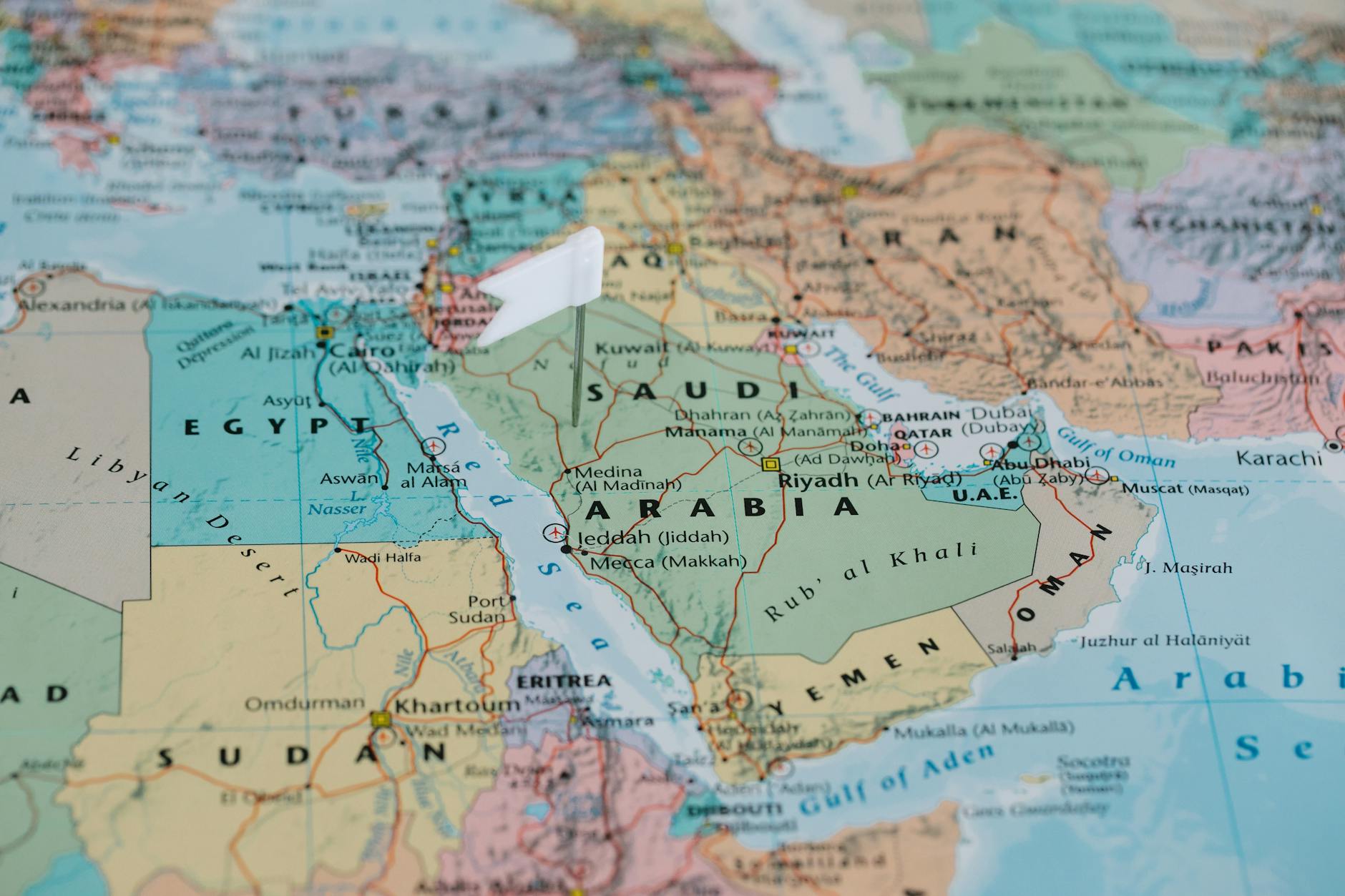
Al Udeid was not the only American military facility in Iran’s crosshairs that night. The IRGC launched a coordinated offensive targeting US installations across multiple Gulf states simultaneously. Al-Salem Air Base in Kuwait, Al-Dhafra Air Base in the UAE, and the US Navy Fifth Fleet headquarters in Bahrain all came under fire as part of what Iran framed as retaliation for joint US-Israeli strikes on iranian territory. The multi-front nature of the attack was strategically significant.
By hitting targets in four different countries at once, Iran demonstrated both the reach of its missile arsenal and its willingness to escalate beyond a single theater. Multiple Gulf states subsequently warned of retaliation against Iran, a notable shift from the cautious neutrality several of these countries had tried to maintain in earlier phases of the broader conflict. The UAE, Kuwait, and Qatar all host substantial American military infrastructure, and the attacks forced each government to publicly choose sides in a way they had previously tried to avoid. For these nations, the strikes represented an attack on their own sovereignty as much as on American assets.

Why Analysts Had Already Warned About Al Udeid’s Vulnerability
The strike on Al Udeid did not come as a complete surprise to the defense policy community. On January 16, 2026, the Foundation for Defense of Democracies published an analysis titled “It’s Time to Rethink Al Udeid Air Base,” arguing that the installation’s vulnerability to Iranian missiles needed urgent reassessment. That warning came just six weeks before the base was actually hit. The FDD’s concern was rooted in precedent. A previous Iranian attack on Al Udeid had occurred in June 2025 during a 12-day war between Iran and Israel.
The fact that Al Udeid had already been targeted once made it clear that Iran viewed the base as a legitimate and reachable target. The tradeoff for the US military is straightforward but painful: Al Udeid provides enormous logistical and operational advantages due to its location and infrastructure, but those advantages come with the reality that the base sits within range of Iranian ballistic missiles and cannot be made invulnerable. Dispersing assets to less concentrated locations would reduce vulnerability but also reduce operational efficiency. Hardening the existing base is expensive but does not eliminate the threat. Neither option is costless, and the February 28 attack proved that the risk is not theoretical.
Qatar’s Diplomatic Tightrope After the Strikes
Qatar’s response to the attack reveals the difficult position Gulf states now find themselves in. The Qatari Ministry of Foreign Affairs condemned the strikes as “reckless and irresponsible” and called them a “flagrant violation” of Qatari sovereignty, language that leaves little room for diplomatic ambiguity. But Qatar has historically tried to maintain working relationships with both the United States and Iran, positioning itself as a regional mediator. That balancing act becomes far harder when Iranian missiles are landing on Qatari soil and injuring Qatari civilians.
The 16 civilian injuries from shrapnel and the 114 reports of debris falling across the country are not just military statistics. They represent a direct threat to Qatar’s population and infrastructure that no government can publicly downplay. The warning for other Gulf states hosting US military assets is clear: neutrality may not be a viable option when a conflict escalates to this level. Hosting American forces provides security guarantees and geopolitical leverage, but it also makes a country a target in ways that diplomatic finesse cannot fully mitigate.
Airspace Closures and Regional Disruption
The simultaneous airspace closures by the UAE, Qatar, and Kuwait during the attacks had immediate consequences beyond the military sphere. Commercial aviation across one of the world’s busiest transit corridors came to a halt, affecting airlines, cargo shipments, and the millions of passengers who route through hubs like Doha’s Hamad International Airport and Dubai International Airport.
📨 Get Free Accountability Coverage Alerts
Free · No spam · Unsubscribe anytime
For a region whose economies depend heavily on aviation connectivity and global commerce, even temporary airspace closures carry substantial economic costs. The closures also served as a stark reminder of how quickly a military escalation can ripple into civilian life. Insurance premiums for airlines operating in the Gulf had already risen after the June 2025 incidents, and this latest round of hostilities is likely to push those costs higher still.
What Comes Next for US Basing in the Gulf
The February 28 attacks have accelerated a conversation that was already underway in Washington about the future of American military posture in the Persian Gulf. The concentration of US assets at a small number of large, fixed installations like Al Udeid has clear advantages in terms of logistics and command-and-control. But the Iranian strikes demonstrated that these bases are known targets with known coordinates, and that Iran possesses the capability and willingness to hit them.
Expect increased discussion of distributed basing concepts, where smaller numbers of assets are spread across more locations to reduce the impact of any single strike. The Pentagon will also likely push for additional missile defense deployments in the region and further hardening of existing facilities. Whether the political will and funding exist to make those changes at the necessary scale remains an open question, but the argument for the status quo took a serious hit when missiles struck a base clinic and a radar system on the night of February 28.
Conclusion
The Iranian missile strikes on Al Udeid Air Base mark a significant escalation in the ongoing conflict between the United States and Iran. Two missiles and a drone penetrated Qatar’s air defenses and struck the largest US military installation in the Middle East, damaging infrastructure and targeting critical defensive systems. While the absence of US military casualties is fortunate, the attack demonstrated that Iran can reach and hit American bases in the Gulf, a reality that demands a serious reassessment of how and where the US positions its forces in the region. For Qatar and other Gulf states, the strikes have forced uncomfortable choices.
The 16 civilian injuries, the 114 shrapnel reports, and the airspace closures brought the conflict directly into the daily lives of citizens who had no part in the US-Iranian confrontation. As multiple Gulf countries warn of retaliation against Iran, the risk of further escalation remains high. The defense policy community had warned this was coming. Now the question is whether the response will match the scale of the threat.
Frequently Asked Questions
Were any US military personnel killed in the Al Udeid Air Base attack?
No. Despite two missiles and a drone striking the base on February 28, 2026, no US or coalition military casualties were reported from the direct strikes on Al Udeid.
How many missiles did Iran fire at Qatar?
Iran launched 65 to 66 missiles toward Qatar as part of the retaliatory strike. Qatar’s air defenses intercepted the majority, according to Brigadier Abdullah Khalifa Al-Muftah.
What was damaged at Al Udeid Air Base?
One missile damaged a clinic on the base, and a drone targeted an early warning radar system. The full extent of damage to other base infrastructure has not been publicly detailed.
Was this the first time Iran attacked Al Udeid?
No. A previous Iranian attack on Al Udeid occurred in June 2025 during a 12-day war between Iran and Israel. The Foundation for Defense of Democracies had published an analysis in January 2026 arguing the base’s vulnerability needed to be reassessed.
Were other US military bases in the Gulf also attacked?
Yes. The IRGC offensive simultaneously targeted Al-Salem Air Base in Kuwait, Al-Dhafra Air Base in the UAE, and the US Navy Fifth Fleet headquarters in Bahrain.
How many civilians were injured in Qatar?
Sixteen civilians in Qatar were injured by missile shrapnel and debris. Qatari authorities received 114 reports of shrapnel falling in locations across the country.
You Might Also Like
- U.S. Sinks Iranian Navy Corvette at Chabahar Port
- Trump Told the Iranian People: “The Hour of Your Freedom Is at Hand”
- Trump Says 9 Iranian Naval Ships Destroyed — “They Will Soon Be Floating at the Bottom of the Sea”