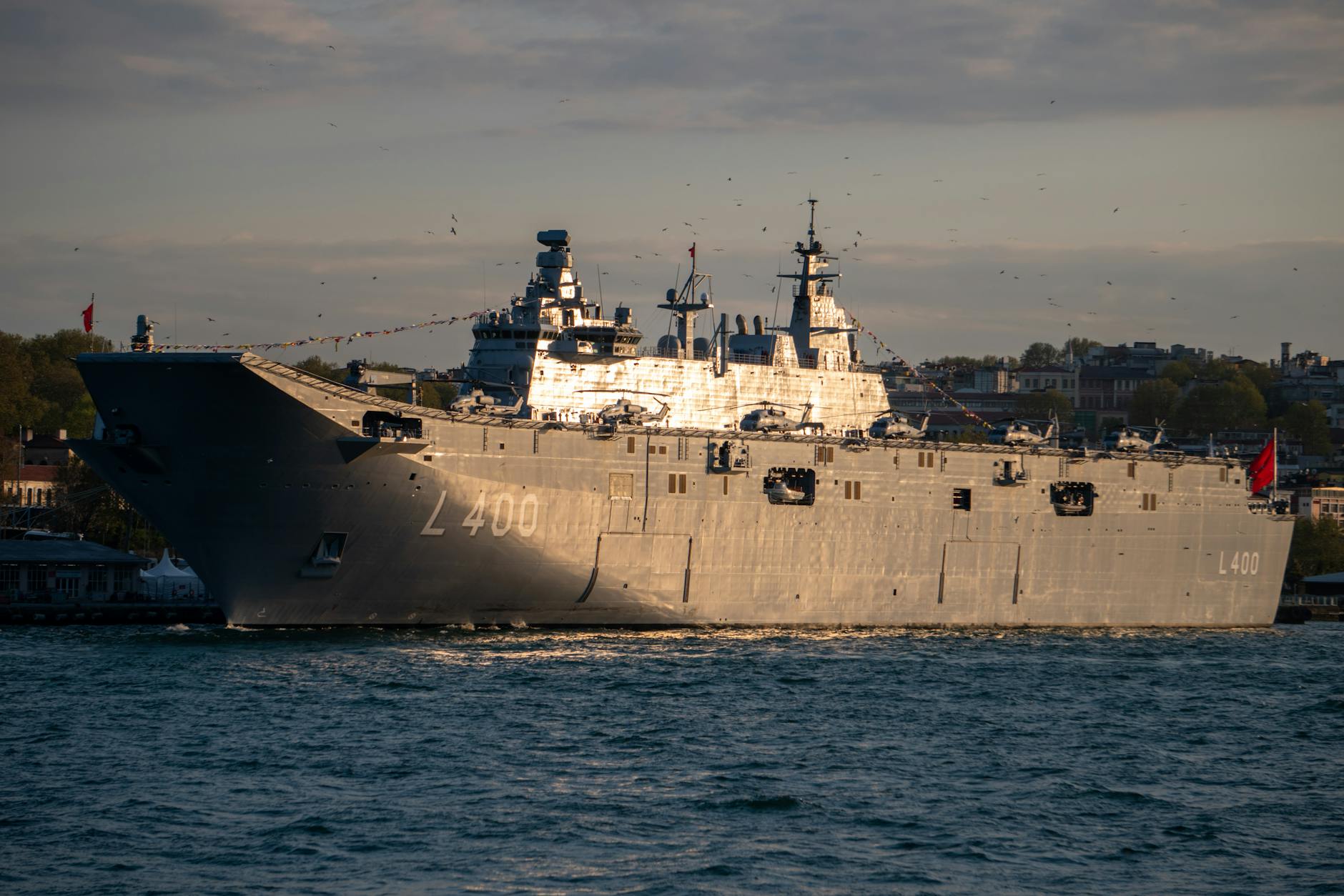
On March 1, 2026, President Trump declared that the U.S. military had “destroyed and sunk 9 Iranian Naval Ships, some of them relatively large and important,” adding ominously, “We are going after the rest — They will soon be floating at the bottom of the sea, also!” The claim came amid the second day of Operation Epic Fury, a joint U.S.-Israeli military campaign launched against Iran on February 28. However, U.S. Central Command has not confirmed the full scope of Trump’s 9-ship claim.
What CENTCOM has verified is the sinking of an Iranian Navy Jamaran-class corvette at a pier in Chabahar, on the Gulf of Oman — a significant strike against Iran’s primary domestically-built surface combatant, but a far cry from nine vessels. The gap between Trump’s social media declarations and official military confirmation matters. During an active military operation that has already cost three American service members their lives and left five seriously wounded, the public deserves accurate information — not premature victory laps. This article breaks down what has actually been confirmed by military authorities, the broader context of Operation Epic Fury, the strategic stakes in the Strait of Hormuz, and what this escalation means for global energy markets and American service members.
Table of Contents
- Did the U.S. Really Destroy 9 Iranian Naval Ships?
- What Is Operation Epic Fury and How Did It Begin?
- The Strait of Hormuz — Why It Matters to Every American
- What Has CENTCOM Actually Verified vs. What Trump Has Claimed?
- The Death of Khamenei and the Question of What Comes Next
- Impact on U.S. Military Personnel and Bases in the Region
- Where Does This Go From Here?
- Conclusion
- Frequently Asked Questions
Did the U.S. Really Destroy 9 Iranian Naval Ships?
The short answer is: we do not know. Trump’s statement, posted on social media, asserted that nine iranian naval vessels had been destroyed and sunk, with some described as “relatively large and important.” He also claimed the U.S. had “largely destroyed” Iran’s Naval Headquarters. But as of this writing, CENTCOM — the military command responsible for operations in the Middle East — has only confirmed one specific naval strike. U.S. forces struck and sank an Iranian Navy Jamaran-class corvette, also known as a Moudge-class vessel, at a pier in Chabahar.
That ship displaces roughly 1,500 tonnes and stretches about 95 meters in length — Iran’s most significant domestically-built surface combatant. This is not the first time presidential statements about military operations have outpaced official confirmation. During active operations, the fog of war makes real-time damage assessments difficult, and military leaders typically take time to verify claims before making them public. The Military Times reported Trump’s 9-ship figure while noting the absence of CENTCOM corroboration. It is entirely possible that additional Iranian vessels were struck or damaged during the broader campaign, but until the Department of Defense confirms those numbers, the claim remains unverified. The distinction between “the president said it” and “the military confirmed it” is not semantic — it is the difference between political messaging and operational fact.

What Is Operation Epic Fury and How Did It Begin?
operation Epic Fury, the joint U.S.-Israeli military campaign targeting iranian military and governmental sites, commenced at 1:15 a.m. ET on Saturday, February 28, 2026. The operation involved B-2 bombers and extended into a second day of strikes on March 1. The campaign represents the most significant direct U.S. military engagement with Iran in decades, escalating well beyond the tit-for-tat exchanges that characterized earlier tensions in the region. The human cost became apparent quickly.
Three U.S. service members were killed during the operation, and five more were seriously wounded, according to CENTCOM. These casualties are a stark reminder that military operations carry consequences that no social media post can adequately capture. However, if the operation’s objectives were limited to degrading Iran’s naval capabilities, the broader scope of strikes — targeting governmental sites and military headquarters — suggests a far more expansive campaign than a purely naval engagement. The attack on Iran’s territory at this scale crosses a threshold that previous administrations deliberately avoided, and the long-term strategic consequences remain deeply uncertain. The operation also drew fire in return. The U.S. Navy Fifth Fleet headquarters in Bahrain was attacked during the broader conflict, underscoring that Iran and its proxies retain the ability to strike back at American military assets in the region even while under heavy bombardment.
The Strait of Hormuz — Why It Matters to Every American
A key objective of the naval strikes was to neutralize Iran’s ability to close the Strait of Hormuz, one of the most strategically important waterways on the planet. Roughly one-fifth of the world’s oil supply flows through the strait, making it a chokepoint that affects gas prices, shipping costs, and economic stability for virtually every country on earth. When Iran’s navy broadcast warnings on emergency radio channels declaring the Strait closed, and a semiofficial Iranian outlet described it as effectively shut, the global economic implications became immediate. Approximately 150 freight ships, including oil tankers, were reported stalled behind the strait as of late February.
For american consumers, this translates directly into fuel price volatility. For global supply chains already strained by years of disruption, a prolonged closure of Hormuz would be catastrophic. Bloomberg reported that oil tankers began avoiding the strait entirely after the first strikes, rerouting around the Cape of Good Hope — a detour that adds weeks to delivery times and significant cost per barrel. The question is not whether this conflict will affect the American wallet, but how severely and for how long.

What Has CENTCOM Actually Verified vs. What Trump Has Claimed?
Drawing a clear line between confirmed military activity and presidential assertions is essential during any armed conflict. CENTCOM confirmed the sinking of one Jamaran-class corvette at Chabahar. This is a meaningful strike — the Jamaran class represents the backbone of Iran’s domestically-produced surface fleet, and destroying one at pier suggests the vessel never had a chance to put to sea or mount a defense. Trump, by contrast, claimed nine ships destroyed and Iran’s naval headquarters “largely destroyed.” The tradeoff here is between speed of information and accuracy.
Presidents have access to real-time intelligence briefings that may include preliminary damage assessments not yet verified through the formal battle damage assessment process. It is possible Trump was relaying early reports that CENTCOM has not yet been able to independently confirm through satellite imagery or other means. But the history of military conflicts is littered with early claims that later proved exaggerated — from body counts in Vietnam to weapons of mass destruction in Iraq. The responsible approach is to treat CENTCOM’s confirmed strikes as verified fact and Trump’s broader claims as pending confirmation. Citizens and journalists should watch for subsequent CENTCOM press releases that either corroborate or quietly walk back the 9-ship figure.
The Death of Khamenei and the Question of What Comes Next
Perhaps the most consequential development to emerge from the strikes is the confirmed death of Iran’s Supreme Leader, Ayatollah Ali Khamenei, following the U.S.-Israeli attacks. Iranian state media confirmed his death, a development reported by NPR and CNBC among other outlets. The elimination of Iran’s paramount leader raises profound questions about what kind of government — or chaos — emerges in the aftermath. The warning here is historical.
The removal of authoritarian leaders without a clear plan for what follows has repeatedly led to power vacuums, civil conflict, and regional destabilization. Iraq after Saddam Hussein and Libya after Muammar Gaddafi are the most obvious cautionary examples. Iran is a nation of over 85 million people with a complex internal political structure that includes hardliners, reformists, the Islamic Revolutionary Guard Corps, and a restive population that has staged multiple rounds of protests in recent years. Who fills the vacuum left by Khamenei — and whether that transition is orderly or violent — may ultimately matter more than how many ships were sunk. The administration has not publicly articulated a post-strike political strategy for Iran, which should concern anyone who remembers the last two decades of American military engagement in the Middle East.
Impact on U.S. Military Personnel and Bases in the Region
The attack on the U.S. Navy Fifth Fleet headquarters in Bahrain during the broader conflict highlights a reality that triumphant social media posts tend to obscure: American service members are in harm’s way. Three killed and five seriously wounded in Operation Epic Fury are not abstractions.
📨 Get Free Accountability Coverage Alerts
Free · No spam · Unsubscribe anytime
The Fifth Fleet headquarters serves as the nerve center for U.S. naval operations across the Persian Gulf, Red Sea, and parts of the Indian Ocean. An attack on that facility suggests Iran or its proxies retain meaningful strike capabilities even under heavy bombardment — a fact that should temper any assumptions about a quick, clean military victory.
Where Does This Go From Here?
The coming days and weeks will determine whether Operation Epic Fury remains a defined military campaign or becomes the opening chapter of a prolonged conflict. The closure — or near-closure — of the Strait of Hormuz, the death of Khamenei, and the ongoing exchange of strikes create conditions that are inherently unstable. Oil markets will react. Allies will weigh in.
Iran’s remaining military and political leadership will have to decide whether to seek escalation, retaliation through proxies, or some path toward de-escalation. For Americans watching at home, the most important thing to track is not presidential social media posts but official CENTCOM statements, congressional responses, and whether the administration presents a coherent strategy for what happens after the bombs stop falling. Military operations without political objectives have a way of becoming open-ended commitments. The country has been down that road before.
Conclusion
President Trump’s claim that nine Iranian naval ships were destroyed remains unverified by CENTCOM, which has confirmed the sinking of one Jamaran-class corvette at Chabahar. Operation Epic Fury, launched on February 28, 2026, has already cost three American service members their lives, disrupted one of the world’s most critical shipping lanes, and resulted in the death of Iran’s Supreme Leader. These are historic developments with consequences that will reverberate for years.
The gap between political declarations and confirmed military facts is not a minor detail — it is the space where accountability lives. As this situation evolves, citizens should demand verified information from military and intelligence authorities, not rely on social media pronouncements. The stakes — for American troops, for global energy markets, for regional stability, and for the prospect of a wider war — are too high for anything less.
Frequently Asked Questions
Has the U.S. military confirmed that 9 Iranian ships were destroyed?
No. As of March 1, 2026, CENTCOM has confirmed the sinking of one Iranian Navy Jamaran-class corvette at Chabahar. Trump’s claim of nine ships destroyed has not been independently verified by military authorities.
What is Operation Epic Fury?
Operation Epic Fury is a joint U.S.-Israeli military operation targeting Iranian military and governmental sites. It began at 1:15 a.m. ET on February 28, 2026, and continued into a second day of strikes on March 1.
Is the Strait of Hormuz closed?
Iran’s navy broadcast warnings declaring the strait closed, and a semiofficial Iranian outlet described it as effectively shut. Approximately 150 freight ships, including oil tankers, were reported stalled behind the strait, and some tankers have begun rerouting to avoid the area entirely.
Were any Americans killed in the operation?
Yes. Three U.S. service members were killed and five were seriously wounded during Operation Epic Fury, according to CENTCOM.
Is Ayatollah Khamenei dead?
Yes. Iranian state media confirmed the death of Supreme Leader Ayatollah Ali Khamenei following the U.S.-Israeli strikes, as reported by multiple major outlets including NPR and CNBC.
How does the Strait of Hormuz closure affect oil prices?
Roughly one-fifth of the world’s oil supply passes through the Strait of Hormuz. Its closure or disruption forces tankers to reroute around the Cape of Good Hope, adding weeks to delivery times and increasing costs, which ultimately affects fuel prices globally.
You Might Also Like
- Trump Says He’s “Considering” Limited Strike on Iran Soon
- Trump Will Be Giving State of the Union Tonight at 9 PM Eastern
- Trump Told Congress Iran “Working to Build Missiles”…Hours After Rubio Briefed Gang of Eight Members