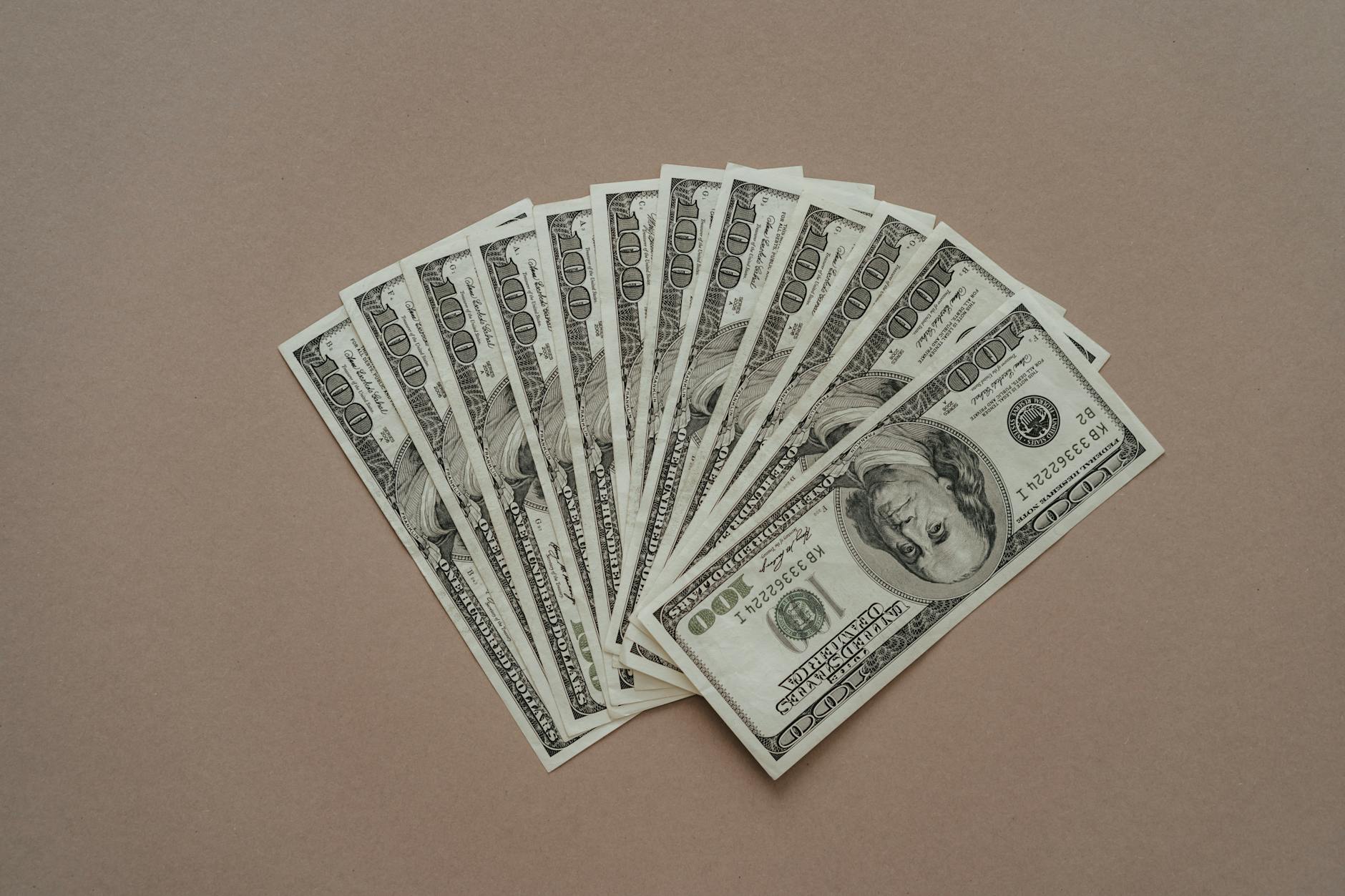
Iran’s currency is not merely declining — it is in a state of outright collapse, and the country’s banking system is buckling under the weight of insolvency, corruption, and sanctions pressure that has no modern parallel. As of March 2, 2026, the US dollar trades at 1,664,000 Iranian rials on the open market, a figure that represents a 62.1% surge over just the past six months. The rial has lost roughly 84% of its value across 2025 alone, and over four decades, the currency has depreciated approximately 20,000 times over. This is not a slow bleed. This is a financial system in cardiac arrest.
The banking sector is faring no better. In January 2026, Bank Ayandeh collapsed in what a Central Bank official openly described as “a Ponzi scheme,” dragged down by $5 billion in bad loans. By the Central Bank’s own admission, only 9 of Iran’s banks are not considered insolvent. Eight banks are reporting negative capital ratios, some as severe as negative 360%. Meanwhile, inflation hit 42.5% in December 2025, food prices have climbed 72%, and protests have swept 27 of 31 provinces. What follows is a detailed accounting of how deep this crisis runs, who bears responsibility, and what it means for ordinary Iranians and for the geopolitical maneuvering around sanctions policy.
Table of Contents
- How Fast Is Iran’s Currency Freefall, and What Triggered It?
- Why Iran’s Banking System Is Functionally Insolvent
- How Inflation Is Crushing Iranian Households
- The Sanctions Architecture — Maximum Pressure and Its Tradeoffs
- The Protest Movement and the Regime’s Response
- The IRGC’s Role in Corrupting the Banking System
- What Comes Next for Iran’s Economy
- Conclusion
- Frequently Asked Questions
How Fast Is Iran’s Currency Freefall, and What Triggered It?
The speed of the rial’s decline is staggering by any historical comparison. On January 27, 2026, the currency breached 1.5 million per dollar for the first time — a then-record low that drew headlines across the region. Barely a month later, the rate had blown past 1.66 million. That weekly depreciation of 2.02% might sound modest until you realize it compounds into a currency that functionally halves in value every several months. For an iranian family earning rials and buying food priced partly in imported goods, each week brings a measurable decline in purchasing power with no floor in sight. The proximate trigger is straightforward: Iran’s oil exports dropped below 1.39 million barrels per day in January 2026, a 26% decline year-over-year. Oil is Iran’s primary source of hard currency.
When exports fall, fewer dollars flow into the country, and the rial weakens against every major currency. But this is not merely a supply shock. The United States has openly acknowledged engineering a “dollar shortage” inside Iran by simultaneously blocking oil exports and cutting off access to international banking channels. This dual chokehold — fewer dollars coming in, fewer ways to move the dollars that do exist — has created a currency death spiral that Iran’s Central Bank lacks the tools to reverse. What makes this different from prior episodes of rial weakness is the absence of any credible stabilization mechanism. In previous years, the regime could lean on backdoor oil sales to China, informal hawala networks, or periodic releases from frozen assets abroad. Each of those channels has narrowed dramatically under the current sanctions architecture. The result is a currency that the market treats as having no reliable floor.
Why Iran’s Banking System Is Functionally Insolvent
The collapse of Bank Ayandeh in early January 2026 was not an isolated failure — it was the most visible symptom of a banking system that has been hollowed out from the inside. The bank had accumulated $5 billion in bad loans, many of them extended under political pressure to well-connected borrowers who had no realistic path to repayment. When a Central Bank official described the institution as a Ponzi scheme, the characterization was not rhetorical. Ayandeh was paying depositors with new deposits rather than investment returns. The broader picture is worse. Eight Iranian banks currently report negative capital ratios, meaning their liabilities exceed their assets. Sarmayeh Bank sits at negative 328%. Ayandeh itself was at negative 360.5%.
Day Bank reports negative 53.5%, Sepah negative 23.2%, and Iran Zamin negative 21%. These are not institutions teetering on the edge — they are technically bankrupt and operating only because the state has not yet formally shut them down. By the Central Bank of Iran’s own criteria, only 9 banks in the entire system avoid the “insolvent” classification. The rest are zombie institutions propped up by implicit government guarantees that grow less credible by the week. However, even if the Iranian government attempted an honest restructuring of the banking sector, it would confront a politically impossible obstacle: at least 15 of the 20 largest debtors in the banking system are state-owned enterprises or companies affiliated with the Islamic Revolutionary Guard Corps. These are not arms-length borrowers. They are the regime’s own power centers. Reforming the banks would require forcing the IRGC and state entities to repay debts or accept write-downs, a move that would directly threaten the financial foundations of the security apparatus. No faction within the Iranian government has shown the willingness or the power to take that step.
How Inflation Is Crushing Iranian Households
Numbers like 42.5% annual inflation or a rial at 1.66 million to the dollar can feel abstract. They become concrete at the grocery store. Food inflation in Iran hit 72% in December 2025, according to Anadolu Agency. That means a family spending 10 million rials per month on food at the start of 2025 would need 17.2 million rials for the same basket by year’s end — assuming their income kept pace, which for most Iranian workers, it did not. The IMF projects consumer price inflation of approximately 42.4% for 2026, which suggests the international community does not expect conditions to improve this year. Banking system liquidity rose over 40% year-over-year as of November 2025, which sounds like a technical statistic until you understand what it means in practice: the Central Bank has been printing money at an extraordinary rate to keep insolvent banks liquid and government operations funded. More rials chasing the same goods drives prices higher, which drives the rial lower on foreign exchange markets, which drives import costs higher, which drives prices higher still.
It is a textbook inflationary spiral, and Iran is deep inside it. The distributional impact is deeply unequal. Wealthy Iranians with access to dollars, gold, or property have seen their real wealth preserved or even grow. Working-class and middle-class Iranians who hold their savings in rials — which is to say, most of the population — have watched decades of accumulated wealth evaporate. A retired teacher’s pension that once covered modest living expenses now buys a fraction of what it did two years ago. This is not theoretical hardship. It is the mechanism by which currency crises destroy social stability.

The Sanctions Architecture — Maximum Pressure and Its Tradeoffs
The Trump administration’s approach to Iran has been built around a simple economic logic: deny the regime hard currency, and the resulting financial pain will either force concessions at the negotiating table or destabilize the government from within. The administration has been unusually candid about this. In February 2026, U.S. officials openly acknowledged engineering a “dollar shortage” inside Iran by simultaneously blocking oil exports and severing international banking access. On its own terms, the strategy is producing measurable results. Oil exports have fallen 26% year-over-year. The rial is in freefall. Banks are collapsing.
Protests have spread to the majority of Iran’s provinces. But the tradeoffs deserve honest examination. Maximum pressure campaigns historically produce unpredictable outcomes. The economic pain falls disproportionately on ordinary citizens rather than regime elites, who maintain access to hard currency through smuggling networks and favorable exchange rates. The IRGC — the very institution the sanctions aim to weaken — controls significant portions of Iran’s black-market economy and arguably benefits from the chaos by expanding its economic footprint as legitimate businesses fail. There is also the question of what “success” looks like. If the goal is regime change, history offers few examples of sanctions alone producing that outcome. If the goal is a negotiated agreement, the current approach has yet to produce one. And if the goal is simply to weaken Iran as a regional actor, the humanitarian cost of 72% food inflation on a population of 88 million people is a variable that American policymakers should be forced to account for publicly, regardless of one’s views on the Iranian government.
The Protest Movement and the Regime’s Response
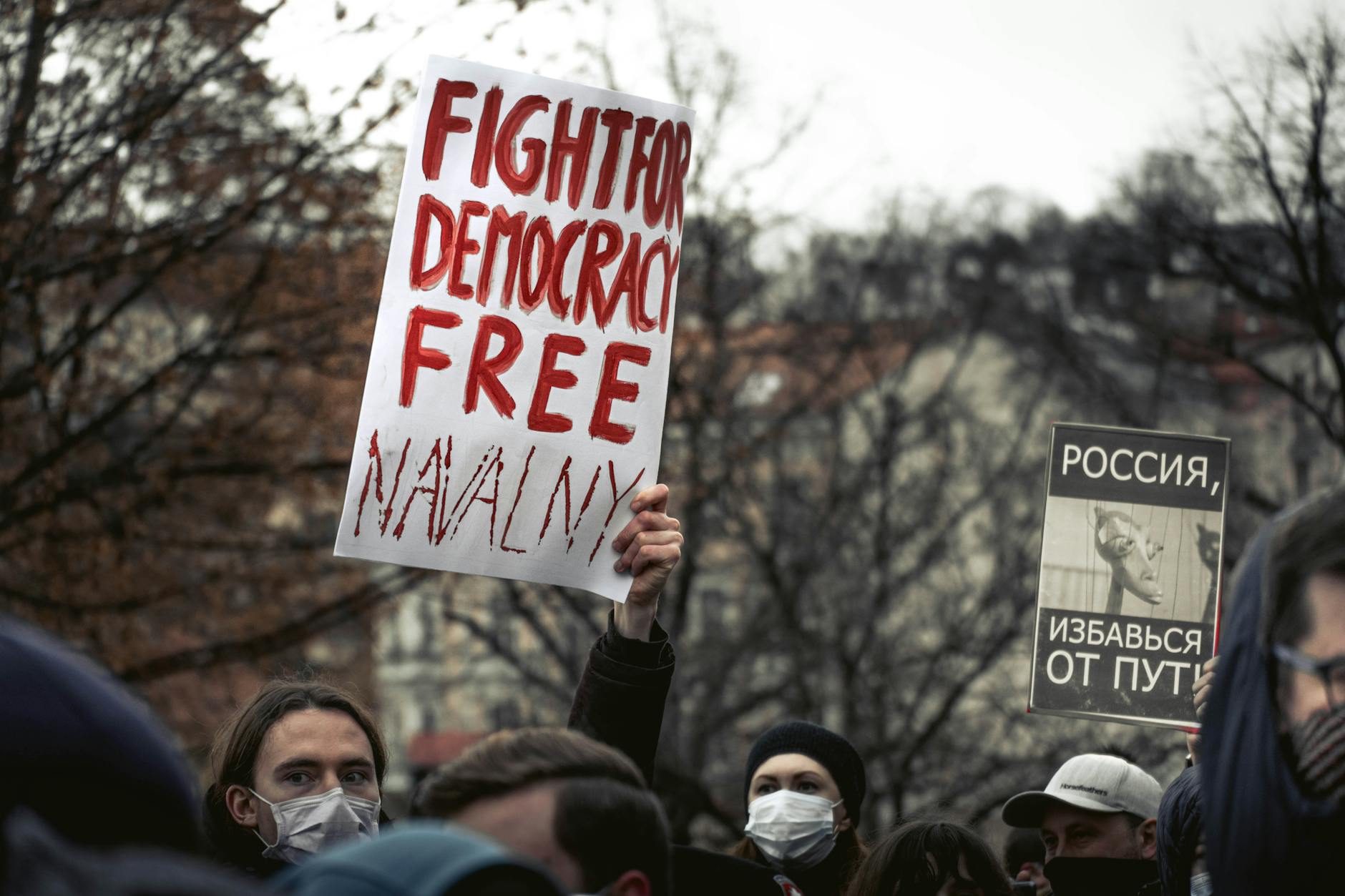
Protests erupted on December 28, 2025, when shopkeepers in Tehran began shuttering their stores after the rial plunged to then-record lows. The initial demonstrations were economic in nature — merchants who could no longer price their goods, workers whose wages had become meaningless, families who could not afford basic staples. Within days, the protests had spread far beyond Tehran. By January 6, 2026, at least 29 people were dead and more than 1,200 had been arrested. Demonstrations had reached 27 of Iran’s 31 provinces and at least 88 cities. The scale exceeded the 2022 Mahsa Amini protests in geographic breadth, though the character was different — driven primarily by economic desperation rather than social liberalization.
Conservative government estimates now acknowledge more than 3,000 deaths in the broader unrest, while other sources claim figures as high as 30,000. The true number is impossible to verify independently given the regime’s control over information flows and its pattern of underreporting casualties. What makes the current wave of unrest particularly dangerous for the regime is its economic root cause. The government can frame social protests as the work of foreign agents or cultural subversives. It is much harder to dismiss millions of people who simply cannot afford to eat. And unlike political grievances, which can be addressed with symbolic gestures or limited reforms, economic grievances of this magnitude require structural changes that the regime is either unwilling or unable to make. You cannot arrest your way out of 72% food inflation.
The IRGC’s Role in Corrupting the Banking System
The entanglement between Iran’s security establishment and its banking system is not incidental — it is structural. At least 15 of the 20 largest debtors in the Iranian banking system are state-owned entities or companies affiliated with the IRGC. These organizations borrowed heavily from banks, often on preferential terms arranged through political pressure, and then failed to repay.
📨 Get Free Accountability Coverage Alerts
Free · No spam · Unsubscribe anytime
The banks, unable to write off the losses without becoming visibly insolvent, carried the bad loans on their books at inflated valuations while quietly becoming dependent on Central Bank liquidity injections to meet depositor obligations. This is the mechanism through which the Iranian government and the Revolutionary Guard corrupted the banking system from within. It was not a single act of fraud but a decades-long pattern of extraction: borrow from the banks, deploy the capital into IRGC-controlled enterprises and regime-connected real estate projects, and leave the banking system to absorb the losses. Bank Ayandeh’s collapse simply made visible what the Central Bank’s own solvency criteria had already revealed — the majority of Iranian banks are carrying losses that exceed their capital.
What Comes Next for Iran’s Economy
The trajectory is grim and the available off-ramps are few. The IMF’s projection of 42.4% inflation for 2026 assumes no major escalation in sanctions or further collapse in oil exports — an optimistic baseline given current trends. If oil exports continue to decline and banking system liquidity continues expanding at 40%-plus annual rates, hyperinflation becomes a realistic scenario rather than a theoretical one. The rial’s 20,000-fold depreciation over four decades could accelerate dramatically in the coming years.
For the Iranian government, the policy options are constrained by the regime’s own structure. Meaningful banking reform would require confronting the IRGC’s debts. Currency stabilization would require either a sanctions deal or a dramatic fiscal contraction that would deepen the economic crisis in the short term. And the protests have demonstrated that the social contract — such as it was — between the government and its citizens is fraying in ways that security forces alone cannot repair. Whether this leads to negotiation, further repression, or something more fundamental remains the defining question of Iranian politics in 2026.
Conclusion
Iran’s economic crisis is not a collection of separate problems but a single, interlocking catastrophe. A currency that has lost 84% of its value in a year. A banking system where the majority of institutions are technically insolvent. Inflation that has pushed food prices up 72%. Protests across 27 provinces met with thousands of deaths. And at the center of it all, a sanctions regime that the United States has openly acknowledged is designed to create exactly this kind of pressure — paired with a domestic power structure that is both the cause of the banking system’s corruption and the primary obstacle to its reform.
The human cost is already severe and likely to worsen. Eighty-eight million people live inside this economic implosion, most of them with no meaningful ability to hedge against currency collapse or access hard currency. Whether the current crisis leads to political change, a negotiated settlement, or simply deepening misery depends on decisions being made in Tehran and Washington. What is not in question is the scale of the damage already done. The rial at 1,664,000 to the dollar is not a number on a screen. It is the daily reality of a country whose financial system has, by its own central bank’s admission, already failed.
Frequently Asked Questions
How much has the Iranian rial fallen against the US dollar?
As of March 2, 2026, the dollar trades at 1,664,000 rials on the open market, reflecting a 62.1% increase over the past six months. The rial lost roughly 84% of its value in 2025 and has depreciated approximately 20,000 times over four decades.
How many Iranian banks are insolvent?
By the Central Bank of Iran’s own criteria, only 9 of Iran’s banks are not considered insolvent. Eight banks report negative capital ratios, with some as severe as negative 360.5% (Bank Ayandeh) and negative 328% (Sarmayeh Bank).
What caused Bank Ayandeh to collapse?
Bank Ayandeh collapsed in early January 2026 under the weight of $5 billion in bad loans. A Central Bank official described the institution as “a Ponzi scheme,” indicating it was paying depositors with new deposits rather than investment returns.
What is the current inflation rate in Iran?
Inflation hit 42.5% in December 2025, with food inflation reaching 72%. The IMF projects consumer price inflation of approximately 42.4% for 2026.
How widespread are the protests in Iran?
Protests began on December 28, 2025 and by January 6, 2026 had spread to 27 of 31 provinces and at least 88 cities. At least 29 people were confirmed dead and over 1,200 arrested in the early days. Government estimates acknowledge more than 3,000 deaths in the broader unrest.
Is the US deliberately targeting Iran’s currency?
Yes. In February 2026, U.S. officials openly acknowledged engineering a “dollar shortage” inside Iran by simultaneously blocking oil exports and cutting off international banking access, a dual strategy designed to deprive the regime of hard currency.
You Might Also Like
- War Crimes Allegations Are Already Emerging From the Iran Bombing Campaign
- The Humanitarian Crisis Inside Iran Is Growing Worse by the Hour
- The Constitutional Crisis Nobody Is Paying Attention to During the Bombing