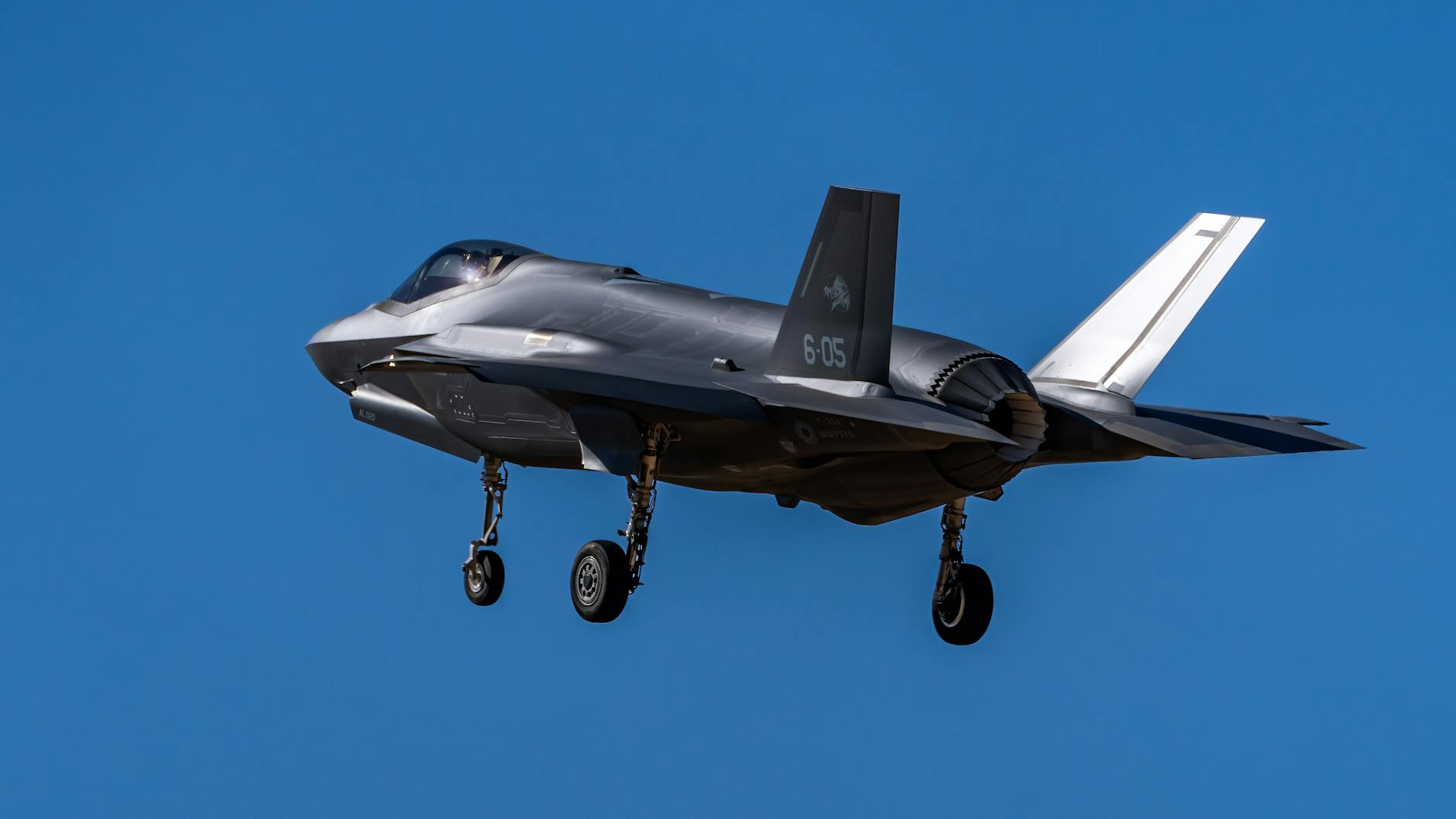
Lockheed Martin, Raytheon (RTX), and Boeing have posted significant stock surges over the past six months, driven by a historic expansion in U.S. defense spending and escalating geopolitical tensions across multiple theaters. Lockheed Martin has surged 48% since late August 2025, RTX has climbed more than 60% through the same period to break above $200 per share, and Boeing has gained 31% to roughly $227. As of March 2, 2026, Lockheed Martin trades at $658.08, RTX at $202.62, and Boeing at $227.53.
These are not speculative meme-stock rallies. They are being fueled by concrete budget allocations, record backlogs, and a geopolitical environment that shows no signs of cooling down. This article breaks down the specific catalysts behind each contractor’s run, from the unprecedented $1.01 trillion FY2026 defense budget to the proposed $1.5 trillion FY2027 spending plan floated by the Trump administration. We will examine what global defense spending trends mean for these stocks going forward, where the risks lie for investors chasing momentum at these elevated prices, and what the recent U.S.-Israel military strike against Iran signals for the broader defense sector. If you hold shares in any of these companies or are considering a position, the details matter more than the headlines.
Table of Contents
- Why Have Lockheed Martin, Raytheon, and Boeing Stocks Surged So Sharply?
- The $1.01 Trillion Defense Budget and What It Means for Contractors
- Lockheed Martin’s Record Backlog and Margin Expansion
- RTX’s Raytheon Segment and the Patriot Missile Boom
- Geopolitical Flashpoints Driving Defense Sector Momentum
- Boeing’s Uneven Recovery
- What Comes Next for Defense Stocks in 2026 and Beyond
- Conclusion
- Frequently Asked Questions
Why Have Lockheed Martin, Raytheon, and Boeing Stocks Surged So Sharply?
The single biggest driver is money — specifically, the U.S. government’s decision to allocate $1.01 trillion in discretionary defense spending for FY2026, a 13.4% increase over the prior year. That kind of year-over-year jump is extraordinary by any historical standard. On top of that, the Trump administration has floated a $1.5 trillion defense budget proposal for FY2027, which sent defense stocks to all-time highs across both U.S. and European indices on February 10, 2026. When the customer responsible for a majority of your revenue signals it wants to spend 50% more within two years, Wall Street pays attention. each of the three major contractors has benefited differently.
Lockheed Martin’s full-year 2025 backlog grew 17% to a record $194 billion, meaning the company has nearly a decade of committed work ahead at current revenue levels. RTX posted a book-to-bill ratio of 2.27 in Q3 — meaning it booked more than double the orders it shipped — a figure that signals accelerating demand well beyond current production capacity. Boeing’s gains have been more modest at 31%, partly because the company continues to work through reputational and production challenges, but increased production rates have provided a floor under the stock. The comparison is instructive. Lockheed and RTX are being rewarded for margin expansion and record order books. Boeing is being rewarded mostly for not getting worse. That distinction matters for anyone trying to decide where to allocate capital in the defense sector.
The $1.01 Trillion Defense Budget and What It Means for Contractors
The FY2026 defense budget represents a watershed moment for U.S. military spending. At $1.01 trillion in discretionary spending, it crosses a psychological and practical threshold that had been building for years. A significant chunk of this spending is earmarked for the SHIELD program — the Scalable Homeland Innovative Enterprise Layered Defense initiative — a $151 billion, 10-year project to build a national missile defense shield. Lockheed Martin, which already produces the THAAD missile defense system, has signed a landmark agreement to quadruple THAAD interceptor production capacity, positioning itself as a primary beneficiary of SHIELD spending. However, there is a critical caveat that investors tend to overlook during periods of defense spending euphoria: budget authorization is not the same as budget appropriation.
Congress must still approve actual spending levels through the appropriations process, and political dynamics can shift. The proposed $1.5 trillion FY2027 budget is exactly that — a proposal. If economic conditions deteriorate, if inflation re-accelerates, or if political winds shift in Congress, the actual appropriated amounts could come in well below the headline figures. Defense stocks are currently priced for the optimistic scenario, which means any disappointment on the spending front could trigger sharp pullbacks. Global defense spending adds another layer. Projected to reach $2.6 trillion in 2026, an 8.1% increase from 2025, international demand is providing a second growth engine for these contractors. RTX’s $1.7 billion deal to supply Spain with four Patriot fire units is a concrete example of how NATO-aligned countries are spending more on U.S.-made systems.
Lockheed Martin’s Record Backlog and Margin Expansion
Lockheed Martin’s performance stands out even in a sector where everyone is doing well. The company’s segment operating profit is expected to jump 25% or more in 2026, reaching $8.425 to $8.675 billion, up from $6.74 billion in 2025. That kind of margin expansion in a company this large is unusual and reflects both pricing power and operational improvements across its four business segments. The $194 billion backlog is the headline number, but the composition matters.
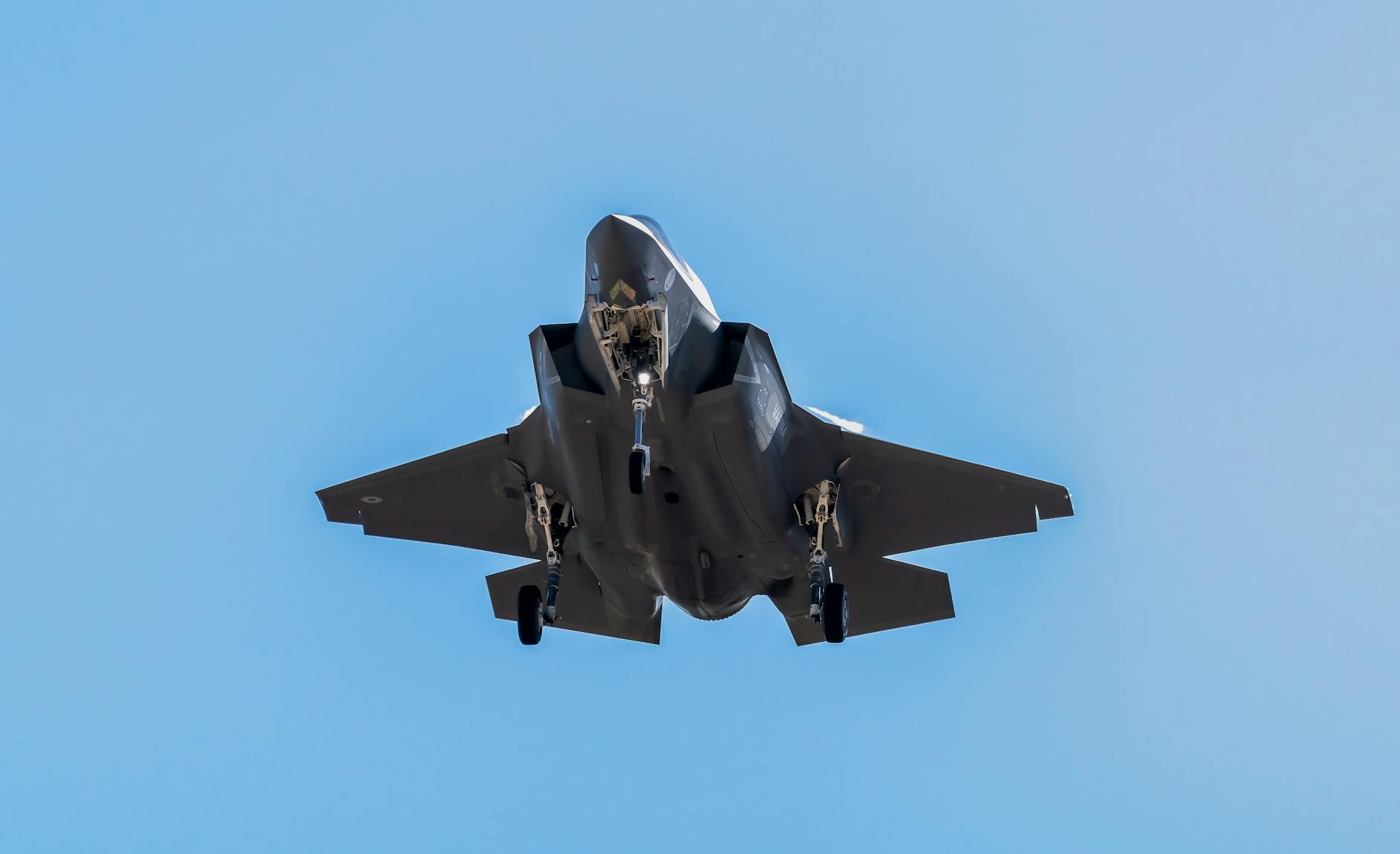
Record F-35 deliveries are a major component, as the program has moved past its most troubled production phases and into a steadier-state delivery cadence. The THAAD production expansion is another growth vector that did not exist at this scale 18 months ago. For context, Lockheed Martin’s annual revenue runs around $70 billion, meaning the backlog represents nearly three years of revenue even before new orders are booked. The risk for Lockheed is concentration. The F-35 program alone accounts for a disproportionate share of revenue, and any production delays, contract disputes, or political pushback on the program’s cost could ripple through the entire company. The stock’s 48% run in six months also means it is trading at a premium that leaves little room for operational stumbles.

RTX’s Raytheon Segment and the Patriot Missile Boom
RTX, the parent company of Raytheon, has arguably the strongest demand signal of the three. A book-to-bill ratio of 2.27 means the company is booking orders at more than twice the rate it can deliver product. This is the kind of metric that defense analysts watch closely because it represents future revenue visibility — and at 2.27, it suggests RTX could sustain elevated growth for years even if new order flow slowed tomorrow. The $1.7 billion Spanish Patriot deal illustrates a broader trend. European and Middle Eastern nations are not just buying more defense equipment; they are specifically buying American-made missile defense systems, driven by the war in Ukraine, rising tensions with Iran, and a general reassessment of defense posture across NATO.
RTX is well positioned for this because Patriot is the gold standard in integrated air and missile defense, and alternatives from European manufacturers cannot match its combat-proven track record. The tradeoff for investors is valuation versus growth runway. RTX at $202 per share is already up 60% in roughly a year. The demand fundamentals are strong, but the stock price reflects a lot of good news. Investors buying at these levels are essentially betting that the geopolitical environment remains hostile enough to sustain elevated defense spending for the foreseeable future — a bet that has paid off recently but carries obvious risks if diplomatic breakthroughs materialize.
Geopolitical Flashpoints Driving Defense Sector Momentum
The U.S. and Israel launched a joint military strike against Iran on February 28, 2026, marking a dramatic escalation in Middle East tensions and sending defense stocks higher in the final trading sessions of the month. This followed months of deteriorating relations and represents the most direct U.S. military engagement with Iran in decades. For defense contractors, active military operations do two things: they draw down existing munitions stockpiles that need to be replenished, and they create political cover for even larger defense budget requests.
Separately, an Arctic diplomatic crisis involving mineral rights has led to the most significant military deployment in the region since the 1940s. This is a theater that was barely on investors’ radar a year ago, and it underscores how unpredictable the geopolitical catalysts for defense spending can be. The warning here is straightforward: stocks that rise on geopolitical tension can also fall when tensions ease. If the Iran situation de-escalates through diplomatic channels, or if the Arctic dispute is resolved without sustained military presence, the premium currently baked into defense stocks could evaporate quickly. Investors should be clear-eyed about the fact that they are, in effect, making a bet on continued global instability — a bet that has a strong track record historically but is not without moral and financial complications.

Boeing’s Uneven Recovery
Boeing’s 31% gain looks impressive in isolation but pales next to Lockheed’s 48% and RTX’s 60%. The company remains weighed down by years of production problems, safety concerns following the 737 MAX crisis, and a general erosion of institutional credibility.
📨 Get Free Accountability Coverage Alerts
Free · No spam · Unsubscribe anytime
Its defense division has benefited from the same spending tailwinds lifting the entire sector, but Boeing’s commercial aviation challenges continue to act as a drag on overall sentiment. As of March 2, 2026, Boeing actually closed down 0.82% at $227.53, even as Lockheed and RTX posted gains. For investors, Boeing represents a higher-risk, potentially higher-reward play within the defense sector — you get more upside if the turnaround fully materializes, but you also carry more downside risk from the commercial side of the business.
What Comes Next for Defense Stocks in 2026 and Beyond
The forward outlook depends almost entirely on whether the spending trajectory holds. If the $1.5 trillion FY2027 budget proposal advances through Congress in anything resembling its current form, defense stocks likely have further room to run despite already elevated valuations. Global defense spending trending toward $2.6 trillion provides an additional cushion, as international orders diversify these companies’ revenue bases beyond U.S. government dependence.
The SHIELD program alone, at $151 billion over 10 years, represents a multi-year growth driver that has barely begun to flow through contractor income statements. But trees do not grow to the sky. At some point, valuations will need to be justified by actual delivered earnings rather than backlog promises and budget proposals. The defense sector has a long history of boom-and-bust cycles tied to political and geopolitical shifts. Investors who rode these stocks up 30% to 60% in a year should have a clear plan for when to take profits — because the same forces that created this rally can reverse faster than most people expect.
Conclusion
The stock surges at Lockheed Martin, RTX, and Boeing reflect a fundamental shift in how the United States and its allies are allocating resources toward defense. A $1.01 trillion defense budget, a proposed $1.5 trillion follow-up, record backlogs, active military operations against Iran, and an Arctic crisis have combined to create the most favorable environment for defense contractors in a generation. These are not just stock market stories — they represent real decisions about national security priorities that will shape geopolitics for years.
For investors and citizens alike, the key question is sustainability. Defense spending at this scale requires either continued geopolitical instability or a durable political consensus that military investment should consume an ever-larger share of federal resources. Right now, both conditions exist. Whether they persist is the trillion-dollar question — quite literally.
Frequently Asked Questions
Why has Lockheed Martin stock risen 48% in six months?
Lockheed’s surge is driven by a record $194 billion backlog, a 17% year-over-year increase, combined with the $1.01 trillion FY2026 defense budget, the SHIELD missile defense program, and a landmark deal to quadruple THAAD interceptor production capacity. Segment operating profit is expected to jump 25% or more in 2026.
What is the SHIELD program and how does it affect defense stocks?
SHIELD, or Scalable Homeland Innovative Enterprise Layered Defense, is a $151 billion, 10-year initiative to build a national missile defense shield. It is a major long-term spending commitment that directly benefits missile defense manufacturers like Lockheed Martin and RTX.
How much is the U.S. spending on defense in 2026?
The FY2026 defense budget allocates $1.01 trillion in discretionary spending, a 13.4% increase over the prior year. The Trump administration has also proposed a $1.5 trillion defense budget for FY2027, though that figure has not yet been approved by Congress.
Why is Boeing’s stock performance lagging behind Lockheed Martin and RTX?
Boeing has gained 31% compared to Lockheed’s 48% and RTX’s 60% because it continues to deal with production challenges and reputational damage from the 737 MAX crisis. Its commercial aviation business acts as a drag even as its defense division benefits from increased military spending.
What geopolitical events are driving defense stock prices higher?
The U.S.-Israel joint military strike against Iran on February 28, 2026, an Arctic diplomatic crisis requiring significant military deployment, and broadly rising global defense spending projected at $2.6 trillion for 2026 are all contributing to elevated defense sector valuations.
Is it too late to invest in defense stocks?
These stocks have already risen significantly, with RTX up 60% and Lockheed up 48% in recent months. While the spending outlook remains strong, current prices reflect substantial optimism. Any shortfall in budget appropriations or unexpected diplomatic breakthroughs could trigger corrections. Investors should weigh the strong demand fundamentals against already-premium valuations.
You Might Also Like
- Veterans With PTSD Report Being Triggered by Nonstop Iran War Coverage
- Veterans Groups Across the Country Issue Statements on the New Middle East War
- Universities Cancel Classes as Students Organize Iran War Protests Nationwide