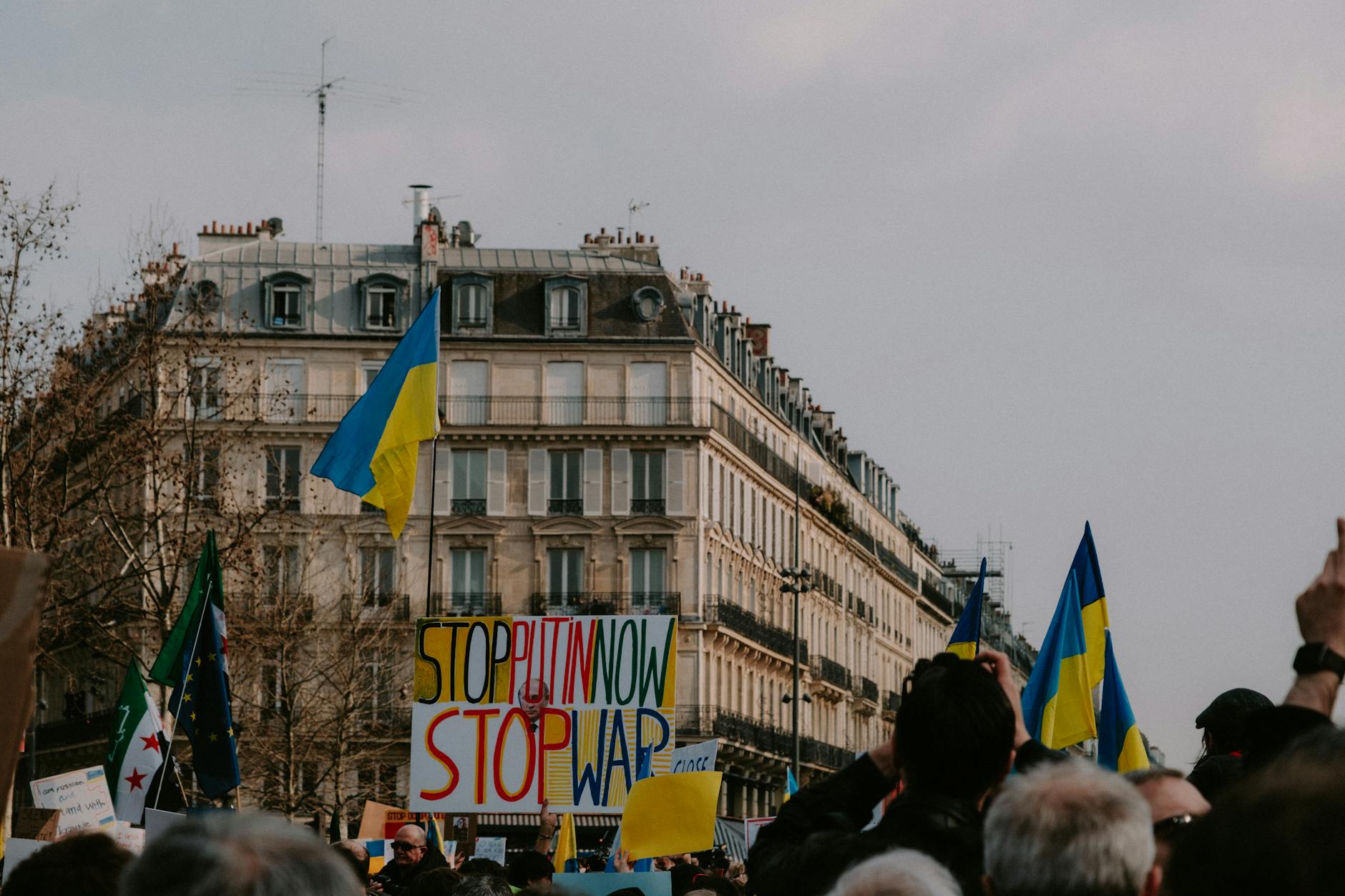
The United States is now seventeen days into a major military conflict with Iran, and the familiar script that has accompanied every American war for the past half-century is playing out again — with one critical difference. The rally-around-the-flag effect, that predictable surge of patriotic unity that has historically boosted presidential approval ratings at the start of military action, has barely materialized. President Trump entered Operation Epic Fury on February 28, 2026, with a net approval rating of -19, making him 14 points more unpopular than any other president at the start of a major military operation in modern polling history. Two weeks and $16.5 billion later, that number has moved less than a single point.
The pattern is unmistakable to anyone who lived through the early days of the Iraq War, the initial months of Vietnam escalation, or even the brief patriotic surge after the invasion of Panama. There is the sudden military action, the dramatic footage, the calls for unity, the accusations of disloyalty against dissenters — and then, inevitably, the mounting casualties, the ballooning costs, the shifting justifications, and the slow realization that the mission has no clear end. This time, the disillusionment phase appears to be arriving faster than ever. A CNN poll shows 59% of Americans already disapprove of the Iran strikes, and a Washington Post poll found opposition outweighs support 52% to 39%. This article examines why the traditional war rally has failed to take hold, how the economic consequences are already hitting American households, what Congress has and hasn’t done about its constitutional war powers, and why historians see disturbing echoes of previous conflicts that spiraled far beyond their original scope.
Table of Contents
- Why Has the Patriotic War Rally Failed to Materialize This Time?
- What Are the Human and Financial Costs After Just Two Weeks?
- Congress and the Constitutional War Powers Crisis
- How the Economic Fallout Is Already Reaching American Households
- The Anti-War Movement and the Divided Iranian-American Response
- What Historians See in This Moment
- Where This Goes From Here
- Conclusion
Why Has the Patriotic War Rally Failed to Materialize This Time?
In nearly every major American military engagement since World War II, the opening days of conflict have produced a measurable surge in presidential approval. George H.W. Bush saw his approval climb by more than 20 points at the start of the Gulf War. George W. Bush’s approval hit 90% after the September 11 attacks and remained elevated through the early months of the Afghanistan and Iraq campaigns. Even unpopular presidents have historically benefited from the instinct to rally behind the commander-in-chief when American forces are in harm’s way. Trump’s approval moved from -20 to -19 — a gain so small it falls within any poll’s margin of error. According to analyst G. Elliott Morris, this represents the weakest rally effect for any president entering a major military operation in modern polling history. Several factors explain why the public isn’t rallying.
The most significant is that the United States initiated this conflict. Operation Epic Fury was not a response to an attack on American soil or an imminent threat that forced the president’s hand. Democrats immediately labeled it a “war of choice,” and unlike the post-9/11 environment, there was no bipartisan moment of shared grief or fear to override partisan divisions. Trump did not seek congressional authorization or a UN mandate before launching joint strikes with Israel that included the assassination of Iran’s supreme leader, Ali Khamenei. The polarized media ecosystem has also eliminated the wall-to-wall, rally-generating coverage that once united the country around a single narrative. Conservatives watch one war, liberals watch another, and there is no Walter Cronkite moment where the country processes the conflict together. The partisan divide in the polling makes this clear. While 77% of Republicans approve of the strikes, only 32% of independents and 18% of Democrats support them. Independents — the voters who typically swing during a rally effect — oppose the action by a 2-to-1 margin, 59% to 28%. There is also a striking gender gap: men are roughly split, while women oppose the strikes by a 26-point margin, 58% to 32%. As Chatham House analysts noted, the “we have only one president” dynamic that once temporarily unified the electorate has simply not appeared.

What Are the Human and Financial Costs After Just Two Weeks?
The speed at which this conflict has consumed lives and money is staggering, even by the standards of American military operations. As of approximately March 14, 2026, 1,444 people have been killed in iran and 18,551 injured. Thirteen American service members have been killed in the first two weeks. In Lebanon, where the conflict has spilled over, 850 people have been killed, including more than 100 children. These are not abstract numbers — they represent a pace of destruction that has already surpassed the opening weeks of the Iraq War in 2003. The financial costs are equally alarming. The United States spent $3.7 billion in the first 100 hours of Operation Epic Fury and approximately $16.5 billion in the first 12 days.
To put that in perspective, the entire first year of the Iraq War cost roughly $53 billion in 2003 dollars. At the current rate, this conflict would surpass that figure in a matter of weeks. However, it is important to note that early spending in a military campaign tends to be front-loaded with precision munitions and initial deployment costs, so the daily rate could decrease — or it could accelerate if the conflict expands, as many analysts expect. The limitation that rarely gets discussed in the early days of any conflict is that these costs are only the visible ones. The long-term expenses — veterans’ healthcare, equipment replacement, economic disruption, interest on war debt — historically dwarf the initial spending by a factor of three to five. The Iraq and Afghanistan wars cost roughly $2 trillion in direct spending but are projected to ultimately cost $6 to $8 trillion when long-term obligations are included. There is no reason to expect this conflict will be different.
Congress and the Constitutional War Powers Crisis
The Constitution is explicit: Congress has the power to declare war. Yet the United States has not issued a formal declaration of war since 1942, and the War Powers Resolution of 1973, passed in the aftermath of Vietnam, has been treated by presidents of both parties as more of a suggestion than a binding law. The current conflict has brought this constitutional tension to a head. Constitutional scholars argue that the scope of Operation Epic Fury — a joint campaign involving airstrikes across a sovereign nation, the targeted killing of a head of state, and now a multi-week engagement with no defined endpoint — clearly qualifies as “war in the constitutional sense.” A bipartisan effort to reassert congressional authority emerged quickly. Senator Tim Kaine of Virginia and Senator Rand Paul of Kentucky introduced a war powers resolution in the Senate, while Representative Thomas Massie of Kentucky and Representative Ro Khanna of California led the parallel effort in the House. The resolution would have halted the war and required the president to obtain congressional authorization to continue.
It was a genuine bipartisan coalition — a libertarian Republican and a progressive Democrat in each chamber, united by the principle that the legislature should decide when the country goes to war. The House narrowly rejected the resolution, 219 to 212. That seven-vote margin deserves attention. It means that if just four members had voted differently, the United States would be facing a constitutional confrontation between the legislative and executive branches over the continuation of an active military campaign. The closeness of the vote also signals that support for the war within Congress is fragile. If casualties mount or the conflict expands — both of which appear likely — those numbers could shift quickly. The precedent being set is that a president can launch a large-scale military operation against a sovereign nation, kill its head of state, and continue the campaign indefinitely without ever receiving a vote from Congress.

How the Economic Fallout Is Already Reaching American Households
The most immediate and tangible consequence of the conflict for most Americans is not the geopolitical chess match or the constitutional debate — it is the price they pay at the gas pump and the grocery store. Brent crude oil surged from $72 per barrel on February 27 to $106 per barrel by mid-March, an increase of more than 40% in less than three weeks. U.S. gasoline prices have risen 7.5% to $3.20 per gallon and are climbing five to ten cents daily with no ceiling in sight. The mechanism driving this is straightforward and alarming. Iran declared the Strait of Hormuz “closed” starting March 4, disrupting roughly 20% of global oil supplies. Approximately 80% of Asia’s oil imports transit through the Strait. This is not a theoretical risk — it is happening now. The consequences have cascaded well beyond oil.
LNG prices have surged roughly 60%. European natural gas prices nearly doubled after Iranian drones hit Qatari gas facilities on March 2, prompting Qatar to halt all gas production. Urea prices, which directly affect fertilizer and food costs, are up 35%. Aluminum has hit a four-year high. Global stock markets have fallen 5.5% since the war began. The tradeoff the administration has not addressed is this: even if the military operation achieves its stated objectives quickly — which history suggests is unlikely — the economic damage is already baked in. Energy markets do not snap back the moment a conflict ends. Supply chain disruptions take months to unwind. The inflationary pressure from a 40% spike in oil prices will ripple through the economy for the rest of 2026, hitting transportation, manufacturing, food production, and consumer goods. Americans who were already stretched thin by years of elevated prices are now absorbing a war tax that nobody voted for.
📨 Get Free Accountability Coverage Alerts
Free · No spam · Unsubscribe anytime
The Anti-War Movement and the Divided Iranian-American Response
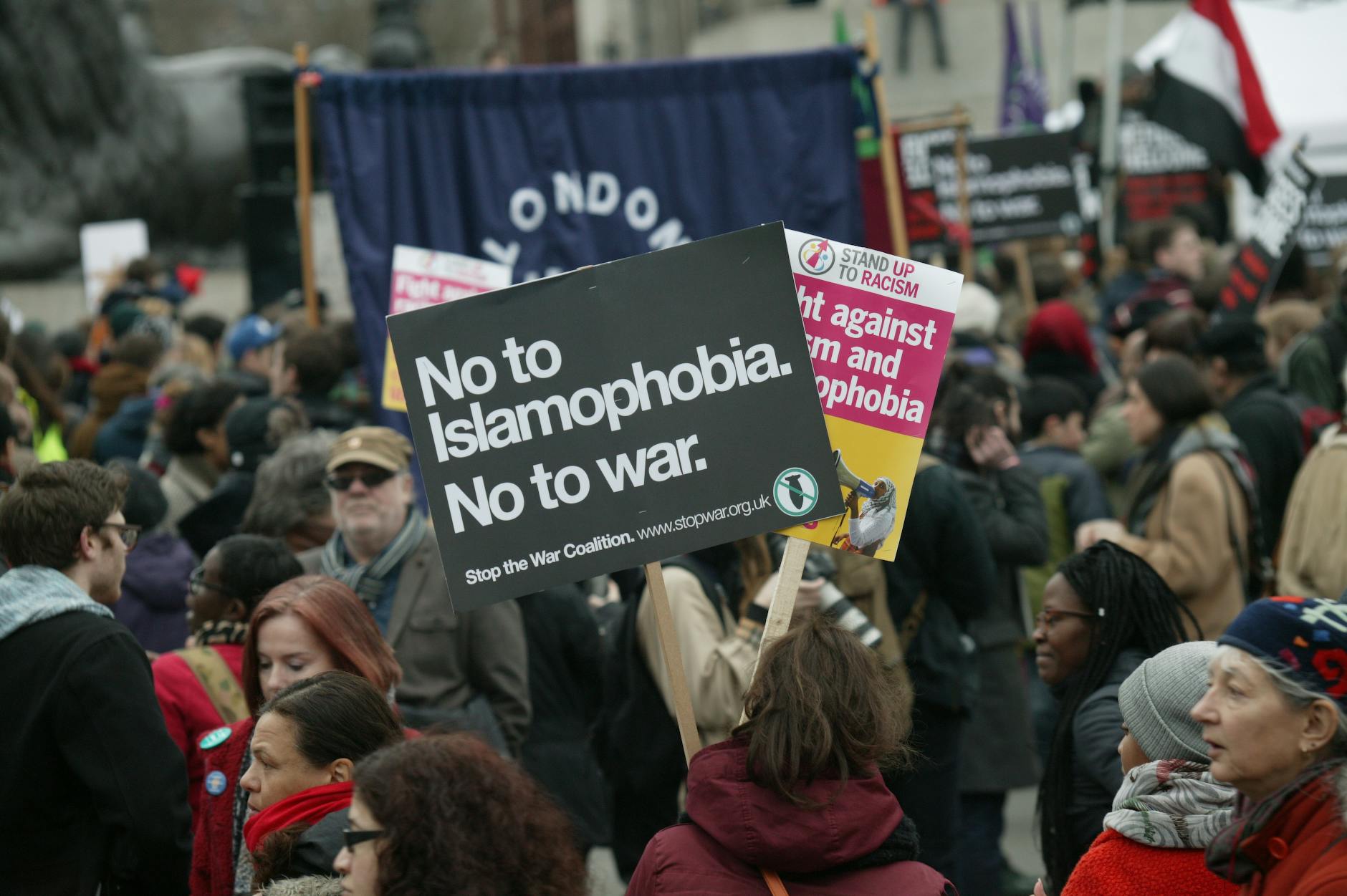
Anti-war protests have erupted in dozens of U.S. cities, organized by a coalition that includes ANSWER, CodePink, Democratic Socialists of America, and the National Iranian American Council. On February 28, the day the strikes began, more than 1,000 people marched down Market Street in San Francisco. Ongoing demonstrations have taken place at Los Angeles City Hall, and protests have been organized in Atlanta, Boston, Chicago, New York, and other major cities. The speed of the mobilization is notable — it took months for anti-Iraq War protests to reach comparable scale in 2003. One aspect of this moment that complicates simple narratives is the deeply divided response within the Iranian-American community itself.
Some Iranian Americans celebrated the strikes, viewing them as a long-overdue action against a regime that has brutalized the Iranian people for decades. Counter-protests appeared in San Francisco with “Make Iran Great Again” signs, reflecting a genuine and understandable hope that military action might lead to regime change and a freer Iran. Others in the community protested the strikes, arguing that bombing a country to liberate its people is a contradiction that has never worked and that the primary victims of the campaign are Iranian civilians, not regime officials. This division carries a warning: the assumption that military action against a government is the same as liberation for its people has been the fatal flaw of American interventionism since at least Vietnam. The people of Iran did not ask for Operation Epic Fury, and the 1,444 killed and 18,551 injured in the first two weeks were overwhelmingly civilians, not Revolutionary Guard commanders. The gap between the stated goal and the lived reality on the ground tends to widen, not narrow, as conflicts progress.
What Historians See in This Moment
The historical parallels are uncomfortable, and the historians drawing them are not doing so casually. Max Paul Friedman, a professor at San Diego State University, told KPBS that “successive US presidents repeat the mistake of believing overwhelming military power can substitute for a viable political endgame.” This is the core lesson of Vietnam, Iraq, Afghanistan, and Libya — and it is a lesson that appears to have gone unlearned. European allies have explicitly invoked the 2003 Iraq War, warning that a “limited” military operation is often just the opening act, not the whole play.
The specific parallels to Iraq are striking: a preemptive strike without UN authorization, shifting justifications, confident predictions of a short engagement, and a regional environment primed for spillover. The conflict has already spread to Lebanon, with 850 killed there including over 100 children. Analysts point to the same pattern that defined Vietnam and Iraq — unclear end goals, asymmetric warfare dynamics, regional destabilization, and the familiar arc of early support eroding as costs mount and the mission creeps beyond its original scope.
Where This Goes From Here
The trajectory of this conflict will likely be determined not by what happens in Iran but by what happens in American living rooms and voting booths. The absence of a rally effect means the administration has no cushion of public goodwill to absorb setbacks. Every additional American casualty, every uptick in gas prices, every report of civilian deaths will land on an already skeptical public. If the House war powers vote was 219 to 212 in week one, the math could look very different by week eight or week twelve.
The most dangerous phase of any American military engagement is not the opening salvo but the period between early momentum and the realization that there is no clean exit. The United States is entering that phase now. The question is not whether disillusionment will set in — polling suggests it already has for a majority of Americans. The question is whether the political system can translate that disillusionment into meaningful constraints on the conflict before the cycle of escalation, mission creep, and sunk-cost reasoning takes hold, as it has in every major American war since Korea.
Conclusion
Operation Epic Fury is seventeen days old, and nearly every warning sign from previous American conflicts is already flashing. The rally-around-the-flag effect has flatly failed to materialize. A majority of Americans oppose the strikes. The conflict has already killed more than 2,300 people across Iran and Lebanon, cost over $16.5 billion, and sent oil prices up more than 40%.
Congress came within four votes of invoking the War Powers Resolution, and the constitutional question of whether a president can wage a full-scale war without legislative authorization remains unresolved. The familiar cycle — patriotic fervor, confident predictions, mounting costs, shifting justifications, and eventual disillusionment — is not starting. For a majority of the public, it appears to have already reached its later stages before the first month is over. That is historically unprecedented, and it leaves the administration prosecuting a major military campaign without the domestic political support that every previous wartime president could count on, at least temporarily. What comes next depends on whether the institutions designed to check executive war-making power can function in an era of extreme polarization — or whether the country will once again watch a conflict expand beyond its stated purpose while the debate over whether to authorize it continues long after the bombs have already fallen.
You Might Also Like
- Young Voters Under 30 Overwhelmingly Oppose the Iran War in Early Polling
- There Are Not Enough Votes to Override a Veto on the Iran War Powers Resolution
- The Yellow Ribbon Campaigns Are Starting Again — Just Like Iraq and Afghanistan