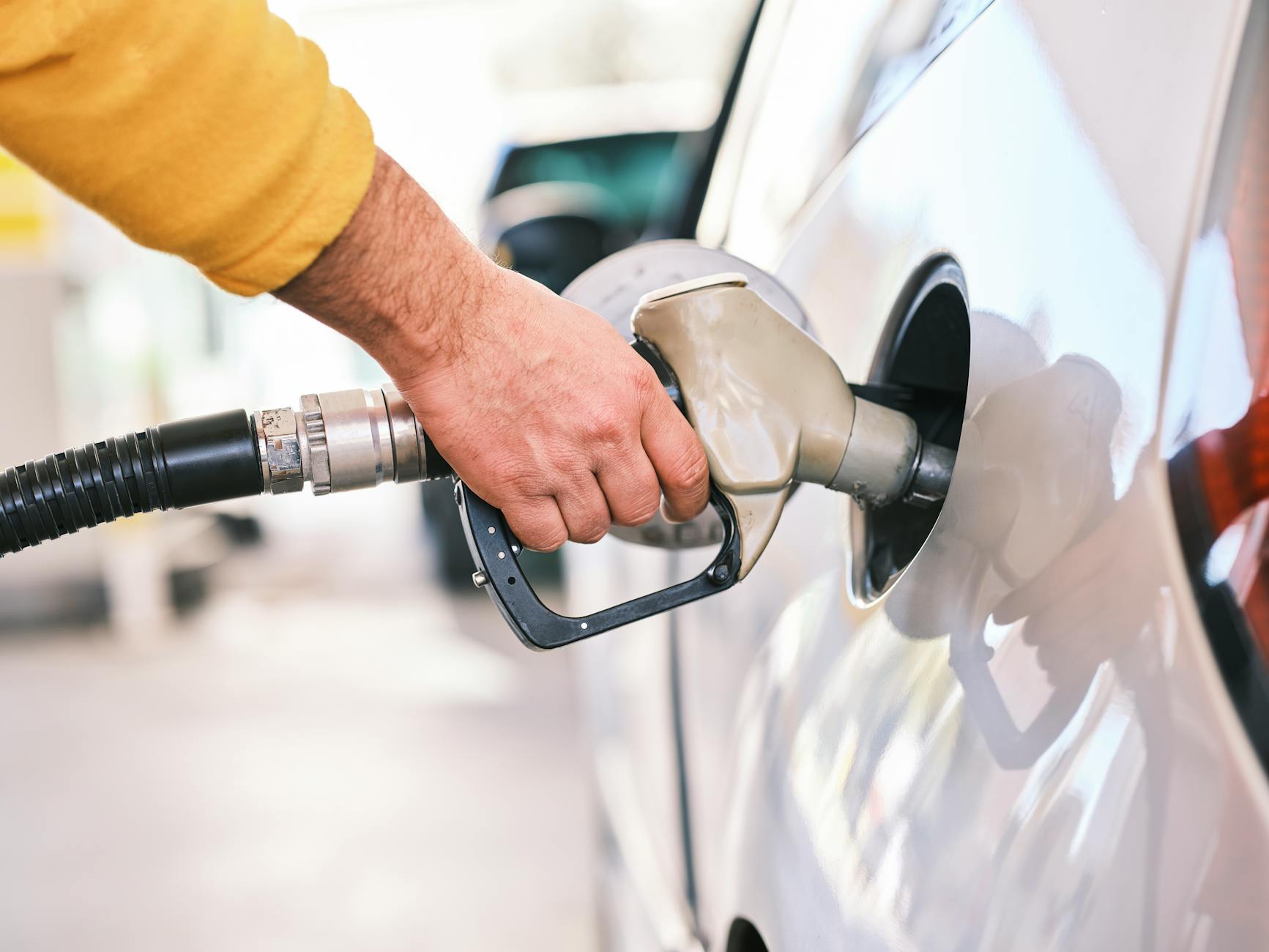
If you filled up your tank last week at roughly $2.98 a gallon, enjoy that memory. Following the United States and Israel’s coordinated military strikes across Iran on February 28, 2026, Brent crude oil prices jumped approximately 13% to $82 per barrel at Sunday’s market open, and analysts are projecting gasoline prices could rise 10 to 30 cents per gallon over the next two to four weeks. For a household driving two cars and filling up weekly, that translates to an extra $30 to $90 per month in fuel costs alone — money that comes straight out of grocery budgets, savings accounts, and whatever margin American families had left. The situation is evolving by the hour, and the worst-case scenarios are genuinely alarming.
Goldman Sachs has estimated oil could blow past $100 per barrel if there is an extended disruption to the Strait of Hormuz, the narrow waterway through which roughly a fifth of the world’s oil supply passes daily. Major shipping companies including Maersk, MSC, Hapag-Lloyd, and CMA CGM have already suspended transits through the strait. Iran’s Islamic Revolutionary Guard Corps has broadcast over maritime radio that no ship is allowed to pass, and the first oil tanker has already been attacked near Oman’s northern coast. This article breaks down exactly what these developments mean for gas prices, how long the pain could last, what OPEC is doing about it, and what practical steps you can take right now.
Table of Contents
- How Much Will Gas Prices Spike Because of the Iran War?
- The Strait of Hormuz Crisis — Why This Chokepoint Matters More Than Anything Else
- Iran’s Oil Production and Why Losing It Hits Global Supply Hard
- What OPEC Is Doing and Whether It Will Actually Help at the Pump
- The Recession Risk Nobody Wants to Talk About
- What You Can Actually Do Right Now to Protect Your Wallet
- Where Gas Prices and the Conflict Go From Here
- Conclusion
- Frequently Asked Questions
How Much Will Gas Prices Spike Because of the Iran War?
The national average price of gasoline stood at $2.982 per gallon as of March 1, 2026, according to AAA. That number was already trending upward — prices had climbed from $2.90 on February 19 to $2.96 on February 26, a six-cent jump in a single week, before the strikes even happened. Now, with Brent crude surging to $82 a barrel and US WTI crude rising more than 7% to $72.10 per barrel, the pressure on pump prices is about to intensify significantly. Energy research firm Rystad Energy expects oil prices to rise roughly $20 from pre-conflict levels, landing around $92 per barrel. NBC DFW, citing multiple energy analysts, reported that gasoline prices could climb 10 to 30 cents per gallon over the next two to four weeks if the Strait of Hormuz risk premium persists.
To put that in perspective, the Energy Information Administration had projected the 2026 yearly gasoline average at just $2.97 per gallon — down from $3.10 in 2025. That forecast is now effectively dead. The price increase won’t hit uniformly. Californians already paying $4.64 per gallon — the highest in the nation — will feel the squeeze far more acutely than drivers in Oklahoma, where gas sits at $2.25. States with higher gas taxes and stricter fuel blend requirements tend to amplify these wholesale price shocks at the pump. If you live in a high-cost fuel state, the 30-cent increase analysts are warning about could be the floor, not the ceiling.
The Strait of Hormuz Crisis — Why This Chokepoint Matters More Than Anything Else
The Strait of Hormuz is a 21-mile-wide passage between iran and Oman, and it is the single most important oil transit chokepoint on the planet. A closure of the strait would remove an estimated 8 to 10 million barrels per day of crude oil supply from global markets, according to CNBC. For context, the entire united states consumes roughly 20 million barrels per day. Losing the strait is not a minor disruption — it is a potential global economic catastrophe. As of March 1, most major tanker owners, oil majors, and trading houses have suspended crude oil, fuel, and LNG shipments through the Strait of Hormuz, according to Bloomberg. Approximately 170 containerships with a combined capacity of roughly 450,000 TEU are currently trapped inside the strait. Iran has not officially declared the strait closed, but the IRGC’s VHF radio broadcasts warning that no ship is allowed to pass, combined with the first confirmed tanker attack near Oman, have effectively accomplished the same thing.
The shipping industry is not waiting for a formal declaration. When missiles are flying, insurance premiums spike, crews refuse passage, and the strait shuts down in practice regardless of what any government says on paper. However, if the military conflict remains limited in duration — say, a matter of days rather than weeks — and the strait reopens relatively quickly, the price spike could be shorter-lived than feared. The oil market has a pattern of pricing in worst-case scenarios during the initial shock, then correcting downward once the actual supply disruption becomes clearer. The critical variable is time. Every additional day the strait remains effectively closed makes the economic damage harder to reverse, supply chains harder to reconstitute, and a broader recession more likely. Al Jazeera quoted analysts stating that a prolonged closure would be a “guaranteed global recession.”.
Iran’s Oil Production and Why Losing It Hits Global Supply Hard
Iran is the world’s sixth-largest oil producer, pumping approximately 3.3 million barrels per day of crude oil plus another 1.3 million barrels per day of condensate — about 4.6 million barrels per day total. Despite US sanctions, Iran was still exporting around 1.9 million barrels per day as of December 2025, according to CEIC Data. Much of that oil was flowing to China, which had been buying Iranian crude at discounted prices. Those barrels are now in jeopardy. The strikes on February 28 targeted locations across Iran, including Tehran itself, according to both CNN and Axios reporting. The immediate question for oil markets is not just whether Iranian production infrastructure was damaged, but whether Iran will retaliate in ways that further constrain supply — which is exactly what the Strait of Hormuz situation represents. Iran does not need to destroy oil fields to cause an energy crisis.
It just needs to make the waterway where a huge share of the world’s oil passes too dangerous to use. That is already happening. For American consumers, the irony is sharp. The United States is now the world’s largest oil producer and a net energy exporter. We do not rely heavily on Iranian crude. But oil is a global commodity priced on global markets. When 8 to 10 million barrels per day are threatened anywhere, prices rise everywhere. Your gas station in Kansas does not get its fuel from the Strait of Hormuz, but its prices are still set by the same global benchmark that just jumped 13%.

What OPEC Is Doing and Whether It Will Actually Help at the Pump
OPEC+ announced plans to slightly raise oil output even as the Iran strikes disrupt shipments, signaling an attempt to calm markets. On paper, this sounds like the right move — more supply should mean less upward pressure on prices. In practice, the gesture is largely symbolic in the short term. OPEC+ has been operating with voluntary production cuts for over a year, and unwinding those cuts takes time. You cannot flip a switch and add millions of barrels to the market overnight. The tradeoff for OPEC members, particularly Saudi Arabia and the UAE, is straightforward but politically complicated.
Higher oil prices mean higher revenue for their national budgets. Flooding the market to bring prices down is good for global stability but bad for their treasuries. Historically, OPEC has moved cautiously during military conflicts, making enough noise about production increases to prevent panic while allowing prices to settle at levels that benefit producers. Do not expect OPEC to be your savior at the pump. The more meaningful supply response, if one comes, would involve the United States and other International Energy Agency members releasing oil from their strategic petroleum reserves. The US Strategic Petroleum Reserve currently holds significantly less than its capacity after the Biden administration’s 2022 drawdown, but it still contains enough crude to provide a temporary buffer. Whether the Trump administration will authorize a release is an open question — the administration has generally favored higher domestic production incentives over SPR releases, but a genuine supply crisis creates political pressure that tends to override ideological preferences.
The Recession Risk Nobody Wants to Talk About
The elephant in the room is not just higher gas prices — it is what higher gas prices do to everything else. Energy costs ripple through the entire economy. When diesel prices rise, shipping costs rise. When shipping costs rise, the price of groceries, building materials, and manufactured goods rise. The last time oil spiked above $100 a barrel for an extended period, inflation surged and central banks responded with aggressive interest rate hikes that hammered the housing market and consumer spending. Goldman Sachs’ warning that oil could blow past $100 per barrel if there is an extended disruption to the Strait of Hormuz should not be treated as a fringe scenario. The disruption is already underway.
Major shipping lines have suspended transits. A tanker has been attacked. If this continues for weeks rather than days, the $100 threshold is not a question of “if” but “when.” Analysts quoted by Al Jazeera were blunt: prolonged closure would mean a guaranteed global recession. The limitation of any analysis right now is uncertainty. Military conflicts are inherently unpredictable. The strikes could lead to a negotiated de-escalation within days, or they could spiral into a broader regional war. Anyone who tells you with confidence exactly what gas prices will be in two weeks is guessing. What we can say with confidence is that the risk is firmly to the upside, and the downside scenarios are severe enough that families should be planning accordingly rather than hoping for the best.
What You Can Actually Do Right Now to Protect Your Wallet
The most immediate and practical step is simply to fill up your tank now, before the price increases fully work their way through the wholesale-to-retail pipeline. Gas station prices typically lag behind crude oil movements by one to two weeks. The $2.98 national average will not last. If you have vehicles with large tanks, top them off.
📨 Get Free Accountability Coverage Alerts
Free · No spam · Unsubscribe anytime
If you have been putting off necessary driving — medical appointments, supply runs, vehicle maintenance trips — do them this week while prices are still relatively close to their pre-conflict levels. Beyond the immediate, this is a moment to audit your household’s energy exposure. If you have been considering carpooling, consolidating errands into fewer trips, or adjusting your commute, the math just shifted dramatically. A 30-cent-per-gallon increase on a 15-gallon fill-up is $4.50 per fill. For a two-car household filling up weekly, that is nearly $500 per year in additional fuel costs — and that is the optimistic scenario.
Where Gas Prices and the Conflict Go From Here
The next 72 to 96 hours are critical. If the Strait of Hormuz remains effectively closed and further military escalation occurs, oil markets will reprice dramatically higher, and pump prices will follow within days rather than weeks. If some form of ceasefire or de-escalation materializes — and diplomatic channels are reportedly active behind the scenes — the crude oil price spike could partially reverse, though prices are unlikely to return to pre-strike levels anytime soon.
Geopolitical risk premiums, once injected into energy markets, tend to linger. What should concern Americans beyond the immediate price spike is the structural vulnerability this conflict exposes. The global oil market remains dangerously dependent on a handful of chokepoints, and the Strait of Hormuz is the most critical. Whether this crisis lasts a week or a year, it is a stark reminder that energy prices are never truly under control — and that the household budget is always one geopolitical event away from upheaval.
Conclusion
The US and Israeli strikes on Iran have triggered the most significant oil market disruption in years. Brent crude has surged 13%, the Strait of Hormuz is effectively closed to commercial shipping, and analysts project gasoline prices could rise 10 to 30 cents per gallon in the near term — with far worse outcomes possible if the conflict escalates. For American families already stretched thin, this is real money coming out of real budgets, with ripple effects that extend well beyond the gas pump into groceries, goods, and the broader economy.
Fill up your tank now, reduce unnecessary driving, and pay close attention to developments over the coming days. OPEC’s modest production increase pledge is unlikely to offset the scale of the disruption, and whether strategic petroleum reserves will be tapped remains uncertain. The best financial move right now is to assume prices are going up, plan your budget accordingly, and hope the diplomats move faster than the missiles.
Frequently Asked Questions
How much are gas prices expected to rise because of the Iran conflict?
Analysts project US gasoline prices could rise 10 to 30 cents per gallon over the next two to four weeks if the Strait of Hormuz risk premium persists. If the strait remains closed for a prolonged period and oil exceeds $100 per barrel, increases could be substantially higher.
What is the current national average gas price?
As of March 1, 2026, AAA reports the national average at $2.982 per gallon. This was already up from $2.90 on February 19. Expect this number to climb in the coming days and weeks.
Why do US gas prices rise when we produce our own oil?
Oil is a globally traded commodity. When supply is threatened anywhere in the world — such as the 8 to 10 million barrels per day that transit the Strait of Hormuz — global benchmark prices rise, and US prices rise with them regardless of domestic production levels.
Is the Strait of Hormuz actually closed?
Iran has not formally declared the strait closed, but Iran’s IRGC has broadcast radio warnings that no ships may pass, an oil tanker has been attacked near Oman, and major shipping companies including Maersk, MSC, Hapag-Lloyd, and CMA CGM have all suspended transits. Roughly 170 containerships are currently trapped inside the strait.
Will OPEC increase production to lower prices?
OPEC+ has announced plans to slightly raise output, but the increase is modest and takes time to implement. It is unlikely to fully offset the supply disruption caused by the effective closure of the Strait of Hormuz.
How long will high gas prices last?
That depends entirely on the duration and scope of the military conflict. If de-escalation happens quickly and the strait reopens, the price spike could partially reverse within weeks. If the conflict escalates or the strait remains closed, elevated prices could persist for months with broader economic consequences.
You Might Also Like
- Massie and Khanna Unite Across Party Lines to Force a Congressional Vote on Iran War
- JD Vance Watched the Iran War Unfold From the White House Situation Room
- U.S. Struck Hundreds of Targets Inside Iran in the Opening Hours