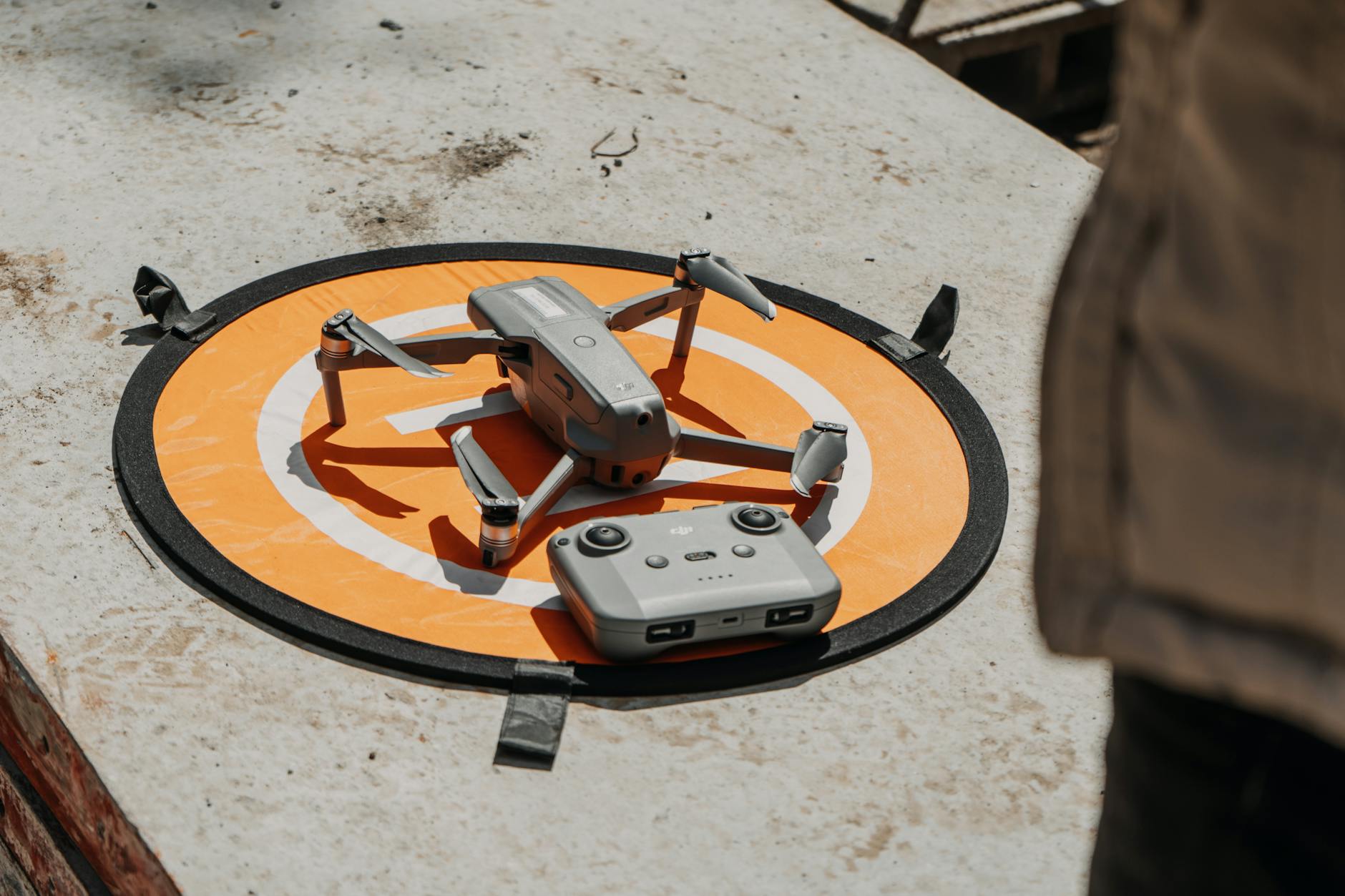
On February 28, 2026, the United States and Israel launched a coordinated military strike that systematically destroyed Iran’s drone and missile launch infrastructure across 24 of the country’s 31 provinces. The operation, codenamed “Epic Fury” by the Pentagon and “Roaring Lion” by Israel, delivered nearly 900 strikes in its first 12 hours and dropped more than 1,200 munitions on targets including IRGC command and control facilities, air defense systems, missile and drone launch sites, and military airfields. Defense Secretary Pete Hegseth called it the “most lethal, most complex, and most-precision aerial operation in history.” A damage assessment of Iran’s 25 primary medium-range ballistic missile launch bases revealed heavy above-ground damage at 10 major facilities, with more than 50 percent of above-ground structures destroyed, and moderate damage at multiple additional sites.
Seven ballistic missile launcher systems were individually confirmed destroyed through open-source intelligence, along with three surface-to-air missile systems and three radar systems, including a Matla-ol-Fajr radar installation. The scale of destruction was unprecedented in modern aerial warfare, though the operation came at a cost — three U.S. service members were killed and five were seriously wounded. This article examines the full scope of the strikes, the weapons systems deployed, Iran’s retaliatory response, and the uncertain outlook for the region’s nuclear and military balance going forward.
Table of Contents
- How Were Iran’s Missile and Drone Launch Sites Identified and Destroyed?
- What Weapons Did the U.S. and Israel Deploy Against Iranian Sites?
- The Killing of Khamenei and Iran’s Military Leadership
- Iran’s Retaliation and the Regional Fallout
- The Nuclear Question — Did the Strikes Actually Work?
- The Human Cost on the Ground
- What Comes Next for the Region?
- Conclusion
- Frequently Asked Questions
How Were Iran’s Missile and Drone Launch Sites Identified and Destroyed?
President trump outlined four military objectives for the operation: preventing iran from acquiring a nuclear weapon, destroying its missile arsenal and production sites, degrading proxy networks, and neutralizing its navy. The targeting list reflected years of intelligence collection. Strikes hit Isfahan, a key hub for Iran’s ballistic missile program where production plants and research facilities were concentrated, as well as the Parchin military complex, long suspected of hosting weapons-related testing. Cities across the country — Kermanshah, Qom, Tabriz, Ilam, Karaj, Lorestan, Zanjan, Urmia, Bushehr, Damavand, and Shiraz — all absorbed munitions aimed at military infrastructure.
In Tehran itself, strikes targeted the Ministry of Intelligence, the Ministry of Defence, the Atomic Energy Organization of Iran, and the Tehran Revolutionary Court, which was destroyed entirely. The breadth of the target list suggests the operation was designed not merely to degrade Iran’s launch capability but to dismantle the command architecture that controls it. However, the damage assessment also makes clear that not every facility was leveled. Multiple sites suffered only moderate damage, with 10 to 50 percent of structures destroyed, meaning some launch infrastructure likely survived in hardened underground positions that aerial strikes cannot easily reach.
What Weapons Did the U.S. and Israel Deploy Against Iranian Sites?
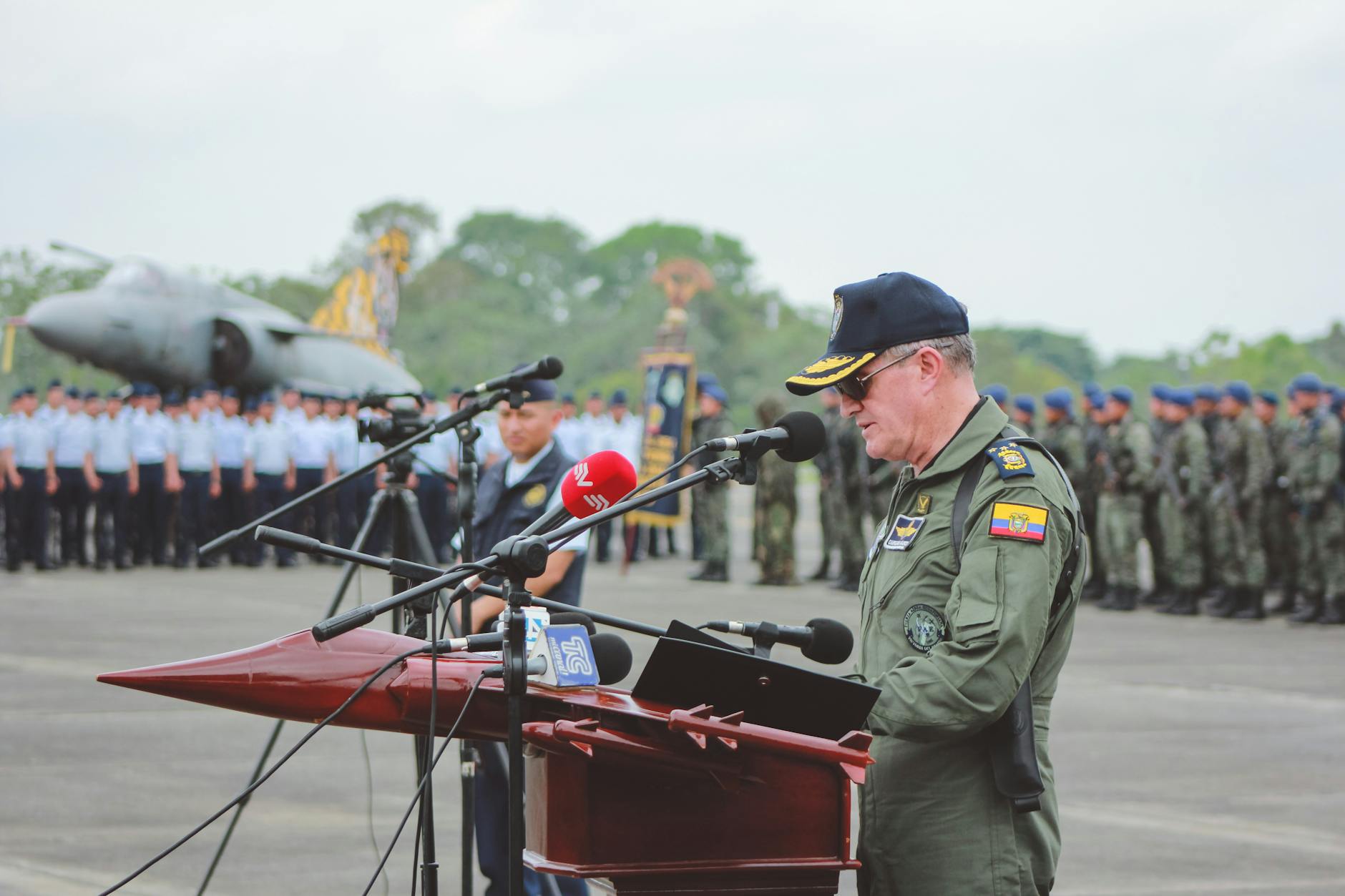
The U.S. brought its most advanced strike platforms to the operation. B-2 stealth bombers, capable of penetrating contested airspace undetected, were used to hit Iran’s ballistic missile facilities. Tomahawk cruise missiles — the workhorse of American long-range strike — were fired from naval assets. HIMARS rocket artillery systems and various standoff weapons rounded out the offensive toolkit.
Israel’s air force contributed massively, accounting for the 1,200-plus munitions dropped across the country. One notable first: CENTCOM’s Task Force Scorpion Strike deployed one-way attack drones modeled after Iran’s own Shahed drones, marking the first known combat use of these systems by American forces. The irony of using Iran-inspired drone designs against Iranian targets was not lost on defense analysts. On the defensive side, Patriot missiles, THAAD batteries, and ship-launched Standard Missiles provided air defense coverage for coalition forces. However, this layered defensive system was not impenetrable — the three American deaths and five serious injuries demonstrate that even the most sophisticated defenses cannot guarantee zero casualties in an operation of this scale and complexity.
The Killing of Khamenei and Iran’s Military Leadership
The strikes produced a consequence that reshapes the entire strategic landscape of the Middle East. Supreme Leader Ali Khamenei was killed in the bombardment, and Chief of Staff Abdolrahim Mousavi was confirmed dead on March 1. The elimination of Iran’s supreme leader — the figure who has shaped the country’s military posture, nuclear ambitions, and proxy network strategy for decades — represents something far beyond a tactical military outcome. It is a decapitation strike on the Islamic Republic’s decision-making apparatus.
The killing of Khamenei raises immediate questions about succession, internal stability, and whether Iran’s retaliatory posture will be guided by rational calculation or desperation. History shows that leadership decapitation does not always produce the desired strategic result. The killing of Qasem Soleimani in January 2020 was supposed to deter Iranian aggression but instead triggered a ballistic missile attack on Al Asad Air Base in Iraq. With Khamenei’s death, the stakes are exponentially higher, and the retaliatory response came swiftly and with far greater force than the post-Soleimani reprisal.
Iran’s Retaliation and the Regional Fallout
Iran did not absorb the strikes quietly. On March 1, Tehran launched missiles and drones targeting Israel, the UAE, Qatar, Kuwait, Bahrain, Jordan, and Saudi Arabia, hitting 27 bases hosting U.S. troops across the region. The geographic spread of Iran’s retaliation is striking — rather than focusing solely on Israel, Iran struck at Gulf states that have in recent years normalized or deepened ties with both Washington and Jerusalem.
The message was clear: hosting American military assets makes you a target. The diplomatic fallout was immediate. The UAE closed its embassy in Tehran and recalled its ambassador, a sharp break from Abu Dhabi’s years-long effort to maintain a working relationship with Iran even as it drew closer to Israel through the Abraham Accords. For countries like Qatar and Kuwait, which have historically tried to balance relationships with both Washington and Tehran, the strikes and retaliation have forced a binary choice that their foreign policies were designed to avoid. The tradeoff is stark: coalition partners gain American security guarantees but accept the risk of becoming Iranian targets, while neutrality becomes increasingly difficult to maintain as the conflict expands.
The Nuclear Question — Did the Strikes Actually Work?
The most consequential question surrounding Operation Epic Fury is whether it accomplished its stated primary objective: preventing Iran from acquiring a nuclear weapon. The early evidence is not reassuring. According to a classified Defense Intelligence Agency bomb damage assessment reported by Fox News’ Jennifer Griffin, Iran’s nuclear program could potentially be back online in as little as one to two months on the low end. This assessment deserves serious scrutiny.
If hundreds of strikes across 24 provinces, using the most advanced munitions in the American and Israeli arsenals, can only set back Iran’s nuclear timeline by weeks or months, it raises fundamental questions about whether military force alone can solve the nuclear proliferation problem. Iran has spent decades dispersing and hardening its nuclear infrastructure precisely to survive this kind of attack. Underground facilities at sites like Fordow were built into mountainsides specifically to withstand aerial bombardment. The limitation here is not one of military capability but of physics — there are depths that even bunker-busting munitions cannot reach, and Iran has had years to prepare for exactly this scenario.
The Human Cost on the Ground
Iran’s Red Crescent reported at least 200 killed and more than 740 injured in the strikes. On the American side, three service members were killed and five were seriously wounded during the operation.
📨 Get Free Accountability Coverage Alerts
Free · No spam · Unsubscribe anytime
These numbers, while significant, are lower than what might be expected from nearly 900 strikes across a country of 87 million people, suggesting the targeting was indeed focused on military infrastructure rather than population centers. But precision is a relative term when ordnance is falling across 24 provinces, and civilian casualties in and around military sites in cities like Tehran, Isfahan, and Shiraz are inevitable consequences of striking targets embedded in urban areas.
What Comes Next for the Region?
Operation Epic Fury has shattered the fragile equilibrium that defined U.S.-Iran tensions for decades — a cycle of provocations, proxy conflicts, and diplomatic feints that both sides managed without direct, large-scale military confrontation. That restraint is gone. Iran’s retaliatory strikes on 27 bases across seven countries have transformed what might have been a contained bilateral conflict into a regional war.
The killing of Khamenei introduces a succession crisis in Tehran that could produce either a more pragmatic leadership willing to negotiate or a hardline faction determined to accelerate the nuclear program as the only guarantee against future attacks. The DIA’s assessment that Iran’s nuclear capability could return within months suggests the window for diplomacy — if it exists at all — is extraordinarily narrow. For American policymakers, the coming weeks will determine whether Epic Fury was the decisive blow its architects intended or the opening chapter of a far longer and costlier conflict.
Conclusion
Operation Epic Fury systematically destroyed significant portions of Iran’s drone and missile launch infrastructure, eliminated its supreme leader, and degraded its conventional military capabilities across the country. The confirmed destruction of seven ballistic missile launcher systems, three surface-to-air missile systems, three radar installations, and heavy damage to 10 of 25 primary launch bases represents a substantial blow to Iran’s ability to project force through its missile arsenal. But the operation has also opened a Pandora’s box of regional consequences.
Iran’s retaliation across seven countries, the diplomatic ruptures in the Gulf, the uncertain nuclear timeline, and the leadership vacuum in Tehran all point to a period of heightened instability rather than the decisive resolution that the operation’s architects promised. The three American service members killed and the hundreds of Iranian casualties are the first entries in a ledger whose final accounting remains unknown. What is certain is that the Middle East’s strategic landscape has been fundamentally redrawn, and the consequences of that redrawing will unfold for months and years to come.
Frequently Asked Questions
What was Operation Epic Fury?
Operation Epic Fury was the U.S. codename for a joint American-Israeli military strike against Iran launched on February 28, 2026. Israel’s codename for its portion was “Roaring Lion.” The operation delivered nearly 900 strikes in its first 12 hours, targeting missile launch sites, drone facilities, air defense systems, command centers, and government buildings across 24 of Iran’s 31 provinces.
Were Iran’s missile launch sites completely destroyed?
Not entirely. A damage assessment of Iran’s 25 primary medium-range ballistic missile launch bases found heavy damage at 10 major facilities, with more than 50 percent of above-ground structures destroyed, and moderate damage at additional sites. Seven ballistic missile launcher systems were individually confirmed destroyed. However, underground and hardened facilities likely survived to varying degrees.
Was Iran’s nuclear program destroyed?
According to a classified DIA bomb damage assessment, Iran’s nuclear program could potentially be back online in as little as one to two months. While the strikes targeted the Atomic Energy Organization of Iran and related facilities, Iran’s dispersed and hardened nuclear infrastructure was designed to survive aerial bombardment.
How did Iran respond to the strikes?
On March 1, 2026, Iran retaliated with missiles and drones targeting Israel, the UAE, Qatar, Kuwait, Bahrain, Jordan, and Saudi Arabia, hitting 27 bases hosting U.S. troops. The UAE subsequently closed its embassy in Tehran and recalled its ambassador.
Were there American casualties?
Three U.S. service members were killed and five were seriously wounded during Operation Epic Fury.
Was Iran’s Supreme Leader killed in the strikes?
Yes. Supreme Leader Ali Khamenei was killed during the February 28 strikes. Iran’s Chief of Staff Abdolrahim Mousavi was confirmed dead on March 1, 2026.
You Might Also Like
- Iran’s Ballistic Missile Production Sites Hit in Coordinated Strikes
- Iran’s IRGC Command and Control Centers Destroyed in First Wave
- Dubai’s Burj Al Arab Damaged by Debris From Intercepted Iranian Drone