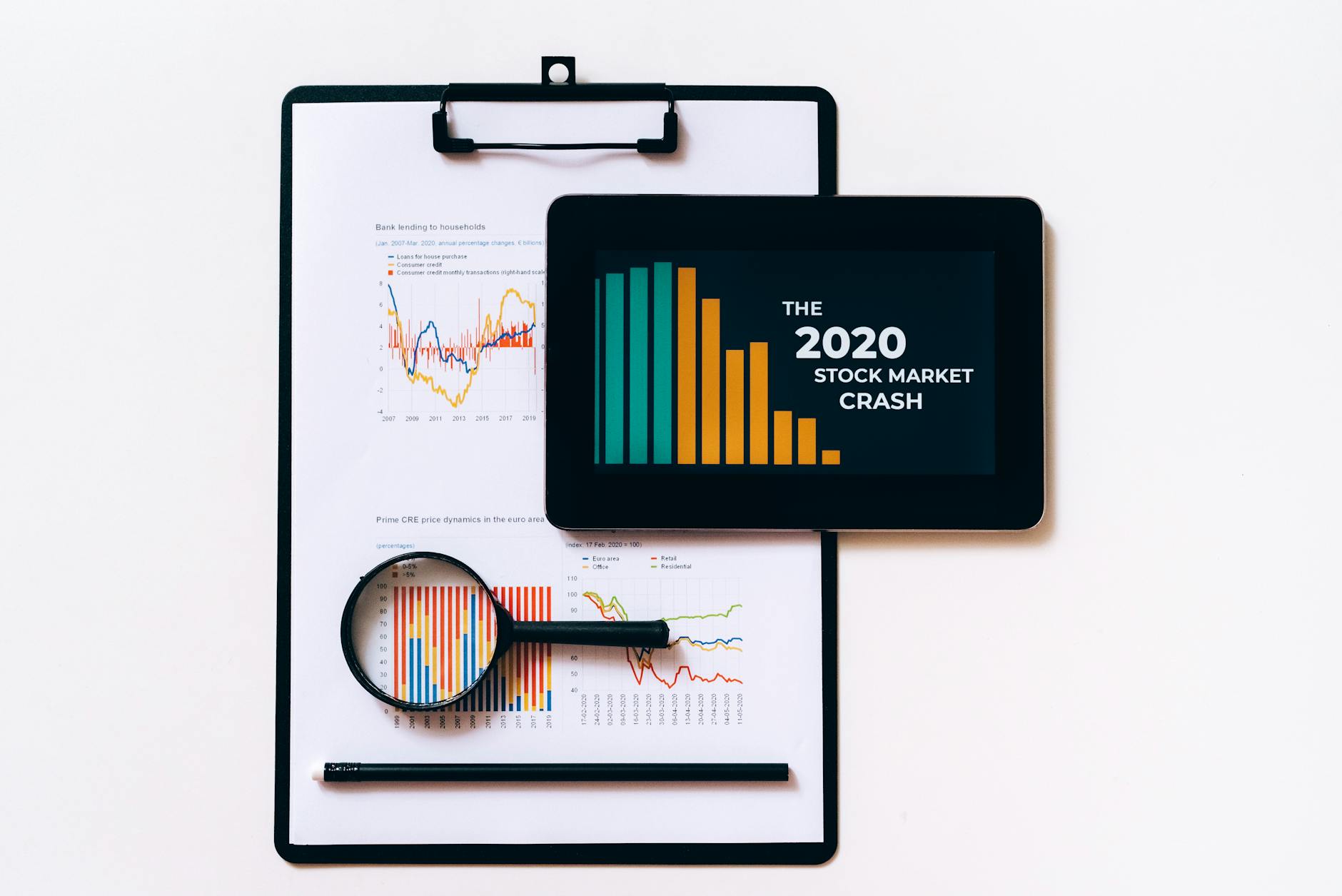
A recession in the years leading up to 2028 would significantly damage the GOP’s electoral prospects, though it would not guarantee Democratic victory. History shows that voters consistently punish the party in power during economic downturns, and no incumbent has overcome stagflation or severe recession in a reelection bid since the 1970s. The 2008 financial crisis cost Republicans the presidency, and the 2020 pandemic recession contributed to Trump’s defeat. If the U.S.
economy contracted in 2027 or early 2028, the economic fundamentals would heavily favor the opposition party. The real question is not whether a recession destroys GOP chances but how severe it would be and how much time remains for recovery. An economy shrinking in mid-2028 with unemployment above 6 percent would be nearly impossible for Republicans to overcome. But if a recession occurred in 2025 or early 2026 and the economy recovered by 2028, higher growth rates and falling unemployment could neutralize the economic headwind. Timing matters enormously.
Table of Contents
- Does an Economic Downturn Guarantee Electoral Defeat?
- Economic Forecasts and Recession Risk Through 2028
- Historical Incumbent Party Performance During Downturns
- Policy Tools and Recovery Timing
- Voter Perception and the Psychology of Recessions
- Regional and Demographic Impacts of Recession
- Future Economic Scenarios and Electoral Implications
- Conclusion
Does an Economic Downturn Guarantee Electoral Defeat?
Economic conditions are the single strongest predictor of incumbent party performance in presidential elections. Political scientist Christopher Achen’s research demonstrates that voters make electoral decisions largely based on whether they perceive the economy as improving or declining. During the 2016 election, trump won Midwestern states partly because voters in those regions blamed the Obama-Biden administration for sluggish wage growth and manufacturing job losses despite the economy technically growing. In 2020, despite the pandemic, Trump’s vote share increased in counties with lower unemployment.
However, recovery timing changes everything. The 1992 election occurred during a technical recovery, but voters still perceived the economy as weak because growth had been lackluster and unemployment remained elevated. Bill Clinton’s famous campaign slogan “It’s the economy, stupid” won him the presidency. By contrast, Ronald Reagan lost the 1982 midterms during a sharp recession but won reelection landslide in 1984 after the economy recovered strongly. Inflation fell from 13 percent to 3 percent, and unemployment dropped from 10 percent to 7.5 percent in that two-year period.
Economic Forecasts and Recession Risk Through 2028
Most major forecasters do not predict a severe recession in the next two years, but economic risks remain elevated. The Congressional Budget Office projects moderate growth of 2 to 2.5 percent annually through 2027, with unemployment stabilizing around 4.5 percent. However, this baseline scenario assumes no major financial shock, trade war escalation, or geopolitical disruption. Interest rates remain higher than historical averages, constraining borrowing for businesses and consumers.
A critical limitation of economic forecasting is its inherent unreliability beyond 12 months. The 2008 crisis, 2020 pandemic, and 2022 inflation surge were not widely predicted in advance. A major recession could result from unexpected sources: a financial sector failure, rapid trade disputes, currency instability, or geopolitical shock. If recession does occur, the timing relative to Election Day will determine its political impact more than its severity.
Historical Incumbent Party Performance During Downturns
Since World War II, the incumbent party’s presidential nominee has lost during or immediately after recessions in nearly every case. In 1960, Richard Nixon lost to John F. Kennedy during a mild recession. In 1976, Gerald Ford lost to Jimmy Carter as the economy recovered from the 1975 recession, but unemployment remained above 7 percent. In 1992, George H.W. Bush lost despite a technical recovery because the recession’s effects on jobs and wages lingered.
The only apparent exception was 2004, when George W. Bush won reelection during his first term despite the 2001 recession—but that election occurred three years after the recession ended, and the economy expanded rapidly in 2003 and 2004. A warning from recent political history: voters do not quickly forgive recessions even after recovery begins. The 2009-2010 recovery created millions of jobs, but many were lower-wage positions without benefits. Democrats still lost the House of Representatives in 2010 despite the statistical recovery. If a 2027 recession occurs and the 2028 recovery is weak or uneven—creating jobs but not raising wages, or benefiting some regions while others stagnate—the GOP’s reelection path becomes extremely difficult.

Policy Tools and Recovery Timing
The Federal Reserve and Congress have tools to combat recession, but their effectiveness and timing are uncertain. The Fed can cut interest rates and inject liquidity into markets. Congress can pass stimulus spending or tax cuts. However, these policies take months to affect employment and consumer confidence. A recession beginning in late 2027 might not show statistical improvement by November 2028, even if the government acts immediately.
The 2008-2009 experience demonstrates this lag: the Great Recession technically ended in June 2009, but unemployment continued rising until October 2009 and remained above 9 percent through 2010. Additionally, fiscal stimulus carries political tradeoffs. If Congress passes major spending measures to combat recession, Democrats will claim they deserve credit for the recovery while Republicans will emphasize the fiscal costs and inflation risks. The relative success of Biden’s 2021 stimulus in preventing deeper recession and 2022’s inflation outcome remains sharply contested along party lines. A 2027 recession response would face similar politicization.
📨 Get Free Accountability Coverage Alerts
Free · No spam · Unsubscribe anytime
Voter Perception and the Psychology of Recessions
Economic perception often exceeds economic reality in determining electoral outcomes. Voters may feel a recession’s effects through job uncertainty, declining asset values, or frozen hiring even if they personally remain employed. The 2008 financial crisis destroyed household wealth through home value and retirement account losses, creating deep economic anxiety that persisted for years. A recession affecting asset prices, home values, or stock markets—even if employment statistics look reasonable—can shift voter sentiment decisively against the incumbent party.
A major limitation in predicting this dynamic is that media coverage and candidate messaging shape perception as much as actual economic conditions. If Republicans successfully argue that external forces (supply chain disruptions, global conflicts, Fed policy mistakes) caused recession, they might soften economic blame. If Democrats effectively frame the recession as resulting from GOP policies or tax cuts that worsened inequality, the political damage intensifies. The 2024 election showed that inflation, despite recent moderation, remained a top voter concern—economic messaging remains highly contested.

Regional and Demographic Impacts of Recession
Recessions do not affect all Americans equally, creating winners and losers in electoral strategy. Manufacturing-dependent regions experience sharper employment losses during recession, while wealthy suburban areas often weather downturns through financial markets and professional services. The 2008 recession devastated the industrial Midwest and swung states like Ohio and Pennsylvania toward Democrats. A similar regional recession in 2027 could hurt Republicans in competitive districts where manufacturing remains important.
However, demographic patterns complicate predictions. Trump’s 2020 gains among working-class and Hispanic voters in areas experiencing manufacturing decline suggest that economic grievance does not automatically translate to Democratic gains. If a recession disproportionately affects financial services, technology, or educated professionals—groups that have shifted away from Republicans—the political calculus changes entirely. A hypothetical recession causing layoffs at tech companies and financial firms might actually help GOP messaging about “coastal elites” facing consequences while other Americans cope better.
Future Economic Scenarios and Electoral Implications
Four major scenarios are possible by late 2028. First, no recession occurs and the economy grows steadily at 2 to 3 percent with unemployment at 4 to 5 percent. In this scenario, the GOP’s reelection chances improve significantly because economic fundamentals become a neutral or slight advantage. Second, a mild recession occurs in 2025-2026 but recovery is robust by 2028, with growth above 3 percent and unemployment falling. This scenario also favors the GOP because voters assess the election-year economy, not the past.
Third, a moderate recession occurs in 2026-2027 with slow recovery, leaving unemployment above 5.5 percent and wage growth below inflation in 2028. This scenario dramatically hurts GOP chances because voters feel economically insecure heading into the election. Fourth, a severe recession or financial crisis occurs close to the election with unemployment spiking above 7 percent. This scenario would likely doom the Republican nominee unless extraordinary circumstances (war, security threat) shifted voter focus away from economics. The historical record suggests that scenario four is devastating, scenario three is highly damaging, while scenarios one and two pose manageable challenges.
Conclusion
Whether a recession destroys 2028 GOP chances depends entirely on timing and severity. A deep recession in 2027 or early 2028 would make reelection extraordinarily difficult, perhaps impossible—history provides no examples of incumbent parties surviving such conditions. However, if recession occurs earlier and recovery takes hold by 2028, rising growth and falling unemployment could overcome the economic headwind. The next 18 months will be critical in determining which scenario materializes.
For voters evaluating 2028 politics, the economic lesson is straightforward: watch employment statistics and wage growth in the months leading to November 2028, not predictions about whether recession will occur. Incumbents win or lose based on how the economy looks when voters cast ballots, not based on recessions that ended years earlier. If the economy is growing and unemployment is falling in late 2028, the GOP candidate will have a fighting chance despite historical patterns. If either metric is worsening, the challenge becomes insurmountable.
You Might Also Like
- Is the GOP Still the Party of Reagan?
- Could Trump Loyalty Hurt Future GOP Candidates?
- Would Jesus Support Trump Style Politics?