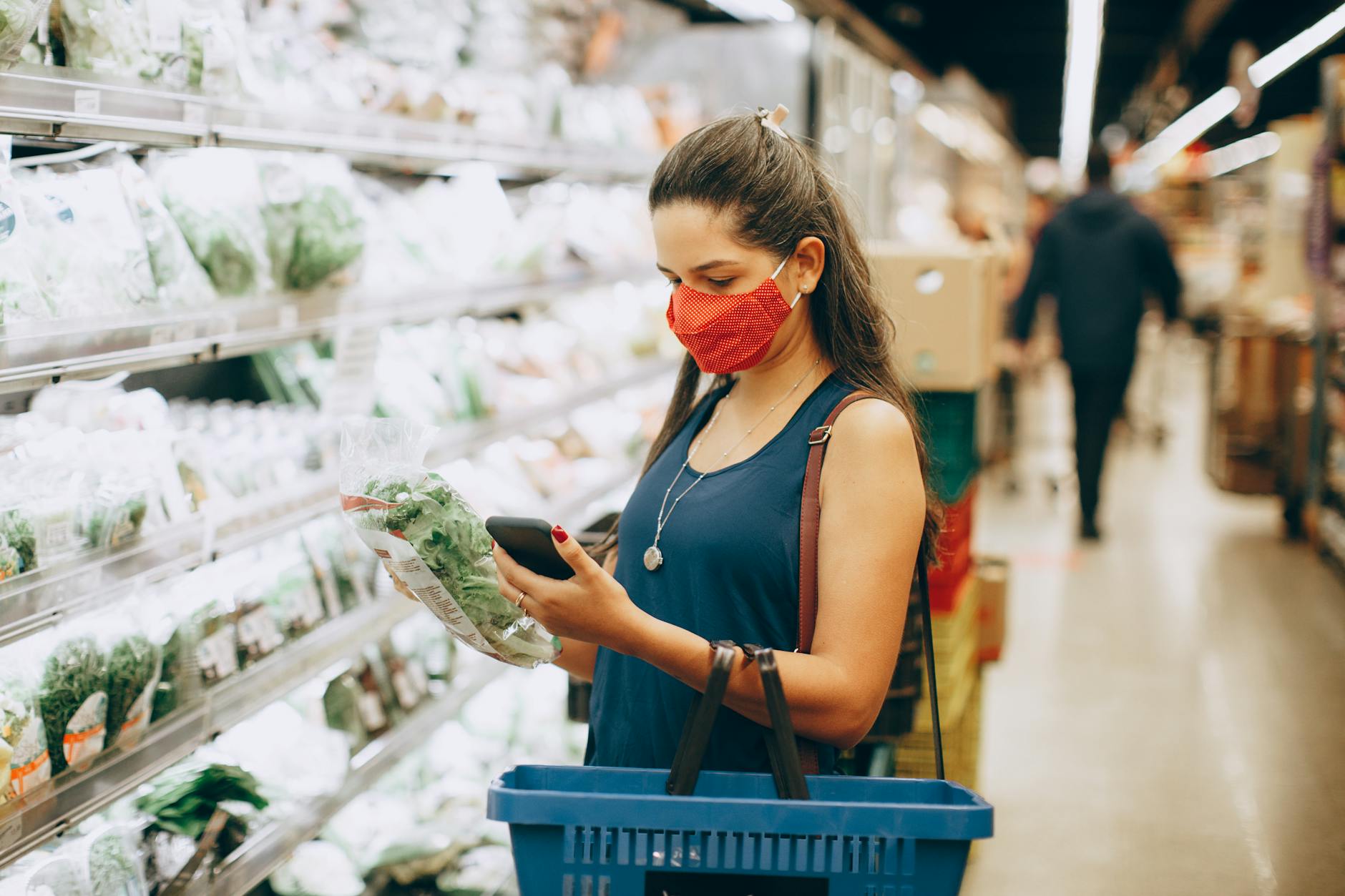
Grocery prices matter more than speeches because they hit your wallet every single week, regardless of what any politician says. When a loaf of bread costs 15% more than last year, when beef prices spike 10%, when your family’s grocery bill forces you to buy store brands instead of name brands—that’s not a talking point. That’s a lived reality that no speech can reframe or dismiss. Americans understand this intuitively, which is why food prices remain the single most powerful indicator of consumer confidence in the economy, even when official statements suggest everything is improving. The contrast is stark.
Politicians can promise economic recovery, tout policy victories, and declare inflation defeated. Meanwhile, food-at-home prices rose 2.7% year-over-year in the 12 months ending March 2026, and the USDA predicts another 3.1% increase for the full year—faster than the 20-year historical average of 2.6%. Nonalcoholic beverages are rising 6.5% in 2026. Beef and veal prices are climbing 10.1%. For a family buying groceries for four, this translates to hundreds of dollars in additional annual costs that speeches cannot explain away. This is why consumers prioritize groceries over politics: the grocery store is a direct, unfiltered referendum on economic conditions.
Table of Contents
- What Consumers Care About More Than Campaign Promises
- The Detailed Breakdown of Rising Food Costs
- How Consumer Behavior Reveals the Truth Politicians Miss
- What Rising Grocery Prices Actually Mean for Your Household Budget
- Why Higher Prices Persist Despite Official Optimism
- The Grocery Store as Economic Reality Check
- Looking Forward – When Will Actions Match Political Words
- Conclusion
What Consumers Care About More Than Campaign Promises
When researchers ask shoppers what matters most to them, the answer is remarkably consistent: price. Sixty-two percent of shoppers say price matters more than brand name, and 81% cite value and affordability as the top factor influencing their food purchasing decisions in 2026. These aren’t abstract preferences—they reflect real constraints. One-third of consumers bought fewer groceries in the past year specifically because of inflation and high prices. That means fewer meals, smaller portions, or items left behind at checkout.
A politician’s promise that inflation is under control rings hollow to someone who just paid $8 for a dozen eggs (though egg prices are predicted to fall 22.2% in 2026, providing some relief in at least one category). The disconnect between political messaging and consumer experience creates a credibility crisis. When government officials claim economic success while grocery bills climb, ordinary people correctly identify the gap. They’re not being fooled by rhetoric because they’re living the numbers every time they shop. A family spending $200 more per month on groceries than they did two years ago doesn’t need an economist to explain their situation—they need actual prices to come down, not assurances that conditions are improving.
The Detailed Breakdown of Rising Food Costs
The price increases are not uniform, but they are widespread. Sugar and sweets are 5.7% higher in January 2026 compared to January 2025. Beverage costs have jumped 6.5%. Animal proteins—the cornerstone of most American diets—are experiencing dramatic increases, with beef and veal up 10.1%. These categories overlap with what families consider essentials, making the increases particularly painful.
A household that reduces beef purchases because prices are too high may shift to chicken or plant-based alternatives, but that still represents a reduction in purchasing power or a forced change in diet preferences. One important limitation: these are aggregate national figures, and regional variation is significant. Grocery prices in rural areas often differ markedly from urban centers, and local availability affects pricing. Additionally, price increases at the wholesale level don’t always translate uniformly to retail shelves—some stores absorb costs, others pass them directly to customers. The 10.1% predicted increase in beef prices may not affect a household with access to discount bulk retailers the same way it affects someone shopping at a smaller, limited-inventory store. But for the majority of Americans shopping at standard supermarkets, these increases represent real financial pressure that cannot be minimized.
How Consumer Behavior Reveals the Truth Politicians Miss
People’s actions speak louder than government assessments. Forty-four percent of consumers bought more store brands than last year, and 88% plan to maintain or increase private-label purchases in 2026. This isn’t preference shifting—it’s necessity. Private-label products are cheaper, and budget-conscious shoppers are embracing them to stretch their grocery dollars. Simultaneously, consumers are shifting to value retailers: Dollar General is up 9%, and Walmart is up 5%. These are not modest movements.
Millions of shoppers are changing where and how they buy food, a direct response to price pressures that official economic commentary often downplays. The shift to value retailers and store brands is a canary in the coal mine. It tells us that consumers don’t believe they can afford to shop the way they did previously, so they’re adapting. A household making $60,000 a year might have shopped at a conventional supermarket three years ago. Today, they’re budgeting their trips to Dollar General or shopping primarily store brands at Walmart. These behavioral changes reflect a degradation in purchasing power that persists even as politicians celebrate economic gains. The consumer isn’t being irrational or overly pessimistic—they’re responding to measurable increases in their cost of living.
What Rising Grocery Prices Actually Mean for Your Household Budget
For a family of four spending roughly $12,000 annually on groceries (the USDA estimate for a moderate-cost plan in 2025), a 3.1% increase translates to roughly $372 in additional annual costs. That’s $31 per month. For families already operating on tight budgets, that $31 comes from somewhere—less money for utilities, transportation, healthcare, or savings. This tradeoff is not trivial. A household with $2,000 monthly take-home income and a $1,000 rent payment loses 1.5% of their available income to food price increases alone.
The pressure compounds across categories. If beef, beverages, and sugar prices all rise simultaneously, families don’t get to choose which increases to absorb—they absorb them all. This is where the comparison to speeches becomes most damning. A speech promising economic growth is meaningless to someone calculating whether they can afford a second car for their spouse’s new job or need to stay with one vehicle. Grocery prices, in this context, are the honest measure of whether ordinary families’ economic lives are actually improving.
📨 Get Free Accountability Coverage Alerts
Free · No spam · Unsubscribe anytime
Why Higher Prices Persist Despite Official Optimism
Consumer sentiment studies consistently show that higher prices remain the key factor in weak confidence in the economy. Even as some metrics improve, 67% of consumers report inflation negatively affects them, down only 3 points year-over-year—still a dominant concern. This persistence reveals something important: inflation has real, lasting effects. When a consumer experiences price increases, especially across essential categories like food, that experience becomes embedded in their economic assessment. One year of 3% food inflation doesn’t feel like victory; it feels like a loss of purchasing power.
There’s a critical warning here: price expectations shape future behavior and confidence. If consumers expect prices to rise again next year, they may make different purchasing decisions now—buying less, switching to cheaper alternatives permanently, or reducing consumption of discretionary food items. This creates a self-reinforcing cycle where price anxiety, whether justified or not, leads to reduced spending and weaker economic growth. Government messages about inflation being “under control” at 3.1% predicted growth don’t address this reality. Three percent annual growth is higher than the historical average and higher than consumers experienced during the lowest-inflation years of the 2010s. It doesn’t feel like “under control”—it feels like persistent strain.
The Grocery Store as Economic Reality Check
Walk into any supermarket and you’re witnessing economic policy in real time. The size of packages has shrunk (shrinkflation). The number of items on sale has decreased. The premium sections that once held a variety of options now feel sparse. These aren’t coincidental retail decisions—they’re responses to wholesale price increases that retailers must manage. A consumer looking for a specific brand of olive oil but finding the shelf picked over isn’t seeing a supply issue; they’re seeing the effect of pricing that pushed other shoppers toward cheaper alternatives or toward buying nothing at all.
A specific example: eggs. The USDA predicts egg prices will fall 22.2% in 2026, the one major category with predicted relief. This is significant. Households that cut back on eggs because a dozen cost $6-8 might return to regular egg consumption when prices normalize. But that temporary spike, while it lasted, caused budget recalculations in millions of households. The fact that relief is coming in one category while beef, beverages, and sweets climb in others is a reminder that food inflation is not a single story—it’s a collection of individual price increases that each require consumer adaptation.
Looking Forward – When Will Actions Match Political Words
Real economic recovery—the kind that shows up in groceries—requires actual price relief, not just slower rates of increase. A 3.1% increase in food prices next year is better than a 5% increase, but it’s still erosion. Consumers will see it, feel it, and factor it into their economic assessments. Politicians and economists might celebrate the moderation; shoppers will continue adjusting their behavior to accommodate higher baseline prices.
The path forward hinges on whether supply-side factors (crop yields, livestock availability, transportation costs) improve enough to stabilize or reduce food prices. Policy speeches about inflation can only matter if they translate into actual price relief at the grocery store. Until that happens, grocery prices will continue to tell a different story than the official economic narrative. Consumers will keep choosing store brands, shopping at value retailers, and buying less—not because they’re pessimistic, but because they’re reading the real numbers on price tags.
Conclusion
Grocery prices matter more than speeches because they’re immediate, tangible, and inescapable. They affect every household regardless of political affiliation or economic literacy. When food prices rise, no amount of rhetoric about economic growth changes the fact that families are spending more money on essentials and less on everything else. The data is clear: 81% of consumers cite value and affordability as their top food purchasing concern; 67% report inflation negatively affects them; millions are shifting to cheaper alternatives and discount retailers. These are not sentiment shifts—they’re behavioral adaptations to real financial pressure.
The next time you hear an economic assessment from government or media, check it against your grocery receipt. The prices you paid are the most honest economic data available. They reflect actual supply, demand, production costs, and inflation far more directly than any quarterly report. If food prices are rising, consumer confidence will remain weak, regardless of speeches. If prices stabilize or fall, consumer behavior will shift, and economic growth will follow. Until then, the grocery store remains the most accurate measure of economic reality for ordinary Americans.
You Might Also Like
- Why Trump’s Pope Comments Could Matter More Than Polls
- Will Gas Prices Reach $10 a Gallon Under Trump? Some Say Yes
- Why Evangelicals Still Back Trump Despite Moral Criticism