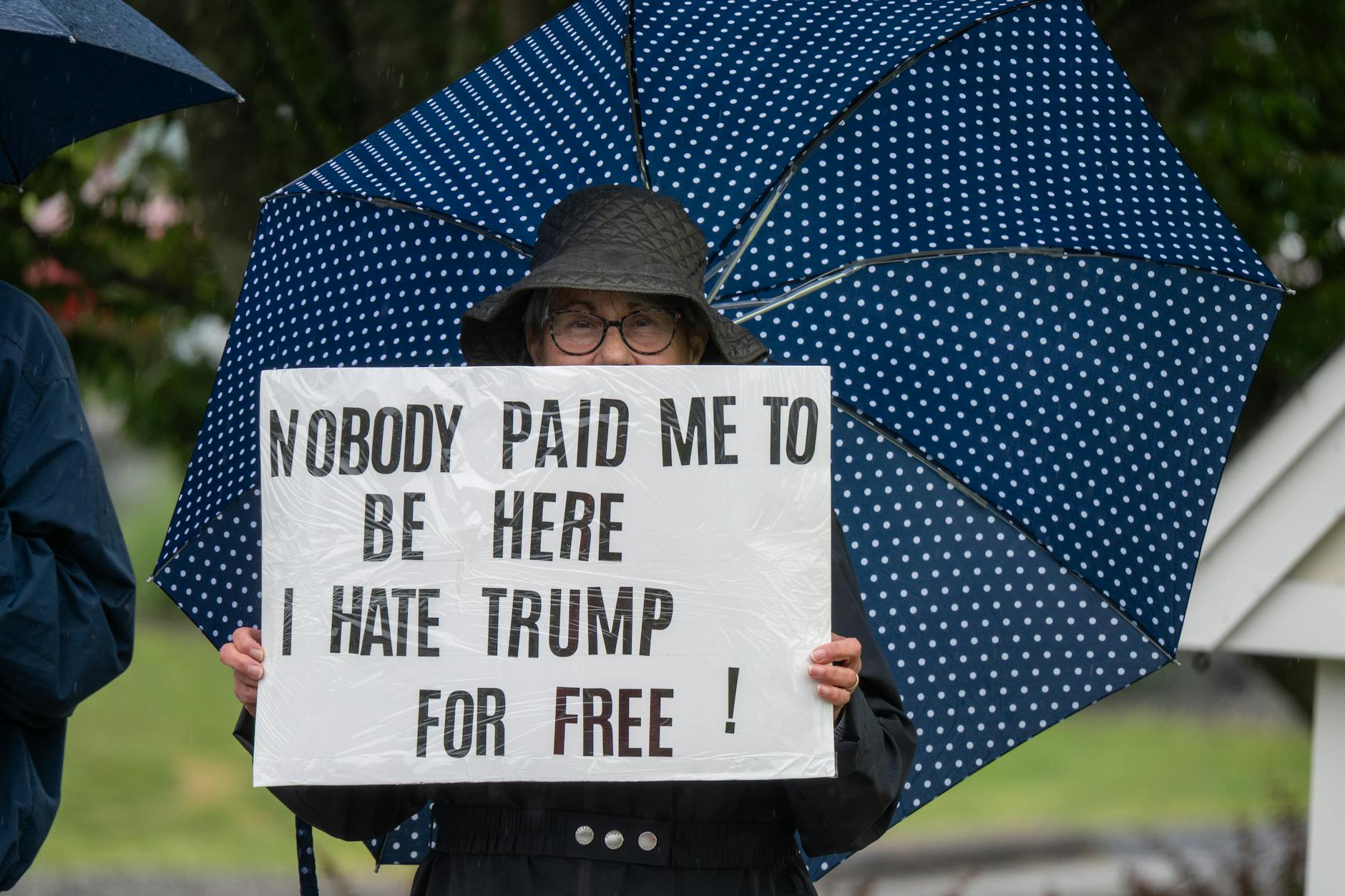
Republicans fear criticizing Trump because doing so carries immediate and measurable political consequences within their party. Donald Trump has consolidated extraordinary influence over the Republican base and the party’s machinery since 2016, creating a system where public criticism often triggers primary challenges, withdrawal of campaign support, social media attacks, and loss of grassroots backing. When Rep. Liz Cheney voted to impeach Trump in January 2021 and continued criticizing his false election claims, she faced a primary challenge funded by Trump allies and was removed from House Republican leadership—a direct demonstration of the cost of dissent within the party.
The fear is structural, not theoretical. Trump maintains direct communication with his supporters through social media and rallies, allowing him to instantly mobilize party voters against anyone he identifies as disloyal. This dynamic has shifted Republican politics fundamentally: where party leaders once expected to manage internal disagreements privately, they now must calculate whether any public criticism will trigger Trump’s personal opposition and the grassroots response that follows. The result is a party where many Republicans support policies or positions they privately question, but publicly defend them to avoid becoming a Trump target.
Table of Contents
- How Trump’s Control Over Party Voters Creates Political Risk for Dissenters
- The Reputational and Social Consequences of Trump Opposition
- Primary Challenge Financing and Party Support as Leverage
- Media Attacks and the Influence of Conservative Media on Party Loyalty
- The Fear of Losing Grassroots Support and Campaign Volunteers
- The Precedent of Long-Term Career Damage for Trump Critics
- Looking Forward: The Structural Entrenchment of Trump’s Party Influence
- Conclusion
- Frequently Asked Questions
How Trump’s Control Over Party Voters Creates Political Risk for Dissenters
Trump’s influence over Republican voters is proportionally larger than his formal position in the party. While serving as a private citizen, he has maintained polling support from 80-90% of Republican voters, a level of loyalty that exceeds even many sitting party leaders. This support translates into real power: Trump endorsements in Republican primaries significantly increase a challenger’s chances of winning, while opposition from Trump substantially decreases an incumbent’s reelection prospects. When Sen. Lisa Murkowski of Alaska voted to impeach Trump and later spoke against him, Trump endorsed her primary challenger, and she was forced to wage a write-in campaign to survive the general election.
The mechanism is simple but brutal. In most Republican primary elections, Trump voters represent a controlling plurality or majority of the electorate. A Republican who criticizes Trump can expect that Trump will either endorse a primary challenger or at minimum remain neutral, which signals to his supporters that the incumbent is fair game for opposition. This has proven devastatingly effective: numerous Republicans have been primaried out after taking positions Trump opposed, including former Sen. Jeff Flake and former House members like Justin Amash. The fear is rational because the political consequences are observable and severe.

The Reputational and Social Consequences of Trump Opposition
Beyond electoral consequences, Republicans who criticize Trump face immediate reputational attacks within their own party and media ecosystem. Trump has demonstrated a willingness to publicly attack Republicans through social media, at rallies, and through allied media figures with the same intensity he directs toward Democrats. When Rep. Adam Kinzinger served on the House Select Committee investigating January 6 and criticized Trump’s role in the Capitol riot, he became a subject of sustained attacks from Trump and Trump-aligned media figures, effectively exiling himself from the broader conservative movement. The limitation of social attacks is their unpredictability and inability to be fully defended against.
A Republican cannot prevent Trump from attacking them or demanding purity; they can only either capitulate or accept the consequences. This creates a chilling effect where many Republicans self-censor on issues where they might otherwise disagree with Trump. Some accept this bargain as the cost of remaining in elected office; others retire rather than face the choice between their conscience and their political survival. Former Rep. Peter Meijer, who voted to impeach Trump, left Congress entirely rather than navigate a primary where he would face Trump opposition—a warning to others contemplating dissent.
Primary Challenge Financing and Party Support as Leverage
Trump’s alignment with high-profile Republican donors and his own fundraising capacity gives him outsized ability to fund challenges against Republicans who cross him. While Trump himself cannot legally funnel unlimited campaign dollars, the alignment of his political interests with wealthy conservative donors means that primary challengers to Trump-opposed Republicans often have access to substantial financial resources. This creates an asymmetry: an incumbent Republican who criticizes Trump must expect to face a well-funded primary challenger, while an incumbent who remains loyal enjoys a more straightforward path to renomination.
The financial disparity matters particularly in lower-profile races where name recognition and advertising dollars determine outcomes. A primary challenger to an incumbent Republican typically must raise millions to be competitive; if Trump endorses or signals support for that challenger, funding often follows. This dynamic has been observed repeatedly in House races where Trump-backed candidates challenged sitting Republicans, sometimes successfully and sometimes failing, but always making the race significantly more difficult and expensive for the incumbent. The warning here is that this mechanism doesn’t require Trump’s direct financial participation—merely his signal of preference is often sufficient to attract donor support to his preferred candidate.
Media Attacks and the Influence of Conservative Media on Party Loyalty
Conservative media figures, particularly those aligned with Trump, have significant power to shape Republican voter attitudes toward party members. Fox News hosts and other conservative media personalities have amplified Trump’s criticism of dissident Republicans, reaching millions of voters in the Republican base. When a Republican criticism of Trump receives sustained coverage in these outlets, it can shift party perception and affect their standing with voters. Rep.
Cheney, after her impeachment vote, was subject to intense criticism from Trump-aligned media figures, which contributed to her becoming a political liability within the Republican Party. The comparison to historical party dynamics is instructive: in earlier eras, party leaders could weather some internal criticism because voters had limited and fragmented media sources. In the current media environment, a coordinated attack from Trump, Trump-aligned media figures, and Trump’s social media presence creates a unified messaging environment where dissent is relentlessly highlighted and attacked. A Republican considering criticism must now factor in not only whether they disagree with Trump, but whether they can withstand weeks or months of coordinated media criticism. Many conclude they cannot, and simply remain silent.
The Fear of Losing Grassroots Support and Campaign Volunteers
Beyond formal campaign mechanics, Trump’s support translates into grassroots mobilization. Trump rallies generate enthusiasm and volunteer activity that many Republican candidates rely on to turn out voters. When Trump publicly opposes a Republican, he signals to his supporters that the candidate is disloyal, which can dampen volunteer enthusiasm and grassroots turnout. This is particularly important in primary elections, where volunteer-driven turnout operations can be decisive.
A Republican candidate who faces Trump opposition may find that the volunteer base they normally depend on is less motivated to help their campaign. The warning is that this creates a dependency: as Republicans increasingly rely on Trump’s direct grassroots support for campaign infrastructure, their ability to weather his opposition decreases. Some House Republicans have noted privately that Trump’s ability to draw his own voters to rallies and mobilize them for campaigns has made him central to their reelection strategy, not peripheral to it. This dependency means that even Republicans who might have privately supported party leadership decisions that differ from Trump’s preferences have become reluctant to do so publicly, because they need Trump’s grassroots mobilization for their own reelection.
📨 Get Free Accountability Coverage Alerts
Free · No spam · Unsubscribe anytime
The Precedent of Long-Term Career Damage for Trump Critics
Several Republicans have experienced sustained career damage from challenging Trump, creating a visible precedent that discourages others from following suit. Beyond the immediate electoral consequences, Republicans who criticize Trump often find themselves marginalized within the Republican Party infrastructure, excluded from leadership positions, and unable to attract support for higher office ambitions. Liz Cheney, despite being the third-ranking House Republican, was removed from leadership and ultimately left the House—a dramatic fall that serves as a clear warning to other Republicans considering public dissent.
The example extends beyond Cheney: Mitt Romney has faced sustained calls for his removal from party positions due to his willingness to criticize Trump; other Republicans have faced primary challenges or loss of committee assignments. These visible consequences create a historical record that new Republican politicians can see, raising the perceived cost of dissent. Any Republican considering public criticism of Trump knows they are likely to face at minimum loss of leadership position, exclusion from party events, and potential primary opposition—a sufficiently high cost to deter many from speaking out.
Looking Forward: The Structural Entrenchment of Trump’s Party Influence
Trump’s influence over the Republican Party shows no signs of diminishing, and the mechanisms that create fear of criticism appear to be becoming more entrenched rather than weakening. Younger Republican politicians entering the party often do so understanding that Trump loyalty is a prerequisite for advancement, which means they have never operated under the older model where party leadership could manage internal disagreements more flexibly. This structural shift suggests that Republicans’ fear of criticizing Trump may persist even if Trump personally steps back from politics, because the incentive structure he created has become embedded in how the party operates.
The forward-looking question is whether this concentration of power within the Republican Party will shift if circumstances change—for example, if Trump were to face serious legal consequences or if he decisively lost an election. Historical parallels suggest that party power dynamics can shift, but they shift slowly and often only after major disruptive events. In the near term, the structural reasons for Republicans fearing Trump criticism remain firmly in place, and Republican politicians face genuine costs for breaking what has become an informal but enforceable party rule of Trump loyalty.
Conclusion
Republicans fear criticizing Trump because the political system he has built creates immediate, observable, and severe consequences for dissent. Primary challenges, withdrawal of campaign support, media attacks, and loss of grassroots mobilization are not theoretical risks—they are documented outcomes that have affected numerous Republicans. The fear is rational, proportionate to the actual threats, and reinforced by visible examples of what happens to Republicans who speak out. This has created a self-reinforcing system where many Republicans either accept Trump’s positions or simply remain silent rather than risk the consequences of public criticism.
Understanding this dynamic is essential for evaluating Republican politics and assessing claims of party support for Trump policies. When a Republican publicly supports Trump despite private concerns, it is often because the political incentives created by Trump’s control over the party make dissent too costly to express. This doesn’t explain every Republican position, but it provides important context for understanding why Republican opposition to Trump policies within the party remains muted despite what polling suggests may be private disagreement among some Republicans. For voters and policymakers, recognizing this dynamic helps distinguish between genuine party consensus and manufactured consensus shaped by fear of political consequences.
Frequently Asked Questions
Can a Republican criticize Trump without facing consequences?
Rarely. Some Republicans in safe seats have more latitude to speak out, and some criticisms (on narrow policy issues rather than character or election claims) carry less risk. However, sustained or direct criticism of Trump consistently triggers primary challenges or other party consequences. Even seemingly safe Republicans like Romney have faced calls for removal from party positions.
Why don’t Republican leaders just stand up to Trump collectively?
Collective action would be necessary to counterbalance Trump’s influence, but individual Republicans lack incentive to be the first to break ranks. Each Republican’s calculation is that if they speak out alone, they bear the full cost of Trump’s opposition, while the benefit of breaking Trump’s control would be shared across the entire party. This is a classic collective action problem that favors Trump’s continued dominance.
Has this always been how the Republican Party works?
No. This level of control by a non-elected figure over the party is historically unusual. In earlier periods, party leaders managed leadership transitions and party disputes through formal party structures. Trump’s influence operates outside these formal channels, through direct communication with voters and support from grassroots voters and media figures, which is a newer dynamic in Republican politics.
What happens if Trump faces serious legal consequences?
It’s unclear. His control over the party might weaken if he were imprisoned or faced outcomes that made him politically toxic, but the structural changes he has made to how the Republican Party operates would likely persist. Any significant weakening of Trump’s influence would probably require a major disruption to the existing political equilibrium.
You Might Also Like
- Why Nothing Seems to End Trump Support
- Is Trump Fatigue Real or Media Fantasy?
- Is Loyalty to Trump Stronger Than Party Loyalty?