
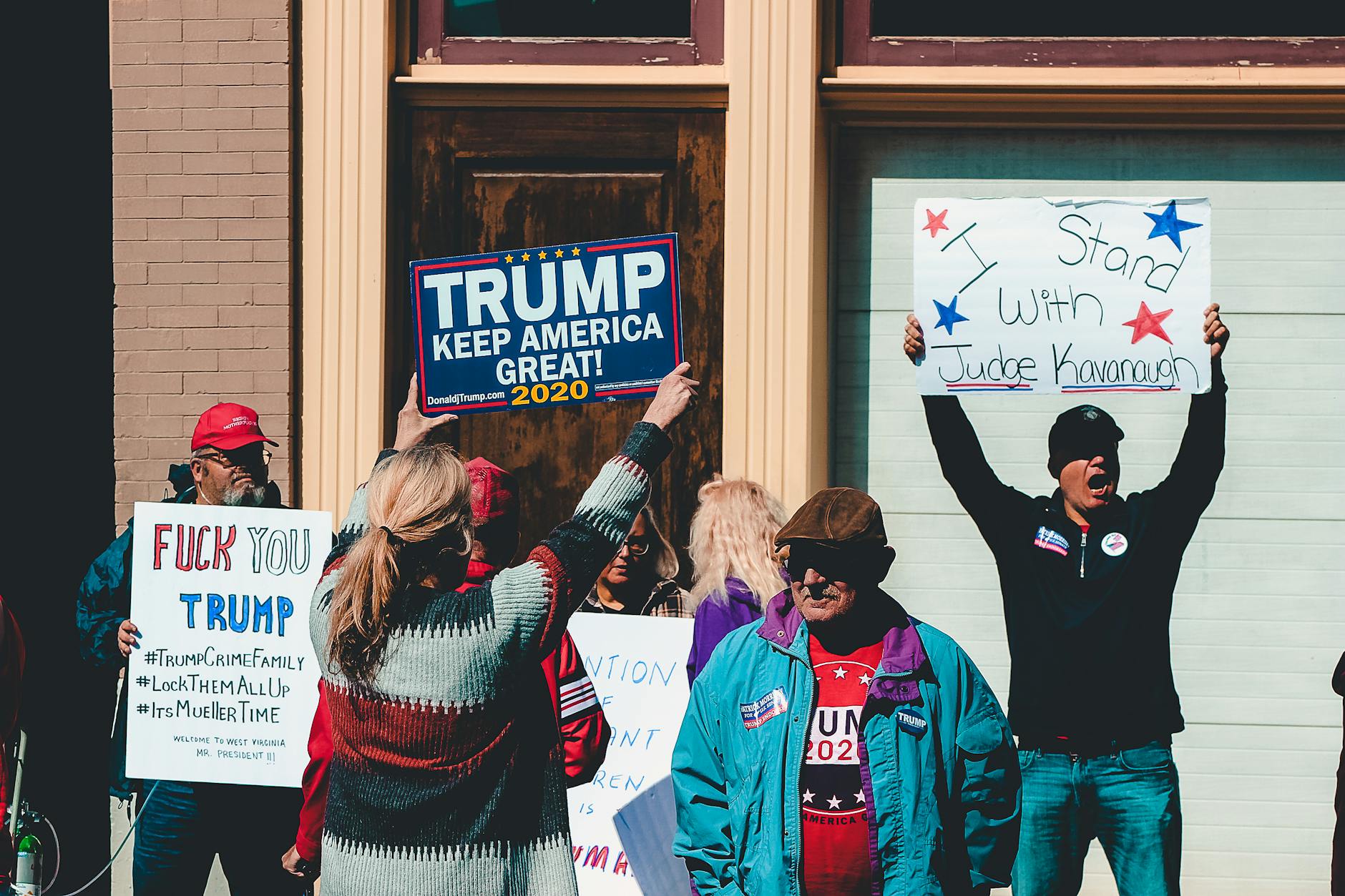
Trump support remains persistent among his base despite ongoing controversies, legal challenges, and policy reversals because supporters have fundamentally different interpretations of events than critics—they view legal actions as politically motivated persecution, media coverage as biased attacks, and policy changes as necessary adaptations rather than broken promises. This phenomenon isn’t unique to Trump; studies on political polarization show that voters increasingly filter information through partisan lenses, meaning the same facts become different realities depending on which media ecosystem someone inhabits. For example, when Trump faced multiple indictments, supporters largely interpreted these as coordinated attacks by a weaponized justice system, while critics saw accountability for illegal behavior—the same events, completely opposite conclusions.
The persistence of Trump support despite scandals reveals a core truth about modern American politics: tribal identity now matters more than individual actions or statements. When someone’s political identity becomes tied to a leader or party, contradictions don’t erode that support—they’re rationalized, reinterpreted, or dismissed as insignificant compared to the broader cause. This explains why support margins have remained relatively stable even as new controversies emerge monthly.
Table of Contents
- How Does Partisan Identity Override New Information?
- What Role Do Legal Battles Play in Reinforcing Support?
- How Do Media Ecosystems Shape Support Persistence?
- What Does Persistent Support Mean for Elections and Policy?
- Why Do Contradictions and Reversals Fail to Undermine Support?
- What Role Do Economic Anxiety and Cultural Concerns Play?
- What Might Eventually Change Trump Support Dynamics?
- Conclusion
How Does Partisan Identity Override New Information?
Partisan identity functions as a cognitive filter that determines how voters process political information. Once someone identifies as “trump supporter,” their brain unconsciously prioritizes information that confirms that identity and dismisses information that contradicts it. Psychologists call this “motivated reasoning”—people aren’t being irrational, they’re protecting their self-image and community membership. A supporter who has repeatedly told family members, friends, and coworkers that they back Trump faces real social costs if they suddenly change positions; admitting error becomes an identity threat. The strength of this effect is measurable. Research shows that partisans literally remember news differently depending on their political alignment—two people watching the same speech recall different quotes and meanings based on their starting bias.
This isn’t stupidity; it’s how human brains work under conditions of high polarization. When Trump contradicts himself (supporting NAFTA, then opposing it, then renegotiating it), supporters view this as flexibility and learning, while critics see hypocrisy. The same behavior, opposite interpretation. Media fragmentation amplifies this effect exponentially. A Trump supporter can spend their entire media diet—Fox News, talk radio, podcasts, social media feeds—in spaces that present Trump favorably and hostile media coverage as proof of bias. They’re not isolated by choice; algorithms actively push them toward confirming content, and communities form around shared political identity. Unlike the 1980s when most Americans watched the same three news networks, today’s supporters can inhabit entirely different informational universes.

What Role Do Legal Battles Play in Reinforcing Support?
Trump’s legal challenges—indictments, civil suits, and civil fraud findings—have functioned as proof of persecution rather than evidence of wrongdoing for much of his base. This inversion of meaning is crucial to understanding support persistence. When prosecutors bring charges, supporters interpret this as the establishment trying to eliminate a political threat, not as accountability. The New York indictment for alleged hush money payments, Georgia’s election interference case, and the federal classified documents prosecution are each interpreted as politically timed attacks designed to keep Trump off the ballot. A significant limitation of this interpretation is that it requires dismissing or delegitimizing institutions that have traditionally commanded bipartisan respect: federal courts, state attorneys general, and career prosecutors.
It demands believing that multiple independent jurisdictions (Georgia, New York, Florida, D.C.) coordinated a conspiracy, and that judges appointed by Republicans would participate in such schemes. This requires an extraordinary level of distrust in institutions, yet millions hold this belief sincerely. The warning here is that when large portions of the electorate lose faith in courts, elections, and prosecutorial independence, the entire rule-of-law system weakens regardless of anyone’s specific claims. However, this dynamic cuts both ways. Critics dismiss legitimate questions about prosecutorial timing and political bias, arguing that pointing out coordination concerns amounts to defending criminality. Neither side’s interpretation has room for nuance: either the charges are real or they’re fabricated; either institutions are trustworthy or they’re weapons.
How Do Media Ecosystems Shape Support Persistence?
Conservative media outlets from Fox News to talk radio to online commentators have invested tremendous resources in presenting Trump support as reasonable and inevitable. These outlets don’t just cover Trump positively; they actively construct narratives where supporting Trump is the only rational response to perceived threats: immigration, inflation, cultural changes, and institutional corruption. This creates a feedback loop where Trump supporters encounter daily validation of their views. For example, when inflation peaked in 2022, conservative media blamed Biden’s spending immediately and thoroughly. When inflation later declined, the same outlets discussed remaining high prices more than the improving trajectory. Trump supporters living in this information environment reasonably believed that Biden caused permanent economic damage.
They weren’t wrong about inflation occurring, but they received filtered information about its causes and trajectory. A supporter consuming only NBC and MSNBC would have absorbed a completely different narrative: temporary pandemic disruptions with improving conditions and Fed responsibility. This isn’t unique to the right. Liberal media outlets largely ignore or downplay stories unfavorable to Democratic leaders while emphasizing negative stories about Republicans. The difference is scale and cohesion—conservative media operates more uniformly, while liberal media is more fragmented. But the principle is identical: media ecosystems create bounded informational spaces where partisan interpretations become self-reinforcing.

What Does Persistent Support Mean for Elections and Policy?
Understanding why Trump support persists has direct electoral and policy implications. It means that normal political dynamics don’t apply: scandal revelation won’t dent support because supporters interpret scandals as persecution. Policy failures don’t undermine support because supporters attribute negative outcomes to obstacles (media hostility, bureaucratic resistance, Democratic obstruction) rather than leadership incompetence. This creates a floor beneath which support can’t fall among engaged base voters. For Trump allies and the Republican Party, this means the base is dependable but potentially electorally limiting. Trump can guarantee a passionate base of roughly 35-40% of voters, but struggles to expand beyond that ceiling because his polarizing image drives up opposition intensity equally.
The comparison: Ronald Reagan maintained high approval ratings across party lines by presenting a less divisive image, even when pursuing similar conservative policies. Reagan could win 49 of 50 states; Trump barely wins popular support with 47%. Both are conservatives; one was more electable through broader coalition-building. For policymakers, this means that Trump-era policies won’t be easily reversed regardless of who holds power, because supporters will fight any changes as betrayals. Post-Trump administrations face a problem: even unpopular policies from the previous administration get fierce defense from supporters who’ve made them identity markers. This makes governance more difficult, as partisan identity increasingly trumps policy evaluation.
📨 Get Free Accountability Coverage Alerts
Free · No spam · Unsubscribe anytime
Why Do Contradictions and Reversals Fail to Undermine Support?
Trump has reversed or contradicted himself on numerous issues: his stance on vaccines (endorsed and then questioned the pace of rollout), his criticism of the Federal Reserve (blamed Powell, then sought to reappoint him), his relationship with North Korea (hostile rhetoric then engagement), and his COVID response (downplayed severity, then took credit for vaccine development). Yet each reversal fails to significantly impact support because supporters employ what researchers call “backfire narratives”—they reframe contradictions as strengths. When Trump changes positions, supporters call it pragmatism and learning. When Democrats change positions, the same supporters call it flip-flopping. This isn’t hypocrisy; it’s tribalism working exactly as designed.
The human brain evaluates identical behavior differently depending on whether the actor is a member of your group (in-group bias). A limitation to remember: this means nearly no amount of factual evidence will automatically change partisan support, because people don’t update beliefs through facts alone—they update beliefs through identity-preserving narratives. A critical warning for those concerned about institutional function: if facts become secondary to identity, and if large populations filter information through partisan lenses exclusively, then the shared factual basis for democratic governance erodes. Citizens in the same country literally inhabit different reality constructs. Elections become competitions between incompatible worldviews rather than debates about policy trade-offs.
What Role Do Economic Anxiety and Cultural Concerns Play?
Underlying Trump support among working-class voters is genuine economic anxiety. Deindustrialization, wage stagnation, and the rise of precarious service-economy jobs are real, measurable trends. Trump’s appeal partly rests on his willingness to diagnose these problems and name culprits (China, immigration, globalist elites) even if his proposed solutions are debatable. For voters experiencing real economic stress, Trump’s rhetoric validates their frustration in ways establishment politicians don’t.
Cultural concerns—immigration, changes to racial demographics, concerns about traditional values—are equally real to supporters. Whether one agrees with how Trump addresses these concerns, they are legitimate political topics. Dismissing support as irrational ignores that supporters have substantive grievances, even if their diagnosis of causes and preferred solutions differ from critics’ views. This is important because it means reversing Trump support requires not just discrediting Trump, but offering an alternative vision that addresses the same underlying concerns (or convincingly argues they’re misdiagnosed).
What Might Eventually Change Trump Support Dynamics?
No major political coalition persists indefinitely unchanged. History shows that realignments happen, but they typically require generational change or extraordinary external events. Trump’s coalition might shift if economic conditions substantially improve, if younger voters increasingly reject older voters’ cultural framework, or if a competing Republican figure offers similar messaging with less baggage. Alternatively, Trump support might endure as a permanent feature of American politics if polarization continues deepening.
The forward-looking reality is this: we’re unlikely to see Trump support collapse through fact-checking, scandal exposure, or journalistic investigation. Those tools didn’t significantly impact support in 2016, 2020, or 2024. Understanding why requires moving beyond the assumption that people simply need better information. It requires recognizing that political identity, tribal belonging, and worldview coherence matter more to most people than any single issue or scandal. Until that changes, nothing seems likely to substantially end Trump support.
Conclusion
Trump support persists not because supporters are uninformed or irrational, but because political identity now functions as a primary lens through which people interpret all new information. When someone identifies as a Trump supporter, they’ve constructed a narrative frame that explains and justifies his actions while dismissing contradicting evidence as biased attacks. Institutional fragmentation—media by partisan alignment, social circles by political affiliation, online spaces by algorithmic amplification—reinforces these separate reality constructs.
The implications extend beyond Trump himself. If large portions of the electorate are genuinely isolated in different informational universes and interpret facts through incompatible partisan lenses, then the conditions for normal democratic governance become strained. Moving forward, political leaders attempting to expand their coalition will need to do more than present facts; they’ll need to engage with the underlying grievances and identity concerns that make partisan loyalty so durable in modern America.
You Might Also Like
- Is Trump Fatigue Real or Media Fantasy?
- Why Wall Street Still Bets on Both Parties
- Why Tech Anxiety Is Fueling Populism