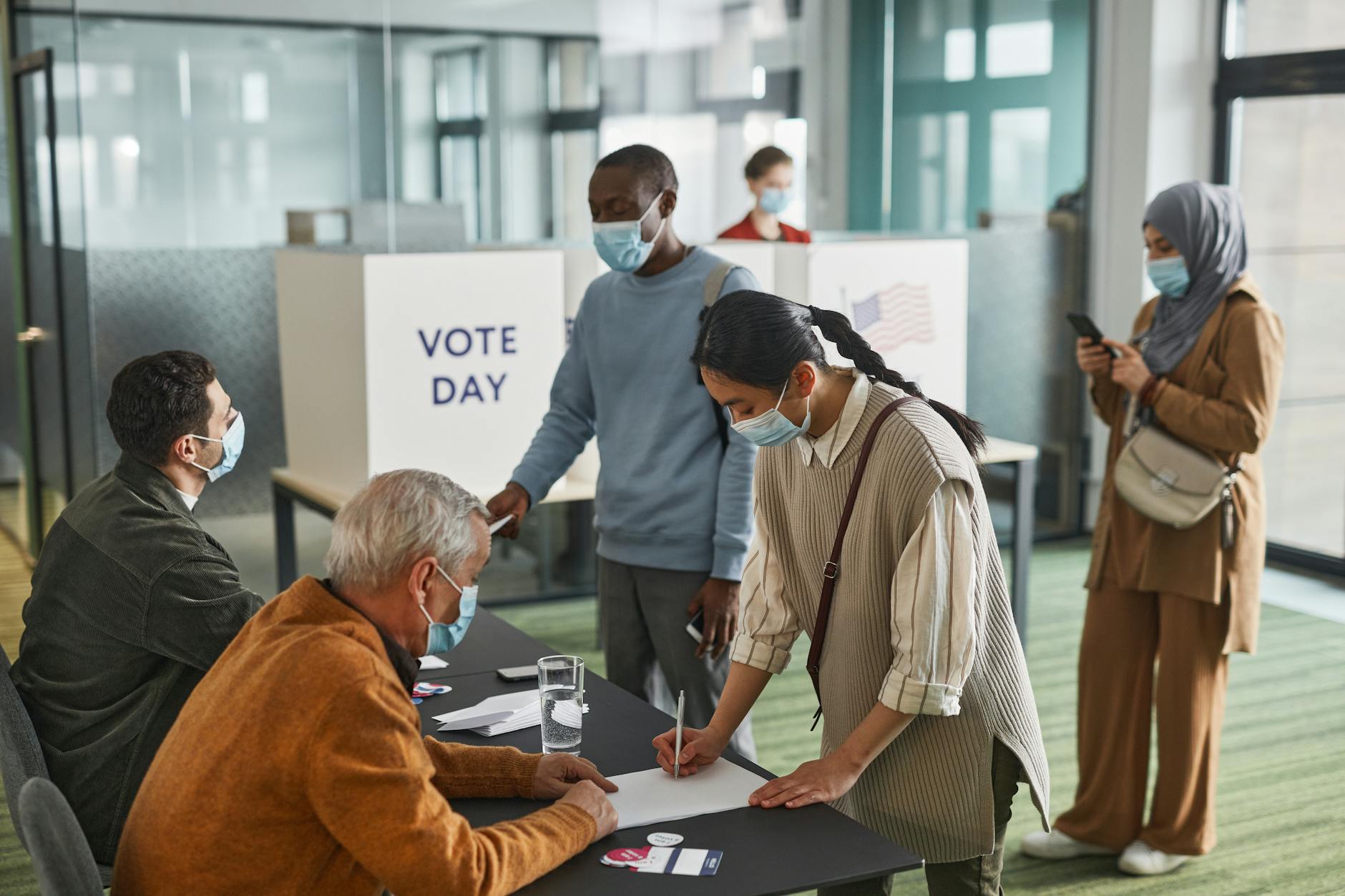
The concept of “hidden Trump voters”—the idea that significant numbers of supporters secretly voted for Trump while concealing their preference from pollsters—appears to have little empirical foundation in 2024. Researchers from the American Association for Public Opinion Research (AAPOR) found no systematic evidence that voters misreported Trump support to pollsters, and prominent pollster Frank Luntz stated plainly: “I don’t believe in this so-called shy Trump voter this time.” This marks a notable shift from 2016, when exit polls and post-election analysis suggested some voters may have underreported Trump support to surveyors. However, the answer to whether hidden voters can “return again” requires a more nuanced understanding of what actually happened in 2024.
Rather than shy voters hiding their preferences, the more significant story involves voters who were previously disengaged from the electoral process altogether. Voters who did not participate in 2020 but cast ballots in 2024 favored Trump 54 percent to 42 percent—a 12-point margin among this previously invisible population. This represents the genuine “hidden” voter phenomenon: not those concealing preferences, but those stepping into the political arena for the first time in a decade.
Table of Contents
- What Research Shows About “Shy” Trump Voters in 2024
- The Real Hidden Story—Previously Disengaged Voters, Not Shy Ones
- Voter Retention and New Voter Acquisition—The Dual Challenge
- How Turnout Levels and Coalition Composition Reshape Elections
- Why Polling Miss “Hidden” Voters Differently Than Previously Thought
- Could This Coalition Reassemble in 2028 and Beyond?
- The Real Focus: Coalition Building Over Voter Concealment
- Conclusion
What Research Shows About “Shy” Trump Voters in 2024
The shy Trump voter theory originated from the 2016 election, when some analysts argued that Trump supporters were reluctant to admit their vote choice to pollsters due to social desirability bias—the tendency to give answers one believes are more socially acceptable. This concern became embedded in post-2016 analysis and influenced polling adjustments heading into 2024. However, systematic research contradicted the narrative before a single 2024 ballot was cast. AAPOR’s analysis of 2016 polling data found little support for the shy voter hypothesis. Researchers examined whether Trump voters systematically reported themselves as undecided or as supporting other candidates, and the evidence was minimal.
FiveThirtyEight’s examination of this question similarly concluded that while polls could miss voters for other reasons—like poor turnout modeling or demographic shifts—there was scant evidence of systematic misreporting about Trump support specifically. This finding matters because it suggests pollsters’ 2024 adjustments based on “shy voter” theories were solving for a problem that didn’t actually exist, potentially introducing new inaccuracies instead. The irony is that despite the lack of empirical support for the shy voter narrative, Trump’s performance in 2024 once again outpaced some polling predictions. Trump received 77.3 million votes (49.8 percent) to Kamala Harris’s 75.0 million votes (48.3 percent), winning the popular vote for the first time. Rather than supporting the shy voter theory, this outperformance reflected a different dynamic: mobilization of previously non-voting or infrequently voting populations who had little reason to tell pollsters about voting plans they hadn’t yet made.

The Real Hidden Story—Previously Disengaged Voters, Not Shy Ones
If the shy voter theory doesn’t hold up, what does explain Trump’s electoral success and his apparent ability to mobilize support that traditional polling might have missed? The answer lies in the voters who simply weren’t participating in surveys because they hadn’t engaged with the political system. These voters represent the genuine “hidden” population—not those hiding their preferences, but those absenting themselves entirely. This group proved decisive in 2024. Among voters who did not cast a ballot in 2020 but did so in 2024, Trump’s margin was substantial: 54 percent for Trump versus 42 percent for Harris. By comparison, Trump maintained strong retention of his 2020 base, with 85 percent of voters who backed him four years earlier doing so again. The composition matters: the net gain came not from persuading Harris voters to switch, but from reactivating and newly mobilizing voters who had been outside the system.
This is a different challenge for pollsters and political analysts than the shy voter problem, and one that traditional surveys struggle to capture because disengaged voters are by definition difficult to reach. The limitation of this data is that it only explains 2024; it doesn’t necessarily predict 2028 or beyond. Mobilization of new and previously disengaged voters depends on specific motivations, campaign intensity, candidate factors, and the overall political environment. A different candidate or different circumstances could produce different results. What worked in 2024 may not scale indefinitely.
Voter Retention and New Voter Acquisition—The Dual Challenge
Trump’s 2024 strategy succeeded on two fronts simultaneously: retaining the overwhelming majority of his 2020 voters while also making inroads with new and previously disengaged voters. The 85 percent retention rate among 2020 Trump voters represents exceptionally strong base cohesion—it’s far more common to see slippage in incumbent party coalitions or when a candidate doesn’t run again. This core stability provided a floor for his support. But the ceiling came from elsewhere. In a race decided by 2.3 million votes out of roughly 155 million cast, the previously disengaged voters who favored Trump 54-42 provided crucial marginal support.
To put this in perspective, if that 12-point margin among newly voting or reactivated voters had been reversed, the overall popular vote could have gone differently. This group’s preference wasn’t hidden through social desirability—it was hidden through non-participation, and only became visible on election day. The warning here is straightforward: relying on newly mobilized or previously disengaged voters as a core electoral strategy carries risk. These voters, by definition, have weaker ties to the political system, lower baseline turnout propensity, and may be responsive to different messaging and mobilization techniques than habitual voters. In 2024, factors like immigration, inflation, and perceived disorder resonated strongly with these voters. Whether those same issues maintain salience, or whether different candidates or circumstances shift preferences, remains uncertain.
How Turnout Levels and Coalition Composition Reshape Elections
The 2024 election saw 63.9 percent of eligible voters cast ballots—the second-highest turnout percentage in the last 100 years. This extraordinarily high turnout is central to understanding where Trump’s votes came from. High turnout elections tend to bring out voters from across the political spectrum, but they also bring out voters with weaker partisan commitments or baseline engagement. These are precisely the voters most likely to fall into the “previously disengaged” category. Higher turnout elections don’t automatically favor one party or the other, but they do change the composition of the electorate. When turnout is very high, the demographic and behavioral composition of voters shifts.
In 2024, this shift included the reactivation of voters who had skipped 2020 and the mobilization of voters who rarely participate. Understanding the margin among these groups is crucial because it means assessing Trump’s coalition requires looking beyond his performance among habitual voters to his strength with episodic voters. This creates a tradeoff for future elections. Democratic campaigns might focus on the fact that extremely high turnout (63.9 percent) still produced a Trump victory, suggesting that their base mobilization strategy has limits. Conversely, Trump-aligned campaigns will focus on the fact that even without winning the habitual voter demographic decisively, the expansion of the electorate benefited them. The durability of this dynamic depends on whether similar voters remain mobilizable and whether the factors driving their 2024 participation persist.
📨 Get Free Accountability Coverage Alerts
Free · No spam · Unsubscribe anytime
Why Polling Miss “Hidden” Voters Differently Than Previously Thought
The pivot from the shy voter theory to an understanding of disengaged voter mobilization changes how we should interpret polling misses. If shy voters aren’t the main problem, what is? The answer involves turnout modeling—predicting which voters will actually cast ballots—and reaching voters who fall outside traditional sampling frames. Disengaged voters are harder to survey because they’re less likely to answer calls from pollsters, less likely to be registered at consistent addresses, and less likely to follow political news that might prime them for survey participation. The 2024 Trump campaign and allied organizations invested heavily in voter contact and mobilization outside traditional polling environments.
Calls from campaign organizations, direct mail, paid digital advertising, and grassroots organizing reached voters that standard phone polls might miss entirely. This represents a different kind of “hidden” than shy voters. These voters aren’t shy about their preferences once engaged—they’re simply not consistently represented in surveys because the traditional mechanisms for reaching voters (random-digit dialing, online panels) have degraded as cell phone adoption has become universal and response rates have declined. The limitation is that surveying methodology has not kept pace with these changes, meaning future elections are likely to see continued gaps between final polls and outcomes—but the gaps will result from turnout surprises and demographic shifts, not from voters hiding their preferences behind social desirability concerns.
Could This Coalition Reassemble in 2028 and Beyond?
The durability of Trump’s coalition and the mobilization of previously disengaged voters in future elections hinges on several factors. First, candidate identity matters enormously. Trump himself was a significant draw for many voters, particularly among working-class and non-college-educated voters, as well as among some demographic groups with limited prior Republican engagement. A different Republican candidate might not produce the same mobilization patterns.
Second, the issue environment will shift—inflation, immigration, and perceptions of disorder drove voting preferences in 2024, but in 2028 or 2030, voters will be responding to an entirely different set of circumstances and may re-evaluate their priorities. The example of 2020 illustrates this point. Trump lost the popular vote despite receiving 74 million votes (an increase from 2016), because turnout surged overall and new and reactivated voters favored Joe Biden. The same underlying mechanism—disengaged voters becoming engaged—operated, but with different effects. This suggests that Trump’s ability to reassemble his coalition depends not merely on the existence of mobilizable disengaged voters, but on whether his campaign and allied organizations can outcompete Democrats for their support and engagement.
The Real Focus: Coalition Building Over Voter Concealment
The broader lesson from examining 2024 voting patterns is that focus on “hidden” or “shy” voters may have been a distraction from the more important story: voter engagement and coalition composition. Political competition in the modern era operates less through convincing existing voters to switch sides (though this still happens) and more through differences in whose supporters show up to vote. The question isn’t whether hidden Trump supporters exist in significant numbers—the research suggests they don’t—but rather whether voters previously outside the system can be mobilized and retained.
This reframing has implications for 2028 and beyond. Rather than debating whether shy voters will emerge or whether systematic polling errors driven by social desirability will recur, political analysts and campaigns should focus on understanding which populations are mobilizable, what drives their participation, and how to maintain engagement beyond a single election cycle. For Trump-aligned operations, the question becomes whether the 54-42 advantage among previously disengaged voters was a one-time shift driven by unique 2024 circumstances or a durable feature of the American electorate they can reliably access. For Democratic campaigns, it becomes how to compete for these voters or alternatively, how to maintain their own mobilization advantages among other segments of the electorate.
Conclusion
Hidden Trump voters in the sense of shy voters reluctant to admit their preference appear not to exist in significant numbers—researchers and prominent pollsters have found little empirical support for this phenomenon in 2024. However, Trump’s electoral success did involve a genuinely “hidden” population: voters who had not participated in 2020 but came to the polls in 2024, where they favored Trump 54 percent to 42 percent. This previously disengaged group provided crucial marginal support and represents the real story of voter “hiding”—not concealment of preferences, but absence from the political system until 2024.
The question of whether this pattern can be replicated depends on factors that extend beyond polling theory: whether the same voters remain mobilizable, whether the issues driving their 2024 engagement maintain salience, and whether different candidates or circumstances reshape their preferences. The durability of Trump’s coalition will depend not on hidden voters remaining hidden, but on whether his political movement can sustain engagement with voters who had checked out of politics. For the broader electorate and for political analysts, the lesson is that understanding voter composition and participation is more important than debating whether certain voters are shy. That shift in focus better reflects the actual challenges and opportunities in American electoral politics.
You Might Also Like
- Can Trump Win Hispanic Men Again?
- Can Democrats Compete in Small Town America Again?
- Why Faith Based Voters Still Matter