
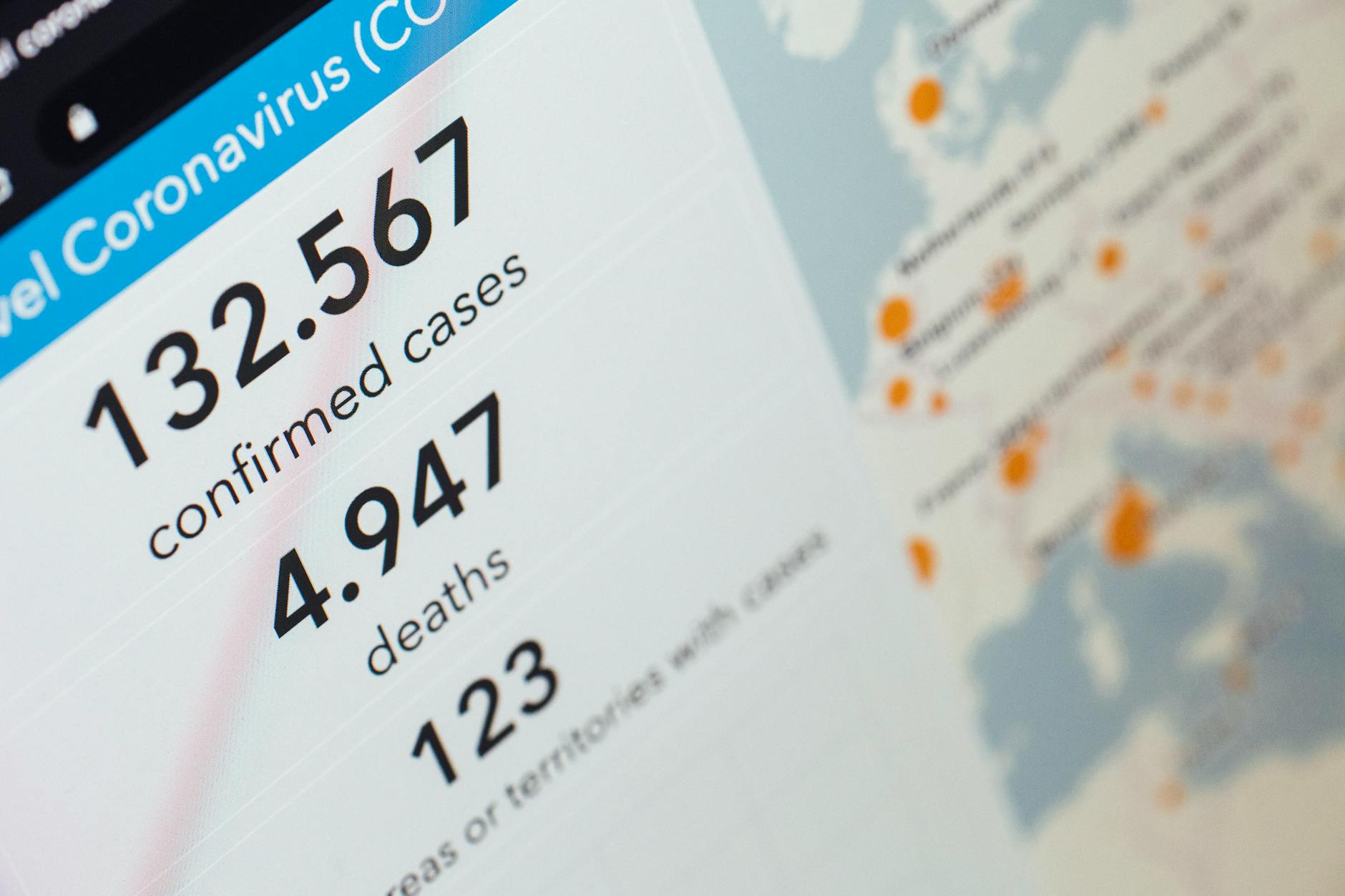
Americans have stopped trusting the mainstream media, and the numbers tell a stark story. Only 28% of Americans now express a “great deal” or “fair amount” of trust in newspapers, television, and radio to report the news fully, accurately, and fairly. According to Gallup’s 2025 survey, this represents the lowest level of trust since polling began in the 1970s. When fewer than one in three people believe the institutions responsible for informing the public are doing their job honestly, something fundamental has shifted in American democracy. This collapse in confidence didn’t happen overnight. Trust in national news organizations dropped a staggering 11 percentage points between March and September 2025 alone, with 56% of Americans expressing at least some trust as of September 2025. The decline reflects years of accumulating grievances: perceived bias, editorial decisions that seem driven by ideology rather than facts, and a growing sense that major newsrooms have agendas that don’t align with how ordinary Americans see the world.
Consider the 2024-2025 election cycle, when mainstream outlets faced sustained criticism for story selection and framing that left roughly half the country feeling their concerns were either dismissed or distorted. That wasn’t a unique moment—it’s become the baseline expectation. The consequences are real. When the public doesn’t trust the institutions meant to hold power accountable, those institutions lose their ability to do so. Government agencies can operate without scrutiny. Corporate wrongdoing can persist longer. Consumer fraud schemes can flourish in information gaps. The breakdown of shared facts makes civic conversation nearly impossible, because citizens no longer have a common reference point for what’s actually happening in the world.
Table of Contents
- How Partisan Polarization Has Fractured Media Confidence
- The Generational Divide: Age as a Predictor of Media Trust
- The Credibility Crisis Behind the Numbers
- Local News: The Exception That Proves the Rule
- Editorial Choices and the Appearance of Agenda
- The Economic and Structural Roots of the Crisis
- What Comes Next: The Information Crisis and Democratic Accountability
- Conclusion
How Partisan Polarization Has Fractured Media Confidence
The trust crisis in mainstream media follows starkly partisan lines, revealing a system that has lost credibility across the political spectrum, just in different ways. Republican trust in the media hit 8% in 2025—the first time this metric has fallen into single digits since tracking began. This isn’t just a recent development; it represents the culmination of decades of messaging that mainstream outlets are biased against conservative viewpoints. Whether that perception is always accurate is debatable, but perception is what determines behavior. When 92% of Republicans believe the media can’t be trusted, that becomes their operating reality, and they make choices accordingly. Democrats, meanwhile, still show more trust, but it’s a qualified and modest majority. Only 51% express confidence in mainstream media—a historic low that matches the previous record set during the 2016 election.
This is telling because it suggests the partisan divide isn’t simply a function of Republicans distrust; something in the media’s approach has eroded confidence across the entire political landscape. Democrats who once relied on major newsrooms to cover their stories now express reservations about institutional quality and motivation. Independents sit even lower at 27%, showing that those outside either major party have even less faith in mainstream outlets. The polarization means different segments of the country are essentially living in different information universes. A Republican consuming news curated toward conservative commentary exists in a fundamentally different reality from a Democrat relying on mainstream outlets, or an Independent trying to piece together truth from fragmented sources. This fragmentation has real downstream effects. Without shared facts, policy conversations become impossible. Jury selection in litigation becomes complicated when potential jurors have been exposed to vastly different narrative frameworks about the same events.

The Generational Divide: Age as a Predictor of Media Trust
Age is now one of the strongest predictors of whether someone trusts mainstream media. Adults 65 and older show 43% trust in traditional news outlets—still a minority, but substantially higher than any younger age group. Everyone younger than 65, by contrast, trusts mainstream media at 28% or less. That’s a stark gap with profound implications for the future of information institutions. The situation is even more dramatic for Americans under 30. This age group shows equal confidence in national news organizations (51%) and social media platforms (50%). In other words, young adults trust TikTok as much as they trust the New York Times or CNN. This represents not just a shift in media consumption but a fundamental equalization between professional news operations and unfiltered social platforms—a comparison that should concern anyone who cares about information quality.
Social media platforms have algorithms designed to maximize engagement, not accuracy. They amplify emotion and conspiracy. Yet they’ve achieved parity with newsrooms that employ fact-checkers, editors, and institutional processes supposedly designed to catch errors. This generational divide has several causes worth understanding. Younger Americans have never known a world without the internet, so they’ve always had access to alternative information sources. They’ve watched mainstream outlets get major stories wrong or refuse to cover stories that later proved consequential. Many have also been exposed to media literacy arguments suggesting that all institutions, including news outlets, have built-in biases worth questioning. The result is healthy skepticism taken to an extreme—a default presumption that nothing should be trusted without independent verification, which sounds prudent until you realize most people lack the time or expertise to independently verify everything they encounter.
The Credibility Crisis Behind the Numbers
The low trust figures reflect a real credibility crisis, not just partisan disenchantment. A majority of Americans express low confidence in journalists to act in the best interests of the public, according to Pew Research data from February 2026. This goes beyond disagreement about editorial positions; it’s a question about fundamental motivation. Do journalists care about truth, or are they serving other interests—corporate owners, advertisers, ideology, partisan allies? Public skepticism on this question has become the default rather than the exception. Recent high-profile cases have fed this skepticism. The retraction by Rolling Stone of its University of Virginia campus assault story, CNN’s bungled reporting on the Trump University settlement, and multiple media outlets’ overconfidence in the Russian collusion narrative during the Trump administration all provided evidence for those who believed mainstream outlets got major stories wrong. Importantly, these weren’t disagreements about interpretation or perspective; they were errors about facts that could be verified.
When institutional news outlets make these kinds of mistakes, especially at high-profile outlets, it chips away at the foundation of public trust. One mistake might be forgivable. Multiple errors across different outlets over several years becomes a pattern, and patterns create conclusions. The financial pressures facing traditional newsrooms have also undermined credibility. As advertising has migrated to digital platforms and readers have abandoned paid subscriptions, many outlets have downsized reporting staffs while increasing the number of stories each reporter must produce. This creates obvious pressure toward shortcuts: recycling press releases rather than reporting, failing to seek comment from affected parties, covering stories from afar rather than doing on-the-ground reporting. The audience can sense this decline in rigor, whether consciously or intuitively. Fewer original investigations, more reliance on talking heads, less accountability for accuracy—these trends are noticeable even to casual news consumers.
Local News: The Exception That Proves the Rule
If there’s any silver lining in the trust crisis, it’s that local news outlets retain somewhat higher credibility than national outlets. Roughly 70% of Americans express at least some trust in local news organizations, which is substantially higher than the 28% figure for mainstream media overall. The reason is straightforward: local journalists cover stories their communities can verify firsthand. A city council meeting, a school board decision, a local business closing—these are events that readers directly experience or can directly investigate. When a local newspaper covers something in your neighborhood inaccurately, you find out quickly. However, even this relatively bright spot is dimming. Trust in local news has declined from 82% in 2016 to 70% today, a 12-point drop in less than a decade.
This decline often reflects a deeper problem: the collapse of local news economics. Hundreds of local newspapers have shut down entirely over the past 15 years, and many of those remaining have reduced staff to skeleton crews that can barely cover routine city business, let alone investigate complex stories. Communities without functioning local news outlets suffer measurable increases in municipal corruption, government waste, and fraud. Studies show that when a local newspaper closes, property tax fraud increases, construction permits become easier to obtain through connections rather than merit, and school districts operate with less scrutiny. The irony is that local news represents the model that could theoretically fix the credibility crisis: news produced by people living in the community, accountable to readers they encounter at coffee shops and churches, with strong incentives to get things right because errors directly affect their neighbors. Yet this model is being economically destroyed at the very moment the public is rejecting national outlets. The market incentives are perverse. It’s economically viable to operate a partisan cable news channel or a national digital outlet; it’s nearly impossible to operate a profitable local newspaper in a mid-sized American city.
📨 Get Free Accountability Coverage Alerts
Free · No spam · Unsubscribe anytime
Editorial Choices and the Appearance of Agenda
Much of the trust crisis stems from how mainstream outlets choose which stories to cover and which to ignore or minimize. Readers don’t need to prove intentional bias to feel that coverage is slanted; editorial decisions about newsworthiness can create that impression. If one political perspective’s scandals receive extensive coverage while another’s receive minimal coverage, audiences notice. If a particular issue dominates headlines during one political regime but disappears when different leadership takes power, observers catch the pattern. Consider how major outlets covered various stories depending on political context. Economic statistics that earned prominent coverage in one administration disappeared from front pages in another, despite remaining equally significant. Crime stories that sparked investigations and outrage in some circumstances received cursory treatment in others. Immigration enforcement actions were covered with different urgency and framing depending on which president implemented them.
These aren’t necessarily fabrications; they’re editorial choices about what deserves coverage and what doesn’t. But when these patterns appear consistent—always favoring one viewpoint, always skeptical of one side—it creates the appearance of institutional bias even if no individual journalist is deliberately pushing an agenda. The limitation worth acknowledging is that some editorial judgment is inevitable. Outlets must decide what’s newsworthy. Not every story can receive equal coverage. Different outlets will make different choices based on their audience and resources. The problem arises when these choices become too predictable, too consistent, and when they diverge too sharply from what different segments of the audience consider important. When that happens, trust doesn’t just decline—it collapses into separate information ecosystems where different groups consume different news entirely.
The Economic and Structural Roots of the Crisis
Understanding why trust collapsed requires looking at the economic forces reshaping journalism. Digital advertising platforms, particularly Google and Facebook, have captured the vast majority of online ad revenue while doing almost none of the reporting themselves. This has devastated the financial model that sustained newsrooms for a century. Outlets that once employed dozens of reporters and editors now operate with a fraction of that staff, forcing reporters to produce more stories more quickly, which inherently reduces quality and depth. This economic squeeze creates perverse incentives.
Outlets are pushed toward sensationalism because sensational stories drive clicks and engagement. They’re incentivized toward polarization because partisan audiences are more loyal and generate more engagement. They’re encouraged to focus on national culture war issues that trigger strong reactions rather than patient investigation of local regulatory failures. The result is a news ecosystem optimized for virality rather than truth, for audience retention rather than public understanding. It’s not necessarily that journalists have become less ethical; it’s that the economic system they operate within rewards different behavior than the one their predecessors worked in.
What Comes Next: The Information Crisis and Democratic Accountability
The decline of trust in mainstream media represents one of the most significant challenges facing democratic governance. When citizens don’t trust the institutions meant to provide factual information about how the world works and how power is exercised, democratic accountability becomes nearly impossible. Voters can’t make informed choices. Juries can’t fairly evaluate evidence. Regulators and legislators can’t respond to public concern because they lack shared understanding of what the actual problems are.
The path forward likely involves multiple complementary approaches. Greater transparency about editorial decision-making might help—outlets explaining why certain stories are covered and others aren’t. Renewed investment in local journalism, perhaps through public funding models or structural reforms to the digital advertising market, could restore the institutions most resistant to the current crisis. Independent media outlets and newsletters have filled some of the void left by mainstream outlets’ credibility loss, though they lack the resources for comprehensive reporting. Ultimately, the question isn’t whether trust in mainstream media will be restored, but rather what will replace it as the primary source of factual information for Americans trying to navigate an increasingly complex world.
Conclusion
Nobody trusts mainstream media anymore because trust requires a combination of perceived accuracy, apparent motive integrity, and consistent performance across time. Mainstream outlets have failed on all three counts—whether due to genuine errors, structural pressures that reward sensationalism, or editorial patterns that appear to serve partisan interests. The numbers are undeniable: 28% of Americans trust mainstream media, down from significantly higher levels just years earlier. The pattern is consistent across Gallup and Pew Research, and it’s worsening, not improving. The consequences extend far beyond journalism. Without trusted institutions providing factual information, democratic accountability deteriorates.
Government agencies operate with less scrutiny. Corporate wrongdoing persists. Consumer fraud flourishes. Citizens fragment into separate information universes where productive debate becomes impossible. Rebuilding trust will require not just changing how outlets operate, but fundamentally restructuring the economic incentives driving news production. Until those incentives change, distrust in mainstream media isn’t likely to reverse—it will continue deepening.
You Might Also Like
- Why Some Christians Say Trump Failed Biblical Values
- Is Gen Z Quietly Turning Against MAGA?
- How Do Catholics Reconcile Supporting Trump After Pope Mockery Claims?