
Yes, Gen Z is turning against MAGA—and the movement’s collapse among the youngest voters is both rapid and comprehensive. An April 2026 poll of 3,009 adults ages 18-29 found that 76% of Gen Z disapproves of Trump, with 60% strongly disapproving. That represents a stunning 14-point increase in disapproval from just six months earlier, in August-September 2025. Gen Z has become more disapproving of Trump than any other age group—including millennials, Gen X, and baby boomers—marking a historic shift in youth politics.
The erosion extends far beyond general approval ratings. Among young voters who once confidently identified with MAGA, enthusiasm is collapsing. A Spring 2026 survey of over 2,000 young Americans found that only 10% confidently identify as MAGA, while 77% position themselves outside the movement entirely. For a political movement that once claimed to represent the future, this rejection from the generation supposedly closest to that future is both dramatic and disorienting.
Table of Contents
- The Generational Divide: Why Gen Z Stands Apart From Older Trump Voters
- The MAGA Identification Crisis Among Young Republicans
- When Young MAGA Supporters Themselves Are Wavering
- Iran War and Economic Turmoil Drive Young Voters Away
- The Limits of Current Gen Z Anti-MAGA Sentiment
- Democratic Advantage and the Youth Electoral Map
- What MAGA’s Youth Crisis Means for Republican Future
- Conclusion
The Generational Divide: Why Gen Z Stands Apart From Older Trump Voters
The data reveals something striking: Gen Z’s rejection of trump is more severe than among any other generation, a reversal of historical patterns. Older voters—baby boomers and Gen X—have remained more stable in their Trump support or disapproval, but Gen Z has moved decisively against him. This generational split carries real political implications. In a March 2026 Yale Youth Poll, voters aged 18-22 favor Democrats by 23 points, while those aged 23-29 favor Democrats by 30 points.
These aren’t narrow margins; they represent overwhelming Democratic advantages among the cohort that will shape American politics for the next 40 years. The movement’s failure to retain Gen Z support is particularly telling because maga was explicitly sold as a youth-oriented movement. Social media influencers and online personalities promoted MAGA culture to Gen Z audiences. Yet despite these efforts, the movement has largely failed to convert temporary interest into lasting political commitment. The speed of this reversal—a 14-point increase in disapproval in just six months—suggests not gradual political realignment but something closer to active repudiation.

The MAGA Identification Crisis Among Young Republicans
The real crisis for the MAGA movement appears within its own tent: among young Republicans. A Spring 2026 survey found that 66% of young Republicans identify with traditional Republicans rather than MAGA—a 10-point drop from the previous year. Even more striking, 59% of young Republican respondents actively identify as non-MAGA Republicans. this distinction matters enormously.
These are not Democrats or independents; these are voters whose families have likely been Republican for generations, yet they are explicitly rejecting the MAGA label even while maintaining nominal Republican identity. This fracture within the Republican Party’s youth base represents a limitation to MAGA’s claim of representing the party’s future. If nearly two-thirds of young Republicans reject the MAGA identity, then MAGA has failed at its core mission: consolidating the next generation of Republican voters. Instead, the movement faces internal opposition from young conservatives who see traditional Republicanism as more aligned with their values. This creates a structural vulnerability for Trump’s political project—unlike a defeat by the opposing party, an internal party division is harder to recover from and suggests deeper ideological conflicts within conservatism itself.
When Young MAGA Supporters Themselves Are Wavering
Even among the shrinking cohort of young voters who still identify as MAGA, support is eroding. An April 2026 analysis found that while 86% of young MAGA voters still approve of Trump, disapproval has climbed from 6% to 14%—an 8-point increase. This is significant: it suggests that MAGA identification no longer guarantees Trump support among young voters, creating a dangerous precedent for the movement’s leadership. The vulnerability appears sharpest on economic issues.
Among young MAGA supporters, disapproval of Trump’s handling of inflation jumped 16 points, from 13% to 29%. This statistic reveals a critical weakness: young voters in the MAGA coalition came in with expectations about economic performance. When inflation and rising gas prices persist despite Republican control of the presidency and both chambers of Congress, disillusionment follows quickly. For a generation that came of age during the post-pandemic inflation crisis, this economic pain is not abstract—it directly affects their ability to rent apartments, buy cars, or plan for the future. A MAGA supporter who approved of Trump’s inflation handling six months ago but now disapproves represents a voter actively reassessing their political commitments.
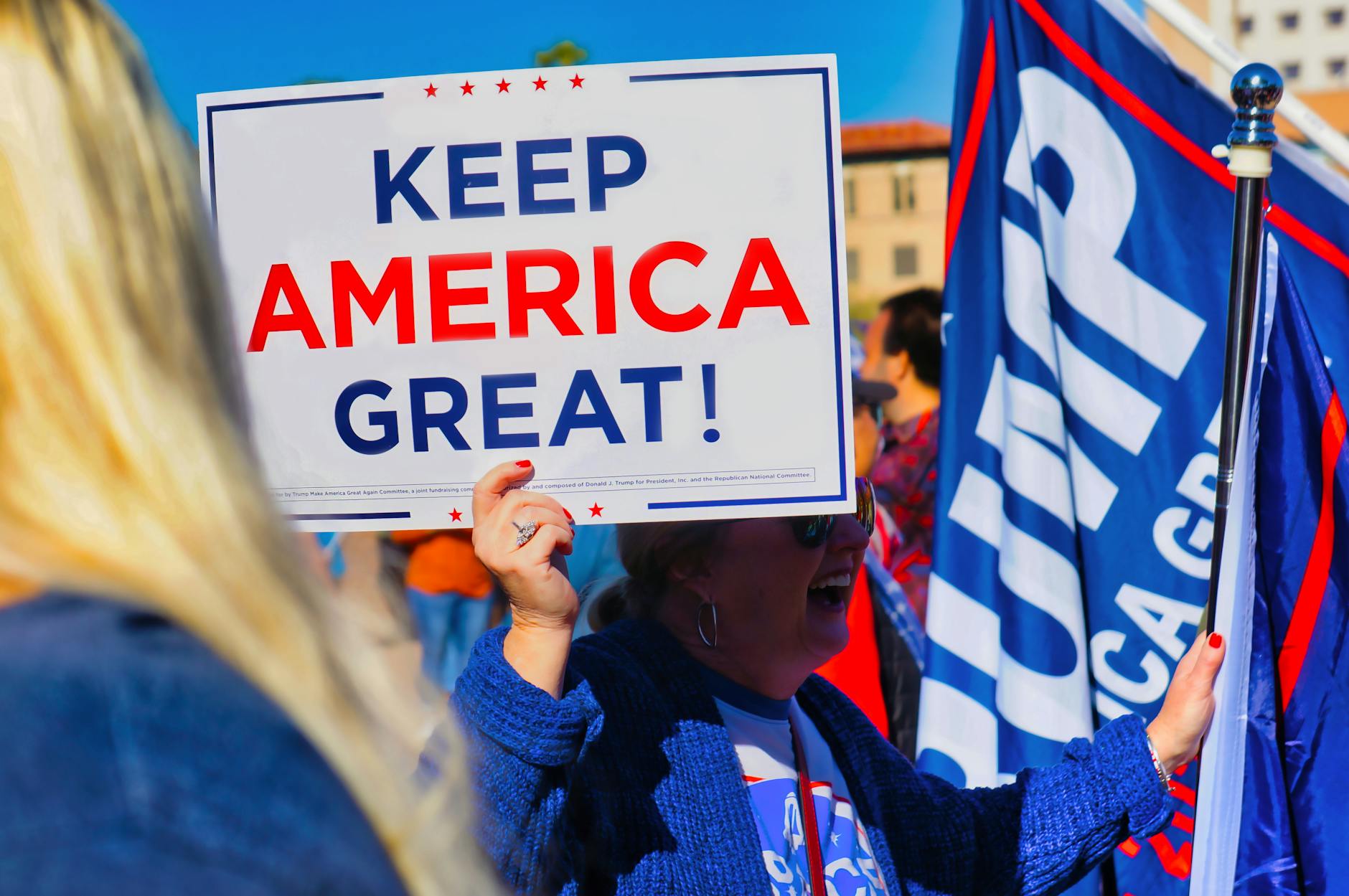
Iran War and Economic Turmoil Drive Young Voters Away
Two specific factors have accelerated Gen Z’s departure from MAGA: the Iran war and economic deterioration. Trump’s decision to escalate military tensions with Iran alienated parts of his base who voted for him explicitly on an anti-intervention platform. Young voters who believed they were voting for “America First” isolationism instead watched as the administration moved toward Middle Eastern conflict. This represents a betrayal of campaign messaging, and Gen Z voters appear less willing to tolerate such pivots than older voters. Economic concerns have proven even more corrosive.
Sharp jumps in gas and oil prices directly affect young voters’ daily lives and financial planning. Unlike older voters who may have accumulated savings or own appreciating assets, Gen Z faces these price increases while trying to build financial stability from scratch. Rent, food, fuel, and childcare costs consume larger percentages of young people’s income, making inflation not a statistical abstraction but an immediate threat to their economic security. When these hardships persist under a Republican administration that promised economic competence, young voters reassess. The 16-point jump in young MAGA supporters’ disapproval of Trump’s inflation handling reflects this calculation in real time.
📨 Get Free Accountability Coverage Alerts
Free · No spam · Unsubscribe anytime
The Limits of Current Gen Z Anti-MAGA Sentiment
A critical limitation to understanding Gen Z’s shift: disapproval of Trump and rejection of MAGA does not automatically translate into stable Democratic support. The NPR polling data shows that young voters have soured on both parties, suggesting that Gen Z’s anti-MAGA position reflects dissatisfaction with Trump specifically rather than enthusiasm for Democratic alternatives. This warning matters for both political parties: Gen Z is not locked into Democratic support; they are temporarily homeless politically. Additionally, the April 2026 data snapshot captures a moment in time—April 2026—when economic and geopolitical conditions were particularly dire.
If economic conditions improve or if the Iran situation de-escalates, some portion of young voters currently disapproving of Trump might reconsider. The data represents current sentiment, not permanent realignment. However, the 14-point increase in disapproval over six months suggests a strong directional trend, not a temporary fluctuation. Yet politicians and observers should recognize that Gen Z remains a volatile cohort politically, with potential for rapid shifts if external conditions change.
Democratic Advantage and the Youth Electoral Map
The practical implication of Gen Z’s MAGA rejection appears in electoral dynamics. A 30-point Democratic advantage among voters aged 23-29 is transformative in closely contested races. In a hypothetical presidential election where margins matter in swing states, Gen Z’s overwhelming preference for Democrats could determine outcomes in Pennsylvania, Michigan, Wisconsin, and Arizona. The Democratic Party has essentially locked in a significant portion of the youngest eligible voters—at least for the 2026 midterms and beyond.
However, this advantage carries a caveat: youth voters historically show up at lower rates in midterm elections. If Gen Z does not translate their disapproval of Trump into actual votes in 2026, the size of their anti-MAGA coalition becomes politically irrelevant. Democratic strategists face a mobilization challenge: converting disapproval into turnout. Young voters motivated by dissatisfaction with Trump might not feel equally motivated to vote for Democratic candidates with positive platforms. This represents a structural weakness in relying on negative partisanship rather than affirmative support.
What MAGA’s Youth Crisis Means for Republican Future
The MAGA movement faces a demographic dead-end if Gen Z remains permanently alienated. Political movements require generational replacement—older supporters eventually age out of the electorate, and younger voters must be incorporated. MAGA’s failure to retain Gen Z support, combined with the 10-point drop in young Republicans identifying as MAGA, suggests the movement has peaked. Future elections may show MAGA influence declining as older supporters outnumber younger ones.
The Republican Party’s strategic choice becomes clearer. Traditional Republicans, who now represent 66% of young Republicans, have an opening to reclaim party leadership from Trump. If the party successfully repositions toward a pre-Trump conservatism, it might retain some portion of the young voters currently rejecting MAGA. Alternatively, if MAGA consolidates power further, the party risks accelerating Gen Z’s departure. By 2030, when current 18-year-olds will be voting in midterms and presidential elections, today’s MAGA rejection could determine whether Republicans remain competitive with younger voters at all.
Conclusion
Gen Z is not quietly turning against MAGA—the rejection is explicit, measurable, and accelerating. Seventy-six percent disapproval, only 10% confident MAGA identification, and 66% of young Republicans choosing tradition over MAGA represent a comprehensive repudiation. The movement that promised to represent the future has instead been decisively rejected by the generation that will actually live in that future. The immediate political question is whether this shift proves permanent or temporary.
If economic conditions deteriorate further or if the Iran situation escalates, Gen Z’s rejection of Trump might harden into generations-long Democratic lean. If conditions improve, some portion might return. What appears certain is that MAGA’s window for capturing younger voters has closed, and what remains is not the youth movement it was marketed as, but an aging coalition increasingly dependent on older voters. For Trump, Republican strategists, and Democratic operatives, the April 2026 polling represents a political inflection point—the moment when the next generation stopped waiting to see if MAGA would deliver and decided to move on.
You Might Also Like
- Why Some Christians Say Trump Failed Biblical Values
- Trump Promises to Require work for Medicaid. Here’s the waiver process
- Trump Promises to Lower airline fares by deregulation. Here’s what airlines already control