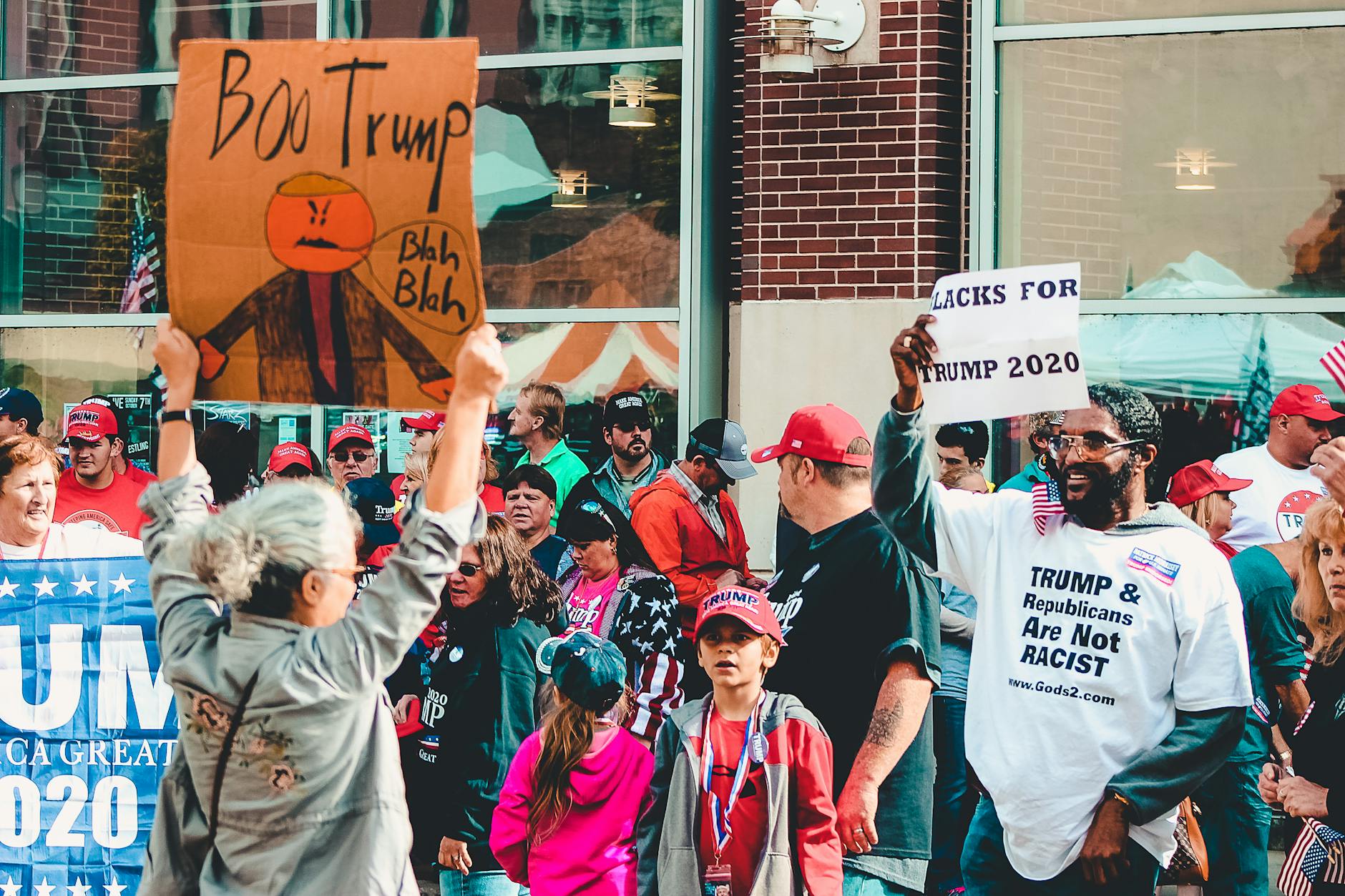
Evangelicals continue to support Donald Trump at historically high levels despite repeated moral controversies because they view him as a political instrument for advancing specific policy goals—most critically, anti-abortion judicial appointments and conservative Supreme Court decisions. According to April 2025 Pew Research Center polling, 72% of white evangelicals approve of Trump’s job performance, and approximately 80-81% supported him in the 2024 election, making them among his most reliably supportive constituencies. This sustained backing persists even as Trump engages in behavior that would typically provoke fierce criticism from religious leaders: in mid-April 2026, Trump shared an AI-generated image depicting himself as Jesus Christ, an act that prompted rare public rebukes from evangelical allies and internal theological debates about whether supporting him undermines their own spiritual credibility.
The paradox is not accidental. Evangelical leaders have developed a theological framework—comparing Trump to “King Cyrus,” a pagan ruler chosen by God to advance Jewish interests in biblical times—that allows them to separate Trump’s personal morality from his utility as a political agent. This framing enables evangelical voters to acknowledge Trump’s character flaws while maintaining that his policy achievements outweigh his personal conduct. Yet the coalition shows signs of strain: approval ratings have declined from 78% in early 2025 to 69% by January 2026, and recent controversies over immigration enforcement in churches and cuts to humanitarian aid have sparked criticism from evangelical pastors who once remained silent.
Table of Contents
- Why Does Abortion Policy Drive Evangelical Support Despite Other Concerns?
- The “King Cyrus” Theology—How Religious Framing Enables Moral Compromise
- The April 2026 Jesus Image Controversy—A Breaking Point for Evangelical Unity?
- Approval Ratings in Decline—Understanding the Polling Data
- Immigration Enforcement and Humanitarian Aid—Cracks in the Coalition
- What Evangelicals Have Gained and Lost—The Moral Ledger
- Looking Forward—Can the Evangelical Coalition Survive?
- Conclusion
Why Does Abortion Policy Drive Evangelical Support Despite Other Concerns?
Abortion has become the central organizing principle of evangelical political identity, and trump‘s anti-choice judicial legacy provides the primary justification for evangelical support even when his personal behavior conflicts with their stated moral values. The Trump administration appointed three Supreme Court justices who voted to overturn Roe v. Wade in June 2022, and subsequent state-level abortion bans have mobilized evangelical voters who view ending legal abortion as a non-negotiable religious priority. For many white evangelicals, this single policy achievement supersedes concerns about Trump’s history of infidelity, his inflammatory rhetoric toward immigrants and religious minorities, or his recent AI jesus image post.
One evangelical pastor described the calculation plainly: “We’re supporting him because of the judges, not because we think he’s a good person.” The limitation of this approach is that it places evangelicals in a morally vulnerable position. As one TIME Magazine analysis noted, when evangelical leaders must constantly excuse or overlook Trump’s transgressions to maintain political alignment, they risk undermining the moral authority they claim to represent. The 58% of white evangelicals who say they support “all or most” of Trump’s policies must reconcile that claim with recent administration decisions—such as lifting bans on immigration enforcement in churches, an action that sparked anger from evangelical pastors committed to sanctuary ministry principles. This creates a practical problem: evangelicals may gain the abortion policy wins they prioritize while losing credibility on humanitarian issues their faith tradition historically emphasized.

The “King Cyrus” Theology—How Religious Framing Enables Moral Compromise
To justify continued support for Trump despite his moral character, many evangelical leaders invoke the biblical analogy of King Cyrus, a pagan Persian ruler whom God supposedly chose to advance Jewish interests despite his lack of religious credentials. Under this theological framework, Trump is understood not as a moral exemplar but as a divinely-appointed instrument—flawed, imperfect, perhaps even morally compromised, but nonetheless selected by God to serve evangelical political interests. This framing appeared explicitly in evangelical commentary during both the 2016 and 2024 election cycles, allowing religious leaders to maintain spiritual credibility while endorsing a candidate whose personal conduct would otherwise disqualify him from their support. However, this theological argument contains significant limitations that have become more apparent as Trump’s behavior has escalated.
The “King Cyrus” analogy breaks down when applied to an elected democratic leader operating in a secular constitutional system—Cyrus ruled as an absolute monarch in ancient Persia, not as a president bound by constitutional limits and subject to voters. More problematically, the framework assumes evangelical voters and leaders can accurately discern God’s will in contemporary politics, a claim that historical evangelical theology would treat with considerable skepticism. When Rod Dreher, a conservative evangelical author, suggested in april 2026 that Trump “radiates the spirit of Antichrist,” he was essentially arguing that the theological case for Trump has become so thin that it now contradicts evangelical interpretations of biblical prophecy itself. This internal theological division reveals the instability of the “King Cyrus” framework when Trump’s behavior becomes too explicitly blasphemous to rationalize.
The April 2026 Jesus Image Controversy—A Breaking Point for Evangelical Unity?
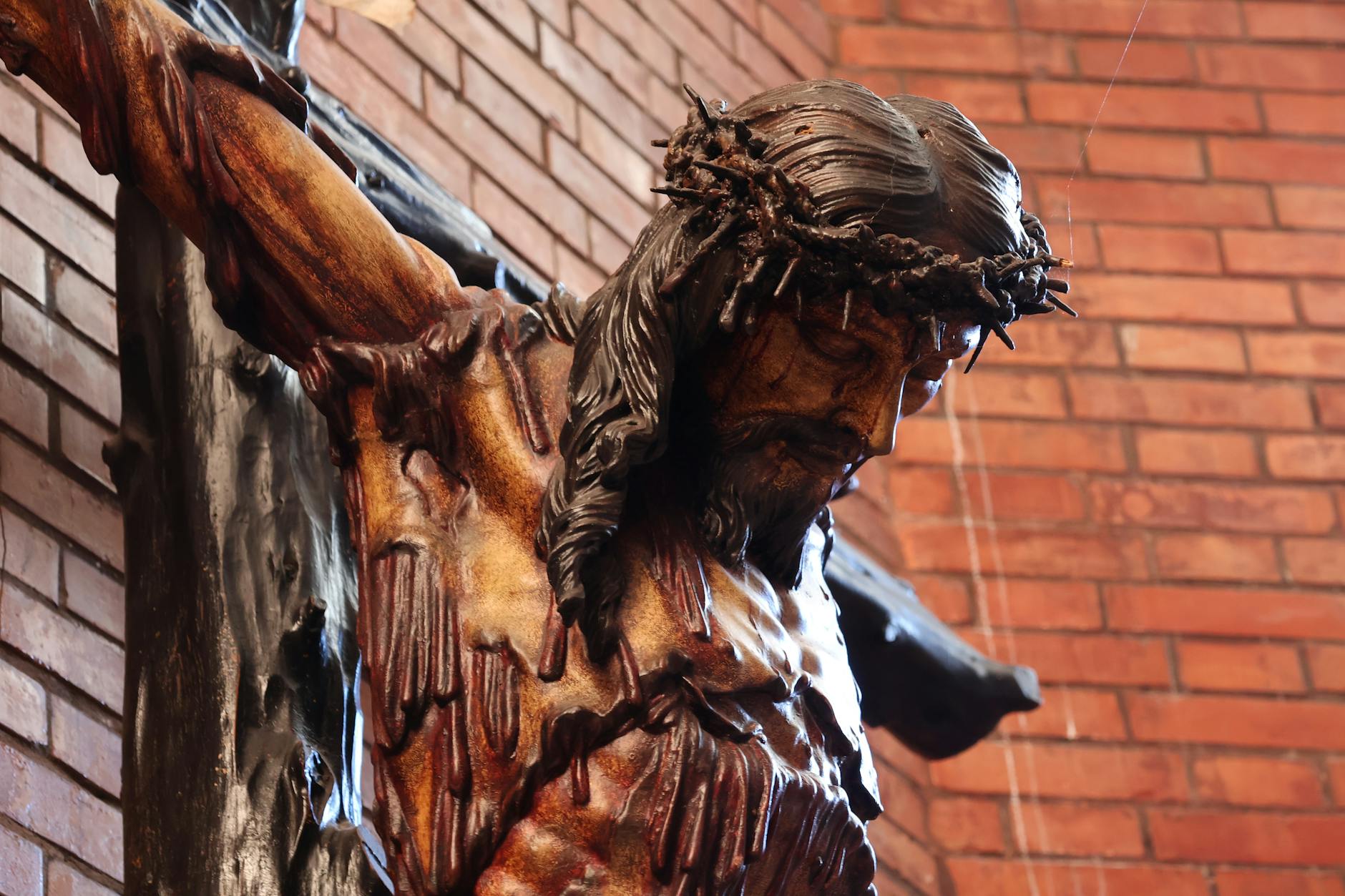
In mid-April 2026, Trump posted an AI-generated image appearing to depict him as Jesus Christ—a direct violation of evangelical theology and aesthetic sensibilities. The image sparked immediate criticism from evangelical leaders who rarely challenge Trump publicly: conservative author Megan Basham called it “blasphemous” and demanded an apology; Rod Dreher’s “Antichrist” comment followed shortly after. Yet the evangelical response remained deeply divided. Franklin Graham, one of the most prominent evangelical figures in American politics, remained silent. Tony Perkins and Ralph Reed, leaders of major evangelical political organizations, similarly offered no public criticism.
This division demonstrated that even explicit religious transgression cannot fully dislodge Trump from evangelical support—a significant portion of his evangelical base appears willing to overlook actions that directly mock Christian theology. The Jesus image controversy also revealed the generational and theological diversity within American evangelicalism that national polling often obscures. Younger evangelical leaders and progressively-minded evangelical outlets were more likely to criticize the image harshly, while older evangelical power brokers maintained silence or defensive postures. This split suggests that Trump’s evangelical coalition may not survive intact into a post-Trump era, particularly as younger evangelicals evaluate whether the political gains of the past decade justified the moral compromises required. The very fact that Trump felt comfortable posting such an image—and that most major evangelical leaders either defended it or remained silent—indicates he has calculated that evangelical political support is sufficiently secure that provocative religious transgressions carry minimal electoral risk.
Approval Ratings in Decline—Understanding the Polling Data
While 72% approval among white evangelicals still represents overwhelming support, the trend line shows meaningful erosion. Trump’s approval among evangelicals fell from 78% in early 2025 to 69% by January 2026—a nine-point decline in less than a year. This shift coincides with specific policy controversies: the lifting of immigration enforcement bans in churches became a flashpoint for evangelical pastors who had built sanctuary ministry programs on the assumption of church property immunity. Similarly, cuts to humanitarian aid programs both domestically and internationally prompted criticism from evangelical organizations whose missions include disaster relief and global development work. These declines suggest that Trump’s evangelical base, while still substantially larger than any other religious demographic’s support for him, is not monolithic and responds to specific policy decisions that contradict evangelical institutional interests.
The polling also reveals important nuance in measuring evangelical support. While 72% approve of Trump’s job performance overall, only 58% say they support “all or most” of his policies, and only 57% say they trust what Trump says over his predecessors. This gap is significant: it indicates that many evangelicals support Trump despite reservations about his specific policies and truthfulness. They are voting for the idea of Trump—the anti-abortion president who appoints conservative judges—rather than enthusiastically endorsing his actual governance record. This distinction matters because it suggests that if future controversies reach a critical mass, or if Trump’s judicial victories become less salient (particularly if he leaves office), evangelical support could fragment more rapidly than current approval numbers suggest.
📨 Get Free Accountability Coverage Alerts
Free · No spam · Unsubscribe anytime
Immigration Enforcement and Humanitarian Aid—Cracks in the Coalition
One of the most revealing evangelical responses to Trump’s second administration came when the Department of Homeland Security lifted restrictions on immigration enforcement agents making arrests in or near churches, schools, and hospitals. This policy change provoked direct criticism from evangelical pastors who had established sanctuary ministry programs based on decades of Trump-era immigration enforcement patterns. Unlike the AI Jesus image, which divided evangelicals along theological lines, the immigration enforcement decision created a direct conflict between Trump’s stated policy priorities and evangelical institutional practice. Churches that had been operating under the assumption of relative safety from immigration enforcement suddenly faced enforcement actions on their property.
The humanitarian aid cuts—both domestic programs serving poor Americans and international development assistance through agencies like USAID—similarly contradicted stated evangelical priorities around serving the poor and marginalized. While evangelicals mobilized politically around abortion and religious liberty, the Trump administration’s aid cuts affected the actual evangelical missionary and relief networks that depend on federal funding for disaster response, global health, and development work. This created a practical warning for evangelicals: Trump’s policy agenda is not uniformly aligned with evangelical institutional interests, even when he advances policies evangelicals prioritize. The political alliance is fundamentally transactional and contains inherent tensions that can only be managed through silence (as Franklin Graham chose) or active reframing (as other evangelical leaders attempted). Either approach erodes evangelical credibility over time.

What Evangelicals Have Gained and Lost—The Moral Ledger
From an evangelical perspective, the political calculation offers clear gains: three Supreme Court justices, the overturning of Roe v. Wade, continued appointment of conservative judges to lower courts, and policies protecting religious liberty (including exemptions from birth control coverage mandates). These represent substantial policy victories that evangelical leaders campaigned for decades to achieve. Yet the costs have extended beyond abstract moral compromise. The requirement to continuously defend Trump’s character flaws, reframe his blasphemous statements, and either excuse or minimize his attacks on religious minorities has damaged evangelical institutional credibility in the broader American culture.
A telling comparison: in the 1980s and 1990s, evangelical leaders exercised significant moral authority in mainstream American discourse, and their criticism of political leaders carried weight. By 2026, evangelical leaders are viewed by substantial majorities of non-evangelical Americans as hypocritical and politically compromised. The evangelical church attendance, already in decline before Trump’s rise, continues to drop even as evangelical politics has become more Republican-aligned. In effect, evangelicals have traded moral authority and cultural influence for specific policy outcomes. Whether that trade was strategically sound depends on whether the policy gains prove durable—if future presidents reverse abortion restrictions and replace Trump-appointed judges, the moral compromise will have yielded temporary victories at the cost of permanent institutional damage.
Looking Forward—Can the Evangelical Coalition Survive?
The evangelical support for Trump appears likely to remain substantial through the 2026 midterm elections and beyond, but several factors suggest this coalition faces long-term vulnerabilities. First, Trump’s willingness to engage in religiously provocative behavior (the Jesus image) without significant political consequences has potentially lowered the threshold for future transgressions. If Trump tests evangelical tolerance further—through attacks on Christians he deems insufficiently loyal, through statements perceived as hostile toward Christian faith itself, or through policies that directly harm evangelical institutions—the coalition’s cohesion could fracture more rapidly than polling currently suggests. Second, the generational divide within evangelicalism is widening, with younger evangelicals substantially less aligned with Trump than their parents’ generation.
As older evangelical power brokers retire or pass from leadership, their replacements may not maintain the same political commitments. Third, the practical policy conflicts between Trump’s governance agenda and evangelical institutional interests will likely intensify. Immigration enforcement in churches, aid cuts affecting evangelical relief networks, and potential religious liberty decisions that benefit non-Christian or secular interests at evangelical expense could generate more visible splits within evangelical leadership. The 2026 congressional elections and beyond will test whether the evangelical coalition remains unified or whether specific policy controversies create fissures comparable to the cracks visible in April 2026 over the Jesus image controversy.
Conclusion
Evangelicals continue backing Trump despite moral criticism because they have constructed a political and theological framework that separates his personal character from his policy utility. The “King Cyrus” analogy, combined with abortion’s primacy in evangelical political identity, allows voters to maintain support while acknowledging character flaws. This arrangement has delivered substantial policy gains—most notably the judicial overturning of Roe v. Wade—but at the cost of evangelical institutional credibility and moral authority in broader American culture.
The April 2026 Jesus image controversy and recent evangelical divisions over immigration and humanitarian aid policy suggest the coalition, while still substantial at 72% approval, is showing strain. For voters and observers monitoring evangelical politics, the key indicator going forward is not whether evangelicals will abandon Trump—current data suggests they will not, barring dramatic escalation—but rather whether generational change, policy conflicts, and repeated moral provocations gradually erode the coalition’s size and unity. The evangelical-Trump alliance has proven more durable than many secular observers predicted in 2016, but it rests on increasingly fragile theological and moral grounds. If Trump’s term produces additional religious transgressions or policies that directly harm evangelical institutions, the 69% approval rating from January 2026 may represent the coalition’s high-water mark rather than its baseline.
You Might Also Like
- Would Jesus Support Trump Style Politics?
- Trump Says He Will Tax remittances sent abroad. Here’s what that could do to immigrant families
- Trump Says He Will Overhaul Medicare Advantage payments. Here’s the reimbursement system